
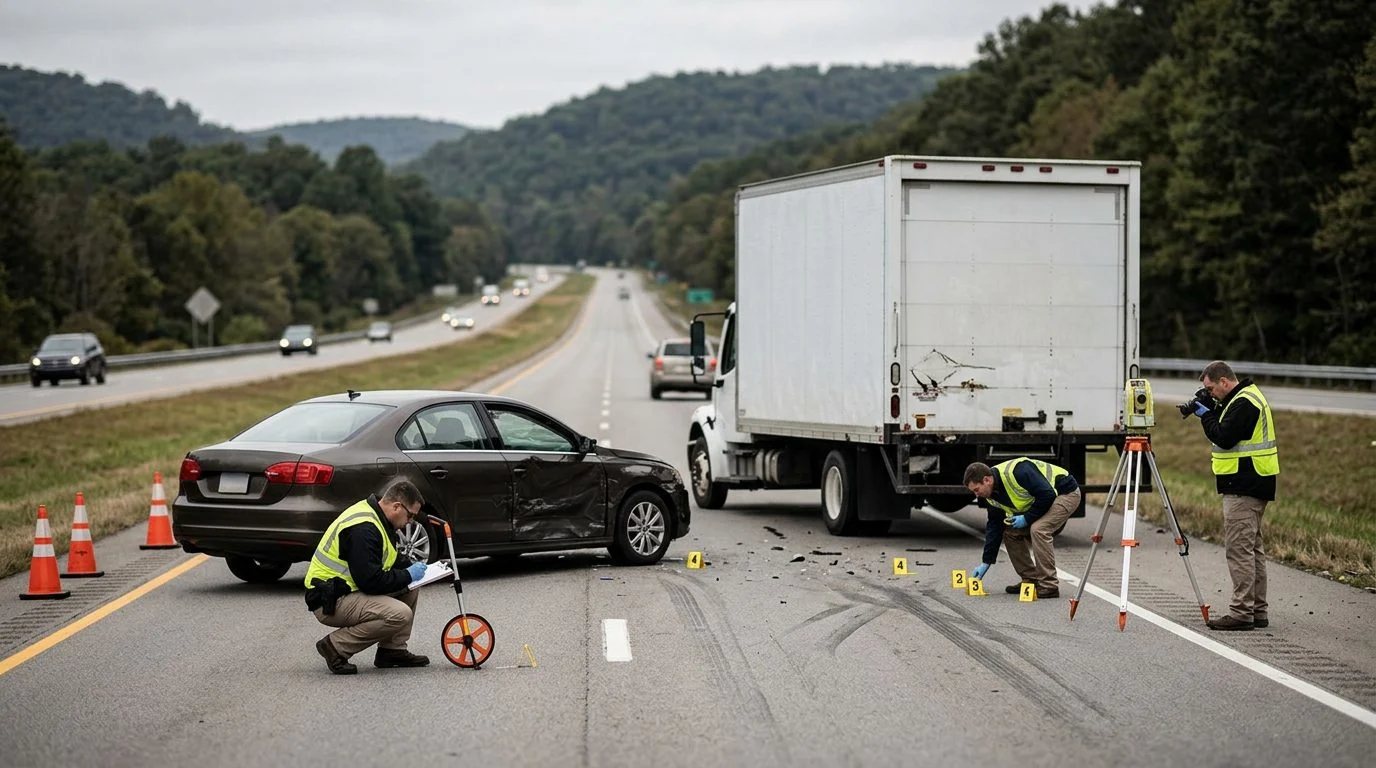
Spinal Cord Injury | Serving West Virginia
Getting a Clear Diagnosis After a Spinal Cord Injury in a Car Accident
Learn how doctors diagnose spinal cord injuries after a crash, why prompt medical evaluation matters, and how Big Bubba Injury Law can help you take the next step.
Published October 28, 2026
How Is a Spinal Cord Injury Diagnosed After a Car Accident?
So how is a spinal cord injury diagnosed after a car accident? Doctors combine a physical and neurological exam with imaging tests. The process usually starts in the emergency department.
Car crashes are a known cause of these injuries. According to MedlinePlus spinal cord injury overview, car accidents can cause spinal cord injury. That injury may lead to permanent paralysis or loss of feeling below the injury site.
The hard part is that the injury may not be obvious. Some people feel shaken but otherwise fine at the scene. Symptoms can change over hours and days. Anyone who hit their head or neck should be checked, even if they feel okay.
Expect more than one test. The care team looks at the exam, the imaging, and how symptoms change over time. Results are reviewed together, so one test rarely tells the whole story.
If you're waiting on spinal test results after a crash, you don't have to sort out the next steps alone. Reach out to the firm for a free case review. Talk it through with Big Bubba — the first case review is free, confidential, and carries no obligation.

What Happens First: Emergency Assessment and Spinal Precautions
At the scene and in the emergency room, staff first keep the person breathing and stable. The neck and back stay protected until a spine injury is ruled out.
Responders often keep the head, neck, and back still while they move a person. Staff check breathing, blood flow, and whether the person is awake and aware. The spine is assessed as part of this trauma care.
Staff will also ask where it hurts. They ask about numbness, tingling, and weakness. They want to know if any movement feels wrong. The answers go into the medical chart.
Be specific. “My left hand is tingling” gives the team more to work with than “I feel bad.” Many people say “I’m fine” because they want to leave or stay calm. Tell staff about every symptom, even small ones. Early notes shape how the team reads the injury later.
The Neurological Exam: What Doctors Check in the Arms, Legs, and Body
A neurological exam checks how well the nerves and spinal cord are working. It tests movement, feeling, and reflexes.
For movement, the examiner asks you to squeeze your hands and push or pull against resistance. You may be asked to lift each leg. Weakness on one side or in one limb is important to note.
For feeling, the examiner uses light touch and a pinprick. You say where you feel it and where you don’t. This maps areas of numbness or changed sensation. Reflexes are checked by tapping the knee and ankle.
Doctors look for patterns. Weakness in the arms but not the legs can point to where along the spine the injury may sit. The exam is repeated over time, and changes matter as much as the first result. Research on natural recovery after spinal cord injury shows recovery depends on timing and other factors. That is why follow-up checks matter.
Imaging Tests Used to Confirm a Spinal Cord Injury
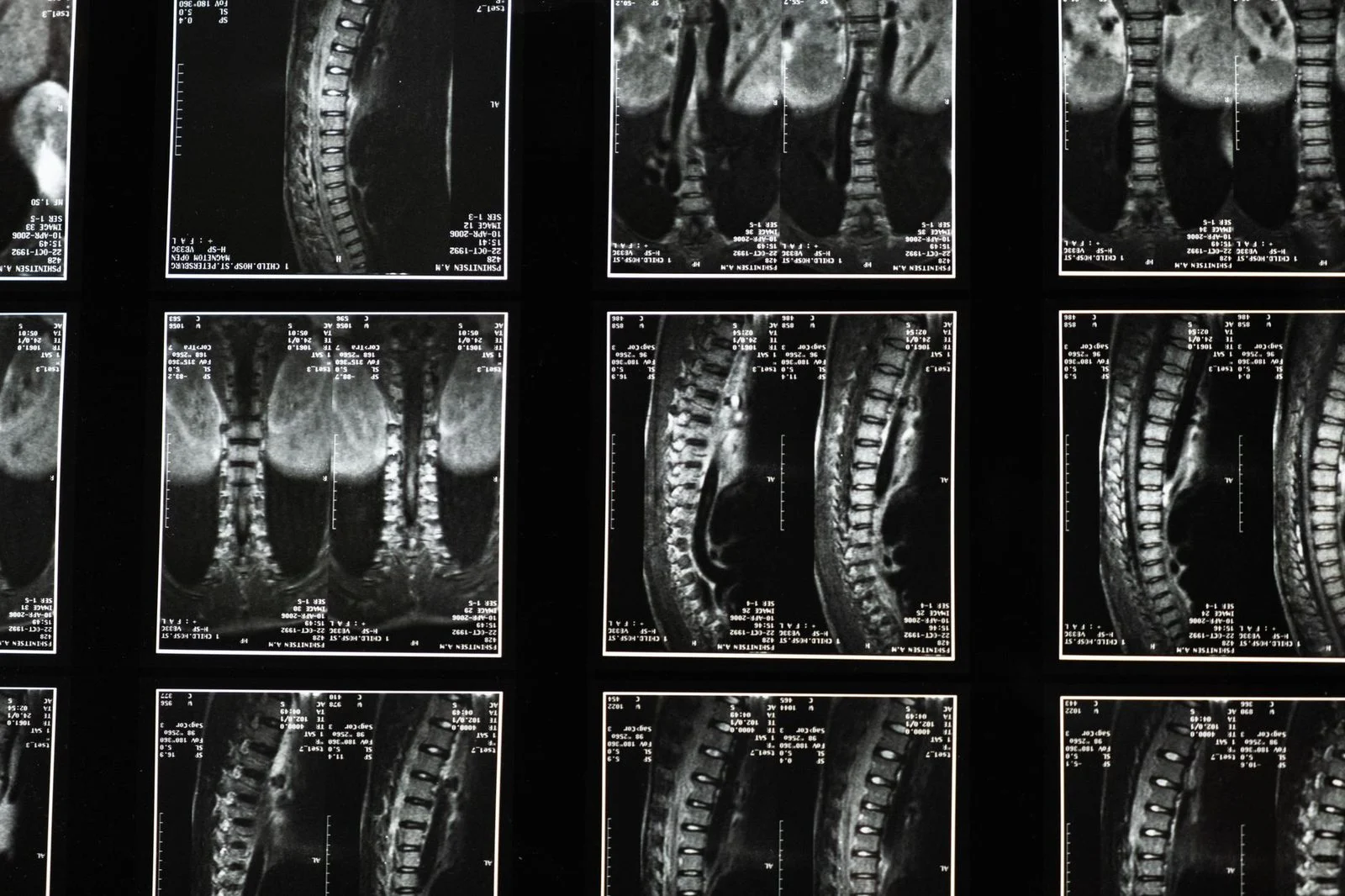
Imaging tests show whether the spine is broken or the cord itself is damaged. Common tests include X-rays, CT scans, and MRI.
X-rays are often the first picture taken. They show fractures, dislocations, and how the bones line up. They don’t show the cord itself well.
CT scans give more detailed pictures of bone. They help show fracture patterns. They also show whether a bone fragment is pressing into the spinal canal, the channel that holds the cord. That pressure is called spinal cord compression.
MRI is the test most often used to show the cord. It can reveal swelling, bleeding, compression, and damage to ligaments or discs.
Not every person needs every test. The care team chooses which tests to order based on symptoms and what the exam finds. Ask the team what each test showed, and write the answers down.
Key Terms: Complete vs. Incomplete Injuries and Tetraplegia
A complete spinal cord injury means no movement or feeling below the injury. An incomplete injury means some movement or feeling still works below the injury.
Tetraplegia, also called quadriplegia, is paralysis that affects the arms, trunk, and legs. It usually comes from an injury in the neck area of the spine.
The classification comes from the exam and the imaging. Doctors may describe an injury differently as they learn more over time. Early labels are not always the final picture.
Recovery is different for each person. Timing, the type of injury, and other factors all play a role. Exam results from the first days cannot show the full path ahead.
Warning Signs That Need Immediate Medical Attention After a Crash
New weakness, numbness, or loss of bladder or bowel control after a crash needs emergency care right away.
Get emergency help for any of these signs:
- New weakness or numbness in the arms or legs
- Loss of bladder or bowel control
- Trouble breathing
- Severe neck or back pain
- Loss of feeling in the groin or inner thighs
Symptoms can appear late. A person who felt fine at the scene should still be checked after a serious crash. A tingling or numb feeling that spreads or gets worse should be reported right away.
Write down when symptoms start and how they change. Those notes help the care team track the injury. If someone cannot move or breathe normally, call 911 now.
Not sure what your next step is?
Talk it through with Big Bubba — the first case review is free, confidential, and carries no obligation.
Why Complete Medical Records Matter After a Crash
Complete medical records give doctors a clear picture of the injury over time. The chart, imaging reports, and notes from each visit form that record.
Keep every follow-up appointment, therapy note, and prescription record. Write down new or changing symptoms with dates. A simple daily log can show patterns that a busy visit might miss.
Insurance companies may ask for your records or a statement. West Virginia has a rule about timing here. Under W. Va. Code § 55-7-11a, for 20 days after a personal injury, while the injured person is an inpatient in any hospital or is partially or totally unable to engage in his or her usual trade, profession or occupation, no person may try to negotiate a settlement of the claim, obtain a release, or obtain a statement from the injured person for use in negotiating a settlement or obtaining a partial or general release. The statement exception applies only to a person acting or intending to act for and on behalf of the injured person, and only when the injured person makes an express request for it. Separately, a person who may be liable for damages may make an advance payment of all or part of that liability during the twenty days, and the payment is allowed as full credit against any damages finally determined to be due.
When a Crash Injury Involves Head Trauma or Limited Insurance Coverage
A spinal cord injury can happen along with a traumatic brain injury. Both may be hard to spot at first.
Research on brain injury effects after accidents notes that effects may be long-lasting. They may not be immediately apparent. Mild traumatic brain injury can be difficult to diagnose.
Insurance can add another layer. A serious injury may raise questions about the at-fault driver’s policy limits. Those limits affect what coverage may be available.
Time limits matter too. Under W. Va. Code § 55-2-12, every personal action for which no limitation is otherwise prescribed must be brought within two years after the right to bring it has accrued if it is for damages for personal injuries, so other statutes may set different periods. Contact the firm to discuss the deadline that applies to your specific situation. Fault matters as well. Under W. Va. Code § 55-7-13c, a person is barred from recovery only if their fault is greater than the combined fault of all others. Under West Virginia’s comparative fault rules, a person who is partly responsible for a crash may still have a claim unless their fault is greater than the combined fault of all other persons; if their fault is less than that combined fault, any recovery is reduced in proportion to their degree of fault.
Talk With the Firm About Your Situation
Waiting on spinal test results after a crash is hard. The next steps can feel unclear, whether you were hurt or you’re helping a loved one.
How is a spinal cord injury diagnosed after a car accident?
Doctors use a neurological exam along with X-rays, CT scans, and MRI. The care team decides which tests fit the symptoms.
What is tetraplegia?
Tetraplegia is paralysis that affects the arms, trunk, and legs. It usually comes from an injury in the neck area of the spine.
How long do I have to file a personal injury claim in West Virginia?
West Virginia’s limitation period for personal injury actions is two years, under W. Va. Code § 55-2-12.
Can a spinal cord injury show up days after a car accident?
Yes, symptoms can appear hours or days after a crash. Report any new numbness or weakness to a doctor right away.
We serve injury victims across West Virginia, including Charleston, Huntington, Morgantown, Wheeling, Martinsburg, Parkersburg, Beckley, Clarksburg, Fairmont, and Weirton. We handle car accidents, truck accidents, commercial vehicle accidents, catastrophic injuries, traumatic brain injury, spinal cord injury, and wrongful death claims.
If a crash has left you or someone you love waiting on test results, reach out to the firm to ask about a free case review.