
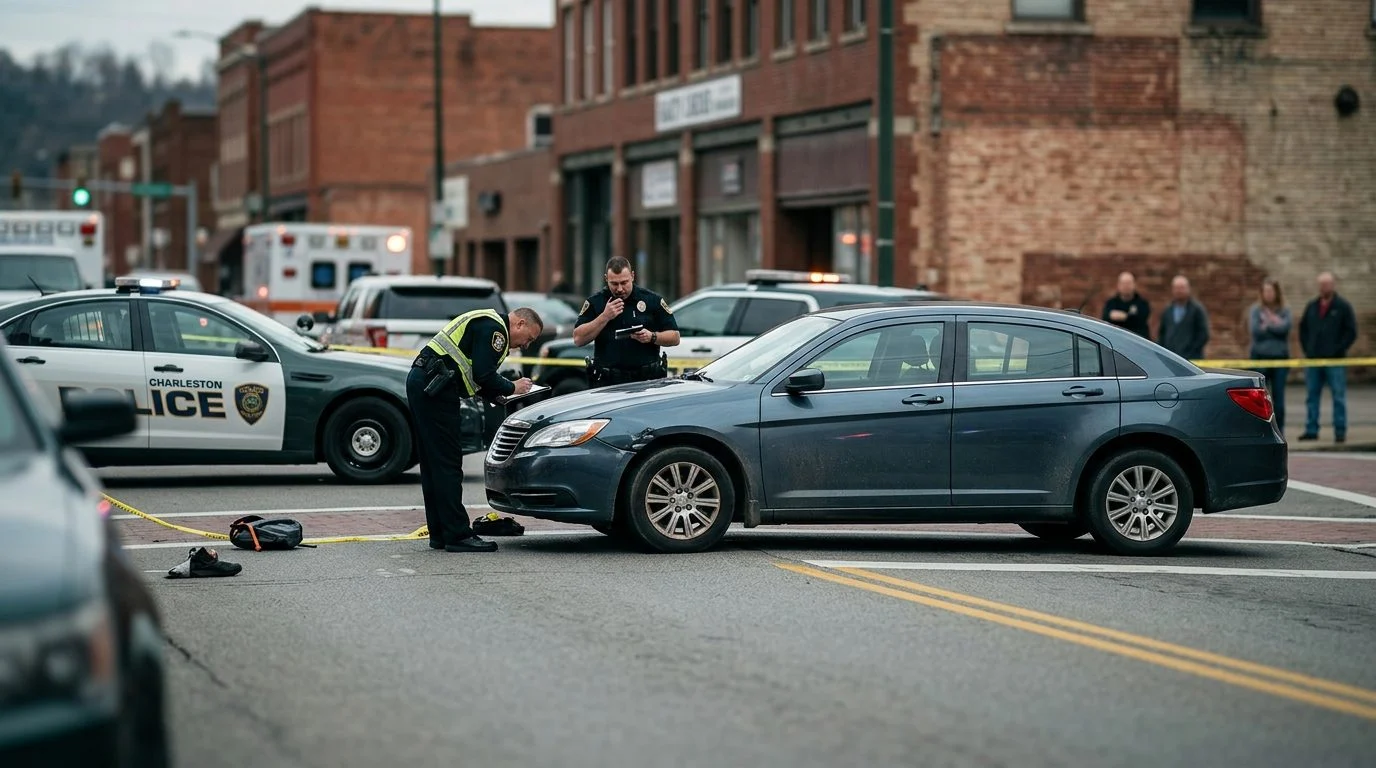
Pedestrian Injury Claims | West Virginia
Struck on Foot by a Vehicle? Tell the Firm What Happened
Big Bubba Injury Law represents people seriously hurt when a car or truck strikes them. Serving injury victims across West Virginia, we offer a confidential free case review with no obligation to continue.
Published October 29, 2026
There is no single answer to how much compensation on average if a pedestrian is hit by a car, because each claim turns on its own facts. Your injuries, your medical care, your lost income, who was at fault, and the insurance that applies all shape what a claim is worth. This page walks through each of those parts, so you can see what drives the value of a claim in West Virginia.
If you are reading this after being struck, you may be hurt, worried about bills, or waiting for news about a family member. That is a hard place to be. Our goal is to explain the process in plain language.
Why There Is No Single Average for a Pedestrian Accident Claim
A single average does not tell you what your own claim is worth. Many online ranges come from other states, from different types of crashes, or from cases with injuries unlike yours. Two people struck on the same street can have very different losses. One may need a few weeks of physical therapy. The other may need surgery, long hospital stays, and years of follow-up care.
Each claim is valued on its own record. The medical file, the wage records, the police report, and the insurance policies all matter. A number from someone else’s case cannot replace that review.
West Virginia law also keeps a specific dollar figure for damages out of the complaint in personal injury or wrongful death actions, though the complaint may state that the amount in controversy meets the minimum jurisdictional amount; this applies only to complaints filed on or after July 1, 2008. In a personal injury or wrongful death case, the complaint may not include a specific dollar amount for damages. That is one reason published numbers are hard to tie to any one case.
If you were struck while walking and are now sorting out bills, time off work, and insurance calls, we invite you to a free case review to talk through your situation. Talk it through with Big Bubba — the first case review is free, confidential, and carries no obligation.
What Compensation in a Pedestrian Injury Claim Is Meant to Cover
Compensation is meant to repay the losses the crash caused. Those losses fall into two groups: economic losses and non-economic losses.
Economic losses have a price tag. They include medical bills, lost wages, and the cost of future care. You can document them with bills, pay records, and treatment plans.
Non-economic losses are harder to put on paper. They include physical pain, emotional distress, and loss of the activities you once enjoyed. These losses show up in medical notes, in changes to daily life, and in statements from family and friends who see the difference.
Both groups matter. A claim that lists only bills can miss the real effect of an injury on a person’s life. A claim that lists only pain, without records, can be hard to support. Strong claims connect the two. They show how the injury caused specific costs and specific changes.
Medical Bills and Treatment Costs After a Pedestrian Crash
Medical bills are usually the first economic loss people notice, and they often grow over time. Care after a pedestrian is struck can include emergency transport, imaging such as X-rays or CT scans, surgery, hospital stays, follow-up visits, physical therapy, and medication.
The emergency room bill is only the start. Some injuries need months of rehabilitation. Others, especially head and spinal injuries, can require care for years. A claim should reflect the care you actually need, not only the first week.
Keep every bill, statement, and receipt. Keep records of mileage and parking for medical trips, too. Those small costs add up, and missing paperwork is hard to rebuild later.
Following medical advice matters just as much. Missed appointments give an insurer something to question. Attend follow-up visits, describe every symptom to your doctors, and ask each provider to send visit notes to your file.
Lost Wages and Loss of Earning Ability
A pedestrian claim can include wages you lost while you healed. It may also address lost earning ability if your injuries limit the work you can do over time.
Lost wages go beyond your regular paycheck. They can include missed overtime, lost tips, reduced hours, and paid leave you had to use. If you are self-employed, lost business income and the cost of hiring help may count.
Loss of earning ability is a longer-term question. A worker who can no longer lift, stand, or concentrate may not return to the same job. That change can affect a claim for years, not just weeks.
Documentation makes this loss clear. Pay stubs, employer letters showing time missed and pay rates, and tax records from prior years all help. Keep a log of the days you missed and why, along with any doctor’s notes that limit your work.
Pain, Suffering, and Emotional Impact
Pain and suffering covers the physical and emotional effects of an injury on your life. These are non-economic losses, and they have no fixed formula.
Pain can limit how you walk, sit, sleep, and care for your children or pets. Many people also feel anxiety about traffic, crossing streets, or even stepping off a curb. Sleep problems and mood changes are common after a serious crash. These are real losses, even though no bill shows them.
These losses are described through medical notes that record pain and limits. They are also shown through a personal journal of symptoms and daily struggles, and through statements from people who see the change. A spouse, coworker, or friend can describe what you could do before and what you cannot do now.
Because there is no fixed formula, each case is judged on its facts. The injury, the treatment, the proof of daily change, and the reliability of the records all count. A simple daily note helps. Write down pain levels, activities you skipped, and times you needed help.
Who Was at Fault: How Responsibility Affects a Pedestrian Claim
Fault decides who must cover the losses from a crash, and how much each person must pay. Fault is shown by facts such as traffic signals, crosswalk use, right-of-way, speed, driver attention, lighting, and weather.
West Virginia uses a modified comparative fault rule. Under W. Va. Code § 55-7-13c, a plaintiff’s fault does not bar recovery unless it is greater than the combined fault of all other persons responsible for the damages. If it is less, recovery is reduced in proportion to the plaintiff’s degree of fault.
That rule matters for pedestrians. A driver may argue the walker stepped outside a crosswalk or ignored a signal. The question is how fault is split among everyone responsible, not only whether the walker made any mistake.
The police report and witness statements often shape the early account of fault. Cities also publish their own rules. A West Virginia study of fatal pedestrian-involved crashes looked at crash conditions, victim characteristics, and alcohol or drug involvement.
Not sure what your next step is?
Talk it through with Big Bubba — the first case review is free, confidential, and carries no obligation.
Insurance Coverage and Policy Limits in Pedestrian Crashes
The at-fault driver’s liability insurance usually sets the first limit on what the insurer pays. Policy limits matter, and they can be lower than the losses in a serious injury.
Uninsured and underinsured motorist coverage can help when the at-fault driver has no insurance or too little. Under W. Va. Code § 33-6-31, a motor vehicle policy must include provisions to pay the insured the sums the insured is legally entitled to recover from an uninsured motor vehicle’s owner or operator. W. Va. Code § 33-6-31 reads: “unless it contains an endorsement or provisions undertaking to pay the insured all sums which he or she is legally entitled to recover as damages from the owner or operator of an uninsured motor vehicle, within limits which shall be no less than the requirements of section two, article four, chapter seventeen-d of this code, as amended from time to time: Provided, That such policy or contract shall provide an option to the insured with appropriately adjusted premiums to pay the insured all sums which he or she shall be legally entitled to recover as damages from the owner or operator of an uninsured motor vehicle up to an amount of $100,000 because of bodily injury to or death of one person.” The same section defines an underinsured motor vehicle as one whose applicable liability limits are less than the limits the insured carried for underinsured motorists’ coverage, or have been reduced by payments to others injured in the accident to limits less than those limits. W. Va. Code § 33-6-31 reads: “unless it contains an endorsement or provisions undertaking to pay the insured all sums which he or she is legally entitled to recover as damages from the owner or operator of an uninsured motor vehicle, within limits which shall be no less than the requirements of section two, article four, chapter seventeen-d of this code, as amended from time to time: Provided, That such policy or contract shall provide an option to the insured with appropriately adjusted premiums to pay the insured all sums which he or she shall be legally entitled to recover as damages from the owner or operator of an uninsured motor vehicle up to an amount of $100,000 because of bodily injury to or death of one person.”
Pedestrians may have coverage through their own auto policy, a household member’s policy, or another policy. The facts decide which coverage applies, so review every policy that could respond.
Adjusters often call early. W. Va. Code § 55-7-11a bars certain settlement contact for twenty days after a personal injury while the injured person is an inpatient in any hospital or is partially or totally unable to engage in his or her usual trade, profession or occupation. You do not have to accept the first offer.
How the Severity of Injuries Changes a Pedestrian Claim
The more serious the injury, the more planning the claim needs. A pedestrian struck by a vehicle can suffer catastrophic injuries, including traumatic brain injury or spinal cord injury.
These injuries often need long-term medical care, ongoing therapy, and equipment. They can change where a person lives, how a family divides daily tasks, and whether a person can return to work. Some effects appear weeks or months after the crash, so early records matter.
A serious injury also raises questions the claim must answer. What will future care cost? How will the person’s earning ability change? Does the injured person need help at home? Answering these takes detailed medical records and careful planning.
We handle catastrophic injury claims. Our catastrophic injuries page explains the types of injuries we handle and how these claims differ from more minor ones.
When a Pedestrian Dies: Wrongful Death Claims in West Virginia
Families facing the death of a loved one in a crash often have many questions, and you can reach out to the firm to talk through your situation. The claim is brought by the personal representative of the deceased person’s estate.
Under W. Va. Code § 55-7-6, the jury’s verdict shall include, but may not be limited to, damages for sorrow, mental anguish, and solace, including the society, companionship, comfort, guidance, and advice of the decedent. The jury may also consider reasonably expected loss of the decedent’s income and of the services and care the decedent provided. The jury’s verdict shall also include expenses for the care, treatment and hospitalization of the decedent incident to the injury resulting in death, and reasonable funeral expenses.
The court or jury can direct how damages are shared among the surviving spouse, children, parents, brothers, sisters, and anyone financially dependent on the decedent or otherwise equitably entitled to share in the distribution.
W. Va. Code § 55-7-8a sets out when a claim for injuries to the person not resulting in death survives the death of the injured person or the wrongdoer, and when a pending action may be revived in favor of the personal representative.
Families are often also handling funeral arrangements, insurance calls, and paperwork. The time to act matters, and the filing deadline is covered below.
Deadlines and How Long a Pedestrian Injury Claim Can Take
For most personal injury claims, West Virginia generally requires filing within two years. Under W. Va. Code § 55-2-12, a claim for damages for personal injuries must be filed within two years next after the right to bring it accrued. For crash injuries, that two-year period runs from when the right to bring the claim accrued, and when that is can depend on the facts of the case.
Wrongful death has its own clock. Under W. Va. Code § 55-7-6, a wrongful death action shall be commenced within two years after the death of the deceased person, subject to the provisions of section eighteen, article two, chapter fifty-five. W. Va. Code § 55-7-6 reads: “The provisions of this section shall not apply to actions brought for the death of any person occurring prior to July 1, 1988.” Waiting can make proof harder, because records fade, witnesses move, and evidence can disappear.
How long a claim takes varies. The injuries, the number of treatment providers, the insurer’s responses, and whether a lawsuit becomes necessary all affect the timeline. Each case moves on its own facts, so no fixed number of months applies to everyone.
Early steps help. Gathering records while memory is fresh makes the claim easier to document and easier to explain later.
Steps That Help Document a Pedestrian Accident
Start with the basics: the police report number, witness names and contact details, photos of the scene, and a written timeline. These items help show what happened.
Take photos of the crosswalk or intersection, any damage to your clothing or belongings, and your injuries as they heal. Note the time of day, the lighting, and the weather. If a witness saw the signal or the driver’s conduct, write down what they said while memory is fresh.
Write a timeline of symptoms. Include when pain started, what it felt like, what you could not do, and who helped you. Update it each week.
Follow medical advice and keep every follow-up appointment. Gaps in care can be used to question how serious the injury was.
Keep copies of every letter from insurers. Do not sign a release or give a recorded statement without reviewing it first. A settlement, release, or statement obtained in violation of W. Va. Code § 55-7-11a may be disavowed by the injured person at any time within one hundred eighty days from the date of the personal injury by executing a written statement of disavowal and forwarding a copy of it to the person violating the section, with repayment of any consideration paid.
If you were struck while walking and are now sorting out bills, time off work, and insurance calls, we invite you to a free case review to talk through your situation. Talk it through with Big Bubba — the first case review is free, confidential, and carries no obligation.

Common Questions About Pedestrian Crash Claims
You can request a free case review to talk through your own pedestrian accident with the firm. The review is confidential, and there is no obligation to continue.
You may be reading this from a hospital waiting room, on behalf of a child, or at a kitchen table after a loved one died. You may not know what the bills will look like or whether the at-fault driver’s insurance will be enough. Those questions are common.
The firm serves injury victims across West Virginia, including Charleston, Huntington, Morgantown, Wheeling, Martinsburg, Parkersburg, Beckley, Clarksburg, Fairmont, and Weirton. If you were struck while walking, or a family member was hurt or killed in a pedestrian crash, the questions about fault, insurance, and deadlines are real.
Is there a deadline to file a pedestrian injury claim in West Virginia?
Generally, yes. Under W. Va. Code § 55-2-12, a personal injury action must be brought within two years after the right to bring it accrued.
Can I still recover if I was partly at fault?
Under W. Va. Code § 55-7-13c, your fault bars recovery only if it is greater than all others’ combined fault.
Can a family bring a claim if a pedestrian was killed?
Generally, yes. Under W. Va. Code § 55-7-6, the personal representative of the estate generally brings the claim within two years after the death, subject to other provisions of West Virginia law, and exceptions may apply.
If you are still working through what happened, you don’t have to sort out fault, bills, and insurance calls alone.
Related practice areas
- Truck Accident Settlements in West Virginia: Key Factors