
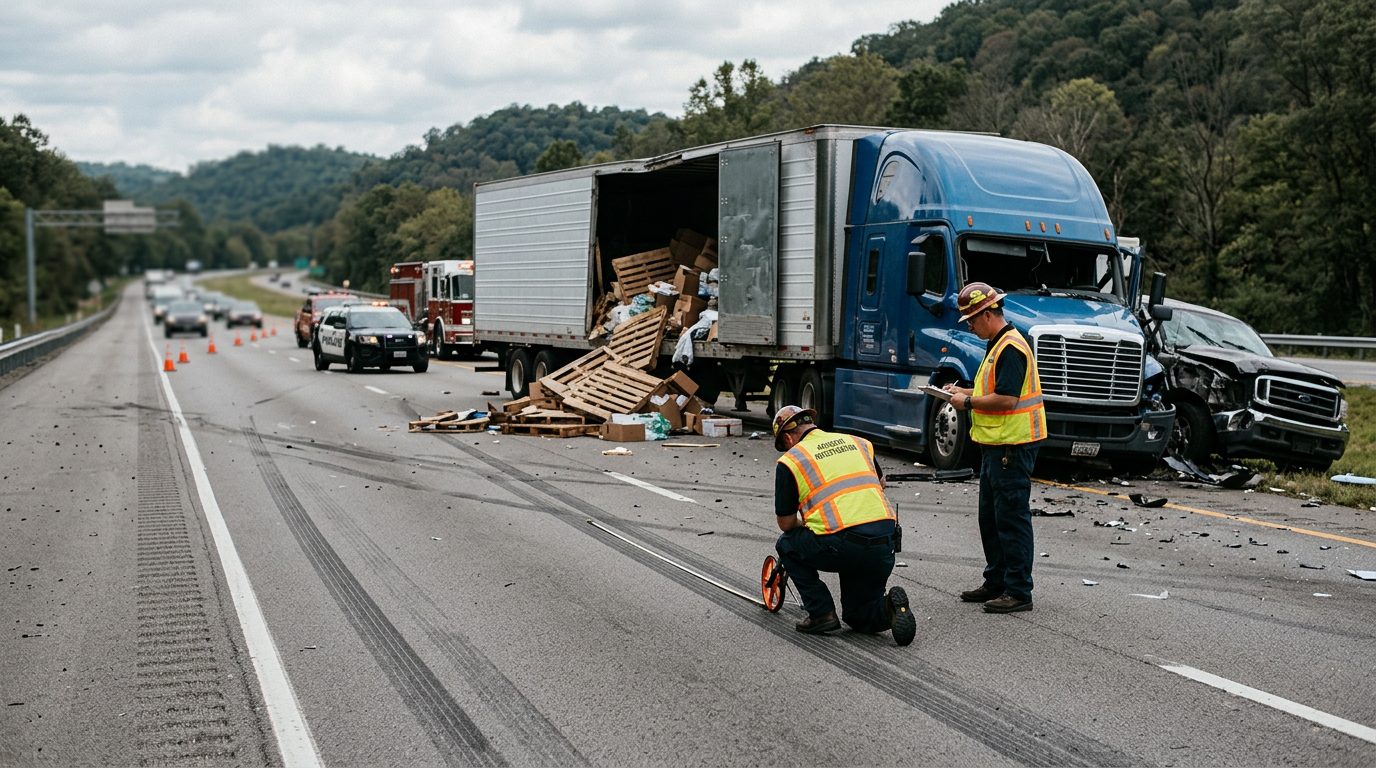
Truck Accidents | West Virginia
More Than One Company May Be Responsible for a Truck Crash
Owner operator trucks often involve a driver, a motor carrier and an equipment owner. Big Bubba helps injured people and families across West Virginia understand who may be responsible.
Published October 30, 2026
Owner operator truck accident liability West Virginia law is rarely decided by one label. A leased or owner-operated truck can involve the driver, the motor carrier that dispatched the load, and the company that owns or controls the equipment. Each may be a possible defendant. Big Bubba handles car accidents, truck and commercial vehicle accidents, and cases involving catastrophic injuries and wrongful death. We serve Morgantown, Charleston, Huntington and communities across West Virginia.
Short Answer: More Than One Party May Be Responsible
More than one party may be responsible when a leased or owner-operated truck causes a crash. The possible defendants often include the driver, the motor carrier, the lessor or equipment owner, and sometimes a cargo loader or maintenance contractor. The facts of the crash, and how these parties actually worked together, matter more than the wording of any single contract.
Catastrophic injuries and wrongful death raise the stakes. A traumatic brain injury or spinal cord injury can mean long medical treatment and lasting changes to work and daily life. After a death, a family’s claim may involve several parties too. Finding every party early keeps the full picture from being missed. West Virginia’s fault rules then decide how responsibility is divided, which we explain below.
Not sure what your next step is?
Talk it through with Big Bubba — the first case review is free, confidential, and carries no obligation.

What Changes When a Truck Is Leased to a Carrier
When a truck is leased to a carrier, federal rules place specific duties on the carrier for that truck. Under 49 C.F.R. § 376.11, a carrier may use equipment it does not own only under a written lease and the other listed conditions, except for interchange of equipment under § 376.31 or the exemptions in subpart C. That lease must meet the requirements in § 376.12. The carrier must also identify the leased truck as being in its service during the lease.
Federal law also allows the Secretary of Transportation to require a carrier to control, and be responsible for operating, leased vehicles as if it owned them. See 49 U.S.C. § 14102.
See 49 C.F.R. § 376.12.
The name and identification on the truck can be an early clue about who was operating it. Still, a lease shows only the paper relationship. If the truck was really run differently than the paperwork says, the actual facts count too.
Owner-Operators and the Independent Contractor Question
A company’s independent contractor label does not settle who is liable for an owner-operator’s crash. An owner-operator owns or leases the truck and takes loads through a carrier or broker. Many companies say the driver is an independent contractor, not an employee. That label matters, but it does not end the question.
People reviewing these cases look at how the work was really done. Key questions include who set the routes and schedules, who controlled the equipment, and how pay and daily work were managed.
West Virginia law also looks past titles. Under W. Va. Code § 55-7-32, an “employer defendant” includes the owner of a commercial motor vehicle. It also includes the operator’s employer, and any person or entity that owns, leases, rents, or holds legal control over the vehicle or its operator. Under W. Va. Code § 55-7-13d, nothing in that section stops a person from being held liable for the fault of an agent or servant acting for that person.
So owner operator truck accident liability West Virginia cases turn on the facts of each arrangement, not only the contract.
Claims Against the Motor Carrier Itself
A motor carrier can face claims for its own decisions as well as for a driver’s conduct. A company may answer for a driver who was working for it or under its control.
Direct claims look at what the company itself did.
Other factors in a truck crash claim can include dispatch and scheduling choices, and whether the truck was kept in safe condition. Federal rules also require motor carriers, except private motor carriers of passengers (nonbusiness), to require each driver to record the driver’s duty status for each 24-hour period. See 49 C.F.R. § 395.8.
These theories add to claims against the driver. They do not replace them.
Claims Against the Driver, the Lessor and Other Parties
A driver can be personally liable for unsafe driving, even when a company is also responsible. Federal rules say no driver may operate a commercial motor vehicle while fatigue, illness or another cause has so impaired, or is so likely to impair, the driver’s ability or alertness as to make it unsafe to operate the vehicle, except that in a case of grave emergency where compliance would increase the hazard, the driver may continue to the nearest place at which that hazard is removed. See 49 C.F.R. § 392.3. Speeding and distracted driving can also support a claim against the driver.
A truck owner or lessor may be a defendant when it kept control of the truck, handled its maintenance, or handed it to a driver it should not have trusted. Federal law also lets regulators require carriers to inspect leased vehicles and carry liability insurance. See 49 U.S.C. § 14102.
Other parties may be examined based on what caused the crash. A maintenance contractor, a cargo loader, or a company that created unsafe conditions at a job site can each be part of the picture. Leasing arrangements must also say in writing who is responsible for loading and unloading. That written answer is often one of the first things to check.
A defective part can also bring an equipment maker into the review.
Records That Usually Decide Who Was Responsible
The carrier’s own records often show who controlled the truck at the time of the crash. Start with the lease, dispatch records, bills of lading, and the driver’s duty-status logs.
Driver qualification files matter too.
Testing records matter after some crashes. Under 49 C.F.R. § 382.303, an employer generally must test surviving drivers for alcohol and controlled substances as soon as practicable, but only after certain crashes involving a commercial motor vehicle on a public road. Under 49 C.F.R. § 382.303, an employer must test a surviving driver for alcohol after a crash that caused a human fatality if that driver was performing safety-sensitive functions. Under 49 C.F.R. § 382.303, as soon as practicable after an occurrence involving a commercial motor vehicle operating on a public road in commerce, an employer must test each surviving driver for alcohol if that driver receives a citation within 8 hours of the occurrence for a moving traffic violation arising from the accident, and the accident involved bodily injury to a person who immediately receives medical treatment away from the scene, or one or more motor vehicles with disabling damage requiring transport away from the scene by a tow truck or other motor vehicle. If an alcohol test is not given within two hours, the employer must keep a record of why.
Scene evidence adds context the paperwork cannot give. Photos, police reports and witness statements show where the truck was and what happened. Because records have set keeping periods, acting early helps protect them.
Not sure what your next step is?
Talk it through with Big Bubba — the first case review is free, confidential, and carries no obligation.
How Catastrophic Injuries and Wrongful Death Claims Are Affected
Catastrophic injury and wrongful death claims often involve more people and longer-term losses. Traumatic brain injury and spinal cord injury can require extended medical care, rehabilitation and planning for future needs. Identifying every responsible party early helps make sure those needs are fully examined.
A wrongful death claim in West Virginia is brought by the personal representative appointed for the person who died. Under W. Va. Code § 55-7-6, the jury’s verdict shall include, but may not be limited to, damages for sorrow, mental anguish and solace. The jury’s verdict shall include, but may not be limited to, damages for reasonably expected loss of income and services, expenses for the care, treatment and hospitalization of the decedent, and reasonable funeral expenses.
West Virginia’s fault rules shape how responsibility is split. Under W. Va. Code § 55-7-13c, a plaintiff’s fault bars recovery only if it is greater than the combined fault of all other persons responsible. Otherwise, recovery is reduced by the plaintiff’s share of fault. Each defendant is generally liable only for its own share of fault.
Under W. Va. Code § 55-7-32, in a civil action for personal injury or wrongful death involving the operation of a commercial motor vehicle requiring a commercial driver’s license, the noneconomic damages limit against an employer defendant is $5 million for each occurrence, and beginning January 1, 2026, that limit shall increase to account for inflation by an amount equal to the Consumer Price Index, not to exceed 150 percent of the $5 million amount. That limit is not available if the employer lacks commercial motor vehicle insurance of at least $3 million for each occurrence. The section also does not apply in certain cases, such as where the driver is found to have had an alcohol concentration of .04 or more. It applies only to causes of action arising after July 1, 2024.
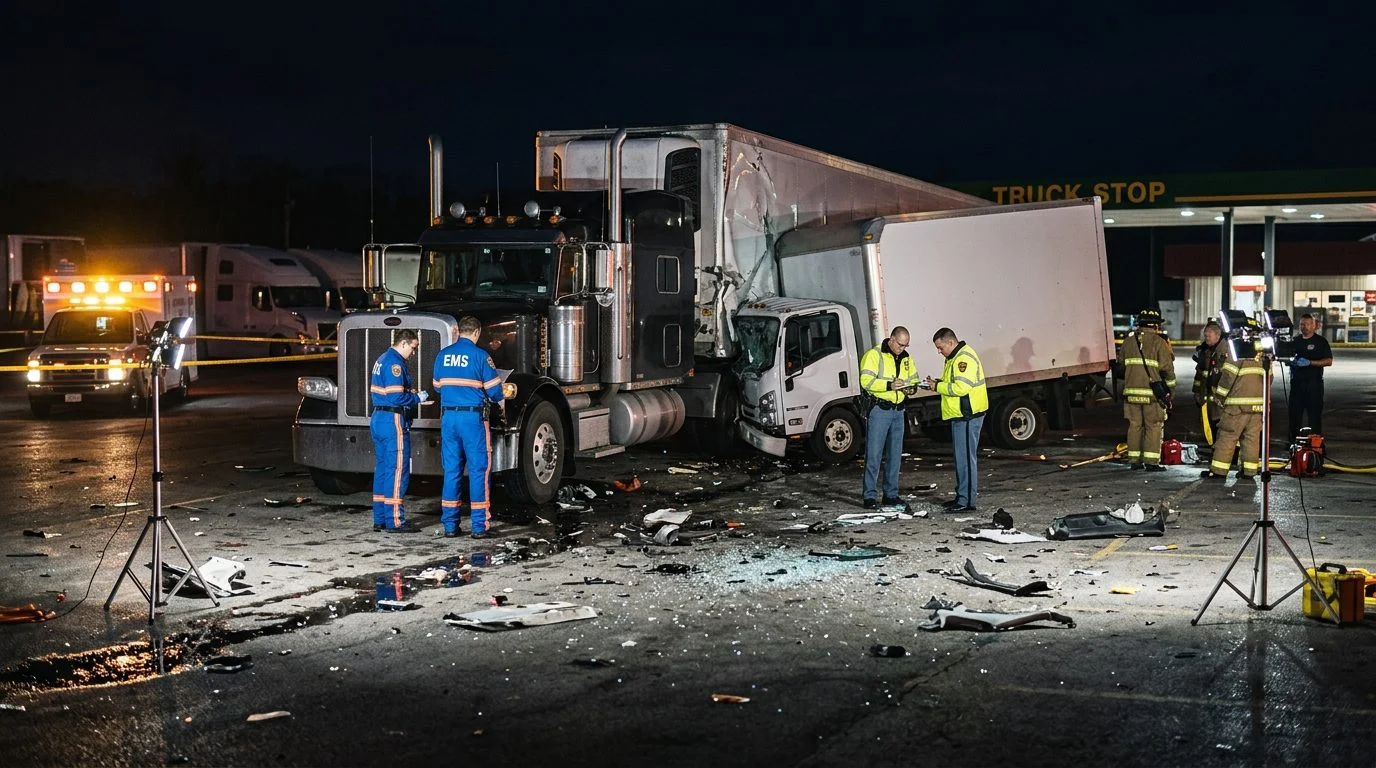
Leased and Owner-Operated Truck Crash Claims
Reaching out starts with a free case review, which the firm offers to people weighing who may be responsible for a crash. The review is confidential and carries no obligation to continue. It helps to bring the carrier or company name on the truck, the crash date, and any lease or paperwork you have. That way the firm can start looking at who may be responsible.
Can a trucking company be liable for an owner-operator’s crash?
A company that owns, leases or holds legal control over the truck or its operator can fall within West Virginia’s employer defendant definition. The answer turns on the facts of the arrangement.
Filing Deadlines for West Virginia Injury Claims
Under W. Va. Code § 55-2-12, a personal injury action generally must be brought within two years after the right to bring it accrues, unless another limitation period is otherwise prescribed.
If a leased or owner-operated truck was part of a crash that left you or someone you love seriously hurt, or that caused a death, you do not have to work out who is responsible alone.
Related practice areas
- Employer Responsible for Work Van Crash in West Virginia