
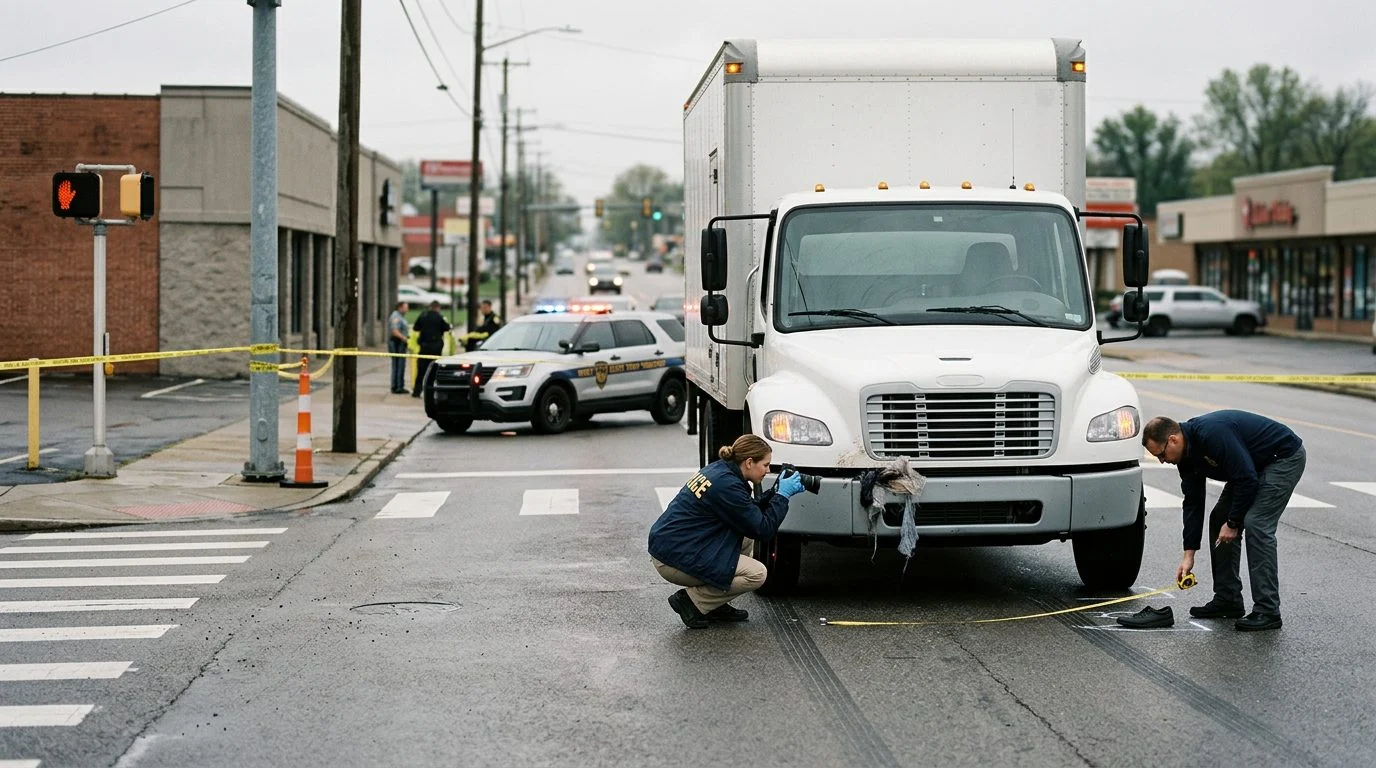
Pedestrian Injury Claims | Serving All of West Virginia
Hit by a Truck as a Pedestrian? You Do Not Have to Figure Out the Next Steps Alone
Big Bubba Injury Law represents pedestrians seriously hurt in crashes with commercial trucks across West Virginia, and families who have lost a loved one. We serve Charleston, Huntington, Morgantown, Wheeling, Martinsburg, Parkersburg, Beckley, Clarksburg, Fairmont, Weirton and communities throughout the state.
Published October 23, 2026
A pedestrian hit by truck catastrophic injury claim covers a person on foot who was struck and hurt for life. Big Bubba Injury Law represents people seriously hurt in car and truck crashes, and families in wrongful death cases, across West Virginia. This page explains how these claims work, what evidence matters most, and which deadlines may apply.
What Is a Pedestrian Catastrophic Injury Claim?
A pedestrian catastrophic injury claim is a legal claim by a person on foot who was struck and suffered serious, lasting harm. The person may have been walking, jogging, using a wheelchair, or working near the road. The vehicle may be a passenger car, pickup, SUV, or commercial truck.
“Catastrophic” means the injury causes lasting loss of function or needs long-term care. Brain injuries, spinal cord injuries, amputations, crush injuries, and multiple serious fractures are common examples.
When a pedestrian dies, a wrongful death claim may be available. It is filed by the personal representative, the person formally appointed to handle the deceased person’s estate. W. Va. Code § 55-7-6 explains how any recovery is shared.
We serve injured pedestrians and families across West Virginia, including Charleston, Huntington, Morgantown, Wheeling, Martinsburg, Parkersburg, Beckley, Clarksburg, Fairmont, and Weirton.
Not sure what your next step is?
Talk it through with Big Bubba — the first case review is free, confidential, and carries no obligation.
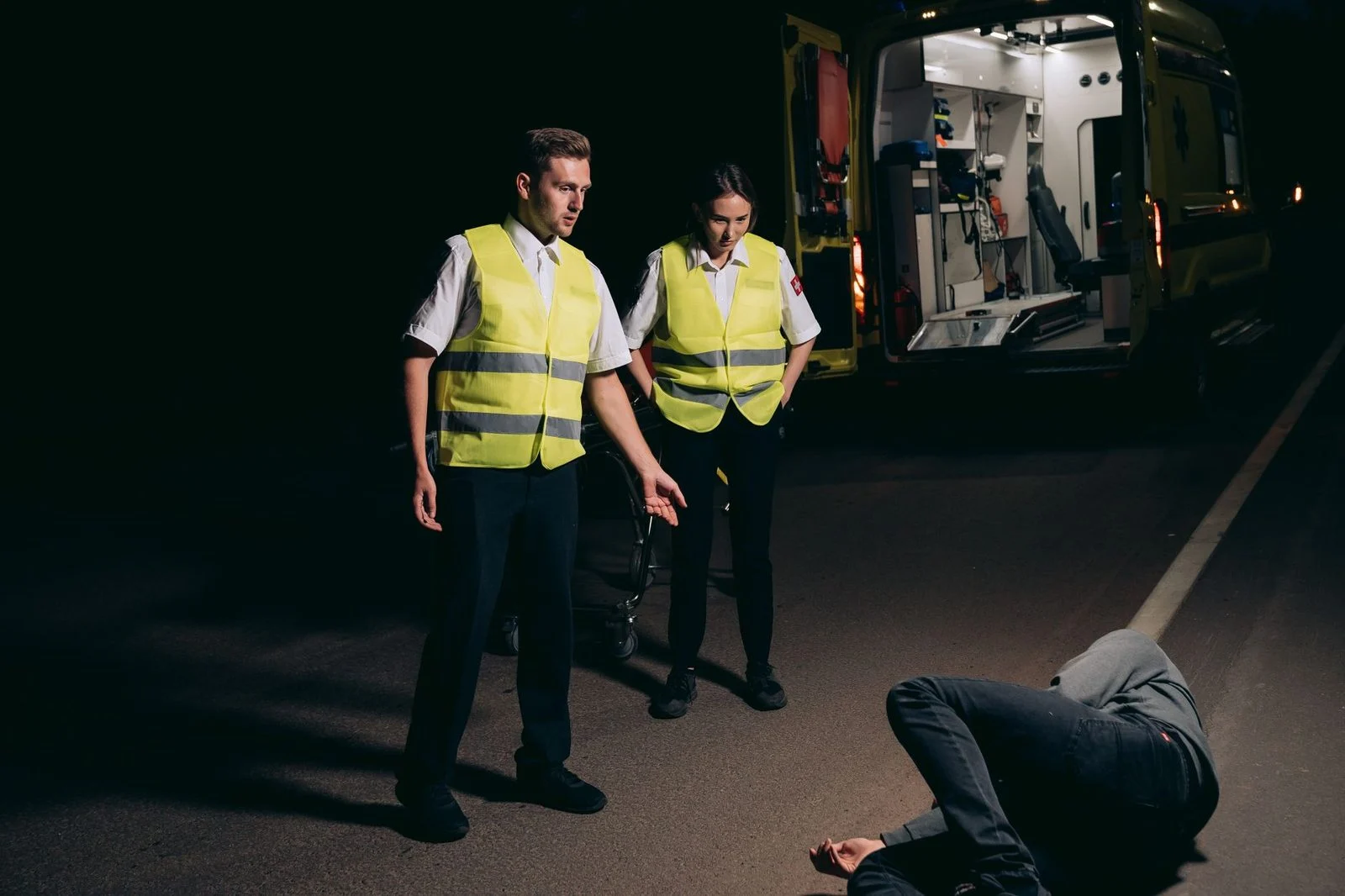
Which Injuries Are Common When a Pedestrian Is Hit?
The most serious injuries often involve the head, spine, and legs. Some take weeks to show their full effect.
- Traumatic brain injury from a head strike on a windshield, hood, or pavement. Symptoms can be delayed and can change over weeks or months.
- Spinal cord injury from the force of impact and the fall.
- Pelvic, hip, femur, and leg fractures.
- Internal bleeding or organ injury that may need emergency surgery.
- Amputation or crush injury, especially when a truck’s wheels or undercarriage are involved.
Medical records tie these injuries to the crash. Keep every emergency room note, scan report, and rehabilitation record. Gaps in treatment can make it harder to connect later symptoms to the crash.
What Can a Pedestrian Claim Cover?
A claim can seek compensation for medical bills, lost income, future care, and the harm the injury causes to daily life. Each category needs its own proof.
- Past and future medical costs, including transport, surgery, hospital stays, rehabilitation, medicine, and equipment.
- Lost income and lost ability to earn in the future, backed by job and medical records.
- Long-term care, such as in-home help or changes to a home, often outlined in a long-term care plan.
- Pain, suffering, and loss of enjoyment of life.
- For wrongful death, West Virginia law allows damages for sorrow, mental anguish, and loss of companionship and guidance. It also covers lost income and services the person would have provided, care and hospital costs tied to the injury, and reasonable funeral expenses. W. Va. Code § 55-7-6
The value of any claim depends on the injuries, the proof, and the insurance that applies. The firm cannot promise a result or an amount.
Who May Be Responsible When a Truck or Vehicle Hits a Pedestrian?
The driver can be responsible, and in a truck case the employer or company may be too. Each party depends on the facts.
- The driver, for speeding, distraction, impairment, or failing to yield at a crosswalk.
- W. Va. Code § 55-7-32
- Others, such as a company that loaded unsecured cargo. The West Virginia DMV warns that unsecured loads can cause serious crashes.
West Virginia uses comparative fault, which assigns fault as a percentage. Under the modified rule, a claimant is barred only if their fault is greater than the combined fault of all others. Under West Virginia law, a plaintiff’s fault does not bar recovery unless the plaintiff’s fault is greater than the combined fault of all other persons responsible for the damages, and if it does not, the plaintiff’s recovery is reduced in proportion to the plaintiff’s degree of fault (W. Va. Code § 55-7-13c). W. Va. Code § 55-7-13c sets out this rule.
Under W. Va. Code § 55-7-32, for a commercial motor vehicle driven by someone who needs a commercial driver’s license, West Virginia generally caps noneconomic damages against the employer at $5 million per occurrence, and exceptions may apply. That cap requires the employer to carry at least $3 million in commercial vehicle insurance, and it has exceptions, such as impairment. W. Va. Code § 55-7-32
What Evidence Matters After a West Virginia Pedestrian Crash?
The crash report, EMS and hospital records, and any video or witness accounts are often the first evidence to secure. Each one can disappear or change over time.
- The crash report from West Virginia State Police or a local police department. It lists the location, often by road name or mile marker, and a report number you can use to request it.
- EMS run sheets and hospital records, which show the scene, the patient’s condition, and the time of transport.
- Witness names and statements. State police sometimes ask the public for help after serious crashes.
- Photos and video, including traffic camera footage and nearby business video. Recordings can be overwritten quickly.
- Truck records, such as electronic logging device data, maintenance files, and driver qualification files. A preservation letter asks the carrier to keep them. Federal rules allow carrier records to be kept by any technology that accurately reflects the record. 49 C.F.R. § 379.7
What Deadlines Apply to a Pedestrian Injury Claim?
A personal injury claim must be brought within two years after the right to sue arises, where no other limitation is prescribed (W. Va. Code § 55-2-12). A wrongful death claim must be brought within two years after the death, subject to the provisions of section eighteen, article two, chapter fifty-five (W. Va. Code § 55-7-6). W. Va. Code § 55-7-6 reads: “The provisions of this section shall not apply to actions brought for the death of any person occurring prior to July 1, 1988.”
- Personal injury: generally two years after the right to bring the claim accrues, and other periods or start dates may apply. W. Va. Code § 55-2-12
- Wrongful death: generally two years after the death, subject to other provisions of law, and filed by the personal representative. W. Va. Code § 55-7-6
- W. Va. Code § 55-7-8 W. Va. Code § 55-7-8
The dates that apply depend on the facts of the crash. Waiting for treatment to finish can cost evidence, so timing matters.
Not sure what your next step is?
Talk it through with Big Bubba — the first case review is free, confidential, and carries no obligation.
How the Process Works, Step by Step?
The process starts with a free case review and moves through evidence, insurance, negotiation, and, if needed, a lawsuit.
- Describe what happened. The free case review is confidential and carries no obligation to continue.
- Gather records. This includes the crash report, EMS and hospital records, insurance details, and any witness or video information.
- Identify every responsible party and policy. This includes commercial carriers and uninsured motorist coverage.
- Document the medical picture. This includes evaluations by treating doctors and a long-term care outlook for catastrophic injuries.
- Present the claim and negotiate with the insurers involved.
- File a lawsuit if needed. If a fair resolution is not reached, the claim is filed in the proper West Virginia court.
Timelines vary. Catastrophic injuries often need time before the medical picture settles. The firm explains the expected stages after it reviews the facts.

What Should You Do First After a Pedestrian Crash?
Get medical care right away, write down the report number, and act early so key evidence is kept. Early steps help protect the record of what happened.
Can I still make a claim if I was partly at fault?
Possibly. West Virginia reduces recovery by your share of fault, and you are barred only if your fault is greater than everyone else’s combined.
What if the driver left the scene?
Does it matter that a commercial truck was involved?
Yes. Commercial cases can involve extra records, possible employer liability, and the damages cap in West Virginia’s commercial vehicle statute.
Who can bring a wrongful death claim for a pedestrian?
The personal representative brings the claim for the family. Surviving spouses, children, and others may share in any recovery under West Virginia law.
Why does timing matter?
If someone you love was struck on foot and is now in intensive care, in rehab, or has died, share what happened while the crash report, records, and video are still available. You can start with a free case review right away.