
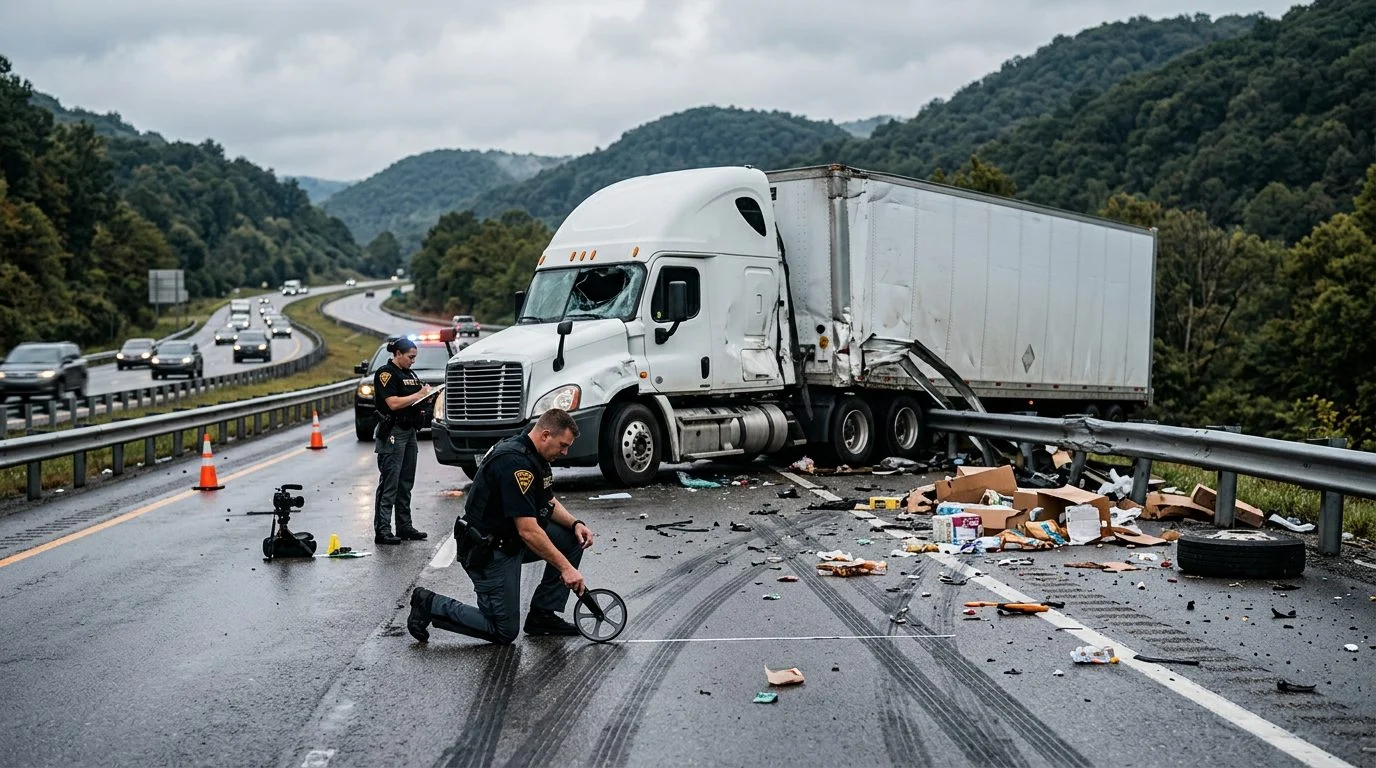
Truck Accident Claims | West Virginia
Thinking About Suing the Trucking Company After a Crash?
Big Bubba Injury Law helps people seriously hurt in truck crashes understand their options, including claims against the company behind the truck. We serve West Virginia communities including Charleston, Huntington, Morgantown and Wheeling.
Published November 1, 2026
Short Answer: Can You Sue a Trucking Company When Its Driver Caused the Crash?
In many cases, yes. If a truck driver’s negligence caused your injuries or a loved one’s death, claims may be possible against the driver and, depending on the facts, the trucking company. Whether a claim can reach the company turns on the facts, including the driver’s job, the company’s role in the trip, and what the company knew about its driver and equipment.
If you’re asking, “can I sue the trucking company if its driver caused the crash?” in West Virginia, this page gives you the plain answer. It explains how claims reach the company, which deadlines apply, and what evidence often matters most.
Many readers are still figuring out who is responsible. You don’t need legal training to understand the basics. Start with the core ideas below.
If a truck driver hurt someone you love, you may have a claim, and you don't have to sort out who is responsible alone. Request a free case review. Talk it through with Big Bubba — the first case review is free, confidential, and carries no obligation.

How a Driver’s Negligence Can Reach the Trucking Company
A trucking company can often be held responsible for careless acts its driver commits while working for it. Under the common-law doctrine of respondeat superior, an employer may be answerable for a negligent act of an employee committed within the scope of employment. The rule is stated in Zirkle v. Winkler.
A driver hauling a load on dispatch is in a different position than one on a personal errand.
Driver classification also matters. Owner-operators who lease their trucks can raise different issues. Who owns the truck, whose name is on the trailer, and who controls the route can all matter.
Your own conduct matters too. West Virginia uses modified comparative fault. Under W. Va. Code § 55-7-13c, your fault does not bar recovery unless it is greater than the combined fault of everyone else responsible. W. Va. Code § 55-7-13c reads: “(c) Any fault chargeable to the plaintiff shall not bar recovery by the plaintiff unless the plaintiff’s fault is greater than the combined fault of all other persons responsible for the total amount of damages, if any, to be awarded.” Otherwise, if your fault is less than the combined fault of everyone else responsible, your recovery is reduced in proportion to your degree of fault.
Direct Negligence Claims Against the Trucking Company
A claim can also say the trucking company itself was careless. This is separate from responsibility for the driver’s actions.
Federal rules place duties on the company, too. Under 49 CFR 390.11, a motor carrier must require drivers to observe the duties and prohibitions placed on them. Under 49 CFR 391.51, each motor carrier must keep a driver qualification file for every driver it employs.
Warning Signs That Training or Supervision May Have Contributed
Warning signs often show up in the driver’s history and the company’s paperwork. Prior citations, moving violations, or earlier crashes can raise questions about hiring and supervision.
Hours-of-service problems are another sign. Under 49 CFR 395.3, and subject to the exceptions in 49 CFR 395.1, a driver of a property-carrying commercial motor vehicle generally must take 10 consecutive hours off duty before driving. Under 49 C.F.R. § 395.3, a driver may not drive without first taking 10 consecutive hours off duty, and may not drive after a period of 14 consecutive hours after coming on duty following 10 consecutive hours off duty. Under 49 C.F.R. § 395.3, a driver may drive a total of 11 hours during the period specified in paragraph (a)(2) of this section. Under 49 C.F.R. § 395.3(a)(3)(ii), and except for drivers who qualify for either of the short-haul exceptions in § 395.1(e)(1) or (2), driving is not permitted if more than 8 hours of driving time have passed without at least a consecutive 30-minute interruption in driving status. Logs that show violations can point to pressure to keep moving.
Other red flags include incomplete qualification files, skipped training, and missing drug or alcohol testing records. Equipment problems reported before the crash but never repaired can also matter.
A clean driver record doesn’t end the inquiry. The company’s own rules and records still count.
Other Parties Who Might Share Responsibility
Responsibility in a truck crash can be spread across more than one party. Under W. Va. Code § 55-7-13d, the jury considers the fault of everyone who contributed to the harm. That includes people who could not have been named in the lawsuit.
Under W. Va. Code § 55-7-13d, the fault of a nonparty shall be considered if the plaintiff entered into a settlement agreement with the nonparty or if a defending party gives notice no later than one hundred eighty days after service of process upon said defendant that a nonparty was wholly or partially at fault. Other possible parties include another driver, a company that maintained or loaded the truck, or a maker of a defective part.
Under W. Va. Code § 55-7-13c, each defendant generally pays only its own share of fault. Some conduct changes that rule. For example, a defendant whose driving under the influence is a proximate cause of the damages suffered by the plaintiff is jointly and severally liable.
Identifying every possible party early helps prevent a missed source of recovery.
Suing the Trucking Company vs. Filing an Insurance Claim
An insurance claim asks an insurer to pay. A lawsuit is a formal case filed in court. The two can run at the same time.
Trucking companies carry insurance, and adjusters often reach out soon after a crash. West Virginia law limits some early settlement activity. Under W. Va. Code § 55-7-11a, a settlement, release of liability or statement obtained in violation of that section may be disavowed by the injured person within one hundred eighty days from the date of the personal injury by sending a written statement of disavowal to the person who violated the section, provided any money paid for the settlement or release is repaid or returned.
Words said to an insurer can be repeated later. Make sure you understand a question before you answer it.
A lawsuit may be considered when liability is disputed or an offer does not address the full harm.
Not sure what your next step is?
Talk it through with Big Bubba — the first case review is free, confidential, and carries no obligation.
Time Limits for Filing in West Virginia
West Virginia generally gives two years to file a personal injury lawsuit. Under W. Va. Code § 55-2-12, a personal injury action generally must be brought within two years after the right to bring it accrued, unless another limitation period is prescribed. The accrual date matters, so keep careful records of when the injury happened.
Wrongful death follows its own rule. Under W. Va. Code § 55-7-6, a wrongful death case must be commenced within two years after the death, subject to the provisions of section eighteen, article two, chapter fifty-five. W. Va. Code § 55-7-6 provides that its provisions do not apply to actions brought for the death of any person occurring prior to July 1, 1988. The statute notes it is subject to another provision of the code.
A missed deadline can end a claim, even when the other side was clearly at fault. Track the dates from the day of the crash and the date of any death.
Evidence That Often Decides These Cases
The most useful evidence often shows where the truck was, how long the driver had been working, and how the company kept its records. Driver duty-status records are a starting point.
Electronic logging device data, dispatch records, and fuel and toll receipts can show the driver’s timeline. Dash camera footage and onboard data can capture speed and braking. Photos of the scene and vehicles add detail.
The police crash report, witness statements, and any citations issued at the scene are common starting points. In West Virginia, a personal-injury lawsuit generally must be filed within two (2) years from the date the cause of action accrues, which is typically the date of injury, and exceptions may apply (see W. Va. Code § 55-2-12). The discovery rule and tolling provisions, such as those for minors or fraudulent concealment, may delay when that period begins in narrow circumstances.
Records can be lost over time. Asking early for them to be preserved can matter.
What a Claim May Cover After a Catastrophic Injury or Wrongful Death
A claim may seek money for losses that follow a serious injury or a death. After a traumatic brain injury or spinal cord injury, care can continue for years. A claim may account for past and future medical care, rehabilitation, and lost income. It may also account for pain and reduced quality of life.
In a wrongful death case, W. Va. Code § 55-7-6 sets out the categories the jury’s verdict shall include, though the verdict may not be limited to them. These include sorrow, mental anguish, and solace, such as companionship and guidance. They also include expected loss of income and services, care and hospital expenses from the injury, and reasonable funeral expenses.
The case is brought by the personal representative, the person formally appointed for the deceased person’s estate. The statute lets the jury direct how damages are distributed to the surviving spouse and children and other listed survivors or dependents; funeral, hospital, medical and other expenses recovered are expended by the personal representative, and if there are no such survivors, damages follow the decedent’s will or the laws of descent.
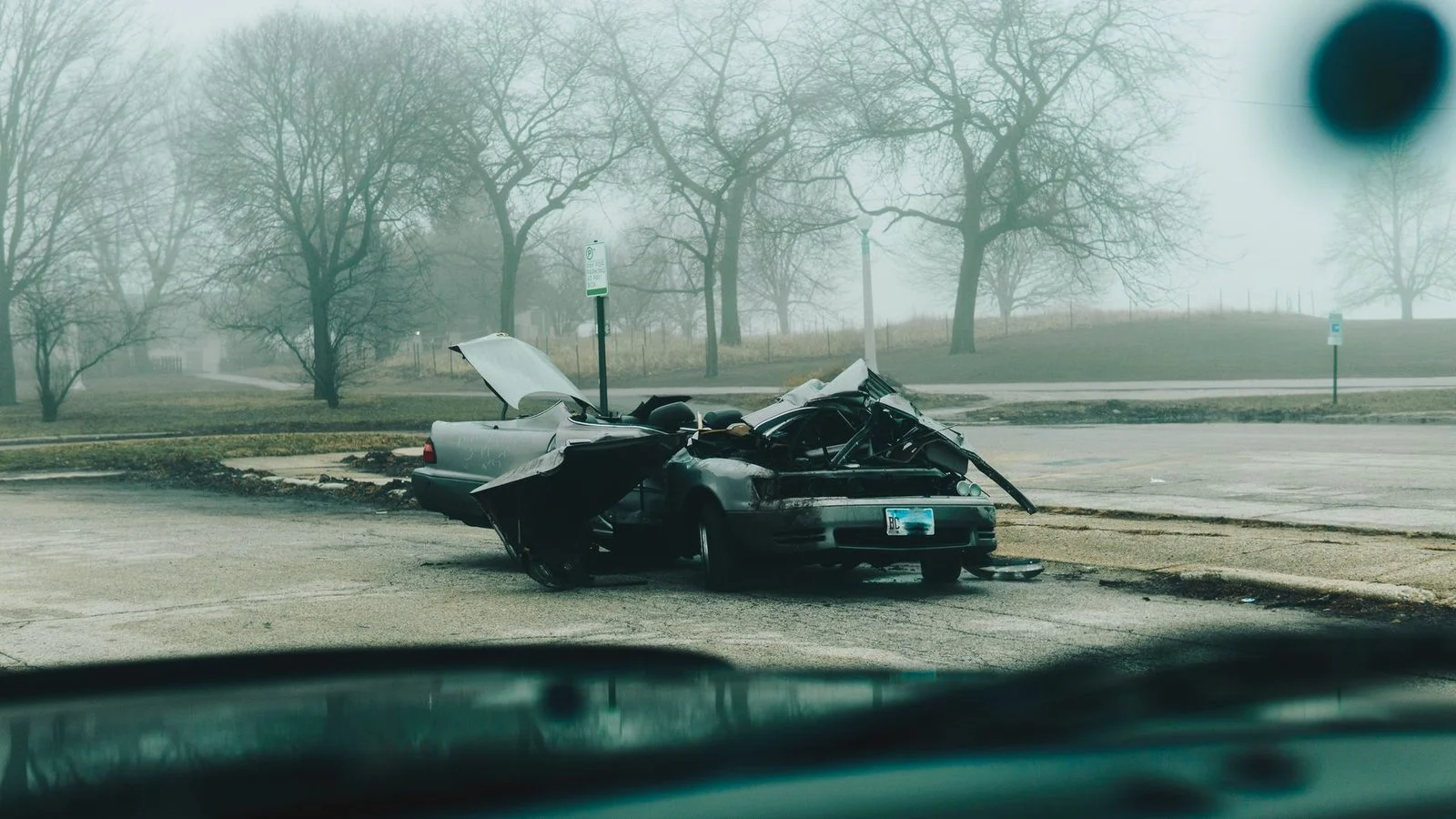
Injury Claims After a Truck Crash in West Virginia
If a truck driver hurt someone you love, you may have a claim against the driver and the company. The questions can pile up while you handle medical care and time away from work.
Frequently Asked Questions
Can I sue the trucking company if its driver caused the crash?
In many cases, yes. West Virginia law can hold a company answerable for negligent acts its employee commits within the scope of work.
How long do I have to file?
West Virginia generally allows two years for personal injury claims. Wrongful death claims generally must be filed within two years after the death (W. Va. Code § 55-7-6).
The firm handles car accidents, truck accidents, commercial vehicle accidents, catastrophic injuries, traumatic brain injuries, spinal cord injuries, and wrongful death cases. We serve injury victims in Charleston, Huntington, Morgantown, Wheeling, Martinsburg, Parkersburg, Beckley, Clarksburg, Fairmont, Weirton, and across West Virginia. If you’re weighing who is responsible for your family’s crash, you can request a free case review with the firm.