
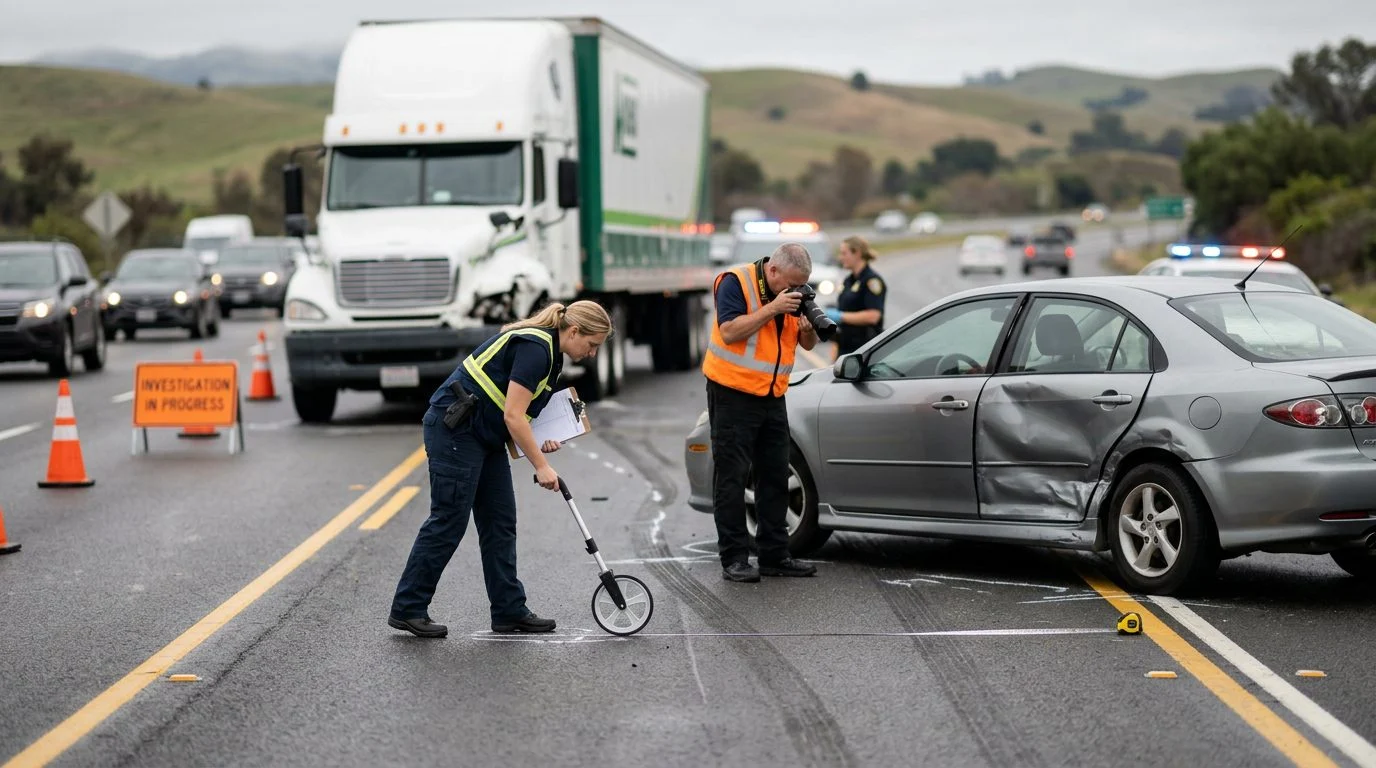
West Virginia Spinal Cord Injury Claims
Living With Partial Paralysis? Learn Your Options in West Virginia
Big Bubba Injury Law represents people with serious injuries from car and commercial truck crashes, including spinal cord injuries, across West Virginia. We serve Charleston, Huntington, Morgantown, Wheeling, Martinsburg, Parkersburg, Beckley, Clarksburg, Fairmont, Weirton and communities statewide.
Published October 13, 2026
A partial spinal cord injury paralysis claim is a personal injury claim for someone who keeps some movement or feeling below the injury after a crash. Generally, whether a claim may exist depends on how the crash happened, how the injury is documented, and the facts of each case. This page explains the basics for people in West Virginia and the families who help them.
What Partial Paralysis Means After a Spinal Cord Injury
Partial paralysis generally means some movement or feeling remains below the injury. Doctors often call this an incomplete spinal cord injury, as opposed to a complete one. The National Institute of Neurological Disorders and Stroke explains that the spinal cord is protected by three layers of tissue and by cerebrospinal fluid, which cushions it against shock.
Where the injury sits matters. Nerves are named by location. The National Institute of Neurological Disorders and Stroke describes the cervical spinal nerves as C1 to C8. It says these nerves generally carry signals to areas that include the neck, shoulders, arms, hands, and diaphragm. Thoracic, lumbar, and sacral nerves send signals to other parts of the body.
An injury can affect movement, feeling, balance, and bladder or bowel control. These effects can show up in different combinations from person to person. Recovery also varies. Nobody can predict how much function a person will regain based on the injury alone.
We serve injury victims across West Virginia, including Charleston, Huntington, and Morgantown.
Not sure what your next step is?
Talk it through with our team — the first case review is free, confidential, and carries no obligation.
How a Partial Spinal Cord Injury Is Usually Documented
Medical records are generally the core of how a spinal cord injury is described. These records often include imaging such as MRI or CT scans, neurological exams, hospital notes, and therapy notes. Depending on the facts, these records may be potentially relevant to a claim.
Doctors may also use a clinical classification to describe the injury’s level and how complete it is. The exact label matters less than what the records consistently show over time.
Consistent treatment and documented daily limits may also matter. For example, notes about what you can lift, how far you can walk, or which tasks need help can help explain your daily life. These notes do not determine any result. They simply help show what the records describe.
Good record-keeping is a practical step many people take. Consider these habits:
- Keep copies of discharge papers, test results, and bills.
- Save appointment notes and therapy reports.
- Start a written symptom log. Note pain, bladder issues, balance problems, and tasks you can no longer do alone.
Entries made close to the time of each symptom are generally easier to explain later. A log cannot decide whether a claim exists, but it can help a review of your facts.
Whether a Partial Paralysis Claim May Be Viable Depends on the Facts
Generally, whether a partial paralysis claim may be viable depends on the crash, the injury, and the evidence. The partial paralysis alone does not decide whether a claim exists. Two people with similar injuries can have very different facts.
Generally, a review looks at a few main questions:
- How the crash happened.
- Whether another party may share fault for it.
- How the injury is documented in the medical records.
Under W. Va. Code § 55-7-13a, recovery is generally based on each person’s percentage of fault. Exceptions may apply depending on the facts.
A free case review is how your specific facts get reviewed. We cannot say in advance what that review will show, and no result is promised.
Who May Be Responsible After a Car or Commercial Truck Crash
Fault may rest with another driver, a vehicle owner, or another party, depending on the facts. The injury itself does not establish who was at fault. Crash causation is a question of the facts in each case.
Under W. Va. Code § 55-7-13c, a plaintiff’s fault generally does not bar recovery unless it is greater than the combined fault of all other responsible persons. If it is not, recovery is generally reduced in proportion to the plaintiff’s fault. Exceptions may apply.
Commercial truck crashes raise extra questions. W. Va. Code § 55-7-32 addresses liability of employer defendants for commercial motor vehicles that require a commercial driver’s license. The statute contains conditions and exclusions that depend on the facts of each incident. Looking at how a trucking company hired, trained, and supervised a driver may be one part of reviewing what happened in a truck crash, depending on the facts of each case. Exceptions may apply.
Insurance is another piece. Coverage and policy limits generally depend on the policy terms and the facts of each case.
Have questions about what happened?
Ask our team directly. The first conversation is free, confidential, and there is no obligation to continue.
Filing Deadlines Generally Apply, With Exceptions
Under W. Va. Code § 55-2-12, a personal injury action generally must be brought within two years after the right to sue accrues. Exceptions may apply depending on the facts.
Missing a deadline may affect your ability to file suit. Because exceptions exist, confirm the deadlines that fit your situation as early as you can.
Wrongful death claims follow their own timing. Under W. Va. Code § 55-7-6, a wrongful death action generally must be commenced within two years after the death. The action is brought by the decedent’s personal representative. Other provisions may apply.
Timing rules can also affect early conversations with insurers. Under W. Va. Code § 55-7-11a, certain settlement activity is generally limited during the first twenty days after an injury, when the injured person is hospitalized or unable to work. A settlement made in violation of that section may be disavowed within one hundred eighty days, subject to its conditions.
Types of Losses a Claim May Address
Injury claims generally look at several kinds of loss. These can include medical care, rehabilitation, and equipment or home changes. They can also include lost income, a reduced ability to work, and help needed at home. Effects on daily life and family relationships are often part of the discussion too.
Which losses apply depends on the facts. Not every loss fits every case. The records that show each loss may vary.
Receipts, medical bills, pay stubs, and employer records may be potentially relevant when documenting these losses. They do not determine whether any recovery is possible. Keep them organized from the start.
West Virginia law also limits what a complaint may say about money. Under W. Va. Code § 55-7-25, a complaint in a personal injury or wrongful death action generally may not include a specific dollar amount of damages sought. Any figures are handled later in the process.
We describe the legal options and the process. We do not promise any personal or financial outcome.
What Affects How Long a Claim May Take
Timing is variable and depends on the facts. No typical number of months applies to every case.
Several factors may affect timing:
- Medical treatment that is still in progress.
- The number of parties and insurers involved.
- The records and reports that still need to be gathered.
- Whether the matter resolves before or after a lawsuit is filed.
These factors are possibilities, not predictions. Settling early or settling later does not generally lead to a particular outcome. Exceptions may apply depending on the facts.
Statutory deadlines and the stage of medical care can both shape the process. Clear records and a complete picture of your losses can help the review move forward, but no timeline is promised.
If you’re living with partial paralysis after a crash and weighing whether to talk with a lawyer about your facts, you’re not required to decide everything at once.
Want to know where you stand?
Tell us what happened and our team will walk you through the options available to you, at no cost.