
Car Crash Cases | West Virginia
Turning Crash Evidence Into Answers
Skid marks, vehicle damage and roadway measurements can tell a detailed story. Here is how that evidence is studied and where its limits lie.
Published November 17, 2026
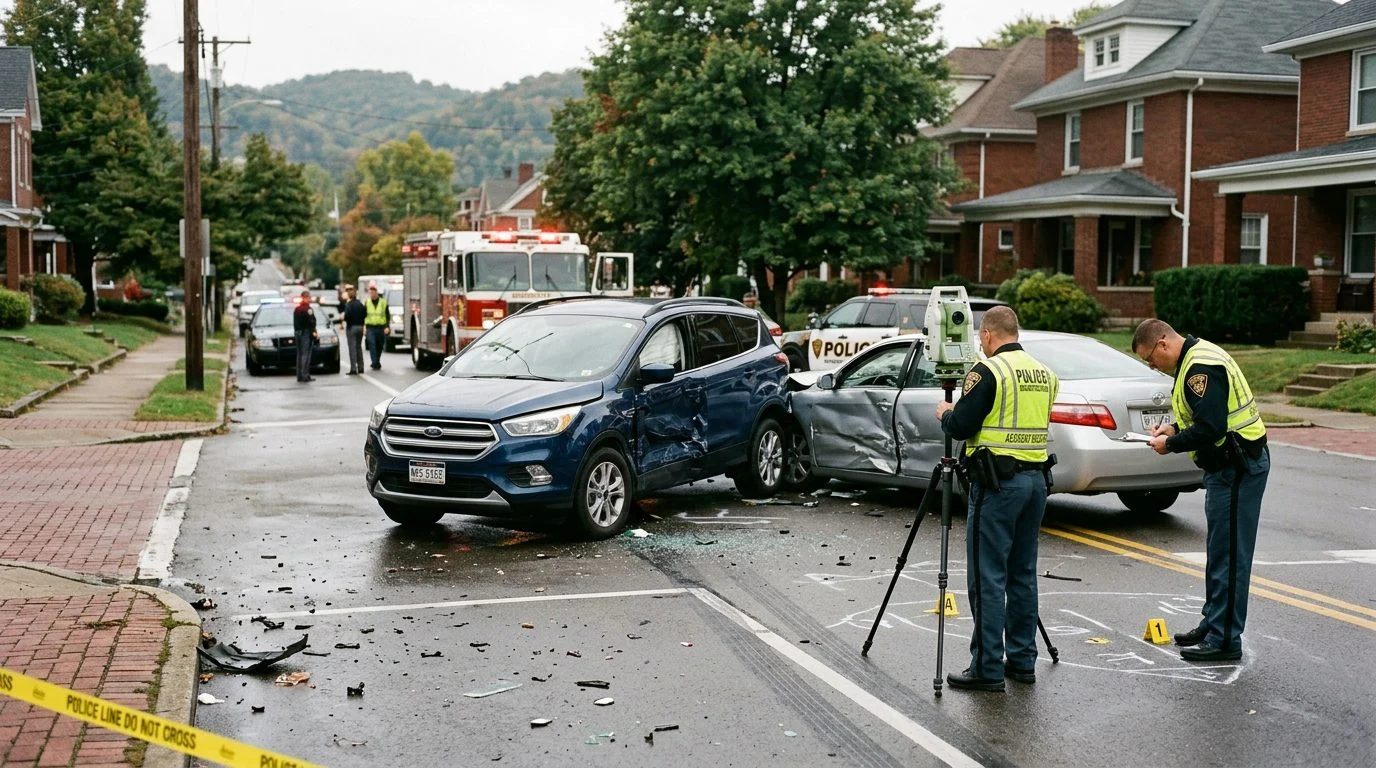
After a serious crash, many people want to know how it actually happened, not just what each driver remembers. Accident reconstruction is the method investigators use to work out the sequence of a collision from physical evidence, measurements and vehicle information. In a West Virginia car crash claim, it may show speed, direction and the order of events.
This guide explains what investigators measure, what reconstruction may and may not show, and when it is usually considered. We serve injury victims across West Virginia. Our car accident claims page covers the wider claim process.
What Accident Reconstruction Means in a Car Crash Case
Accident reconstruction is a scientific analysis of how a collision happened. Investigators also call it crash reconstruction, and the two terms mean the same thing.
The work runs backward. An analyst starts with where vehicles and debris came to rest, then traces the events that most likely led there. Each step is checked against measurements and physical evidence.
Reconstruction is a method, not a verdict. It produces estimates based on the evidence that exists. If photos are missing, a vehicle was repaired, or the scene was cleaned up early, the findings may be narrower or less certain. Two analysts reviewing the same evidence can also reach different conclusions.
Reconstruction is usually one part of a larger claim file. Police reports, medical records and witness statements may sit alongside it.
If a crash left you hurt, or a family member gone, and the other driver's account doesn't match what you remember, we can talk through your facts in a free case review. Talk it through with Big Bubba — the first case review is free, confidential, and carries no obligation.
Physical Evidence Investigators Measure at the Scene
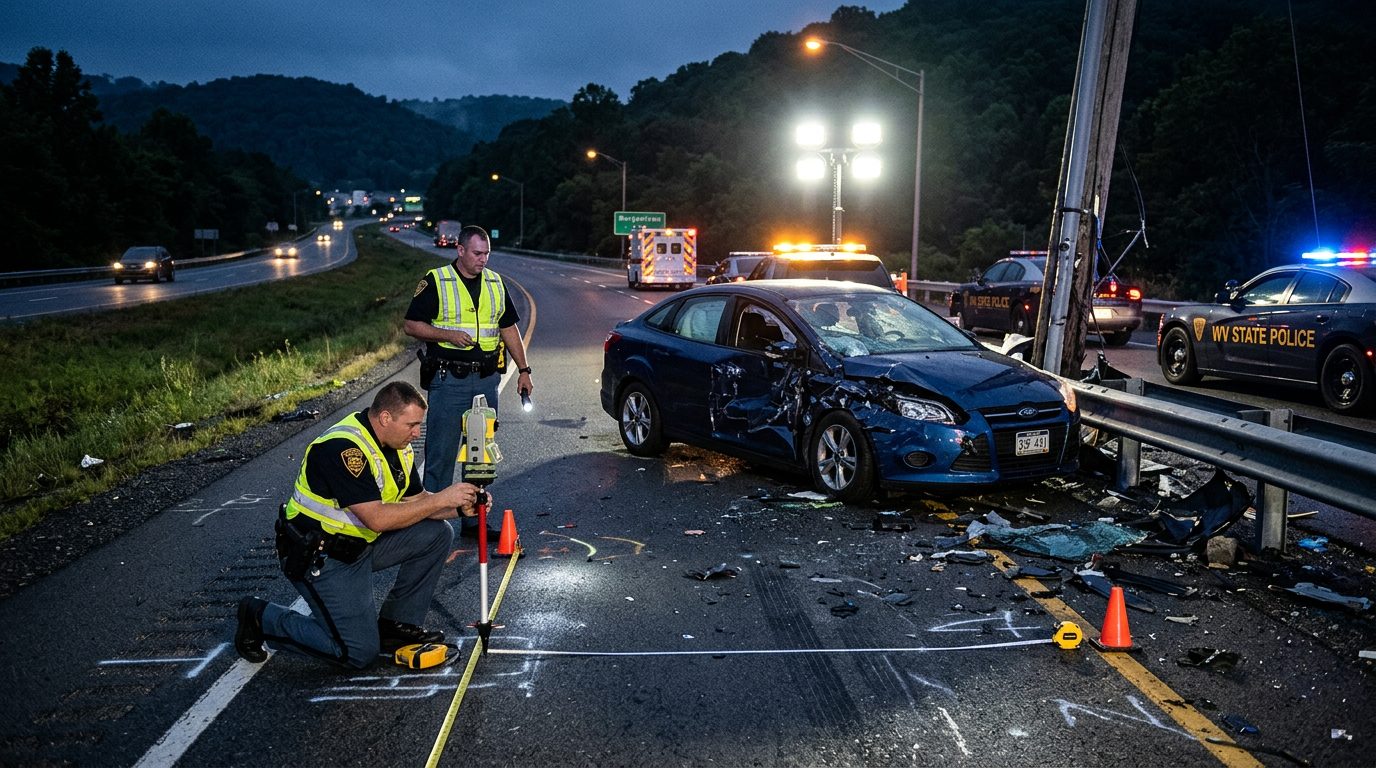
Investigators measure the roadway and the marks left on it to build a timeline. Those marks are often the first clues to speed and when braking began.
- Skid marks: dark marks left when wheels lock during braking. Their length and shape may suggest braking and direction of travel.
- Yaw marks: curved marks left when a tire slides sideways as the vehicle turns or rotates.
- Gouges and scrapes: marks in the pavement that may show where a vehicle or part struck the road.
- Final rest positions: where each vehicle and piece of debris stopped. The distances between them can help show the path after impact.
- Debris field: the spread of glass, plastic and fluid, which may help show where the impact occurred.
Investigators also record the road itself. That includes grade, lane widths, curves, sight lines and the posted speed limit. Weather, lighting and pavement surface matter too, because wet or icy roads lengthen stopping distance.
Evidence can disappear quickly. Rain, traffic and road repairs can erase marks, so early documentation often matters.
Vehicle Damage and Data Used in Reconstruction
Vehicle damage and onboard data can add detail the road alone cannot show.
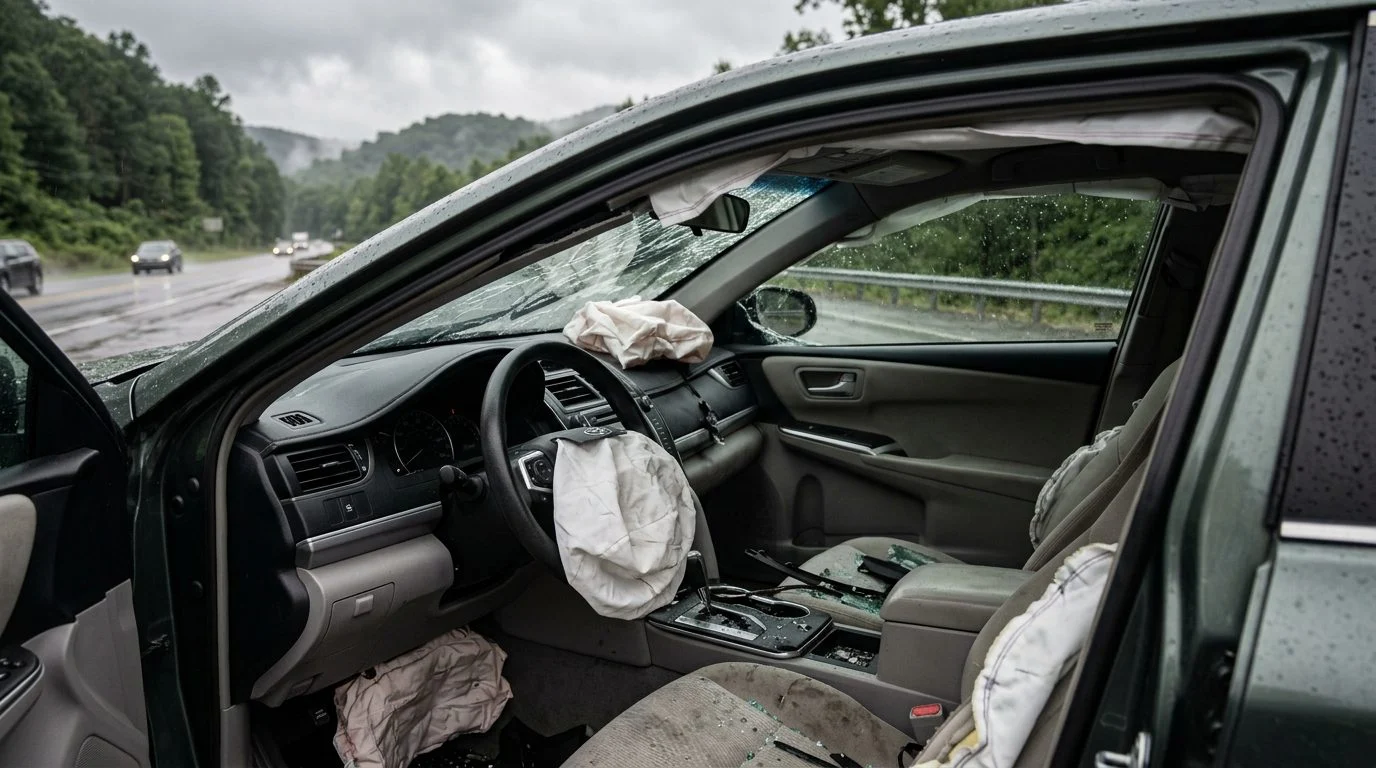
Crush damage is the deformation of a vehicle’s body. Its shape and depth may help estimate the direction and severity of impact. Analysts also study tire marks, paint transfer and debris on each vehicle. Matching these marks may link two vehicles to the same point of impact.
Some vehicles have an event data recorder, a device that can store information around a crash. Depending on what it recorded, it may add timing, speed and braking details. That information only helps if the vehicle is preserved. If a car is repaired or scrapped first, the data may be lost. Our vehicle event data recorder guide explains this evidence in more detail.
Photos and video taken soon after the crash can also capture positions and damage that later disappear.
What Reconstruction May Show About Speed, Angle and Impact
Reconstruction may estimate speed, impact angle and the order of impacts, but each is an estimate with limits.
Speed estimates often use the physics of braking. Analysts compare skid length, road friction and vehicle weight to estimate speed before braking. Crush energy and momentum can add to that picture. Each input carries some uncertainty, so the result is usually a range, not one exact number.
Angle can show how the vehicles were moving relative to each other. In multi-vehicle crashes or rollovers, analysts work out the sequence of impacts to show which event came first.
Reconstruction can also address how a crash happened when drivers tell different stories. Physical evidence does not change with memory, though it still needs careful reading.
Findings may be relevant, depending on the facts. Other analysts can challenge the inputs, assumptions and math behind any report.
When Accident Reconstruction Is Typically Considered
Accident reconstruction is usually considered when how the crash happened is disputed or the injuries are serious.
- Disputed fault: drivers may disagree about a signal, lane position or right of way.
- Serious injuries: traumatic brain injury and spinal cord injury cases may raise questions about how force was applied, so the mechanism of injury can matter.
- Wrongful death: when a crash causes a death, families often need a clear account of what happened.
- Commercial vehicles: records and inspections may be part of the evidence.
Commercial vehicle cases need quick action. Federal rules require post-accident testing of surviving drivers in certain serious crashes, as soon as practicable. If an alcohol test is not given within two hours, the employer must record why. After eight hours, the employer must stop trying to give it. For controlled substances, the cutoff is 32 hours.
Carriers keep some records for limited periods. Motor carriers must keep driver vehicle inspection reports for three months from the date the written report was prepared, except for private motor carriers of passengers (nonbusiness), driveaway-towaway operations, and carriers operating only one commercial motor vehicle. Records of duty status must be kept at least six months. Because these periods are short, early requests matter.
Who Performs Crash Reconstruction and How Timing Matters
Police agencies, county sheriffs and private analysts may all play a role in reconstruction work.
Under W. Va. Code § 17c-4-7, an officer who investigates a crash with injury, death, or $1,000 or more in total property damage must prepare a report within 24 hours after finishing the investigation. If the investigation runs past 10 days, a preliminary report is due on the 10th day. Some police agencies have crash reconstruction units. You can learn more in our crash report guide.
Drivers have duties at the scene too. Under W. Va. Code § 17c-4-6, a driver in a crash with injury, death, or total property damage to an apparent extent of $1,000 or more must immediately notify local police if the crash occurs within a municipality, otherwise the county sheriff or the nearest West Virginia State Police office.
Private analysts may be retained by attorneys or families. Their work depends on what evidence they can still obtain, which is why timing matters.
Fault rules shape the stakes. Under W. Va. Code § 55-7-13a, recovery in a personal injury, property damage, or wrongful death action is based on comparative fault, and each person’s liability is allocated in direct proportion to that person’s percentage of fault. Under W. Va. Code § 55-7-13c, fault chargeable to the injured person does not bar recovery unless that person’s fault is greater than the combined fault of others. If the plaintiff’s fault is less than the combined fault of all other persons, recovery is reduced in proportion to the plaintiff’s degree of fault. If another driver was at fault, reconstruction may help show it.
Time limits also apply. West Virginia generally allows two years for a personal injury claim under W. Va. Code § 55-2-12. A wrongful death action generally must be commenced within two years after death, under W. Va. Code § 55-7-6. W. Va. Code § 55-7-6 reads: “The provisions of this section shall not apply to actions brought for the death of any person occurring prior to July 1, 1988.”
Not sure what your next step is?
Talk it through with Big Bubba — the first case review is free, confidential, and carries no obligation.
Questions to Ask About Whether Reconstruction May Be Relevant to Your Crash
Four questions can help show whether reconstruction may matter in your crash.
Does the other driver dispute how the crash happened? A clear conflict about signals, lanes or speed makes physical evidence more useful.
Are the vehicles and scene evidence still available? Ask whether the vehicles are still in storage or repair, and whether photos were taken.
Was a phone or impairment involved? West Virginia’s electronic distracted driving statute makes texting, and using a wireless device without hands-free equipment, illegal in the state. Our distracted or impaired driver guide explains how these facts are examined.
Were records kept? A car accident injury journal can keep dates, symptoms and conversations in one place.
If your crash left you hurt, or a family member gone, bring these details to a free case review with us. We can talk through whether reconstruction may be relevant to your crash. Contact us here.
Frequently Asked Questions
What is accident reconstruction?
Accident reconstruction is an analysis of how a crash happened, using physical evidence, measurements and vehicle information. Its findings are estimates that depend on the evidence available.
Does West Virginia use a fault-based system for car crashes?
West Virginia generally uses modified comparative fault, so each person’s share of fault is weighed (W. Va. Code § 55-7-13c). That share can reduce recovery and, in some cases, bar it: recovery is barred only if the plaintiff’s fault is greater than the combined fault of all other persons responsible for the total amount of damages (W. Va. Code § 55-7-13c).
How long do I have to file a claim in West Virginia?
West Virginia generally allows two years for a personal injury claim. A wrongful death action generally must be commenced within two years after death (W. Va. Code § 55-7-6). Exceptions may apply, so check the timing early.