
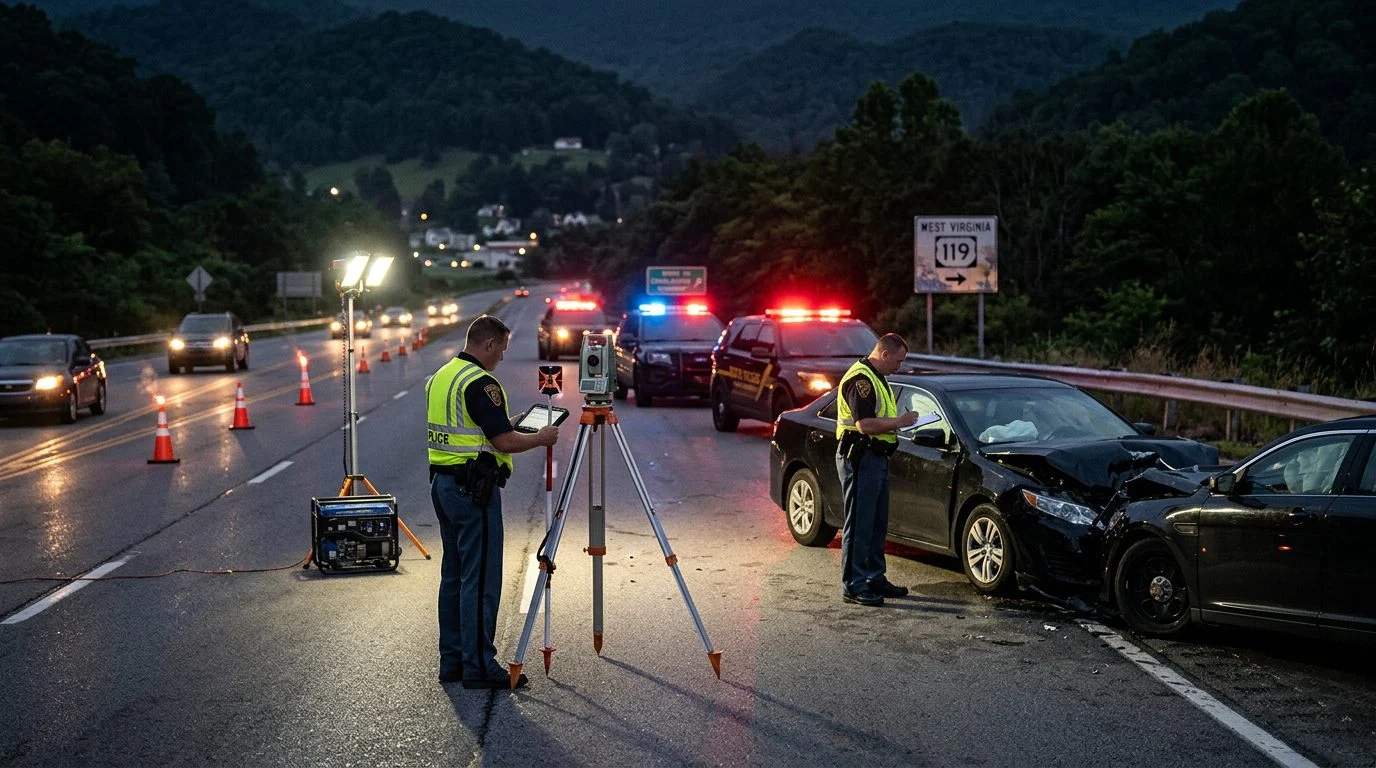
West Virginia Crash Guide
Looking for a Police Report After a Crash?
Report requests work differently from one agency to the next. Here is what to expect and how the firm can help with your case.
Published November 18, 2026
After a crash, many people need a copy of the police report fast. Insurance questions, medical bills, and missing details can make it urgent.
Yes, you can usually look up a local police report in West Virginia. You generally ask the agency that responded to the crash, because that agency keeps the official file.
This guide covers what a report holds, which agency to ask, how requests work, and why timing matters when someone is seriously hurt.
What a police report is and what it records
A police report is the official record an officer or agency creates after responding to a crash. It is the starting point for most requests.
The report usually lists the date, time, and location of the crash. It names the drivers, passengers, vehicles, and any witnesses. Many reports also include a diagram, notes on road and weather conditions, and any citations written at the scene.
West Virginia law says a crash report must give enough detail to show the cause, the conditions at the time, and the persons and vehicles involved. See W. Va. Code § 17c-4-9.
The report is separate from medical records. Hospitals and doctors keep those, so you may need both.
An officer’s observations can matter to a claim. But the report alone does not decide who was at fault. To see how fault gets discussed, read fault after a crash.
Check the report against what you remember. Notes you made soon after the crash can help you spot errors later.
If a crash left you or someone you love hurt, and you aren't sure how to get the police report, we can talk through the next steps with you. Talk it through with Big Bubba — the first case review is free, confidential, and carries no obligation.
Which agency usually holds the report
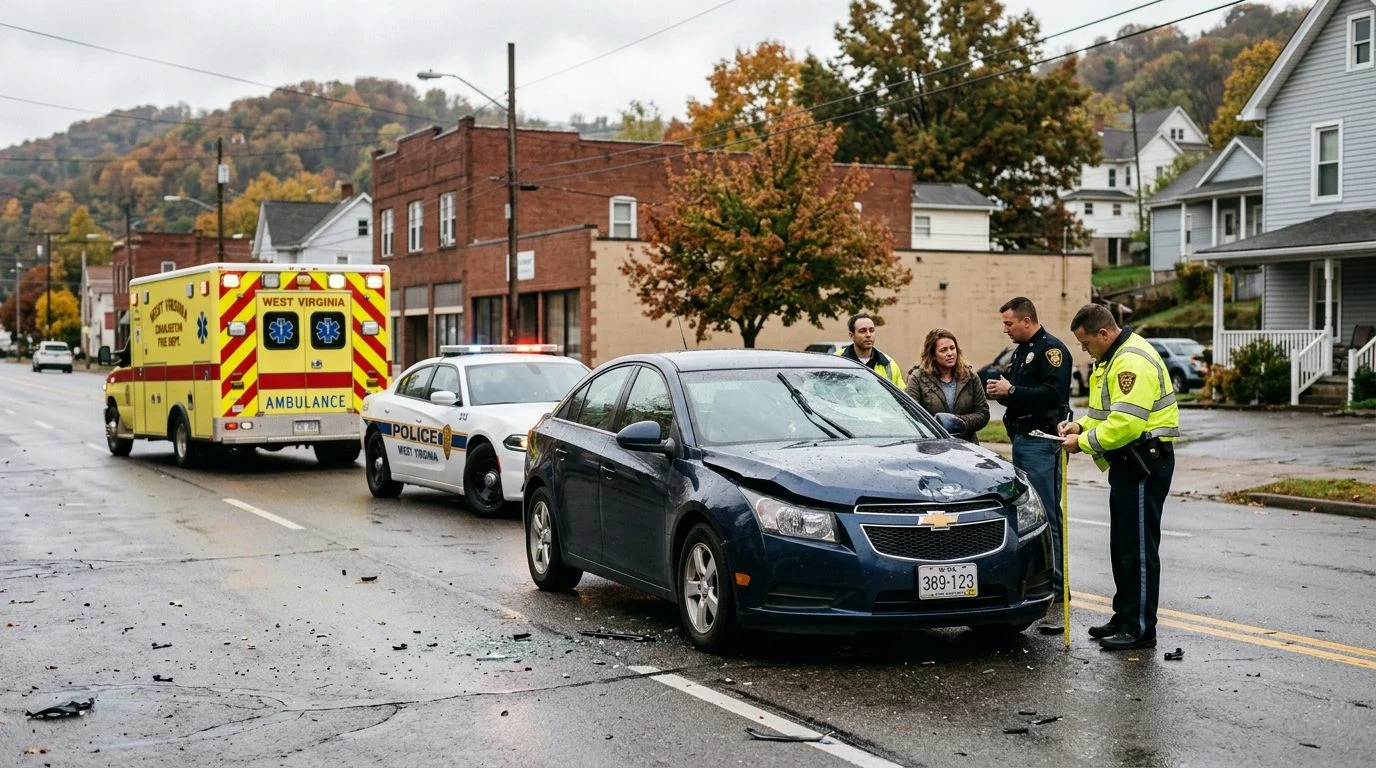
The agency that responded to the crash usually keeps the report. The crash location often decides which agency that is.
West Virginia law sets out who must be notified. For a crash involving injury, death, or at least $1,000 in total property damage, the driver must give notice right away. If the crash happens within a city or town, that notice goes to the local police department. Otherwise, it goes to the county sheriff or the nearest State Police office. See W. Va. Code § 17c-4-6.
So a crash on a city street usually means city police. A crash on a rural county road usually means the sheriff or State Police.
Check the paperwork from the scene. An officer’s card or an exchange form may list a case or report number.
We serve injury victims in cities like Charleston and Wheeling, and in rural counties too. Crashes involving a commercial vehicle may create records beyond the police file. The responding agency is still the first place to ask.
How to ask for a copy of a local police report
Contact the responding agency and ask how it handles requests. Have the details it needs to find the file ready.
Most agencies ask for the date and approximate time of the crash, the street or intersection, and the names of the drivers. A case or report number helps most of all.
Request routes vary. Some agencies take requests in person, by mail, or through an online portal. Others use only one method.
The Beckley Police Department lists a $20 copy fee for crash reports. Its crash report information page explains when reports become available.
The Monongalia County Sheriff’s office publishes a vehicle accident reporting FAQ. It covers the waiting period and the identifying information it asks for.
Ask each agency what it requires and how long processing usually takes. Its answers control your request.
Who is allowed to obtain a copy
Access depends on the agency’s rules and West Virginia public-records law. The agency decides what it releases.
An agency may remove personal identifiers, or details tied to an open investigation, before it gives out a copy. Agencies often ask for identifying details before they release any report.
Insurance information works differently. On request, the officer must give owner, operator, and insurance details to each involved party within 24 hours, at no cost. See W. Va. Code § 17c-4-7.
That information is separate from the full report, and you can ask for it even before the report is finished.
Can anyone get a copy of a police report?
Not always. The agency decides who receives a copy and what it may release.
Can you look up a police report online?
Some agencies offer online requests or portals. Others require a visit or a written request.
Timing, corrections, and supplemental information
A report is usually not ready the moment a crash happens. Officers may need time to finish their work.
West Virginia law says that for a motor vehicle crash occurring on the public streets or highways of this state resulting in bodily injury to, or death of, any person or total property damage to an apparent extent of $1,000 or more, the investigating law-enforcement officer must submit the report within 24 hours after completing the investigation. See W. Va. Code § 17c-4-7. See W. Va. Code § 17c-4-7. See W. Va. Code § 17c-4-7.
If the investigation runs past 10 days, a preliminary report goes to the Division of Highways on the 10th day. The final report follows within 24 hours after the investigation ends.
If a report has a mistake, contact the agency that wrote it. Ask how it handles corrections or added information.
Follow-up work can lead to a supplemental report, which adds to the original.
A report written at the scene may not capture injuries that appear or worsen in the days after a crash. Medical records and a clear timeline matter here. For why timing of care gets discussed, see timing of medical care after a crash.
Next steps if a serious injury is part of the picture
The police report is one piece of the record. Medical records, photos, witness names, and vehicle damage details often sit alongside it.
If someone you love has a brain or spinal cord injury, or died in a crash, you may be handling appointments, bills, and paperwork you never planned for. That is a heavy load to carry alone.
For a commercial vehicle crash, the FMCSA motor carrier lookup can show a carrier’s operating authority, insurance, and process agent after a crash.
The traumatic brain injury overview shows how the police report fits with medical records.
We serve West Virginia injury victims, including people in Charleston, Huntington, and Morgantown.
If you’re trying to gather a crash report while caring for someone who was hurt, you can reach out to request a free case review with the firm.