
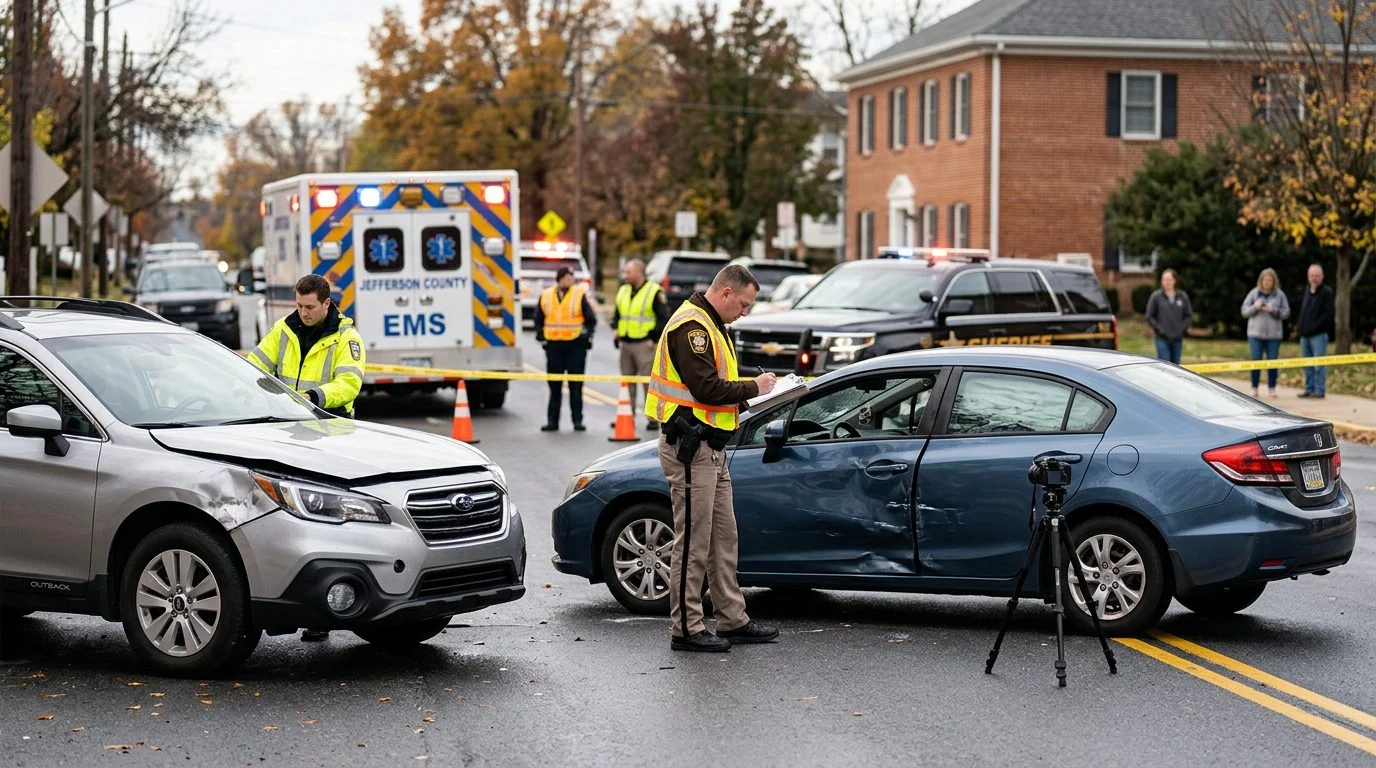
Car Accidents | Jefferson County, WV
Hurt in a Car Crash in Jefferson County? Talk With Our Firm
Big Bubba Injury Law represents people seriously injured in car and commercial truck crashes, along with families in wrongful death cases across West Virginia. We serve Jefferson County injury victims with a confidential free case review.
Published October 24, 2026
A free case review is a confidential first conversation about your crash, your injuries and your questions. You do not have to move forward after it. If you need a car accident lawyer Jefferson County WV residents can reach, this page explains what the firm handles, how the process works and the West Virginia deadlines that shape a claim.
What a Free Case Review With the Firm Involves
A free case review is a confidential meeting where the firm listens to what happened and explains how West Virginia law may apply. You don’t have to decide anything during it. You can share facts at your own pace and ask as many questions as you need.
The review is for people hurt in a crash who are still weighing their choices. It is also for family members of someone who was injured or killed. Drivers, passengers and pedestrians can all take part.
During the review, the firm will:
- Listen to how the crash happened
- Ask about your injuries and medical care so far
- Explain which claim types may apply to your situation
- Answer your questions in plain language
The firm is based in Martinsburg. It serves Jefferson County and the wider Eastern Panhandle, including injury victims in Charles Town.
If a Jefferson County crash left you or someone you love hurt, you don't have to work out what comes next alone. We're here to talk through your options. Talk it through with Big Bubba — the first case review is free, confidential, and carries no obligation.
Car Accident Claims the Firm Handles in Jefferson County
The firm handles car accident claims involving passenger vehicles and commercial trucks and vehicles. These crashes happen on busy highways and rural roads alike.
Common passenger vehicle crashes include:
- Intersection collisions
- Rear-end crashes
- Unsafe lane changes
- Head-on impacts on rural and highway roads
Truck and commercial vehicle crashes often involve more than one party. A tractor-trailer or delivery van may be owned by one company and driven by another person. Those facts shape who may be responsible.
See W. Va. Code § 55-7-32 for details. Federal rules limit how long commercial drivers may drive, and FMCSA testing guidance explains when post-crash testing may be required.
If the at-fault driver has no insurance, your own policy may help. West Virginia requires motor vehicle policies to include uninsured motorist coverage, as described in W. Va. Code § 33-6-31.
Practical items that help a claim:
- The police report number
- Photos of the scene and vehicles
- Names of witnesses
- Medical records and bills
- Insurance information for every driver
Serious Injuries: Brain, Spinal Cord and Catastrophic Harm
Serious injuries like traumatic brain injury and spinal cord injury often need long-term care. That care is a key part of how a claim is reviewed.
Traumatic brain injury
A traumatic brain injury is damage to the brain from a sudden blow or jolt. Some symptoms, like headaches, memory trouble or mood changes, can appear later. Keep every medical visit and tell your providers about every symptom.
Spinal cord injury
Trauma, including car accidents, can cause spinal cord injury. The Reeve Foundation fact sheet explains that complete and incomplete injuries differ. Injury level and severity affect function and walking, and the sheet notes there is no proven definitive cure.
Other catastrophic harm
Catastrophic injuries can include amputation, severe burns and injuries that change work, independence or daily life. These harms often bring lasting costs that reach far past the first hospital stay.
Medical documentation
Early and ongoing medical records show how an injury affects your daily life. They also help show future care needs. The firm can help you organize these records for your review.
Wrongful Death Claims After a Fatal Crash
In West Virginia, a wrongful death claim is brought by the personal representative of the person who died. W. Va. Code § 55-7-6 sets out who files the claim and what damages apply.
The personal representative is the person formally appointed to act for the estate. Families can talk through who that is during a free case review.
The statute lists damages that a wrongful death verdict includes:
- Sorrow, mental anguish and solace, including companionship, guidance and advice
- Reasonably expected loss of the person’s income, and of the services, protection, care and assistance the person provided
- Care, treatment and hospital costs tied to the injury that caused the death
- Reasonable funeral expenses
Families are often handling grief and paperwork at the same time. Keep the police report number, photos, medical bills, funeral receipts and any letters from insurers. Write down what you remember while it is still fresh.
How the Process Works, Step by Step
The process starts with a request for a free case review. It then moves through information gathering, insurance contact and decisions made together.
- First contact. Call the firm or request a free case review. Share the basic facts of the crash.
- The review. You talk through what happened, your injuries, your medical care and your questions.
- Gathering information. The firm helps collect the police report, medical records, bills, photos and insurance details.
- Insurance communication. The firm can handle contact with insurance companies so you can focus on recovery.
- Evaluation. You and the firm review your options and timing together before any decision.
How long a claim takes depends on the facts, your injuries and whether the claim resolves or moves further.
West Virginia Time Limits and Fault Rules That Shape Your Claim
Most West Virginia personal injury claims must be brought within two years (W. Va. Code § 55-2-12). Wrongful death actions must be commenced within two years after the death of the deceased person, subject to the provisions of section eighteen, article two, chapter fifty-five (W. Va. Code § 55-7-6). W. Va. Code § 55-7-6 reads: “The provisions of this section shall not apply to actions brought for the death of any person occurring prior to July 1, 1988.”
- Personal injury: Under W. Va. Code § 55-2-12, most personal injury actions must be brought within two years after the right to bring them accrues.
- Wrongful death: Under W. Va. Code § 55-7-6, the action must be commenced within two years after the death, subject to the provisions of section eighteen, article two, chapter fifty-five. W. Va. Code § 55-7-6 reads: “The provisions of this section shall not apply to actions brought for the death of any person occurring prior to July 1, 1988.”
West Virginia uses comparative fault, which means shared fault. Under W. Va. Code § 55-7-13a, fault is measured as a percentage, and each person’s share is allocated in direct proportion to that share. Your recovery can be reduced by your own share of fault.
Acting early protects evidence. Scenes change, vehicles get repaired and witnesses move on. Early review helps keep the facts clear.
Not sure what your next step is?
Talk it through with Big Bubba — the first case review is free, confidential, and carries no obligation.
Questions People Ask Before a Free Case Review
Is the free case review confidential?
Yes. The review is confidential, and you are not obligated to continue with the firm afterward.
Can I reach out while I’m still in treatment?
Yes. You can reach out while your medical care is still ongoing.
What if an insurance adjuster has already called me?
Tell the firm about every contact so you can plan the next response together.
What if I was partly at fault?
West Virginia uses comparative fault, so your fault does not bar recovery unless it is greater than the combined fault of all other persons; if it is less, your recovery is reduced in proportion to your degree of fault (W. Va. Code § 55-7-13c). How much that matters turns on the details.
Do I need a police report to start?
No. You can start with what you remember, and the firm can help track down records.
Can a family member reach out for someone who is hospitalized?
Yes. Family members can contact the firm on a loved one’s behalf.
Next Steps After a Crash in Jefferson County
The next steps are to keep your records, watch the deadlines and get the facts reviewed early. A crash, an injury or a loss can change daily life fast. Insurance calls, medical bills and time off work can feel like too much at once. You do not need every answer yet.
Key takeaways:
- Know the two-year deadlines for injury and wrongful death claims
- Keep medical records, bills, photos and the police report number
- Write down every call from an insurer
- Get the facts reviewed early, while memories and evidence are fresh
If a car or truck crash in Jefferson County hurt you or someone you love, you don’t have to work out what comes next alone. Request a free case review and tell the firm what happened, in your own words and at your own pace.