
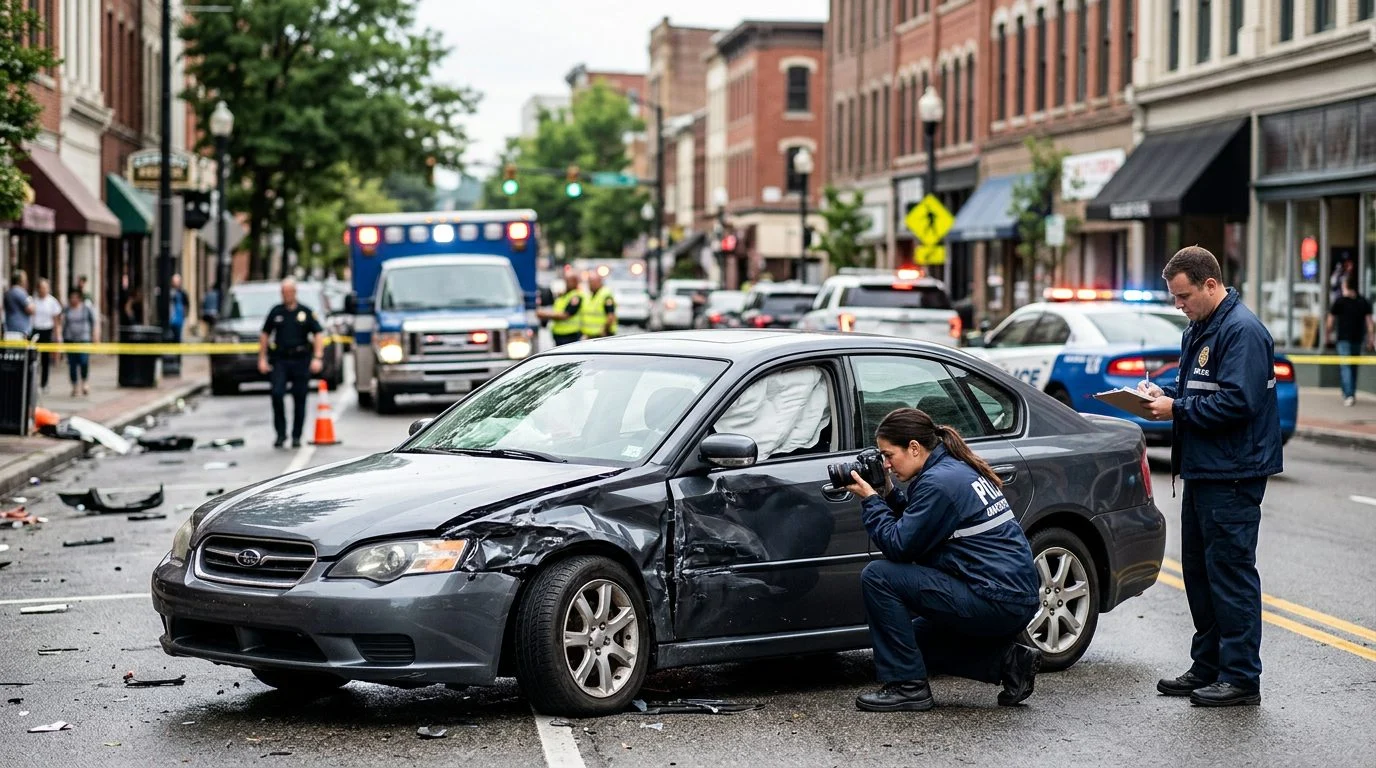
Employer vehicle crashes | West Virginia
Hurt in a Crash With an Employer Vehicle? Start With a Clear Picture
A plain-language guide to car and commercial vehicle crashes involving company cars, vans and trucks across West Virginia, and how to reach the firm to talk about your case.
Published November 8, 2026
An employer vehicle car accident West Virginia claim asks a simple question with a complicated answer: who may be responsible for the harm? The answer depends on who owned or controlled the vehicle, what the driver was doing, and how the crash happened. This guide explains those pieces in plain language. It also covers the evidence and deadlines that matter. The firm handles car accident, truck and commercial vehicle, catastrophic injury, traumatic brain injury, spinal cord injury, and wrongful death claims across West Virginia.
What a Claim Involving an Employer’s Vehicle Covers
A claim involving an employer’s vehicle covers a crash where a company owned, leased, or used the vehicle. That can include a delivery van, a service truck, a work sedan, or a company car an employee was driving.
Several people may bring this kind of claim:
- The injured driver or passenger
- A pedestrian or cyclist hit by the vehicle
- Family members after a fatal crash
Each person has a different role and different questions. A passenger, a driver, and a family member may each have their own path.
Vehicle type matters. West Virginia’s commercial vehicle law applies to certain commercial motor vehicles, as defined in W. Va. Code § 55-7-32. Whether the driver was working at the time also shapes the claim. A company may have insurance that applies, and a personal policy may not be the only source of recovery.
If a company vehicle was part of your crash, you may have a claim, and the firm can review your situation in a free case review. Talk it through with Big Bubba — the first case review is free, confidential, and carries no obligation.
Who May Be Responsible When a Company Vehicle Is Involved
More than one person or company can be responsible, and the answer depends on the facts. The driver may answer for careless driving. In some cases, an employer may also answer for a driver’s negligence when the driver was working.
For commercial motor vehicles, W. Va. Code § 55-7-32 defines an “employer defendant” to include the vehicle’s owner, the operator’s employer, and any party that leases, rents, or otherwise controls the vehicle or driver. That is why ownership, lease terms, and control matter.
Fault is measured under the state’s comparative fault rules. Under W. Va. Code § 55-7-13c, an injured person’s fault generally does not bar recovery unless it is greater than the combined fault of everyone else. Any recovery is reduced by the injured person’s share of fault.
Some insurers may dispute who was at fault, so that question is often examined closely.
Evidence That Helps Show Who Was at Fault
Strong evidence usually connects the crash, the vehicle, and the trip. Start gathering it early, while records and memories are fresh. Useful items often include:
- The police crash report, which you can request from the reporting agency
- Photos of the vehicles, the road, and any damage
- Names and contact details for witnesses
- Ownership, registration, or lease papers for the vehicle
- Work assignment, dispatch, or trip records showing why the driver was on the road
- Medical records that link your injuries to the crash
A crash report is a starting point, not a final ruling on fault. Officers record what they see and what people tell them. Other records may add to that picture.
For commercial vehicles, federal rules require post-accident alcohol and drug testing for some drivers, and timing matters. Ask about testing records early.
If the other driver left the scene, report the crash to police right away. Write down any vehicle details you saw, such as color, make, or partial plate numbers. Keep copies of bills, pay records, and letters from any insurer.
Injuries and Losses a Claim May Address
A claim may address medical costs, lost income, and how an injury changes daily life. Serious injuries can be hard to measure early on, so records from the start help.
Losses a claim may address can include:
- Medical treatment, rehabilitation, and care costs
- Lost wages and a reduced ability to earn
- Pain, suffering, and loss of enjoyment of life
- Help needed at home and with daily tasks
Traumatic brain injury and spinal cord injury can need long-term care. Some symptoms may not show right away. Getting checked early helps your health and gives your records a clear start.
Families in a wrongful death case follow a different path. Under W. Va. Code § 55-7-6, the claim must be brought by the duly appointed personal representative of the person who died. The statute allows damages for sorrow, mental anguish, and solace, lost income and services, care and hospital expenses, and reasonable funeral expenses.
What to Expect: The Claim Process Step by Step
A claim usually starts with a free case review and then moves through fact-gathering and insurer contact. Each stage can take a different amount of time.
- Free case review. You describe the crash, the vehicle’s owner or employer, and your injuries. The free case review is confidential.
- Fact review. The firm looks at who owned and controlled the vehicle and who may be responsible.
- Evidence gathering. Reports, medical records, and vehicle and work documents come together. This step can take time.
- Insurer contact. The firm handles communication with insurers and employer representatives, so you can focus on recovery.
- Next steps. If a fair resolution isn’t reached, the claim may go further.
Deadlines matter. Under W. Va. Code § 55-2-12, West Virginia generally allows two years for a personal injury claim, and exceptions may apply. For wrongful death, W. Va. Code § 55-7-6 generally requires filing within two years after the death, and exceptions may apply.
Early contact can also matter. Under W. Va. Code § 55-7-11a, during the first twenty days after an injury, certain people generally may not negotiate a settlement with an injured person who is in the hospital or unable to work.
Common Questions About Employer-Vehicle Crashes
The most common questions cover fault, West Virginia’s injury rules, and hit-and-run crashes. Short answers follow.
Are employees responsible for damage to company vehicles?
That question is separate from an injury claim. The answer can vary with the employment relationship and any agreements involved.
Is West Virginia a no-fault state?
Recovery for injuries rests on comparative fault under W. Va. Code § 55-7-13a. Each person’s share of fault is weighed.
Can someone leave the scene of an accident?
Some drivers do leave the scene. Police reports, witnesses, and vehicle evidence may still help identify them, so report the crash as soon as you can.
What if the driver was off the clock?
Whether the employer may be responsible often turns on the trip and the driver’s job role. A free case review can look at those details with you.
Should I wait to see if my injuries get better?
Get checked early. Some brain and spinal cord injuries may not show clear symptoms right away. Early medical care protects your health and your record of the crash.
Not sure what your next step is?
Talk it through with Big Bubba — the first case review is free, confidential, and carries no obligation.

The Cases the Firm Handles
The firm handles car accident, truck and commercial vehicle, catastrophic injury, traumatic brain injury, spinal cord injury, and wrongful death claims across West Virginia. The firm has support staff who handle office work, so your call or message gets routed to the right person.
If a company vehicle was part of your crash and you’re unsure who may be responsible, tell Bubba what happened and request a free case review.