
Brain Injury Car Accidents | West Virginia
Waiting on a Brain Injury Claim? Here's What Shapes the Timing
Clear, plain-language guidance for families across West Virginia dealing with a serious head injury after a crash.
Published November 22, 2026
If someone you care about was hurt in a car crash, the first question is often how long a brain injury car accident claim takes in West Virginia. There is no single answer. Most claims depend on the medical picture, the facts of the crash, and whether the case settles or goes to court.
Here is the short version: brain injury claims often take longer than simpler claims, and no one can promise a date. West Virginia generally allows two years to file a personal injury lawsuit, and exceptions may apply (W. Va. Code § 55-2-12). The sections below explain what shapes the pace and which deadlines matter most.
Why a brain injury claim has no single timeline
No single timeline fits every brain injury car accident claim. Many claims take longer than simple property or minor injury claims, because the full medical picture often forms slowly. Symptoms can shift over weeks or months, and doctors may need follow-up visits and testing before they describe the long-term outlook.
Three things shape the pace: the facts of the crash, the injury itself, and the parties involved. A single-car crash with clear fault moves differently than a multi-vehicle crash with disputed fault or a commercial truck. Someone whose symptoms settle within weeks may face a different path than someone whose symptoms continue for months. The claim may settle through talks with an insurer, or it may proceed to a lawsuit. A general answer is more useful than a single number, because the factors below are what shape timing. Ask yourself a simple question first: what has happened so far, and what is still unknown?
Not sure what your next step is?
Talk it through with Big Bubba — the first case review is free, confidential, and carries no obligation.

The usual stages of a brain injury car accident claim
Most claims move through four stages. They often overlap, and they do not follow a fixed order.
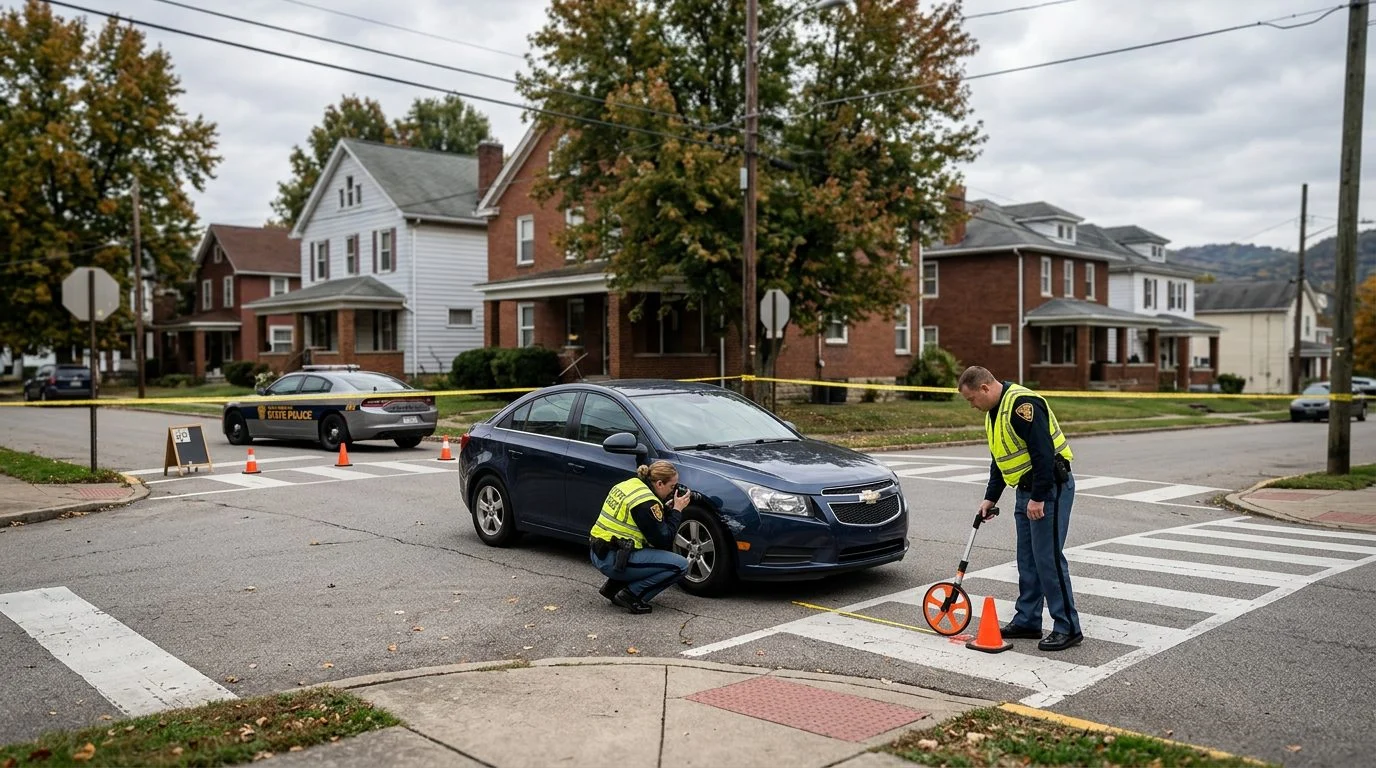
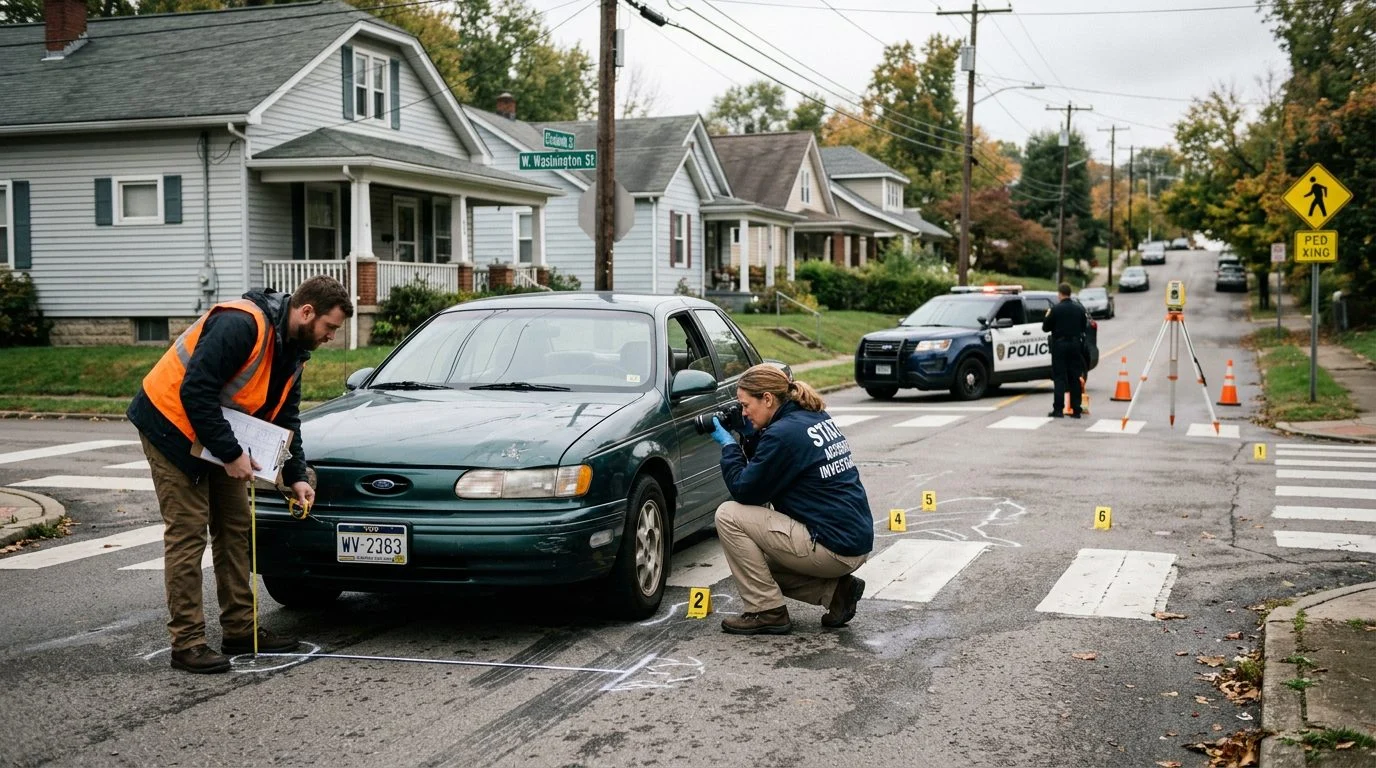
The early stage is about gathering facts. In West Virginia, when a crash on the public streets or highways results in bodily injury, death, or total property damage to an apparent extent of $1,000 or more, the investigating officer must prepare a crash report within 24 hours after completing the investigation, under W. Va. Code § 17c-4-7. Under the same section, within 24 hours of a motor vehicle crash, the investigating officer generally must provide owner, operator, and insurance information upon request to each involved party and to each party’s insurance agents, at no cost, whether or not the accident report has been completed. Medical records from the first days after the crash also start to matter here.
The treatment stage runs alongside everything else. Medical records, imaging, therapy notes, and follow-up visits document the injury as doctors evaluate it. This stage is often the longest, because brain injury care is rarely a single visit.
The demand and negotiation stage starts once the medical picture is clearer. The claim is presented to the other driver’s insurer, which responds with its position. Talks may go back and forth for a while, and each round may bring new questions about records or fault.
The litigation stage, meaning a lawsuit filed in court, applies if a fair resolution is not reached through talks. A lawsuit adds formal steps such as pleadings, exchange of information, and court scheduling. For that reason, it often takes longer than negotiation alone.
How medical treatment and recovery affect the pace
Medical recovery is often the biggest factor in timing. Brain injuries can cause symptoms that appear days later or change as the brain heals. Doctors may need time, testing, and neurology referrals before they can describe a likely prognosis (the expected course of recovery). Scheduling those tests can take weeks or months, depending on availability.
Recovery also varies widely from person to person. Two people with similar crashes can have very different symptoms and recovery periods.
Because of that, claims are usually evaluated with complete medical information rather than early guesses. Waiting for a clearer picture can slow settlement talks. Settling too early, though, can leave out problems that show up later. That tradeoff is one reason the timing is hard to predict. Treatment decisions belong to treating doctors, and the claim should follow the medical record rather than predictions.
If a brain injury keeps someone out of work for a long stretch, disability benefits may also be relevant. The Social Security Administration describes SSDI and SSI disability programs. Those programs are separate from an injury claim, and their rules have their own requirements.
West Virginia filing deadlines and why they matter
West Virginia generally allows two years to file a personal injury lawsuit, and exceptions may apply. Under W. Va. Code § 55-2-12, a personal injury action generally must be brought within two years after the right to sue has accrued, meaning it has arisen. The rules can depend on the facts of each case.
Wrongful death claims follow a different path. Under W. Va. Code § 55-7-6, the action generally must be commenced within two years after the death, subject to section eighteen, article two, chapter fifty-five, and the personal representative of the deceased person’s estate brings it. W. Va. Code § 55-7-6 reads: “The provisions of this section shall not apply to actions brought for the death of any person occurring prior to July 1, 1988.” If the injured person dies before filing, and the claim is not barred by the statute of limitations at the time of death, W. Va. Code § 55-7-8a allows the personal representative to begin the action within the same period that would have applied had the person lived.
A claim filed after the deadline may be barred, which is why the crash date matters early. A filing deadline generally limits when a lawsuit can start. It is not a forecast of how long a claim will take. Because the deadline is easy to lose track of during treatment, write down the crash date now.
Factors that can lengthen or shorten a claim
Disputes over fault are a common cause of delay. West Virginia generally uses comparative fault, meaning shared fault. Under W. Va. Code § 55-7-13c, a plaintiff’s fault generally does not bar recovery unless it is greater than the combined fault of all other persons. Otherwise, recovery is reduced in proportion to the plaintiff’s share of fault. Each defendant’s liability for compensatory damages is generally several only, tied to that defendant’s own percentage of fault. Sorting out those percentages can take time.
Some insurers may dispute a claim or the extent of an injury, and that can extend negotiations. Clear, complete records may narrow the disagreement.
Commercial truck crashes often add steps. More parties may be involved. West Virginia law defines an employer defendant to include the vehicle’s owner, the driver’s employer, and any entity with legal control over the vehicle or operator. See W. Va. Code § 55-7-32. Federal rules also set testing deadlines after certain qualifying commercial vehicle crashes.
Practical steps that help keep the claim organized
Start a written log now. Note symptoms, dates, missed work, and tasks that have become harder. A simple notebook or phone note works. Brain injury symptoms can be hard to recall later, so notes made close to events can help.
Follow the treatment plan and keep copies of medical bills, appointment summaries, and imaging reports. Ask providers for written summaries after important visits, so the record stays complete. Save the crash report, photos, and any messages from insurers.
Be careful about early contact from insurers. Under W. Va. Code § 55-7-11a, during the first twenty days after a personal injury, certain settlement steps are restricted. That applies while the injured person is an inpatient in any hospital or is partially or totally unable to engage in his or her usual trade, profession or occupation. It covers negotiating a settlement, getting a release, and getting a statement for settlement purposes, but nothing prohibits a person acting for the injured person from obtaining a statement upon the injured person’s express request. Under W. Va. Code § 55-7-11a, a settlement, release or statement obtained in violation of that section may be disavowed by the injured person within one hundred eighty days from the date of the personal injury by executing a written statement of disavowal and forwarding a copy to the person who violated the section; the settlement, release or statement then may not be admissible in evidence if any consideration paid is repaid or returned.
Not sure what your next step is?
Talk it through with Big Bubba — the first case review is free, confidential, and carries no obligation.
Telling Big Bubba what happened
If you’re reading this while recovering from a brain injury, or caring for someone who is, the waiting can feel heavy. You may be learning a legal process for the first time, and every date can feel urgent.
The firm handles car accident, truck accident, and commercial vehicle claims. It also handles catastrophic injury, traumatic brain injury, spinal cord injury, and wrongful death cases. We serve injury victims across West Virginia, including Charleston, Huntington, Morgantown, Wheeling, Martinsburg, Parkersburg, Beckley, Clarksburg, Fairmont, and Weirton.
To learn more about brain injury claims, read our traumatic brain injury page. When you’re ready, you can request a free case review to talk through the crash, the injury, and the deadlines that may apply to your situation.