
Car, Truck & Commercial Vehicle Accidents | West Virginia
Hit by a Company Vehicle? Know Your First Steps.
Clear, practical guidance for the hours and weeks after a crash, and a direct way to start a conversation with our team.
Published November 16, 2026
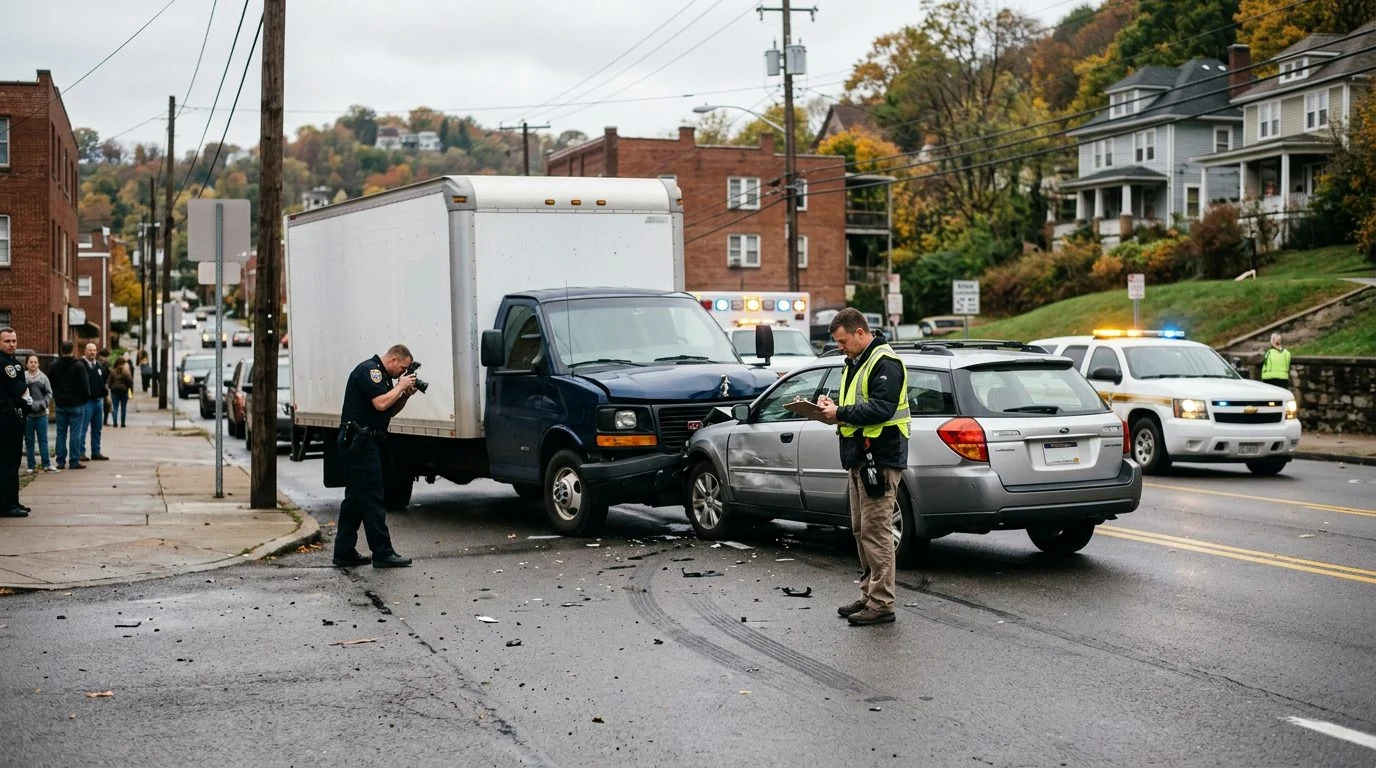
Your car was just hit by a company vehicle, or someone you love was. Now you’re trying to figure out what comes next.
The short answer: call 911, get medical care even if you feel fine, and write down what you can about the vehicle and the driver. Over the following days and weeks, the question of who may be responsible can be sorted out step by step. This guide walks through what to do when a company vehicle hits you in West Virginia, in the order most people need it.
What Counts as a Company Vehicle Accident?
A company vehicle accident involves a car, van, or truck that a business owns, leases, or operates. It can also involve a worker driving a personal car on a work errand. Delivery vans, box trucks, and tractor-trailers raise the same questions. Our truck accident pages cover crashes with larger commercial trucks in more depth.
The driver and the business may each play a role.
The facts of the trip matter. Was the driver working, running an errand for the job, or on a personal trip? Those details can shape who may be liable. Even on a personal trip, the company may still have a role, depending on how the vehicle was used and who controlled it. Write down what you know about where the driver was headed.
If a company vehicle hit you or someone you love, you may not have to sort out who is responsible on your own. We offer a free case review to talk it through. Talk it through with Big Bubba — the first case review is free, confidential, and carries no obligation.
What Should You Do Right After the Crash?
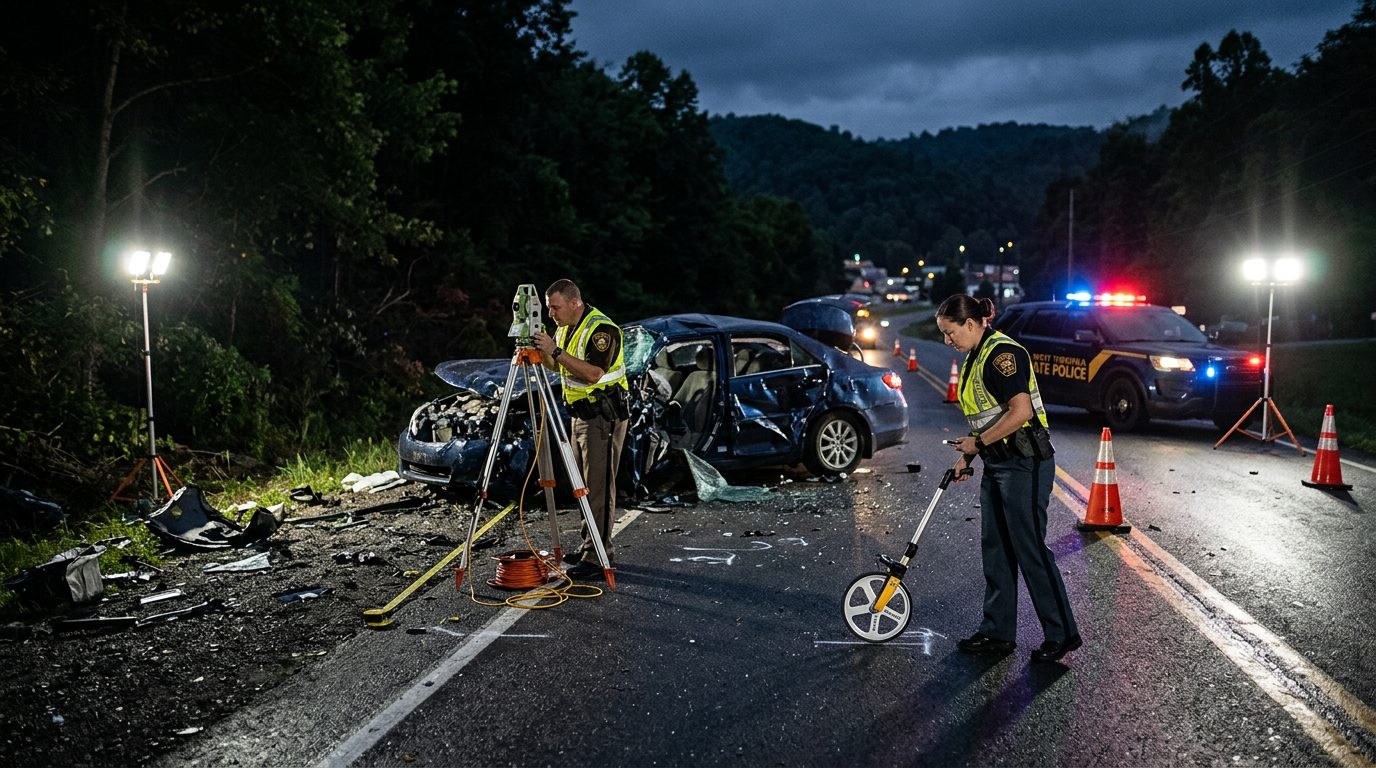
Call 911 first, and ask for medical help even if you feel okay. West Virginia requires a driver to report a crash that causes injury or death, or total property damage of $1,000 or more, right away. W. Va. Code § 17C-4-6 Inside a municipality, that means the local police. Elsewhere, it means the county sheriff or the nearest State Police office.
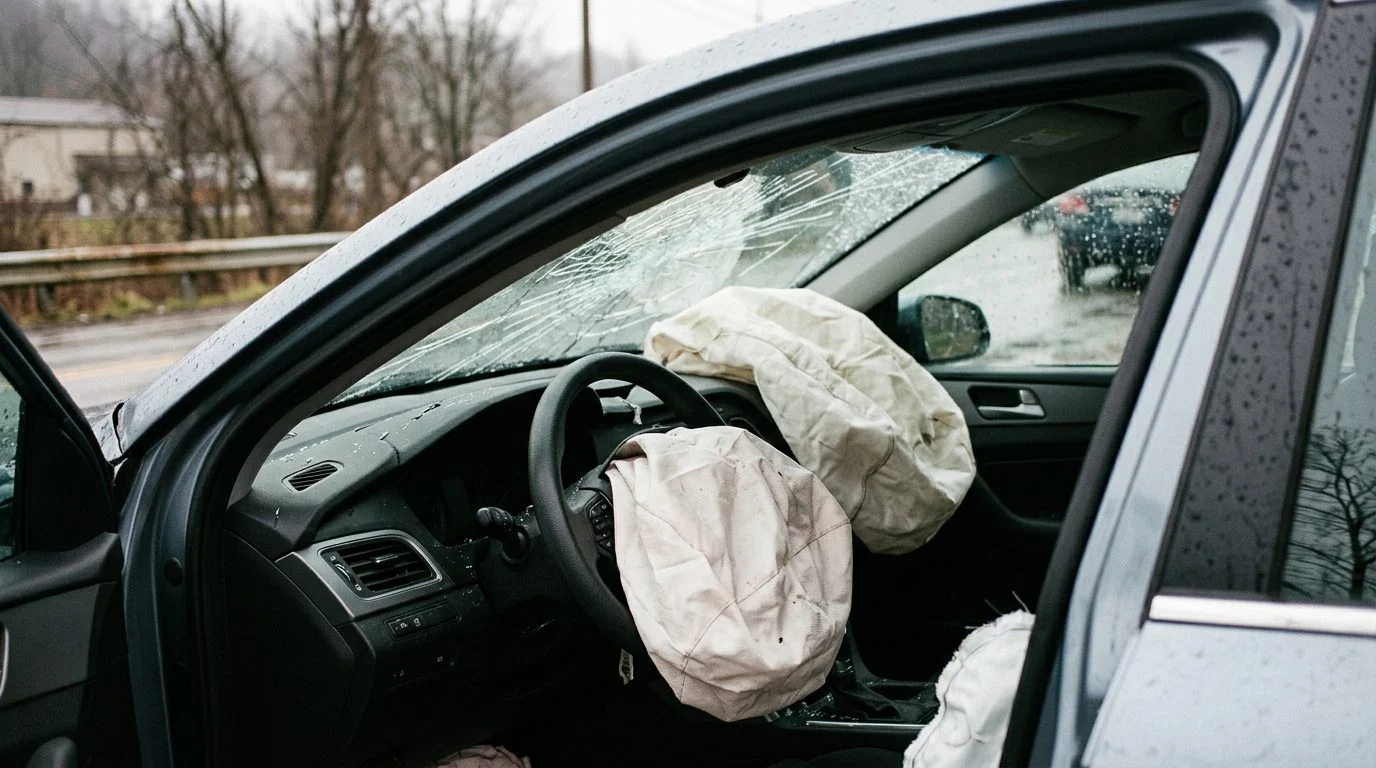
If you can move safely, get out of traffic, turn on your hazard lights, and stay out of the lanes. Adrenaline can mask pain. Headaches, dizziness, numbness, tingling, or back and neck pain may show up hours or days later. Tell every provider about each symptom, even small ones. Those details often matter later in brain and spinal cord injury claims.
Keep the scene conversation simple. Don’t sign papers from the other side. Stick to basic facts about the crash. You don’t have to decide who was at fault that day.
What Information Should You Collect?
Gather the other driver’s name, license number, phone number, and insurance details. If physically able, the driver involved in a crash resulting in injury to or death of any person or damage to any vehicle which is driven or attended by any person must provide to the person struck or the driver or occupant of any vehicle collided with: name, a valid telephone number, the year, make, model and last four digits of the VIN, and proof of security and financial responsibility, including insurance information. A driver may meet this requirement by providing the information to a law-enforcement officer who is investigating or assisting at the scene of the collision. W. Va. Code § 17C-4-3
Company vehicles often carry identifiers that help find the right business. Write down:
- The company name, logo, and phone number on the vehicle
- The unit or fleet number
- The license plate number
- The USDOT Number, if it is a commercial truck. The FMCSA’s USDOT Number guidance explains which carriers need one.
Take photos of vehicle damage, skid marks, traffic signs, and your injuries. Get witness names and phone numbers. Start a simple journal that tracks symptoms, appointments, missed work, and out-of-pocket spending. These notes can help you recall details later, when memories fade.
How Does the Police Report Fit In?
The police report is an important record, but it is not the final word on fault. West Virginia law requires an officer who investigates a qualifying crash to prepare a report within 24 hours after finishing the investigation. W. Va. Code § 17C-4-7 The same statute says that, upon request, within 24 hours of the crash the officer must give each party, and each party’s insurance agent, the owner, operator, and insurance information of the other involved parties, at no cost.
If the investigation runs past 10 days, a preliminary report goes to the Division of Highways on day 10. Ask the investigating agency how to request a copy and what it needs from you. Officers record statements and observations. Photos, witness accounts, and vehicle data can matter too.
When you get the report, check it closely. Note any part you think is wrong. Write down what happened while the details are still fresh, and keep a copy with your other records.
Who May Be Liable When a Company Vehicle Hits You?
The driver, the business, or both may be liable, depending on the facts. The driver may be personally responsible for harm they caused by their own negligence. A business may be responsible under the employer defendant definition above. A claim may also look at whether the company’s own choices contributed to the crash.
Shared fault is common in crash cases. Your own share of fault does not automatically end a claim. Under W. Va. Code § 55-7-13c, fault chargeable to you does not bar recovery unless your fault is greater than the combined fault of all other persons responsible. If it is less, your recovery is reduced in proportion to your share.
W. Va. Code § 55-7-6 generally requires that a wrongful death action be brought by the personal representative of the person who died, and that it be commenced within two years after the death, subject to certain exceptions. Family members often need help understanding who that personal representative is and what the steps are.
How Can Insurance Affect Your Claim?
Insurance often shapes how a claim gets paid, so ask early about which policies may apply. The company may carry a commercial auto policy. The driver may have a personal auto policy. Your own policy may include uninsured or underinsured motorist coverage. The West Virginia Division of Motor Vehicles explains state auto insurance requirements on its website.
Some insurers may dispute a claim, ask for a recorded statement, or request your medical records. Think before you give a statement. Keep copies of everything you send and receive.
West Virginia also limits early settlement contact. Under W. Va. Code § 55-7-11a, a settlement, release of liability or statement obtained in violation of that section may be disavowed by the injured person at any time within one hundred eighty days from the date of the personal injury by executing a written statement of disavowal and thereupon forwarding a copy of the same to the person violating this section, and if any consideration paid for the settlement or release is repaid or returned to the person who paid it, the settlement, release or statement may not be admitted as evidence. The section restricts certain settlement contact during the first twenty days after a personal injury, while the injured person is an inpatient in a hospital or partially or totally unable to engage in his or her usual trade, profession or occupation.
Under W. Va. Code § 55-2-12, an action for damages for personal injuries in West Virginia generally must be brought within two years after the right to bring it accrued, and exceptions may apply depending on the facts.
Not sure what your next step is?
Talk it through with Big Bubba — the first case review is free, confidential, and carries no obligation.
Protecting Your Health and Your Claim Over the Coming Weeks
Follow the treatment plan your providers recommend, and keep your follow-up visits. Gaps in care may be used to question how serious an injury was. Keep a record of each visit and what the provider said.
Keep records of medical bills, prescriptions, mileage to appointments, and lost wages. Save pay stubs and any letters from your employer about time off work. Organized records are easier to review later.
Be careful on social media. Posts about the crash, your activities, or photos of you doing things can be read out of context. Consider pausing posts about the crash until things settle.
Some injuries show up slowly. Symptoms from a brain or spinal cord injury may change over time, so report every change to a medical provider. Our pages on traumatic brain injury and spinal cord injury explain these injuries and how they are evaluated.
Tell the Firm What Happened
If a company vehicle hit you, you may be hurting, shaken, and trying to understand a crash someone else caused. You may also be asking on behalf of a parent, a spouse, or a child. That is a hard place to be, and you don’t need every answer yet.
The firm handles car accident, truck accident, commercial vehicle, catastrophic injury, traumatic brain injury, spinal cord injury, and wrongful death claims. We serve injury victims across West Virginia.
When you reach out, it helps to have the crash date, the company name on the vehicle, your photos, and any medical notes ready. If you want to talk through the crash, the vehicle involved, and the questions in front of you, reach out for a free case review. There is no obligation to continue.