
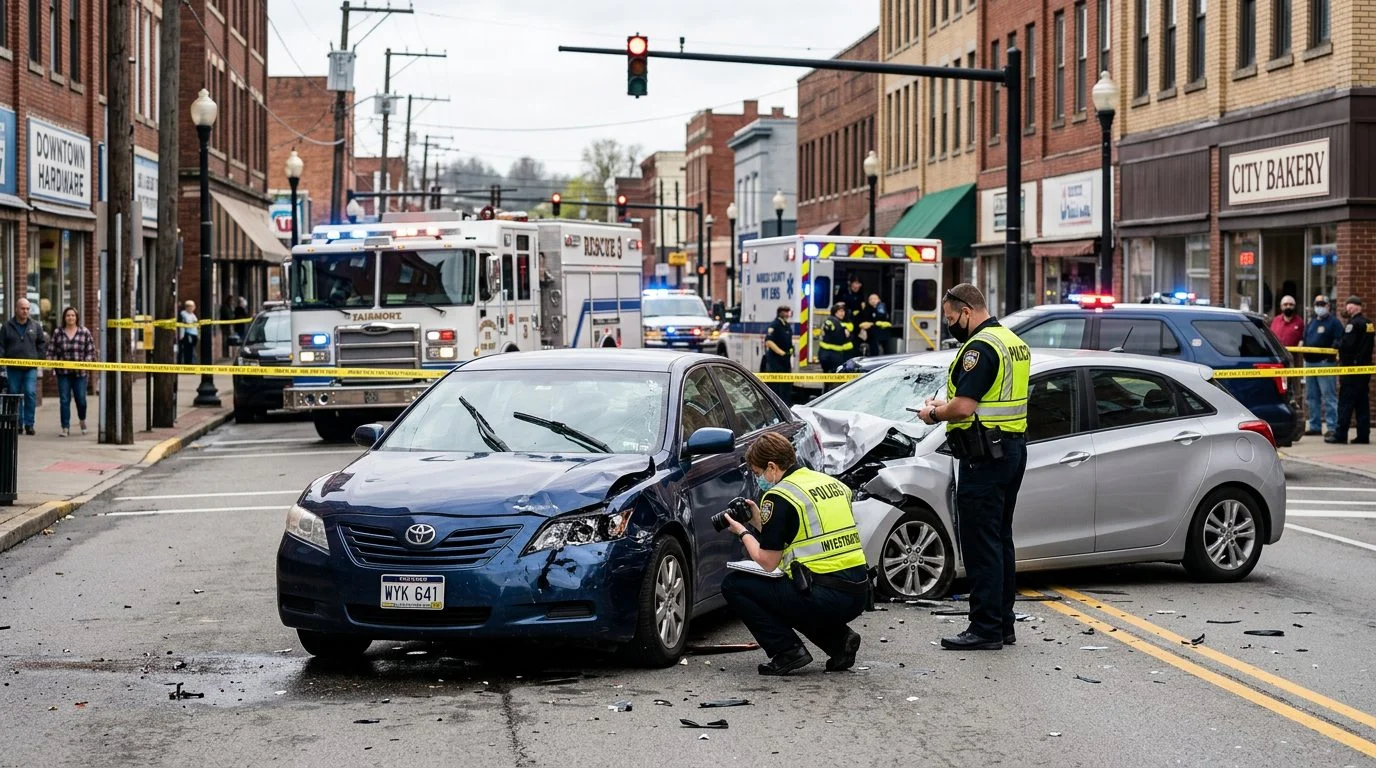
Fairmont, West Virginia
Fairmont Car Accident Claims: Start With a Free Case Review
Big Bubba Injury Law serves Fairmont and Marion County and handles car accident claims across West Virginia. Tell us what happened, and we will explain how we can help.
Published October 15, 2026
Car Accidents Law Firm Fairmont WV: Free Case Review
If you were hurt in a car crash, you probably have many questions. This page explains the basics in plain language. If you need a car accidents law firm Fairmont families can reach, this guide is a good place to start. Every claim depends on its own facts, and exceptions may apply.

Not sure what your next step is?
Talk it through with our team — the first case review is free, confidential, and carries no obligation.
What a Car Accident Claim Involves and Who It Is For
A car accident claim is a request for payment for harm a crash caused. It is generally made against the people or companies who may be responsible. Many claims begin with the insurance companies involved. If they cannot resolve the claim, a lawsuit may be filed.
Drivers, passengers, pedestrians and cyclists hurt in a crash may have a claim. In a fatal crash, a wrongful death action generally must be commenced within two years after the death of the deceased person, and exceptions may apply. W. Va. Code § 55-7-6 explains who brings that action.
Truck and commercial vehicle crashes can involve more parties, such as a carrier or the driver’s employer. Whether those parties are responsible depends on the facts. A claim is not automatic. Whether one exists depends on how the crash happened, what injuries occurred and what losses followed.
Our firm handles car, truck and commercial vehicle crash claims. We serve Fairmont and Marion County injury victims, and we handle car accident cases across West Virginia.
Injuries and Losses a Car Accident Claim May Cover
A claim may seek payment for several kinds of losses. The right categories depend on the crash and the injuries. Common categories include:
- Medical care, such as emergency treatment, hospital stays and therapy
- Lost income and a reduced ability to work
- Damage to your vehicle and other property
- Pain, suffering and other non-economic losses
In a wrongful death case, a personal representative generally may pursue, on behalf of survivors, losses the statute describes, depending on the facts. These can include sorrow and mental anguish, lost income and services, medical and hospital costs, and reasonable funeral expenses. The specific losses depend on the facts.
Some crashes cause catastrophic injuries. Traumatic brain injury and spinal cord injury are two examples our firm handles. A spinal cord injury fact sheet from the Christopher & Dana Reeve Foundation notes that trauma, such as a car accident, can cause a spinal cord injury. Outcomes vary by person, and a crash alone cannot predict them.
Medical records, imaging, treatment notes and bills may be potentially relevant to a claim. Keep every appointment note and receipt.
How Fault, Insurance and Coverage Are Generally Evaluated
Fault is generally decided by the facts of the crash. Police reports, witness statements, photos, vehicle damage and any video or electronic data may be potentially relevant.
West Virginia generally applies modified comparative fault. Under W. Va. Code § 55-7-13c, a plaintiff’s fault generally does not bar recovery unless it is greater than the combined fault of others. When it is smaller, recovery is generally reduced by the plaintiff’s share of fault. Exceptions may apply.
Who may be legally responsible depends on the facts. It can include other drivers, employers or vehicle owners in some situations, but this is not automatic. Those details can matter, and how they apply generally depends on the facts of each case.
Insurance coverage depends on policy terms. West Virginia motor vehicle liability policies generally must cover certain permitted users, under W. Va. Code § 33-6-31. Actual coverage still depends on the policy and the facts.
Statements to insurance companies may be potentially relevant. Ask first before you give a recorded statement.
Have questions about what happened?
Ask our team directly. The first conversation is free, confidential, and there is no obligation to continue.
What to Expect: Step-by-Step Process and Timing
The process generally moves from a free case review to evidence gathering, evaluation, negotiation and, when needed, a lawsuit. Here is what that can look like:
- Free case review. You share the crash details, injuries and paperwork. The review is confidential and carries no obligation to continue.
- Records. We help gather the police report, medical records, bills, photos, wage records and insurance information, as available.
- Investigation and notice. Depending on the facts, the firm may notify other parties who may be responsible, along with their insurers.
- Evaluation. The team reviews coverage questions and any fault issues that may apply.
- Negotiation or lawsuit. Some claims resolve without court. Others may require a lawsuit, depending on the facts.
West Virginia law also limits early settlement contact. W. Va. Code § 55-7-11a describes this rule, and exceptions may apply.
Timing varies and depends on the facts of each case. We cannot say how long any step will take.
Deadlines and Why Timing Matters
Generally, West Virginia gives injury victims two years to bring a personal injury action, and exceptions may apply. W. Va. Code § 55-2-12 sets out this general two-year period.
Wrongful death claims follow a related rule. Generally, the action must be started within two years after the death, and the personal representative brings it. W. Va. Code § 55-7-6 states this rule.
Missing a deadline may affect your ability to bring a claim. Exceptions may apply depending on the facts, so the deadline should be confirmed for each case.
Evidence matters too. Photos, witness names, vehicle data and medical records may be potentially relevant. Some of it can be harder to gather as time passes.
Truck crashes can also involve federal rules. Qualifying interstate carriers generally must obtain a USDOT Number. FMCSA hours-of-service rules set federal driving limits and rest requirements. Whether those rules were broken in a crash depends on the facts.
How Our Firm Can Help Fairmont Crash Victims
We serve Fairmont injury victims who are asking what happens next. Our firm handles car, truck and commercial vehicle crash claims, catastrophic injury claims and wrongful death cases across West Virginia.
Here is what you can expect from us:
- We serve Fairmont and Marion County injury victims.
- A free case review that is confidential and carries no obligation to continue.
- Plain-language explanations of your legal options and each step.
- Support staff who help coordinate records and answer questions. A lawyer leads the legal work.
We describe the process and our representation. We cannot promise any particular result, and each claim depends on its own facts.

Want to know where you stand?
Tell us what happened and our team will walk you through the options available to you, at no cost.
Common Questions About Car Accident Claims in Fairmont
Do I need to live in Fairmont to contact the firm?
No. We serve Fairmont and Marion County, and we handle car accident cases across West Virginia.
What if the crash was partly my fault?
Generally, West Virginia’s comparative fault rule may reduce a recovery by your share of fault (W. Va. Code § 55-7-13c). Exceptions may apply depending on the facts.
Should I talk to the other driver’s insurance company?
Statements may be potentially relevant, so ask before you give a recorded statement.
Is a minor crash worth reviewing?
Whether a claim exists depends on the facts, including injuries and losses. A free case review is a practical way to find out.
How long does a claim take?
Timing varies and depends on the facts of each case.