
Hit-and-Run Crashes | West Virginia
The Driver Fled. Your Questions Still Matter.
If a driver hit you and left the scene, the firm can help you understand your options for a claim in West Virginia. Reach out to tell us what happened.
Published November 5, 2026
If the driver who hit me fled the scene in West Virginia, you still have options. Leaving the scene does not erase the crash or automatically end a claim. Whether you can recover depends on the facts, including who was at fault and what insurance applies.
What West Virginia Law Generally Expects of a Driver After a Crash
Leaving the scene is a separate problem from causing the crash. It can matter to who is held responsible, depending on the facts.
A common mistake is assuming the case ends when the other driver is gone. The crash, your injuries, and your options still exist after the other car pulls away.
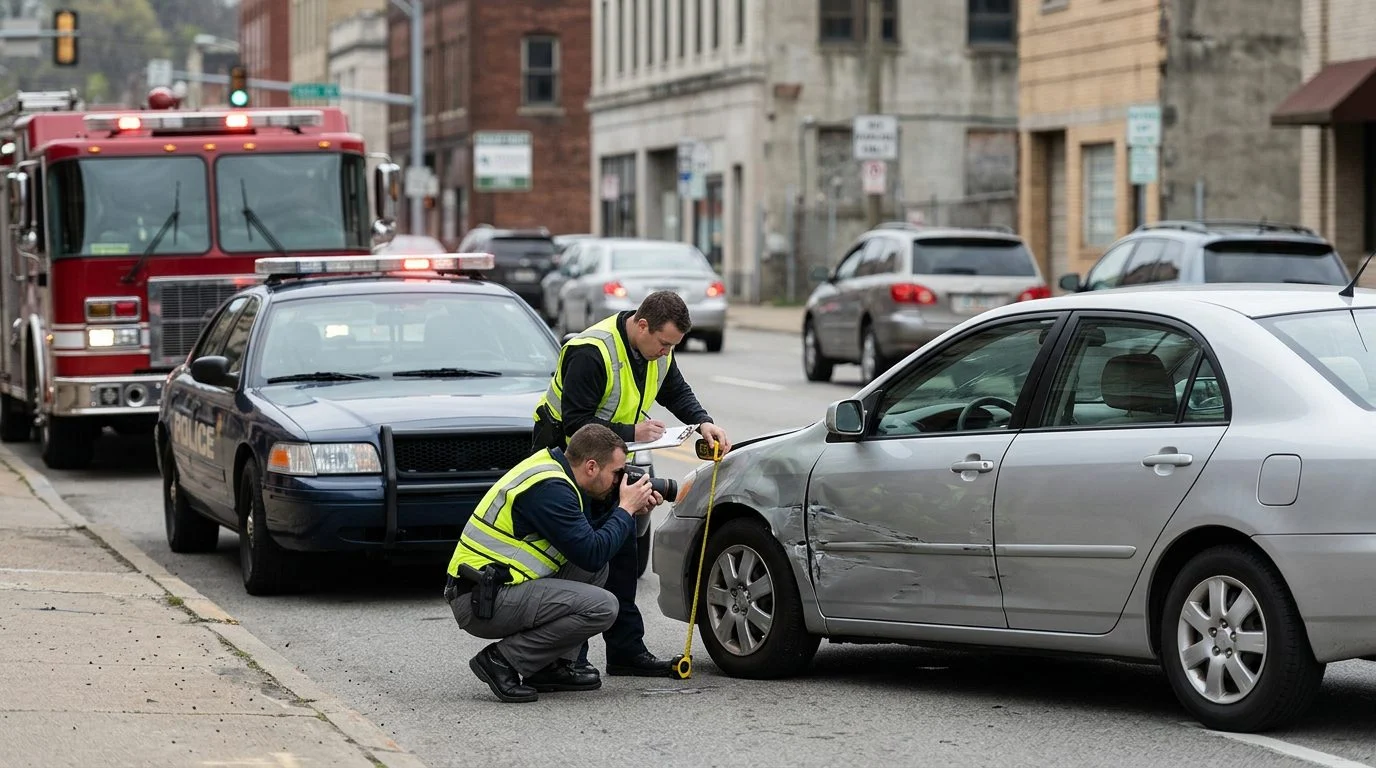
Hit-and-run drivers are not always gone for good. Police may identify a driver through witness statements, nearby camera footage, or damage left on the vehicles. Paint transfer, broken parts, and debris often lead investigators toward a make, model, or repair shop.
Your claim does not depend on catching the driver first. Still, knowing who the driver is can change which insurance applies and how your claim is built. The police report and every detail you gather early help with that work.
Keep your notes factual. Write down what you saw and heard, not guesses about who was at fault. Serious crashes can also lead to serious injuries. The firm’s catastrophic injuries page explains how these cases are usually approached, including the medical and financial questions that follow.
If the driver who hit you drove away and you are still dealing with pain, bills, or missed work, you do not have to sort out coverage and deadlines alone. Request a free case review with the firm. Talk it through with Big Bubba — the first case review is free, confidential, and carries no obligation.
Steps to Take Right Away If the Other Driver Drove Away
Call 911 right away, even if the crash seems minor. A police report gives officers the best chance to search for the vehicle.
Then tell the dispatcher what you noticed:
- The direction of travel and the road you were on
- The vehicle’s make, color, and any partial license plate
- Damage, markings, or features that stood out
- Any words or sounds you heard before or after impact
Then document the scene if you can do it safely:
- Photos of your vehicle, skid marks, debris, traffic signals, and where vehicles came to rest
- Names and phone numbers of witnesses, collected before they leave
- A short note of what each witness says they saw
Get checked by a medical professional the same day. Some injuries do not feel serious at first. An early record can help show what happened and when symptoms began.
Why Your Own Insurance Policy May Still Matter
That makes your own policy worth a close look.
West Virginia law requires motor vehicle policies to include uninsured motorist provisions. Under W. Va. Code § 33-6-31, those provisions undertake to pay the insured sums the insured is legally entitled to recover from an uninsured motor vehicle’s owner or operator. W. Va. Code § 33-6-31 reads: “unless it contains an endorsement or provisions undertaking to pay the insured all sums which he or she is legally entitled to recover as damages from the owner or operator of an uninsured motor vehicle, within limits which shall be no less than the requirements of section two, article four, chapter seventeen-d of this code, as amended from time to time: Provided, That such policy or contract shall provide an option to the insured with appropriately adjusted premiums to pay the insured all sums which he or she shall be legally entitled to recover as damages from the owner or operator of an uninsured motor vehicle up to an amount of $100,000 because of bodily injury to or death of one person.”
The same statute sets a notice step for these cases. The insured must notify the insurance company within sixty days after the accident that a claim exists against a person whose identity is unknown. Tell your insurer promptly, and in writing if you can, so the notice is clear.
Some insurers may dispute a claim, so accurate notes and records matter. The West Virginia Division of Motor Vehicles explains state auto insurance rules on its DMV consumer insurance information page.
Evidence That May Matter When the Driver Is Never Found
The police report, photos, and witness contacts are often the earliest evidence available. Medical records also matter, and they can carry significant weight in a serious injury claim.
Keep these items together:
- The police report and its case or incident number, which you can request from the investigating agency
- Witness names, phone numbers, and any written or recorded statements
- Dash camera footage or nearby business or home video, if it still exists
- Photos of your vehicle, repair estimates, and towing records
- Medical records, imaging, and treatment notes
- A written timeline of what you remember, while it is still fresh
Write the timeline soon after the crash. Memory of the sequence can fade, and details recorded early are easier to explain later. Include what you heard before impact, what happened right after, and who spoke to you at the scene.
Injuries That Need Prompt Medical Attention After a Hit and Run
Get medical care soon after a crash, even when you feel mostly okay. Some brain and spinal cord injuries may not show full symptoms right away.
Symptoms may appear hours or days later. Watch for headaches, dizziness, numbness, tingling, or trouble concentrating. Report every new symptom to your doctor, even if it seems minor.
Keep a simple symptom journal and attend every follow-up visit. Gaps in treatment can make it harder to connect later symptoms to the crash.
A common mistake is waiting to see whether pain fades on its own. Pain that seems minor can hide a more serious injury. Families of a person killed in a hit and run can read the firm’s first-weeks guide after a fatal crash for practical steps. Readers worried about work and income can read the firm’s return-to-work guide.
Filing Deadlines and Why Timing Matters
West Virginia generally allows two years to file a personal injury lawsuit, and exceptions may apply. The rule appears in W. Va. Code § 55-2-12.
Wrongful death claims follow a separate clock. Under W. Va. Code § 55-7-6, a wrongful death action generally must be commenced within two years after the death, and the personal representative of the deceased person brings it. W. Va. Code § 55-7-6 reads: “The provisions of this section shall not apply to actions brought for the death of any person occurring prior to July 1, 1988.” W. Va. Code § 55-7-6(d) reads: “Every such action shall be commenced within two years after the death of such deceased person, subject to the provisions of section eighteen, article two, chapter fifty-five.” W. Va. Code § 55-7-6 reads: “The provisions of this section shall not apply to actions brought for the death of any person occurring prior to July 1, 1988.”
Waiting to learn who the driver is can be risky. A deadline keeps running while an investigation continues, depending on the facts.
Fault also matters. Under W. Va. Code § 55-7-13a, recovery is based on comparative fault, and each person’s share of fault is allocated by percentage. Because of this, the facts of how the crash happened can shape the outcome.
Not sure what your next step is?
Talk it through with Big Bubba — the first case review is free, confidential, and carries no obligation.

Describing Your Situation to the Firm
If the driver who hit you drove away, you do not have to work through coverage, evidence, and deadlines alone. You may be dealing with pain, medical bills, or time away from work. Request a free case review to talk through the crash, the police report, and your insurance questions.
The firm handles car accident, truck accident, commercial vehicle, catastrophic injury, traumatic brain injury, spinal cord injury, and wrongful death matters across West Virginia.
Can I still file a claim if the driver is never found?
A claim may still be possible, depending on the facts, your coverage, and the deadlines.
Does uninsured motorist coverage always apply?
No. Whether it applies depends on your policy language and the facts of the crash.