
Truck Accidents | West Virginia
Truck Accident Settlements in West Virginia: What Shapes the Amount
No two truck crash claims are the same. Here is how injuries, losses, fault and insurer offers affect a settlement, explained in plain language.
Published October 29, 2026
How much are most truck accident settlements? There is no single typical figure. A settlement is an agreement that ends a claim without a trial. The amount depends on the injuries, the losses and who was at fault. This page explains the West Virginia and federal rules that shape those amounts. It also explains what to look for when an insurer makes an early offer. The firm serves injury victims across West Virginia.
Why there is no single typical figure for a truck accident settlement
No single typical figure exists because every truck claim has its own injuries, losses and liability facts. In most truck crashes, the money comes from insurers, not from the driver personally.
You will see averages in online articles. Many of those numbers come from other states, and they mix very different cases together. A minor injury and a spinal cord injury can both land in one average. That number does not describe a West Virginia claim like yours.
A better question is what the facts of your case support. That means looking at the injuries, the losses, the fault picture and the insurance behind the truck. For a wider look at how these claims move from start to finish, read our guide to catastrophic injury claims.
If you're weighing an insurer's early offer after a truck crash that hurt someone you love, you don't have to sort it out alone. Request a free case review with the firm. Talk it through with Big Bubba — the first case review is free, confidential, and carries no obligation.

The factors that shape a truck accident settlement
Injury severity, medical costs, lost income and the length of recovery shape most truck claim values. Insurers and courts look at each one using the records in hand.
Injury type comes first. A soft-tissue injury that heals in a few months is valued differently from a fracture that needs surgery. A brain injury that affects work for years is valued differently again. Treatment matters too. Past bills are documented. Future care has to be supported by the treating doctor’s records and recommendations.
Lost income is the next piece. This includes wages missed during recovery and any reduced ability to earn later. A written record of time off work makes that loss easier to show.
The length of recovery matters as well. A claim still in treatment cannot be fully valued until the medical picture settles. That is one reason truck cases often take longer than a simple car crash claim. The factors that matter most depend on the facts of each crash.
Does a bigger medical bill mean a bigger settlement?
Bills are one factor, but not the whole picture. Insurers also look at future care, lost income and how the injury changes daily life.
Economic and non-economic damages explained
Economic damages are measurable money losses. These include medical bills, lost wages and property damage. They come with receipts, pay records and invoices.
Non-economic damages cover the human harm. This includes pain, suffering, emotional distress and loss of enjoyment of life. These losses have no fixed formula. Adjusters usually weigh them against the documented medical picture and how the injury affects everyday activities.
West Virginia limits one part of this in certain truck cases. It applies to causes of action arising after July 1, 2024. Beginning January 1, 2026, the limit can rise each year with the Consumer Price Index, but not above 150 percent of the stated amount.
Together, economic and non-economic damages form the total value a claim is evaluated on.
Liability and fault in truck crashes
A truck crash can involve more than one responsible party. The statute defines an employer defendant to include the owner of the truck, the driver’s employer, and anyone who leases, rents or holds legal control over the truck or its operator. See W. Va. Code § 55-7-32.
Under W. Va. Code § 55-7-13a, recovery in a personal injury or wrongful death case rests on principles of comparative fault, and liability is allocated to each person who proximately caused the damages, including the injured person, in direct proportion to that person’s percentage of fault. Under W. Va. Code § 55-7-13c, your fault does not bar recovery unless it is greater than the combined fault of everyone else responsible. If your fault is smaller, your recovery is reduced in proportion to your share of fault.
Federal rules also matter. Under 49 C.F.R. § 395.3, a driver may not drive without first taking 10 consecutive hours off duty. The driver may not drive after 14 consecutive hours following that break. Driving time within that window is capped at 11 hours. Courts and insurers often check these logs after a crash.
Is West Virginia a comparative fault state?
Yes. West Virginia uses modified comparative fault (W. Va. Code § 55-7-13c). Your recovery is barred only if your fault is greater than the combined fault of everyone else responsible. W. Va. Code § 55-7-13c reads: “(c) Any fault chargeable to the plaintiff shall not bar recovery by the plaintiff unless the plaintiff’s fault is greater than the combined fault of all other persons responsible for the total amount of damages, if any, to be awarded.”
Commercial insurance coverage and policy limits
Commercial trucks are typically insured under commercial policies. These are separate from a personal auto policy. A policy limit is the most that policy will pay for covered losses.
More than one policy can apply in a truck crash. The available coverage matters most when injuries are severe. That is why coverage is usually reviewed early in a claim.
Federal law sets minimum financial responsibility levels for motor carriers. See 49 U.S.C. § 31139. The federal schedule in 49 C.F.R. § 387.9 lists $750,000 for for-hire carriage of nonhazardous property in interstate commerce with a gross vehicle weight rating of 10,001 or more pounds. That figure is a federal minimum, not the amount of any particular policy.
State law also ties insurance to the non-economic cap. See W. Va. Code § 55-7-32.
Evidence and treatment records that affect value
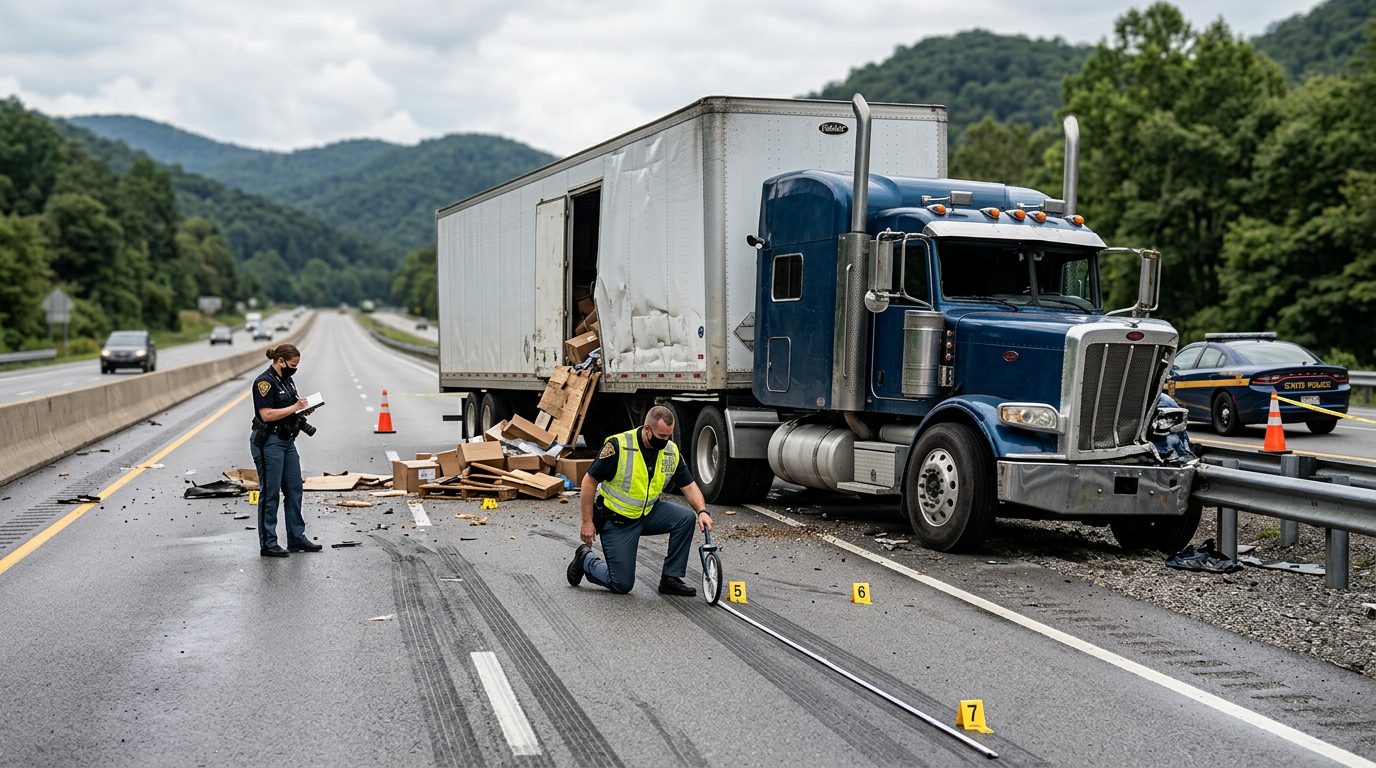
Strong claims rest on good records. Useful evidence often includes the police report, photographs, witness statements, and electronic logging device and trip data. Maintenance and inspection records matter too. Federal rules require motor carriers to keep a driver qualification file for each driver, and that file must include the driver’s motor vehicle record and medical certificate. See 49 C.F.R. § 391.51.
Medical records carry real weight. They should show the diagnosis, the treatment and the recommended follow-up. Keep a simple written journal too. Note symptoms, missed work and daily limits.
Do injections increase your settlement?
An injection does not set a claim’s value by itself. What matters is that the recommended treatment is followed and documented by the treating doctor. Gaps in care can give an insurer a reason to question the injury.
Not sure what your next step is?
Talk it through with Big Bubba — the first case review is free, confidential, and carries no obligation.
Catastrophic injuries and wrongful death claims
Traumatic brain injury and spinal cord injury often involve long-term medical care, rehabilitation and changes to work and independence. These claims are evaluated differently from a typical injury claim. Future care needs are estimated with medical input and, often, a life-care plan. That process takes time because the full course of the injury must become clearer.
Wrongful death is a separate claim. Under W. Va. Code § 55-7-6, the action is brought by the personal representative of the deceased person’s estate. A jury verdict shall include, but may not be limited to, damages for sorrow, mental anguish and solace. It may also include compensation for reasonably expected loss of income and of services, protection, care and assistance provided by the decedent, expenses for care, treatment and hospitalization, and reasonable funeral expenses.
Under W. Va. Code § 55-7-7, the personal representative may compromise a wrongful death claim. When a court approves the compromise, the court apportions and distributes the amount after making provisions for those expenditures, if any, specified in subdivision (2), subsection (c), section six of this article, which include funeral, hospital, medical and other expenses.
How long do I have to file a wrongful death claim in West Virginia?
The action generally must begin within two years after the death. Certain exceptions in state law can apply. See W. Va. Code § 55-7-6.
Reading an early settlement offer from an insurer
An early offer often comes before the full extent of the injuries is known. That is the core problem with early offers. The bills received so far may not show the injury’s expected course.
West Virginia law restricts early settlement talks in some cases. Under W. Va. Code § 55-7-11a, for twenty days after a personal injury, a person may not negotiate a settlement with the injured person while that person is a hospital inpatient or is partly or totally unable to work. The same rule bars obtaining a release or a statement for settlement use.
Under W. Va. Code § 55-7-11a, a settlement, release, or statement obtained in violation of that section may be disavowed by the injured person at any time within one hundred eighty days from the date of the personal injury, by executing a written statement of disavowal and forwarding a copy to the person who violated the section. The disavowal must be in writing and must return any consideration paid.
Adjusters follow a set process after a crash. To learn what usually comes next, read what happens after the insurance adjuster and how to handle an auto insurance adjuster.
What is a reasonable settlement offer?
A reasonable offer reflects documented losses and the injury’s expected course. It should not rest only on the bills received so far.
Talking with the firm about your truck crash
If you’re reading this while caring for an injured spouse, parent or child, or after losing a family member, you’re carrying a lot. You may be trying to understand a claim you never chose. You may be deciding whether to accept an early offer from an insurer.
You don’t have to make that decision alone. The firm offers a confidential free case review, with no obligation to continue. It is a first look at the facts of your crash, your injuries and the offer in front of you. Request a free case review to talk through what your situation may involve.
The firm serves injury victims across West Virginia, including Charleston, Huntington, Morgantown, Wheeling, Martinsburg, Parkersburg, Beckley, Clarksburg, Fairmont and Weirton.