
West Virginia Truck Crash Records
Commercial Truck Crash Records in West Virginia: What to Know and Why Timing Matters
A plain-language guide to the police report, driver logs, maintenance history, and dispatch records that may matter after a serious truck or bus crash.
Published November 8, 2026
A commercial truck or bus crash usually leaves a bigger paper and data trail than a typical car crash. The records that matter most include the police crash report, the driver’s logs, the truck’s maintenance history, and the carrier’s dispatch records. Some of these records are kept for only a limited time, so it helps to know what exists early. This page explains the commercial truck crash records West Virginia families most often ask about, who usually holds them, and why timing matters. What any record shows depends on the facts of each crash.
Why Commercial Truck Crashes Leave More Records
A crash involving a large truck or bus often involves more records because more parties are involved. The driver, the trucking company, the company that loaded the cargo, and outside repair shops may each hold different papers. Federal rules require many motor carriers to keep certain driver, vehicle, and trip records. Those records can exist even if you have never seen them.
West Virginia law can also make more than one party answerable. Whether that applies depends on the facts. Records help show who had control over the truck and the driver, and they are read together with everything else.
If you're gathering records after a truck or bus crash that hurt you or someone you love, the firm offers a free case review to talk through what may matter. Talk it through with Big Bubba — the first case review is free, confidential, and carries no obligation.

The Police Crash Report and What It Covers
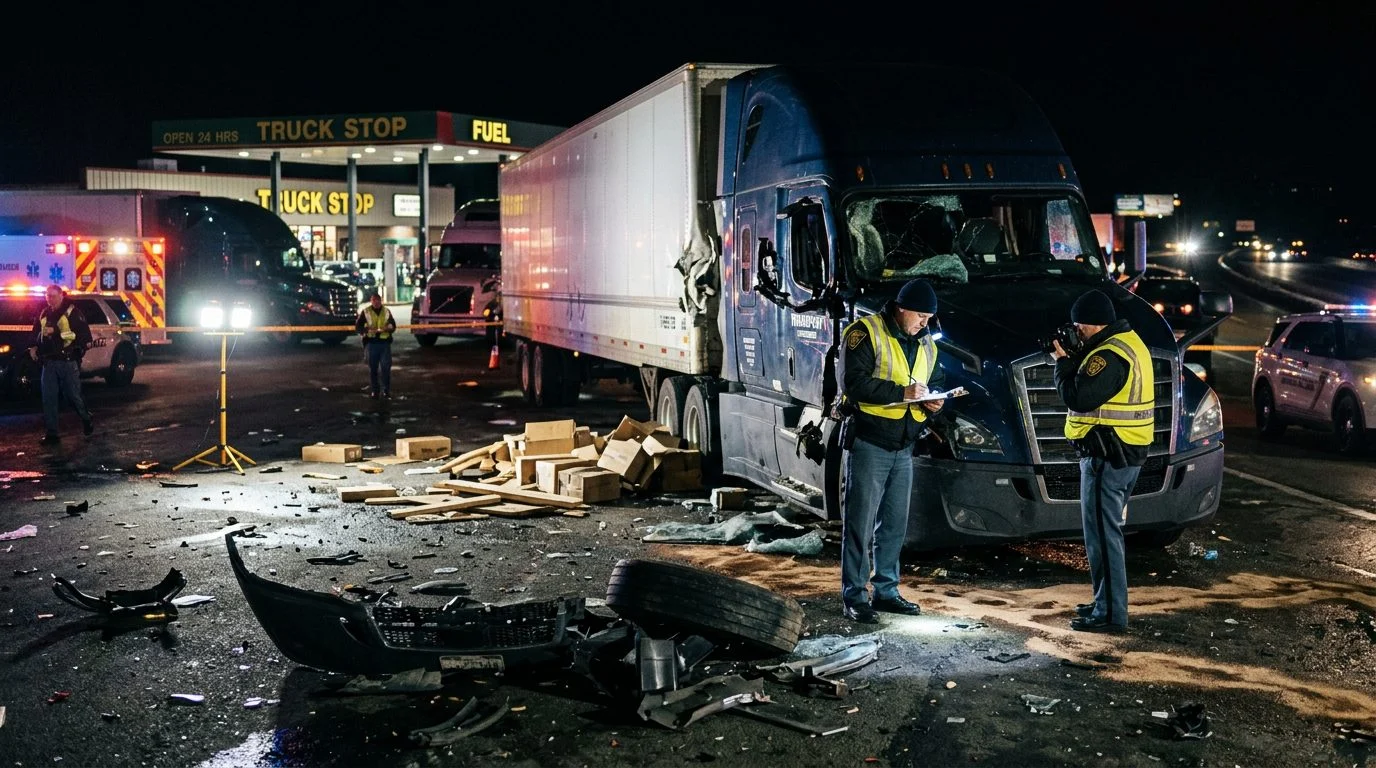
The police crash report is usually the first official record of a crash. The responding law enforcement agency typically completes the West Virginia uniform traffic crash report at or near the scene. It commonly records the date, time, and location, the vehicles and drivers involved, witness details, a diagram, and the officer’s observations.
For a commercial vehicle, the report may also include commercial motor vehicle details. Those details can help identify the carrier and the truck. Copies can be requested from the reporting agency. Check the report carefully for errors in names, plate numbers, and vehicle descriptions.
An officer’s notes about fault are one piece of the picture. They are not the final word on who is responsible. Reports can be supplemented later, and other records may tell a different part of the story.
Driver Logs, CDL, and Qualification Records
A commercial driver generally must hold a commercial driver’s license (CDL) to operate a commercial motor vehicle. 49 C.F.R. § 383.23 sets this rule for federal purposes. The West Virginia Division of Motor Vehicles also describes CDL classes and requirements.
Driving time is another key record. 49 C.F.R. § 395.8 requires a motor carrier to make each driver record duty status for each 24-hour period. Carriers operating commercial motor vehicles must require drivers to use an electronic logging device (ELD). The rule also bars any false report about duty status. These logs can show whether driving hours and rest were tracked.
Carriers also keep a driver qualification file. 49 C.F.R. § 391.51 requires a file for each driver, including the application, motor vehicle records, and a medical examiner’s certificate. The file generally must be kept while the driver is employed and for three years after.
Drug and alcohol testing records are covered too. 49 C.F.R. § 382.401 requires employers to keep program records, including documents generated in decisions about post-accident tests. A record’s existence does not prove what happened. These files work best when read next to the crash report and other evidence.
Vehicle Maintenance and Inspection Records
Maintenance and inspection records show what condition a truck was in before a crash. 49 C.F.R. § 396.21 requires the carrier to keep the original or a copy for fourteen months from the date of the report.
Repair invoices and maintenance logs can show when brakes, tires, or lights were serviced and whether problems were noted. Weight and load paperwork can matter in some cases, too.
Many newer trucks also store data in an onboard electronic control module. That data may record speed, braking, and throttle in the moments before a crash. Some of it can be overwritten or lost if the truck is repaired or returned to service. That is one reason early requests for preservation matter.
Public Crash Data and What It Can and Cannot Show
Public crash data shows patterns, not the full story of one crash. State and federal agencies publish crash statistics for large trucks and buses. Some state dashboards break down commercial vehicle crashes by county and by severity. These tools can help you understand how crashes are tracked across West Virginia.
Aggregate data does not rebuild a specific crash. A county total cannot tell you what a driver did in the minutes before a collision. Those answers come from the records of that crash, such as the report, the logs, and the vehicle data.
Use public data as background only. It may help to read it next to your own crash report and carrier records. It does not predict how any claim will turn out.
Dispatch, Cargo, Phone, and Scene Evidence
Dispatch and communication records can show a trip’s timeline and any time pressure on the driver. Dispatch logs, route plans, delivery schedules, and bills of lading may show when a load was due and where the truck was expected to be. Messages between the driver and the carrier may matter in some cases. They can be sensitive, so they should be preserved.
Phone use is another area to examine. Phone records may show whether a device was in use at the time of a crash.
Scene evidence can change quickly. Photographs, dashcam footage, skid marks, debris, and roadway conditions may be altered once the road is cleared. Witness names and early statements can be hard to find later. Families often learn this only after the first few days have passed.
Not sure what your next step is?
Talk it through with Big Bubba — the first case review is free, confidential, and carries no obligation.

Why Timing Matters and Who Holds These Records
Timing matters because some records are kept for limited periods. 49 C.F.R. § 395.8 requires carriers to keep records of duty status and supporting documents for at least six months from the date of receipt. 49 C.F.R. § 379.3 directs companies subject to that part to retain records for the minimum retention periods the regulation provides, and it states that “the provisions of this part shall not be construed as excusing compliance with the lawful requirements of any other governmental body prescribing longer retention periods for any category of records.”
West Virginia generally allows two years to file a personal injury claim, and exceptions may apply. W. Va. Code § 55-2-12 sets this limitation period. Because the deadline is a legal question, the time to act is early.
Different people hold different records. The police agency has the report. The carrier usually has the logs, driver files, maintenance history, and dispatch records. Repair shops, and sometimes insurers, may hold other pieces. A request to preserve evidence may be sent to the carrier.
Families are often dealing with medical care, grief, and missed work at the same time. That makes tracking records harder. The practical questions are simple: which records exist, who holds them, and whether they should be preserved now.
If you are gathering records after a truck or bus crash that hurt you or someone you love, the firm offers a free case review. The firm handles truck accident and commercial vehicle claims across West Virginia. You can contact the firm to talk through which records may matter in your situation.