
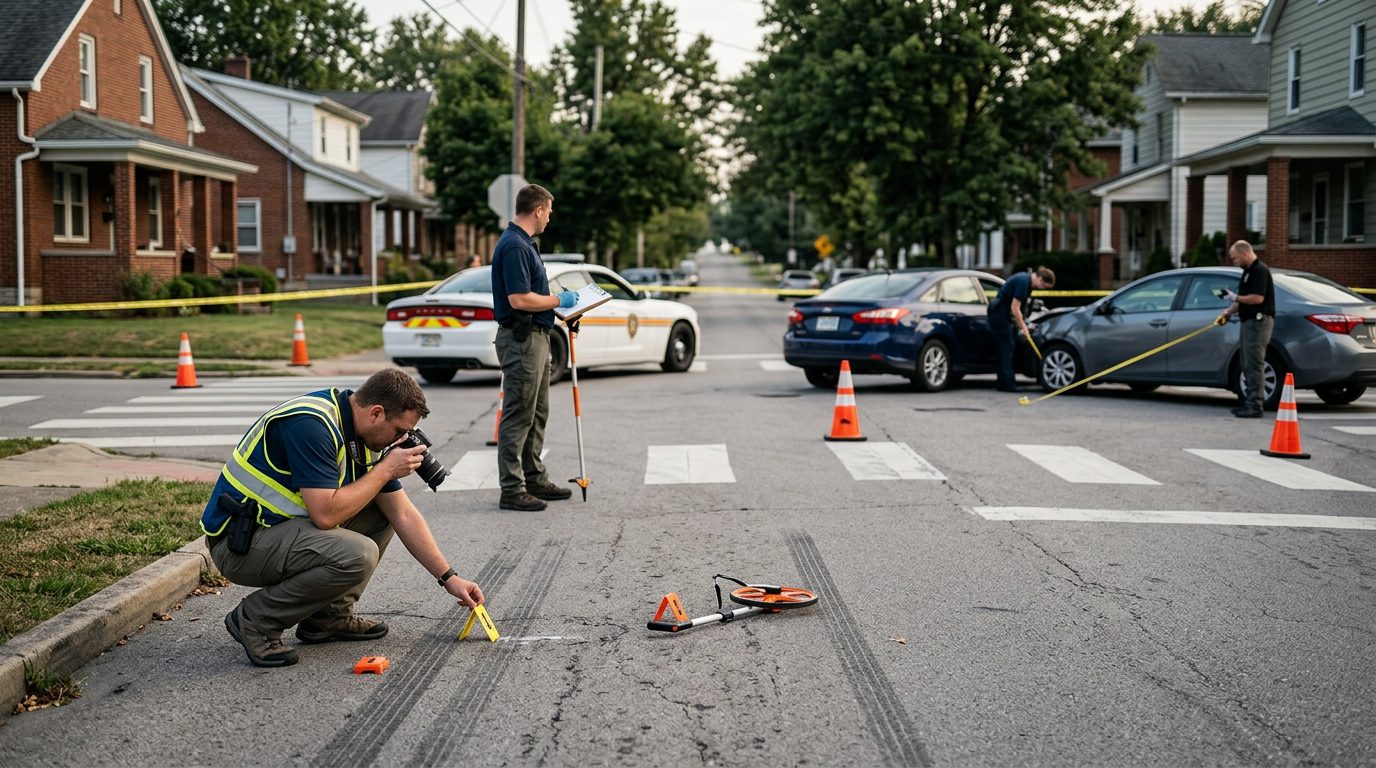
Rideshare Accidents | West Virginia
Hurt in a Rideshare Crash? Tell Bubba What Happened.
Big Bubba Injury Law represents people injured in rideshare crashes and their families across West Virginia. We serve Charleston, Huntington, Morgantown, Wheeling, Martinsburg, Parkersburg, Beckley, Clarksburg, Fairmont, Weirton and communities statewide.
Published October 22, 2026
A rideshare accident injury lawyer in West Virginia looks at more than the crash itself. A collision involving a ride-hailing or delivery app can involve more parties, more insurance policies, and more paperwork than an ordinary car wreck. This page explains who may be involved, what a claim can cover, and the West Virginia deadlines that matter most. Big Bubba Injury Law serves injured people across West Virginia, including Charleston, Huntington, Morgantown, Wheeling, Martinsburg, Parkersburg, Beckley, Clarksburg, Fairmont and Weirton.
Who this page is for and what a rideshare crash claim involves
A rideshare crash claim is an injury claim that arises from a collision involving a vehicle being used for a ride-hailing or delivery app. Three groups of people are often hurt in these crashes:
- Passengers riding in the app vehicle.
- Drivers working through the app.
- Other people on the road, including other motorists, pedestrians, and cyclists.
Each group faces different questions. A passenger usually did not cause the crash. A driver may need to sort out the app’s role and their own insurance. Other motorists and pedestrians may need to show who caused the collision.
Families of people killed in these crashes may have questions about a wrongful death claim. These cases often involve more parties than a standard car crash, so the facts need to be sorted early.
Not sure what your next step is?
Talk it through with Big Bubba — the first case review is free, confidential, and carries no obligation.
What a rideshare crash claim can cover
A rideshare crash claim can seek compensation for medical bills, lost income, property damage, and the effects of the injury on daily life. The losses that apply depend on your injuries and your records.
- Medical care: emergency care, hospital stays, surgery, rehabilitation, medication, and care you will need later.
- Lost income: missed work and a reduced ability to earn. Drivers who rely on app income may need to show how the crash cut that income.
- Property damage: your vehicle, phone, and personal items.
- Pain and suffering: physical pain, emotional distress, and loss of enjoyment of life.
- Wrongful death losses: for eligible family members, these can include sorrow, mental anguish, and solace, lost income and services, and medical and funeral costs under W. Va. Code § 55-7-6.
Medical records, bills, pay records, and photos of the vehicle all help show what the crash cost you. Keep copies of everything, including small receipts.
Who may be responsible and which insurance may apply
More than one party can share responsibility for a rideshare crash. The answer depends on the facts. Possible parties include:
- The rideshare driver.
- Another driver involved in the crash.
- The owner of a vehicle, if the owner was not the driver.
- A third party whose conduct contributed to the crash.
Insurance can depend on what the app was doing at the moment of impact. The app may have been off, on and waiting for a request, heading to a pickup, or carrying a passenger. Records of that status can matter, so the firm works to gather app and trip data early.
The driver’s personal auto policy can also matter. Some personal policies limit or exclude app-based driving, so the policy wording needs a close read.
When the at-fault driver has too little coverage, West Virginia law defines an underinsured motor vehicle. Under W. Va. Code § 33-6-31, a vehicle can qualify when its liability limits are lower than your underinsured coverage limits, or were reduced by payments to others hurt in the same accident.
Fault can also be shared between several people. West Virginia’s modified comparative fault rule is explained in the questions below (W. Va. Code § 55-7-13c).
Catastrophic injuries after rideshare crashes
Catastrophic injuries are serious harms that often need long-term medical care and can change how a person lives and works. Traumatic brain injury and spinal cord injury are two main types. Other severe harms include multiple fractures, internal organ injuries, and burns.
Traumatic brain injury
Families often describe changes in memory, focus, and mood after a brain injury. Keep every follow-up appointment. Tell each provider about every symptom, so your records match your experience.
Spinal cord injury
A spinal cord injury can lead to lasting changes in movement and daily care. Some people need changes to their home or vehicle. Records of these needs help show the full impact of the injury.
Documenting a catastrophic injury
Doctors’ notes, imaging, therapy records, and a written list of daily tasks you can no longer do help show how the injury affects you. Describe your limits the same way each time, so the records line up.
Steps from the crash to a resolution, with timelines
The first steps are medical care, records, and evidence. Filing deadlines apply to both injury and wrongful death claims, and when they start to run may depend on the type of claim and the facts, so timing matters. Here is a typical order:
- Get medical care. Follow your treatment plan and keep every bill and record.
- Report the crash. Ask for the police crash report and keep the report number.
- Save evidence. Take photos of the scene and vehicles, write down witness names, and save app screens and trip details if you have them.
- Be careful with insurance calls. Under W. Va. Code § 55-7-11a, for 20 days after a personal injury, no one may try to negotiate a settlement with an injured person who is a hospital inpatient or unable to work. The same rule covers asking for a statement for a settlement, unless a person acting or intending to act for and on behalf of the injured person obtains it upon the express request of the injured person (W. Va. Code § 55-7-11a). A settlement, release of liability or statement obtained in violation of this section may be disavowed by the injured person at any time within one hundred eighty days from the date of the personal injury by executing a written statement of disavowal and thereupon forwarding a copy of the same to the person violating this section (W. Va. Code § 55-7-11a). If the injured person disavows a settlement, release or statement obtained in violation of this section within one hundred eighty days from the date of the personal injury, the settlement, release or statement may not be admissible in evidence for any purpose in any court or other proceeding relating to the personal injury, provided that any consideration paid for the settlement or general release is repaid or returned to the person who paid it at the time the copy of the written statement of disavowal is forwarded.
- Build the case over time. Medical documentation, treatment timelines, and lost income records come together over months.
Personal injury claims generally must be brought within two years after the right to sue arises, under W. Va. Code § 55-2-12. A wrongful death action must be commenced within two years after the death, subject to the provisions of section eighteen, article two, chapter fifty-five, under W. Va. Code § 55-7-6. W. Va. Code § 55-7-6 reads: “The provisions of this section shall not apply to actions brought for the death of any person occurring prior to July 1, 1988.” W. Va. Code § 55-7-6(d) reads: “Every such action shall be commenced within two years after the death of such deceased person, subject to the provisions of section eighteen, article two, chapter fifty-five.” W. Va. Code § 55-7-6 reads: “The provisions of this section shall not apply to actions brought for the death of any person occurring prior to July 1, 1988.”
Many claims resolve through negotiation. Some move into a lawsuit. Which path fits depends on the facts.
Common questions about rideshare crash injuries
Can I bring a claim if I was a passenger?
A passenger may have a claim against the party whose fault caused the crash. Which parties and insurance apply depends on the facts.
What if the other driver had no insurance?
Uninsured and underinsured motorist coverage may apply. Under W. Va. Code § 33-6-31, an insured who relies on that coverage must have the summons and complaint served on the insurer when a suit is filed.
What if I was partly at fault?
West Virginia uses modified comparative fault. Under W. Va. Code § 55-7-13c, your fault does not bar recovery unless it is greater than the combined fault of everyone else responsible. W. Va. Code § 55-7-13c reads: “(c) Any fault chargeable to the plaintiff shall not bar recovery by the plaintiff unless the plaintiff’s fault is greater than the combined fault of all other persons responsible for the total amount of damages, if any, to be awarded.” If it is less, your recovery is reduced by your share of fault.
Do I have to finish treatment first?
You don’t have to finish treatment before reaching out. Early contact can help preserve evidence, and the firm can talk through timing during a free case review.
What if a family member died in the crash?
A wrongful death claim is brought by the personal representative of the deceased person, for the benefit of eligible family members. Under West Virginia law, a wrongful death action has to be commenced no later than two years from the date of the person’s death, subject to a related provision elsewhere in the state code (W. Va. Code § 55-7-6). W. Va. Code § 55-7-6 reads: “The provisions of this section shall not apply to actions brought for the death of any person occurring prior to July 1, 1988.”
Not sure what your next step is?
Talk it through with Big Bubba — the first case review is free, confidential, and carries no obligation.

How the firm approaches these cases and how to start
Big Bubba Injury Law represents people seriously hurt in car and commercial truck crashes, catastrophic brain and spinal cord injuries, and wrongful death cases across West Virginia. For rideshare cases, the firm focuses on app and trip records, insurance information, and medical documentation early.
A free case review is a confidential first conversation with no obligation to continue. During it, the firm can review the crash facts, your injuries, and possible insurance sources. It’s a good way to learn where your claim stands.
If you were hurt in a crash involving an app-based car, or a family member was killed, Tell Bubba what happened and request a free case review.