
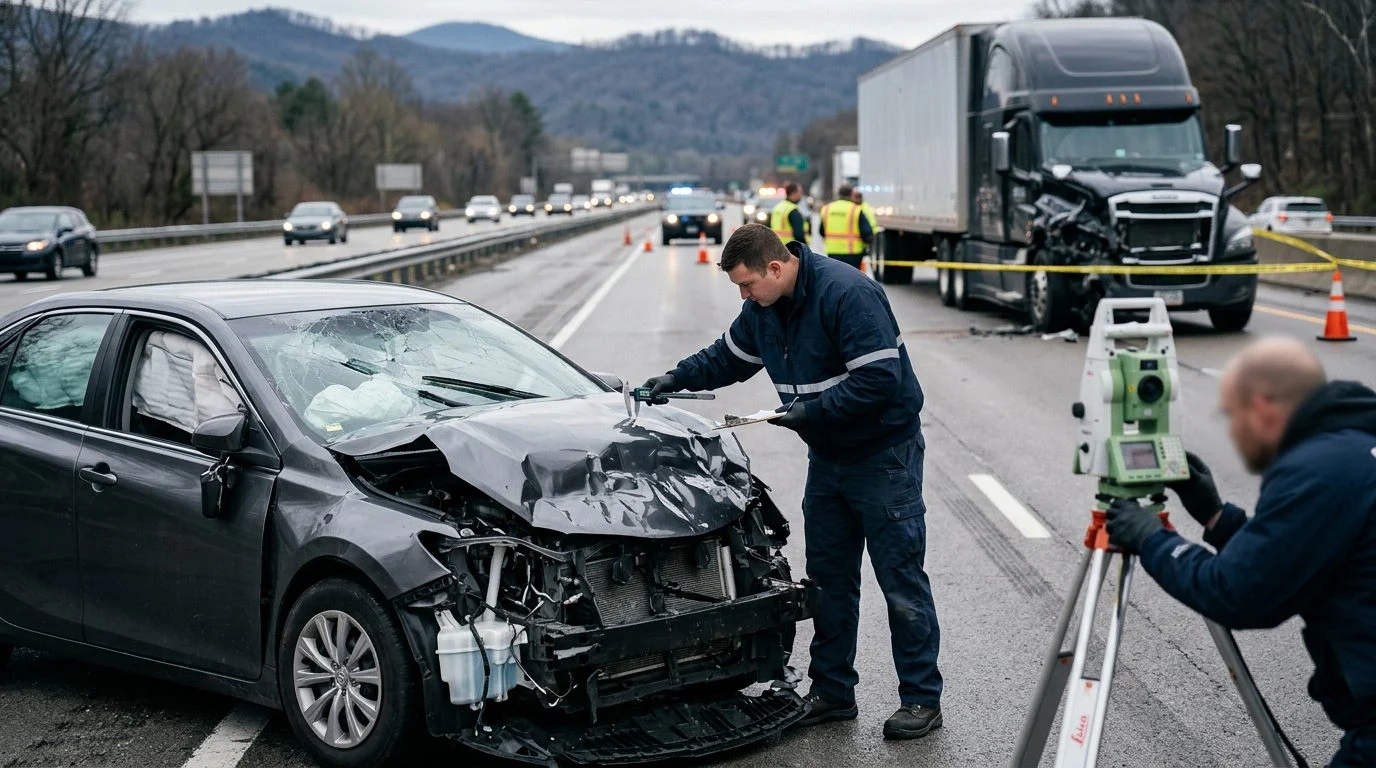
Truck Accidents | Serving West Virginia
Suing a Trucking Company After a Catastrophic Crash in West Virginia
A crash with a commercial truck can change your life in an instant. Big Bubba Injury Law helps people hurt in serious car and truck crashes, and families who have lost a loved one, understand their options and pursue the claim against the companies involved.
Published October 31, 2026
Can You Sue a Trucking Company After a Catastrophic Crash in West Virginia?
Often, yes. In many cases, you can name a trucking company in a lawsuit after a serious crash, not only the driver. Whether that works in your case depends on who was at fault, how the driver was tied to the company, and what injuries or losses followed.
Catastrophic crashes raise hard questions fast. Victims face long recoveries. Families face bills, paperwork, and grief at the same time. This page explains how these cases usually work in West Virginia, in plain language.
Big Bubba Injury Law handles car accidents, truck accidents, commercial vehicle accidents, catastrophic injuries, traumatic brain injury, spinal cord injury, and wrongful death. We serve injury victims across West Virginia, including Charleston, Huntington, and Morgantown. For the wider picture, read our guide to catastrophic injury claims.
Not sure what your next step is?
Talk it through with Big Bubba — the first case review is free, confidential, and carries no obligation.

Who Can Be Named in a Truck Crash Lawsuit
Several parties may be named, not just the person behind the wheel. West Virginia’s commercial vehicle law defines an “employer defendant” broadly. It includes the owner of the truck, the operator’s employer, and anyone who owns, leases, rents, or holds legal control over the truck or its driver. The definition appears in W. Va. Code § 55-7-32.
That means the company that leases the tractor or trailer may be a proper defendant. So may the carrier that hired the driver.
Employers can answer for a worker’s negligence on the job. This is a general rule of law. When a driver acts within the scope of the work, the employer may be held responsible. The driver usually remains personally responsible too.
Companies can also face claims for their own choices. Dispatch decisions that pushed a driver past safe limits can matter too.
Depending on the cause, maintenance providers, cargo loaders, or parts makers may also be relevant.
How Federal Trucking Rules Become Evidence in a Crash Case
Federal trucking rules create records that often matter after a crash. Under 49 C.F.R. § 390.3T, the rules in this subchapter are applicable to all employers, employees, and commercial motor vehicles that transport property or passengers in interstate commerce. The Federal Motor Carrier Safety Administration oversees them. The agency’s hours-of-service summary explains the driving limits and required rest breaks.
Several kinds of records can show whether the rules were followed:
- Hours-of-service and electronic logging device data, which show driving and rest time.
- Driver qualification files, which hold the driver’s application, motor vehicle records, and medical certificate.
- Vehicle inspection and maintenance records.
- Drug and alcohol testing records.
Under 49 C.F.R. § 391.51, a carrier must keep a qualification file for each driver.
Timing matters.
A gap between the records and what happened on the road can support a negligence claim. The records can show what the company knew, what it checked, and what it allowed. For the specific records that matter, see truck crash records to preserve in West Virginia.
What a Catastrophic Injury Claim Has to Account For
Catastrophic injuries cause lasting physical, cognitive, or functional loss. Traumatic brain injury and spinal cord injury are common examples. These claims often take longer than a typical injury case, because the harm continues.
Ongoing needs often include medical care, rehabilitation, assistive equipment, and changes at home. Many families also see lost work, reduced hours, or a new role as a full-time caregiver. Those changes shape what the claim must show.
Future needs are documented with medical and work-related information. Doctors describe the care that is likely to be needed. Vocational reviews look at what work the person can still do. Bills, receipts, and daily care notes help fill in the picture.
For a closer look at spinal harm after a crash, read about incomplete spinal cord injury after a crash.
Wrongful Death Lawsuits After a Fatal Truck Crash
When a crash causes a death, West Virginia law sets who brings the claim. A wrongful death action must be brought by the duly appointed personal representative of the person who died, in that representative’s name. W. Va. Code § 55-7-6 sets this rule.
The statute lists several kinds of damages. These include sorrow, mental anguish, and solace, which may cover companionship, comfort, guidance, and advice. They also include compensation for reasonably expected loss of income of the decedent, and of services, protection, care and assistance provided by the decedent. Care and hospital costs tied to the injury, and reasonable funeral expenses, are included as well.
The court or jury can direct how damages are shared. Shares may go to a surviving spouse, children (including adopted children and stepchildren), brothers, sisters, parents, and any persons who were financially dependent on the person who died or would otherwise be equitably entitled to share.
The same trucking defenses and records apply in these cases. Families often face grief and paperwork at once. Our team can help sort out the paperwork so the family can focus on each other.
Deadlines and Why Early Action Matters
West Virginia generally allows two years from when the right to bring the claim accrues to file a personal injury claim, and exceptions may apply. W. Va. Code § 55-2-12 sets that two-year limit for personal injury actions. Under § 55-7-6, a wrongful death action must be commenced within two years after the death, subject to the provisions of section eighteen, article two, chapter fifty-five. W. Va. Code § 55-7-6 reads: “The provisions of this section shall not apply to actions brought for the death of any person occurring prior to July 1, 1988.” Other rules in the code can affect how the clock runs, so the date should be checked early.
Early action also protects evidence. Under 49 C.F.R. § 379.3, companies keep records for minimum periods. Companies subject to this part must keep records for at least the minimum retention periods in appendix A to 49 C.F.R. § 379.3. After those periods, records may be destroyed at the discretion of each company’s management. The rule does not excuse compliance with the lawful requirements of any other governmental body that sets longer retention periods for any category of records. Requests and preservation steps work best while the records still exist.
A trucking case can involve more than one defendant and more than one insurance policy. Identifying each one takes time. Medical records build the claim from the start. Keep discharge papers, therapy notes, and receipts. Keep photos, crash reports, and names of witnesses.
Not sure what your next step is?
Talk it through with Big Bubba — the first case review is free, confidential, and carries no obligation.
How Fault, Insurance, and Multiple Defendants Shape the Claim
West Virginia uses modified comparative fault (W. Va. Code § 55-7-13c). Your fault does not bar recovery unless it is greater than the combined fault of all other persons. If it is smaller, your recovery is reduced in proportion to your share of fault.
Liability is generally several, not joint. Each defendant is generally liable for its own percentage of fault, with limited exceptions such as a conscious conspiracy to commit a wrongful act. This is why identifying every responsible party matters.
Federal rules also set minimum insurance levels. 49 C.F.R. § 387.9 lists $750,000 for interstate for-hire carriage of nonhazardous property in trucks rated 10,001 pounds or more.
West Virginia also caps some damages. Under W. Va. Code § 55-7-32, in a civil action for personal injury or wrongful death involving the operation of a commercial motor vehicle that requires a commercial driver’s license, the maximum amount recoverable by each person injured or killed against the employer defendant as compensatory damages for noneconomic loss may not exceed $5 million for each occurrence, regardless of the number of claims or theories of liability, subject to the conditions in subsections (c) and (d). On January 1, 2026, and each year after, that limit increases for inflation based on the Consumer Price Index, but not to exceed 150 percent of the amounts specified in the statute. That cap does not apply to an employer without at least $3 million in commercial vehicle insurance. The cap does not apply to a civil action that arises from an incident in which an operator or driver is found to have operated a commercial motor vehicle under the influence of a controlled substance, other drug, or inhalant substance, in excess of the hours of operation established under state or federal regulations, in willful or wanton disregard for the safety of persons or property, or with a load over the maximum gross vehicle weight rating set by state or federal regulations (unless the driver was legally operating the vehicle under a permit issued under § 17C-17-11), and in certain other situations the statute spells out. The provision applies to causes of action arising after July 1, 2024.
Several insurers may be involved, including the driver’s insurer and the carrier’s insurer. Coordinating them is a core part of the case. Long-term needs, such as home modifications after a catastrophic injury, also shape the total claim.
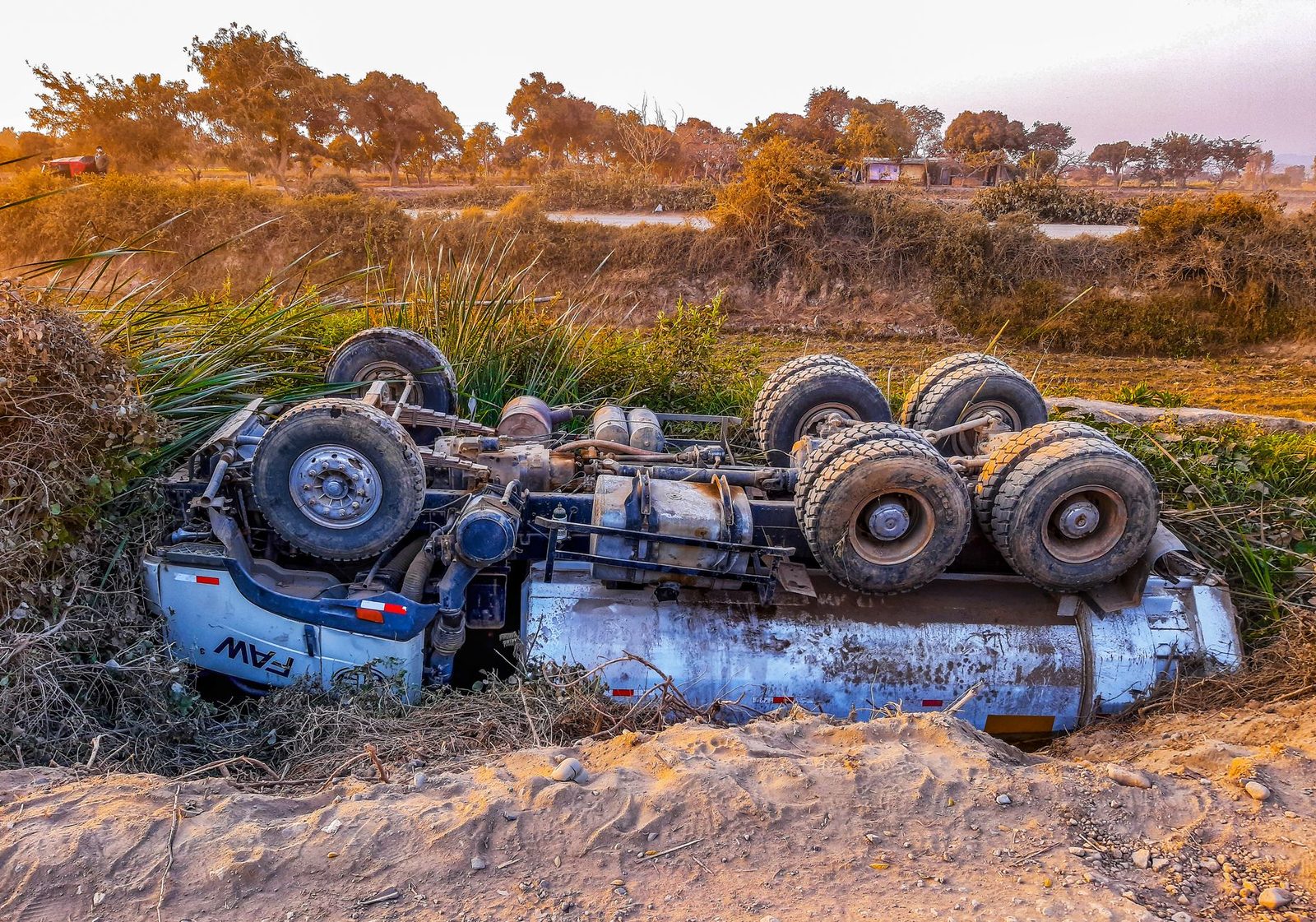
Deciding Whether to Pursue a Claim Against the Trucking Company
Start with four questions. Who employed the driver? What was the driver doing? What injuries or losses followed? When did the crash happen? The answers shape which parties may be named and which deadlines apply.
The choice in front of you is practical. Waiting can cost records and time. Acting early helps keep evidence intact.
Can you sue both the driver and the trucking company?
Yes, a claim can name more than one party. West Virginia then assigns fault among them under its comparative fault and several liability rules (W. Va. Code § 55-7-13c).
How long do I have to file?
Most West Virginia injury and wrongful death claims have a two-year limit. Other rules can change the timing, so check early.
A semi-truck crash can leave a person with a catastrophic injury or leave a family without a loved one, and the firm handles both kinds of cases. You can request a free case review. The firm will go over the crash details and your medical situation with you.