
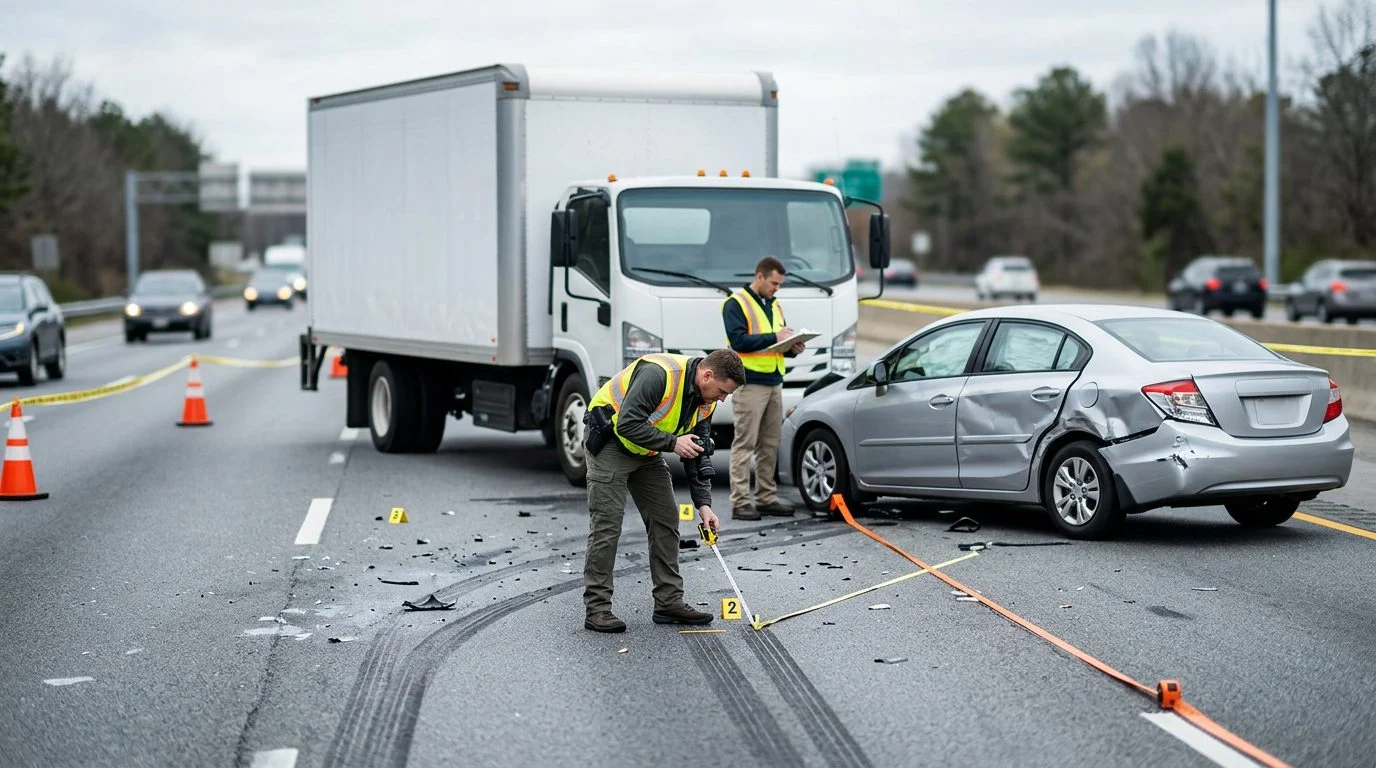
Spinal Cord Injury | Wrongful Death
When a Car Accident Takes a Life: Spinal Cord Injury Wrongful Death Claims
If a loved one died from a spinal cord injury caused by a car crash, you have legal options. Big Bubba Injury Law helps families across West Virginia understand their rights and pursue claims.
Published October 06, 2026
Spinal Cord Injury and Wrongful Death: When a Car Crash Takes a Life
When a car accident causes a severe spinal cord injury, the consequences can be catastrophic—and sometimes fatal. If you’ve lost a loved one in a crash where spinal cord injury played a role, you need to understand what happened medically, what your family’s legal rights are, and how quickly you must act. West Virginia law generally allows two years to bring a wrongful death claim, and exceptions may apply, so the details matter.

If you miss it, your claim may generally be barred, though exceptions may apply depending on the facts. Talk it through with our team — the first case review is free, confidential, and carries no obligation.
What Is a Spinal Cord Injury?
The spinal cord is a bundle of nerves that carries signals between your brain and the rest of your body. Three layers of tissue protect it, and cerebrospinal fluid surrounds it to cushion it against shock and injury. When the spinal cord is damaged, those signals stop traveling normally—or stop altogether.
Spinal cord injuries are classified as complete or incomplete. A complete injury means the spinal cord is fully severed or so badly damaged that no signals cross the injury site. An incomplete injury means some signals still get through, and some function may remain. Either way, the damage is often permanent, and the spinal cord generally does not heal itself the way other tissues do.
How Car Accidents Cause Spinal Cord Injuries
Car crashes cause spinal cord injuries through sudden, violent forces. When a vehicle stops abruptly or is struck with force, occupants experience rapid deceleration. Their bodies jerk forward, backward, or sideways. The spine—a column of bones (vertebrae) stacked on top of one another—can fracture, dislocate, or compress. If any of those bones shift or collapse, they can crush or tear the spinal cord inside.
High-speed collisions and commercial truck accidents pose particular risk. The greater weight of a commercial truck can mean far more force than a passenger car. The impact can be severe enough to cause catastrophic spinal damage in an instant.
Spinal cord damage can be immediate—happening at the moment of impact—or delayed. Swelling, bleeding, and inflammation inside the spinal canal can worsen the injury over hours or days. This is why prompt medical attention is critical. Imaging (CT scans, MRI) and specialist evaluation can reveal the full extent of damage and guide emergency treatment.
When a Spinal Cord Injury Becomes Fatal
Not all spinal cord injuries are fatal, but injuries to the cervical spine—the neck region—can be life-threatening. The cervical nerves (C1 to C7) control signals to the back of the head, neck, shoulders, arms, hands, and diaphragm. The diaphragm is the muscle that makes your lungs expand so you can breathe.
An injury to the spinal cord between the C1-C4 segments can, in some cases, stop breathing. If the nerves that control the diaphragm are damaged, the lungs may generally be unable to fill with air, depending on the facts of each case. A person may need a ventilator (breathing machine) to survive. If the injury is severe enough, breathing may stop entirely, and death may follow, with timing that depends on the facts of each case.
Beyond breathing, severe cervical spinal cord injuries can affect heart rate, blood pressure, and body temperature. Complications such as blood clots, infections, and organ failure can develop in the weeks or months after injury. In some cases, a loved one may die later from complications that may be linked to the crash and the spinal cord damage, depending on the facts of each case.
What Is Quadriplegia?
Quadriplegia (also called tetraplegia) is paralysis of all four limbs—both arms and both legs. It results from injury to the cervical spine. A person with quadriplegia loses motor function and sensation below the level of the injury. Depending on which cervical segments are damaged, breathing, swallowing, and other vital functions may be affected.
When quadriplegia results from a severe cervical injury—especially at C1-C4—it can be immediately life-threatening. A person may require a ventilator to breathe and round-the-clock medical care to survive. In the most severe cases, the injury itself or complications arising from it can be fatal.
Wrongful Death Claims After a Fatal Spinal Cord Injury
In West Virginia, when death is caused by a wrongful act, neglect, or default—and that act would have allowed the injured person to sue if death had not occurred—the person or company responsible is generally liable for damages, though exceptions may apply depending on the facts. A car crash caused by negligent driving may generally be this kind of wrongful act, depending on the facts.
Who can file a wrongful death claim? The personal representative of the deceased person—usually the executor or administrator of the estate—generally must bring the claim, though exceptions may apply. That person files the lawsuit on behalf of the family and the estate.
How does negligence lead to liability? If the other driver was speeding, distracted, impaired, or violated traffic laws, and that negligence caused the crash and the fatal spinal cord injury, they may generally be liable, though the outcome depends on the facts of each case and exceptions may apply. The same general principle may apply to commercial truck companies if the driver was unfit or the company failed to maintain the vehicle properly, depending on the facts of each case.
What damages can a family recover? West Virginia law allows damages for sorrow, mental anguish, and solace (including society, companionship, comfort, guidance, and kindly offices of the decedent); loss of income the decedent would have earned; services, protection, care, and assistance the decedent would have provided; medical and hospitalization expenses; and reasonable funeral expenses.
A surviving spouse also has a separate claim.
Not sure what your next step is?
Talk it through with our team — the first case review is free, confidential, and carries no obligation.
First Aid and Immediate Response to Neck and Spine Injuries
At the scene of a crash, the first priority is to call emergency services. Do not move the injured person unless there is immediate danger (such as fire). Movement can worsen a spinal cord injury.
If you are able to help, limit the person’s movement. Keep their head and neck as still as possible. Do not twist or bend the spine. Professional paramedics are trained to stabilize the spine using a cervical collar and backboard before transport to the hospital.
Medical imaging—CT scans and MRI—will reveal the extent of spinal cord damage. A trauma surgeon or neurologist will assess the injury and determine whether emergency surgery is needed. Early, aggressive medical care can sometimes limit the damage, though it cannot undo a severe injury.
The Medical and Legal Path Forward
In a wrongful death case involving fatal spinal cord injury, medical evidence is everything. Hospital records, imaging reports, autopsy findings, and the medical examiner’s determination of cause of death all establish the link between the crash and the death.
An autopsy can reveal the exact nature of the spinal cord damage and whether it was the direct cause of death or whether complications (such as respiratory failure, infection, or organ dysfunction) were the final cause. Medical experts—trauma surgeons, neurologists, pathologists—will review these records and testify about how the injury occurred and why it was fatal.
Timeline matters. A wrongful death action in West Virginia generally must be brought within two years after the death of the deceased person, though exceptions may apply depending on the facts. Acting promptly can be important. If you miss it, your claim may generally be barred, though exceptions may apply depending on the facts. Even if you are still grieving and not yet ready to pursue legal action, it is wise to consult with an attorney early so you understand your rights and the deadline.
Comparative Fault and Your Family’s Recovery
West Virginia follows a modified comparative fault rule. An injured person’s damages are reduced in proportion to their own percentage of fault, but they are barred from recovery only if their fault is greater than the combined fault of all other parties. This applies to wrongful death claims as well.
If the deceased was partly at fault for the crash—for example, they were speeding or distracted—the jury will assign a percentage of fault to them. The family’s recovery will be reduced by that percentage. However, if the deceased was 50% or less at fault, the family may generally still be able to recover, and under West Virginia law, each defendant is generally liable only for the share of compensatory damages that matches that defendant’s percentage of fault, though exceptions may apply depending on the facts.
The other driver’s insurance company may argue for comparative fault to reduce the amount it pays. Under W. Va. Code § 55-7-13c, comparative fault generally applies, and exceptions may apply depending on the facts. Your attorney’s role is to present evidence about how the crash happened and each party’s role in it.
What Families Should Know
Losing someone in a car crash is a sudden, traumatic loss. The legal process that follows can feel overwhelming on top of grief. But a wrongful death claim serves important purposes beyond money. It may help seek accountability from the responsible party, depending on the facts of the case. It documents what happened. Depending on the facts, it may acknowledge that your loved one’s death was caused by someone’s negligence.
The damages your family may recover are generally meant to address real losses: the income the deceased would have earned, the care and support they would have provided, the companionship and comfort they brought to your life. These are tangible harms the law recognizes.
If a commercial truck driver or company was at fault, pursuing a claim also sends a message that safety matters. It can lead to changes in hiring, training, or maintenance that prevent future crashes.
You do not have to navigate this alone. An attorney experienced in wrongful death cases can guide you through the legal process, handle communication with insurance companies, and fight for the full recovery your family deserves.

Have questions about what happened?
Ask our team directly. The first conversation is free, confidential, and there is no obligation to continue.
FAQ
Can a spinal cord injury from a car accident be fatal?
Yes. Injuries to the cervical spine (neck), especially at segments C1-C4, can damage the nerves that control breathing and vital functions, resulting in death at the scene or later from complications.
What is the deadline to file a wrongful death claim in West Virginia?
West Virginia generally requires a wrongful death action to be commenced within two years after the death of the deceased person, subject to other provisions of state law, and exceptions may apply. Acting promptly can be important.
Who can file a wrongful death claim?
The personal representative of the deceased—the executor or administrator of the estate—must bring the claim on behalf of the family.
What damages can a family recover?
Damages may include loss of income, services and care the decedent would have provided, sorrow and mental anguish, and medical and funeral expenses.
Does the deceased’s own fault affect the family’s recovery?
Yes. Under West Virginia law, each defendant is generally liable only for the amount of compensatory damages allocated to that defendant in direct proportion to that defendant’s percentage of fault.
If a car accident took someone you love and spinal cord injury was involved, your family may have a wrongful death claim—and time matters. Reach out to Big Bubba Injury Law to discuss what happened and explore your options. We serve all of West Virginia, including Charleston, Huntington, Morgantown, Wheeling, Martinsburg, Parkersburg, Beckley, Clarksburg, Fairmont, and Weirton. Tell Bubba what happened and request your free case review.