
West Virginia Spinal Cord Injury Claims
When a Spinal Cord Injury Changes Everything, Your Family Deserves Clear Answers
Big Bubba represents people hurt in serious crashes across West Virginia, and the families who stand beside them.
Published November 12, 2026
A spinal cord injury from a crash can change daily life in a single moment. Many people and families then ask whether they have a legal claim and what it could cover.
A catastrophic spinal cord injury claim asks the people or companies responsible for a crash to answer for the harm it caused. Whether a claim exists depends on the facts. West Virginia generally allows two years to file, and exceptions may apply (W. Va. Code § 55-2-12).
What a catastrophic spinal cord injury claim is
A catastrophic spinal cord injury claim is a personal injury case for someone whose spinal cord was badly damaged. The spinal cord carries signals between the brain and the body. When it is hurt, movement, feeling, and some bodily functions below the injury can be affected.
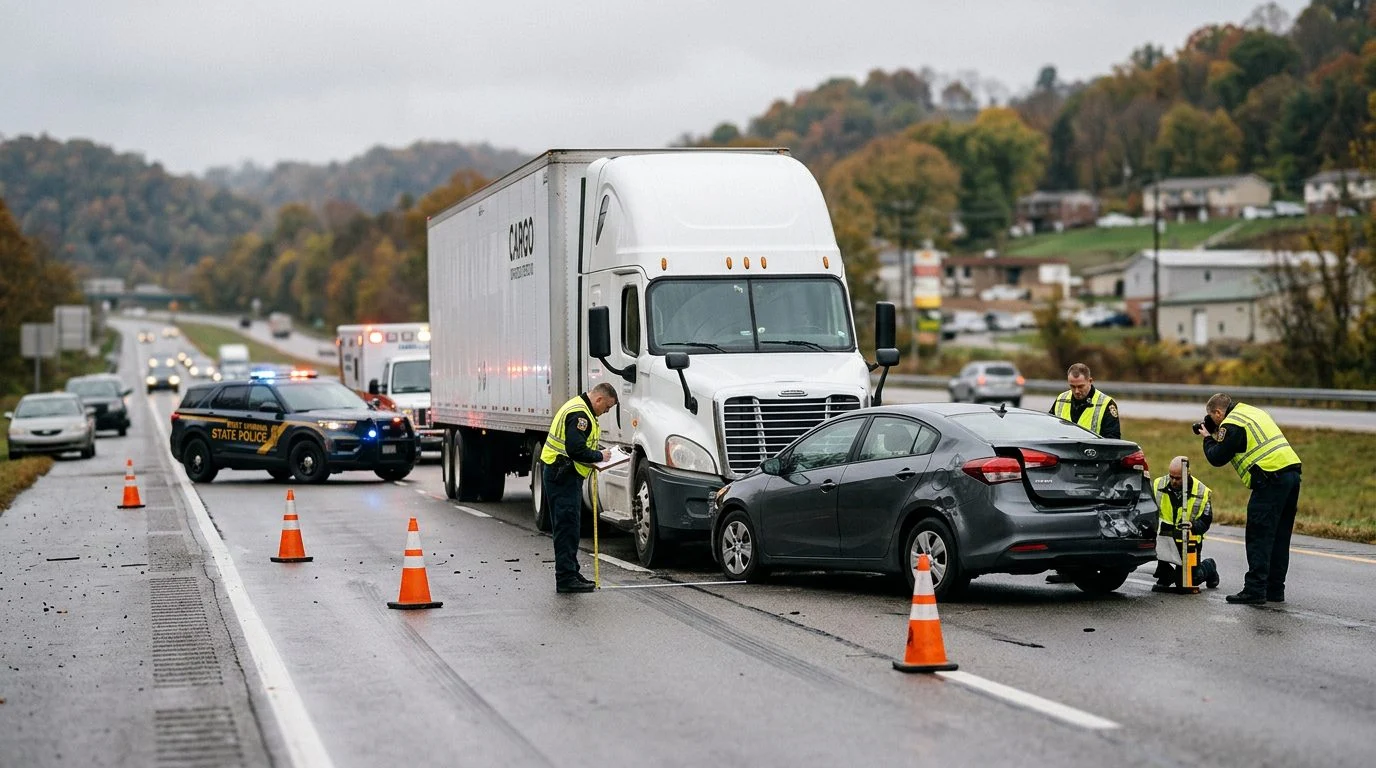
The claim seeks compensation from the party whose negligence, or carelessness, may have caused the crash. Questions about negligence often come up in car and truck accident claims. Many of these claims arise from car crashes, and from crashes involving commercial trucks and other commercial vehicles.
We handle catastrophic injury claims that arise from these crashes. If another driver was at fault, that driver may be part of the claim. If you were hurt, you can reach out to us to talk through what happened.
If a crash left you or someone you love with a spinal cord injury, reach out to us for a free case review and tell us what happened. Talk it through with Big Bubba — the first case review is free, confidential, and carries no obligation.
Complete and incomplete spinal cord injuries, explained
A complete spinal cord injury means no signals pass below the injury site. An incomplete injury means some signals still get through. Doctors use these terms, and the difference shapes the medical plan.
Doctors also describe where the injury sits. The spine has cervical (neck), thoracic (upper back), lumbar (lower back), and sacral (pelvic) regions. An injury higher on the spine often affects more of the body.
You will likely hear the terms paraplegia and quadriplegia, also called tetraplegia. Paraplegia usually involves the legs and lower body. Quadriplegia involves the arms, legs, and trunk. Medical teams assess each person’s injury individually.
Medical records matter to any claim. They show the diagnosis, treatment, and rehabilitation over time. A West Virginia spinal cord injury study examines how injury severity and completeness relate to long-term function.
Who can bring a claim after a crash
The injured person can usually bring a claim for their own injuries. The details of the crash and the law that applies both shape what happens next.
If a crash leads to death, a wrongful death claim is brought by the personal representative of the deceased person’s estate. § 55-7-6 governs who brings the action and how any recovery is shared among survivors. The law names surviving spouses, children (including adopted children and stepchildren), brothers, sisters, parents, and any persons who were financially dependent on the person or would otherwise be equitably entitled to share in the distribution.
West Virginia uses modified comparative fault. Under § 55-7-13c, an injured person’s own fault does not bar recovery unless it is greater than the combined fault of others. W. Va. Code § 55-7-13c reads: “(c) Any fault chargeable to the plaintiff shall not bar recovery by the plaintiff unless the plaintiff’s fault is greater than the combined fault of all other persons responsible for the total amount of damages, if any, to be awarded.” If the injured person’s fault is less than the combined fault of all others, any recovery is reduced in proportion to that person’s degree of fault.
Deadlines matter. West Virginia generally allows two years to file a personal injury claim under § 55-2-12. A wrongful death action generally must be commenced within two years after the death, under § 55-7-6. W. Va. Code § 55-7-6 reads: “The provisions of this section shall not apply to actions brought for the death of any person occurring prior to July 1, 1988.” Under W. Va. Code § 55-7-6(d): “Every such action shall be commenced within two years after the death of such deceased person, subject to the provisions of section eighteen, article two, chapter fifty-five.” Exceptions may apply, so timing should be reviewed early.
What a claim may include
A claim may address several kinds of losses. Which ones apply depends on each person’s injury and life.
- Medical care, past and future, including hospital stays, surgery, and rehabilitation
- Medication, therapy, and equipment such as wheelchairs
- Changes to the home or vehicle, such as ramps, lifts, or adapted controls
- Care at home, including help from an attendant or family member
- Lost income and lost ability to earn in the future
- Pain, suffering, and loss of enjoyment of life
For families in a wrongful death case, § 55-7-6 lists damages that can include sorrow, mental anguish, and solace. It also lists compensation for reasonably expected loss of the decedent’s income, services, protection, care and assistance, medical expenses tied to the injury, and reasonable funeral expenses (the list may not be limited to these).
Keep records of bills, travel to appointments, and changes at work. These details help show the losses a claim may address.
How a claim moves forward, step by step
Most claims follow a similar path. The pace varies from case to case.
- Tell us what happened. The free case review is confidential and carries no obligation to continue.
- Gather records. The crash report, medical records, employment information, and photos of the scene and injuries help build the claim.
- Document the injury over time. Treatment and rehabilitation notes show how the injury affects daily life.
- Deal with insurers. Some insurers may dispute a claim. The firm can handle communications with them.
- Negotiate or file suit. Many claims may resolve without a trial, but some need a lawsuit. How long each stage takes depends on the facts of the case.
Truck and commercial vehicle crashes add evidence to preserve
Crashes involving commercial trucks often leave more records than car crashes do. Those records can bear on who was responsible.
Federal rules limit how long commercial drivers may work. For drivers of property-carrying commercial motor vehicles, 49 C.F.R. § 395.3 provides, except as otherwise provided in § 395.1, that a driver may not drive without first taking 10 consecutive hours off duty, may not drive after a period of 14 consecutive hours after coming on-duty following 10 consecutive hours off-duty, and may drive a total of 11 hours during that 14-hour period; except for drivers who qualify for either of the short-haul exceptions in § 395.1(e)(1) or (2), a driver may not keep driving once more than 8 hours of driving time have passed without at least a consecutive 30-minute interruption in driving status.
Under 49 C.F.R. § 395.8, a motor carrier generally must require each driver to record duty status for each 24-hour period, using an electronic logging device (ELD) unless an exception allows a paper record. These logs, along with maintenance, inspection, and load paperwork, may show what happened before a crash.
West Virginia also addresses employer liability in commercial vehicle cases. Under § 55-7-32, an employer defendant can include the vehicle’s owner, the driver’s employer, and others with legal control of the vehicle. That section also generally limits compensatory damages for noneconomic loss against an employer defendant in certain cases involving a commercial motor vehicle that requires a commercial driver’s license. The limit is not available to an employer defendant without the minimum insurance the section requires, and other exceptions apply.
Electronic data and records can be overwritten over time. Asking early for relevant records is a common step. Trucking companies and their insurers may have their own investigators and may dispute fault.
Not sure what your next step is?
Talk it through with Big Bubba — the first case review is free, confidential, and carries no obligation.
Serving West Virginia families after a spinal cord injury
We serve Charleston, Huntington, Morgantown, Wheeling, Martinsburg, Parkersburg, Beckley, Clarksburg, Fairmont, and Weirton injury victims. The firm handles catastrophic injury claims, car and truck crash claims, and wrongful death claims across West Virginia.
A spinal cord injury changes plans for work, home, and family. A claim is one part of planning for that change, and it can be explained step by step.
If a crash left you or a loved one with a spinal cord injury, reach out to us for a free case review. Tell us what happened, and we’ll explain what comes next.

Frequently asked questions
What is the difference between a complete and an incomplete spinal cord injury?
A complete injury means no signals pass below the injury site. An incomplete injury means some signals still get through.
Can a family bring a claim if a crash injury later leads to death?
Often, yes. Under § 55-7-6, the personal representative of the estate brings a wrongful death action.
Does a truck crash change the evidence that matters?
It can. Driver logs, maintenance and inspection records, and load paperwork may matter in commercial vehicle cases.
How long do I have to file a spinal cord injury claim in West Virginia?
West Virginia generally allows two years to file, and exceptions may apply. § 55-2-12 sets the general period for personal injury actions.