
Car Accident Injuries | West Virginia
Broken Bones From a Car Accident? Talk With Our Firm About Your Case
A broken arm, leg, or ribs can keep you from work and disrupt your family's routine. Big Bubba Injury Law represents people hurt in car and commercial vehicle crashes. We serve injury victims across West Virginia, including Charleston, Huntington, Morgantown, Wheeling, and Beckley.
Published October 23, 2026
Looking for a broken bones car accident lawyer West Virginia drivers can reach? Big Bubba Injury Law handles car and truck crash claims for people with fractures across the state. A broken bone can mean surgery, time off work, and months of recovery. In West Virginia, a fracture claim asks who caused the crash, what losses it caused, and whether the claim was filed on time.
What a Broken Bone Injury Claim Covers After a West Virginia Car Accident
A broken bone claim seeks compensation for the harm the crash caused, not only for the fracture itself. That harm can include medical care, lost pay, and daily tasks you can no longer do.
The firm handles these claims for drivers and passengers hurt in car crashes, and for pedestrians struck by vehicles. The firm serves injury victims across West Virginia, including Charleston, Huntington, Morgantown, Wheeling, Martinsburg, Parkersburg, Beckley, Clarksburg, Fairmont, and Weirton.
Many people think a broken bone is a simple injury. It often isn’t. A fracture can keep you out of work for months and change how you drive or care for children. It may also need follow-up surgery or therapy. A good claim tells that full story, with proof for each part.
If a crash left you with a broken bone and you are unsure what comes next, you may have a claim worth reviewing, and our team is ready to talk it through with you. Talk it through with Big Bubba — the first case review is free, confidential, and carries no obligation.
Common Fractures in Car Crashes and Why Medical Records Matter
Medical records are the core proof that the crash caused your broken bone. Without clear records, an insurer can argue the injury came from somewhere else.
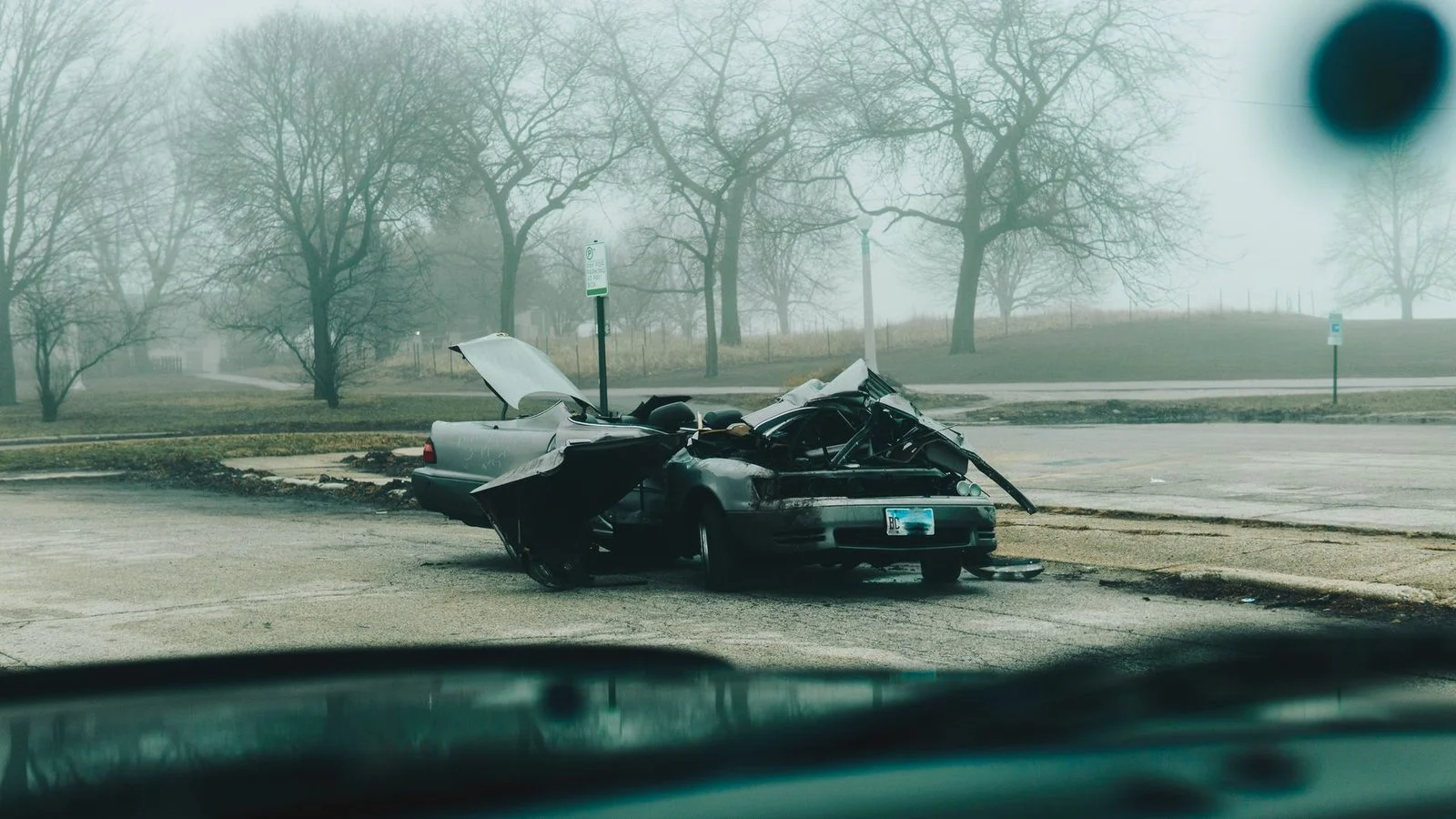
Crash forces break bones in predictable places:
- Wrists and forearms, often from bracing with your hands
- Ribs and breastbone, from the seat belt or steering wheel
- Legs and ankles, from footwell intrusion
- Pelvis and hip, often from side impacts
- Collarbone and shoulder
- Facial bones, from impact or airbag force
Some fractures are not obvious at the scene. X-rays or CT scans may be needed, and pain can grow over hours or days. Get checked promptly and keep every follow-up visit.
Your file should include emergency notes, imaging reports, casting or surgery notes, a treatment plan, and any work restrictions from your doctor. If you also have head or neck symptoms, the traumatic brain injury page covers that area.
What Compensation Can Include for a Fracture Injury
A fracture claim can include past medical bills, future care, lost income, and losses in daily life. Each item needs proof.
- Medical bills so far: ambulance, emergency care, hospital stays, surgery, imaging, medicine, and rehabilitation
- Future medical needs: follow-up surgery, hardware removal, or therapy that a treating provider documents
- Lost income: missed shifts, lost overtime, or reduced ability to earn in your usual job
- Pain and daily life: trouble driving, lifting, caring for children, or doing household work
- Out-of-pocket losses: rides to appointments and similar expenses backed by receipts
The value of a claim depends on the medical proof and the losses you can document. No one can predict an exact figure before the facts are developed. In West Virginia, a personal injury complaint may not list a specific dollar amount of damages sought (W. Va. Code § 55-7-25).
How Fault Is Decided in a West Virginia Car Crash Claim
West Virginia uses a modified comparative fault rule (W. Va. Code § 55-7-13c). You can still recover if you share some of the blame. You are barred only if your fault is greater than the combined fault of everyone else responsible.
Under W. Va. Code § 55-7-13c, if your fault is less than the combined fault of all other responsible persons, your recovery drops in proportion to your share of fault. Each at-fault party is generally liable only for its own share, not for everyone else’s.
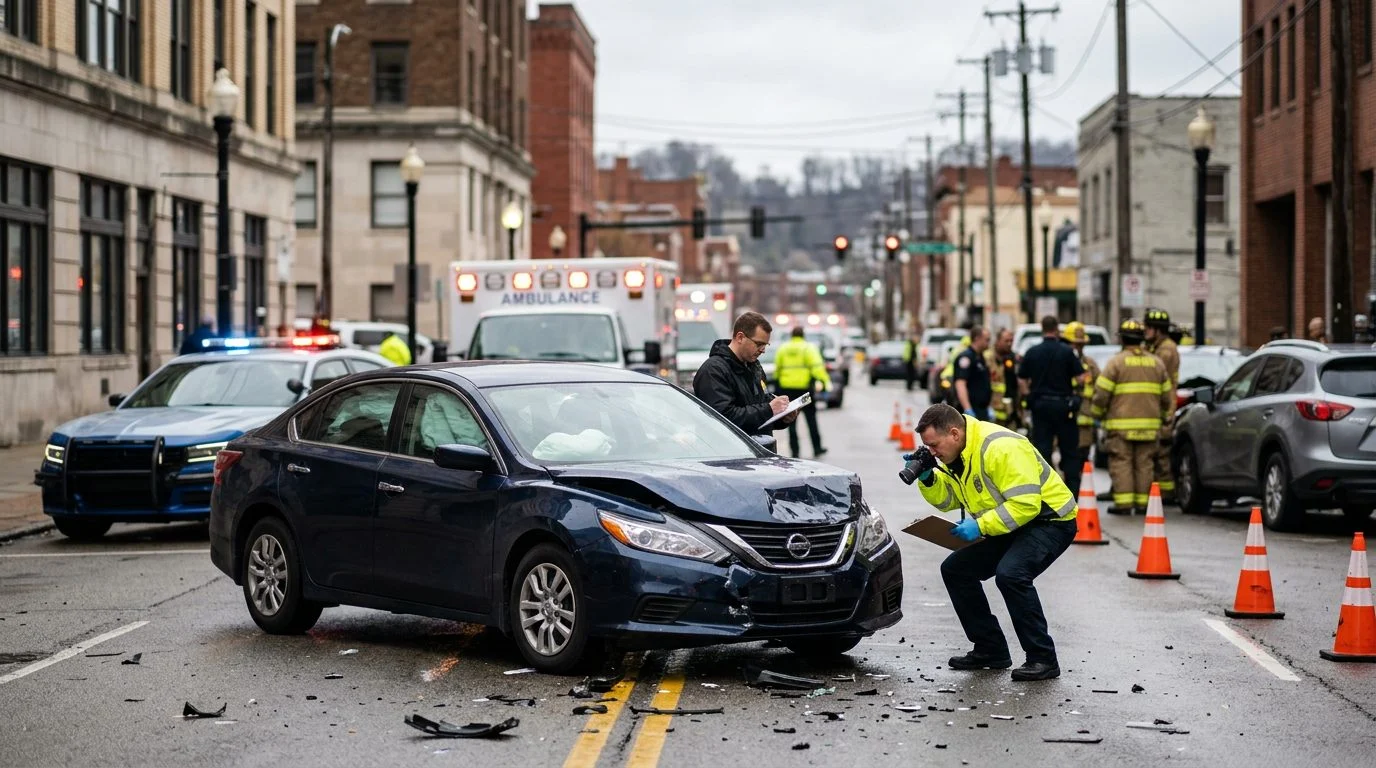
Being blamed at the scene does not end a claim. Police reports, photos, vehicle damage, and witness statements help show how the crash happened and who was at fault. Damage patterns matter in specific crash types:
- T-bone crashes: the side impact and the point of contact on each vehicle
- Rear-end impacts: the sequence of braking and the force of the hit
- Head-on collisions: the path of each vehicle and the lane positions
When a commercial truck is involved, the claim may involve more parties and more records, such as driver and company files.
How a Fracture Claim Works: Steps and Typical Timeline
A fracture claim usually moves from a free case review to evidence gathering, insurer talks, and, if needed, a lawsuit. The timeline depends on how much medical care you need.
- Free case review: You share the crash details, your injuries, and any insurance information. The firm reviews those facts with you.
- Evidence gathering: The firm works to collect police and crash reports, photos, vehicle inspection details, medical records and bills, wage records, and witness contact details.
- Insurer communication: The firm handles contact with the insurer, so you are not pressed for quick decisions.
- Demand and negotiation: Once the treatment picture is clear, a settlement demand is prepared and the insurer responds.
- Lawsuit if needed: If talks do not resolve the claim fairly, the case may move to filing, discovery, and possibly mediation or trial.
Simple fractures often resolve sooner than fractures needing surgery, hardware, or ongoing care. Those claims may wait until your medical picture settles. West Virginia law also limits early settlement moves. For 20 days after an injury, no one may negotiate a settlement or seek a release from an injured person who is in the hospital or unable to do usual work (W. Va. Code § 55-7-11a).
Deadlines and Why Early Action Protects Your Claim
Under West Virginia law, a personal injury action for which no other limitation is prescribed must be brought within two years after the right to sue arises (W. Va. Code § 55-2-12). Other claims can follow different timelines, so learn your deadline early.
Waiting also risks evidence. Vehicle data may be overwritten, skid marks fade, and witness memories blur. Starting early keeps those facts available.
Early medical care matters too. Prompt treatment and clear notes about your symptoms create a stronger record linking the fracture to the crash.
Under federal rules, a surviving commercial truck driver is tested for alcohol and drugs after a crash only in certain cases. Under 49 C.F.R. § 382.303, the employer must then test that surviving driver for alcohol as soon as practicable. If an alcohol test is not given within 2 hours, the employer must record why. Employers must end alcohol testing attempts after 8 hours and drug testing attempts after 32 hours (49 C.F.R. § 382.303).
Not sure what your next step is?
Talk it through with Big Bubba — the first case review is free, confidential, and carries no obligation.
Understanding a Broken Bone Car Accident Claim
Big Bubba Injury Law is a broken bones car accident lawyer West Virginia residents can reach. The firm handles car accidents, truck accidents, commercial vehicle accidents, catastrophic injuries, traumatic brain injury, spinal cord injury, and wrongful death claims in West Virginia.
The firm serves injury victims across all 55 West Virginia counties, including the cities listed above.
The firm has support staff who help organize records, track medical bills, and handle insurer correspondence. Each claim is handled with the firm’s responsible lawyer and that support team.
The firm explains each step in everyday words, so you know what is happening and why. You can reach out to the firm to request a free case review.
Frequently Asked Questions About Broken Bones and West Virginia Car Accident Claims
Can a broken arm support a claim?
A fracture can support a claim when another driver’s careless driving caused the crash. Medical records must tie the fracture to the crash.
Can I still recover if I was partly at fault?
West Virginia may still allow recovery. You are barred only if your fault is greater than everyone else’s combined fault.
What if my pain started days after the crash?
Some fractures and pain show up later. Get checked promptly and keep notes, because consistent records help connect the injury to the crash.
What is the filing deadline?
West Virginia’s general deadline for personal injury claims is two years (W. Va. Code § 55-2-12).
Will I have to go to court?
Some claims settle through talks with the insurer. Others move into a lawsuit when talks do not produce a fair result.

Your Next Step After a Broken Bone in a West Virginia Crash
If a recent crash left you with a broken bone, the next few weeks matter. Keep your medical records together, follow your treatment plan, and think carefully before giving any recorded statement.
Readers in the Eastern Panhandle can review Eastern Panhandle car accident information. If you were struck while walking, the pedestrian crash page explains that situation.
If you were hurt in a West Virginia crash and are weighing your next move, reach out to the firm. Tell us what happened, and we will go over the crash, your fracture, and the insurance facts with you in a free case review.