
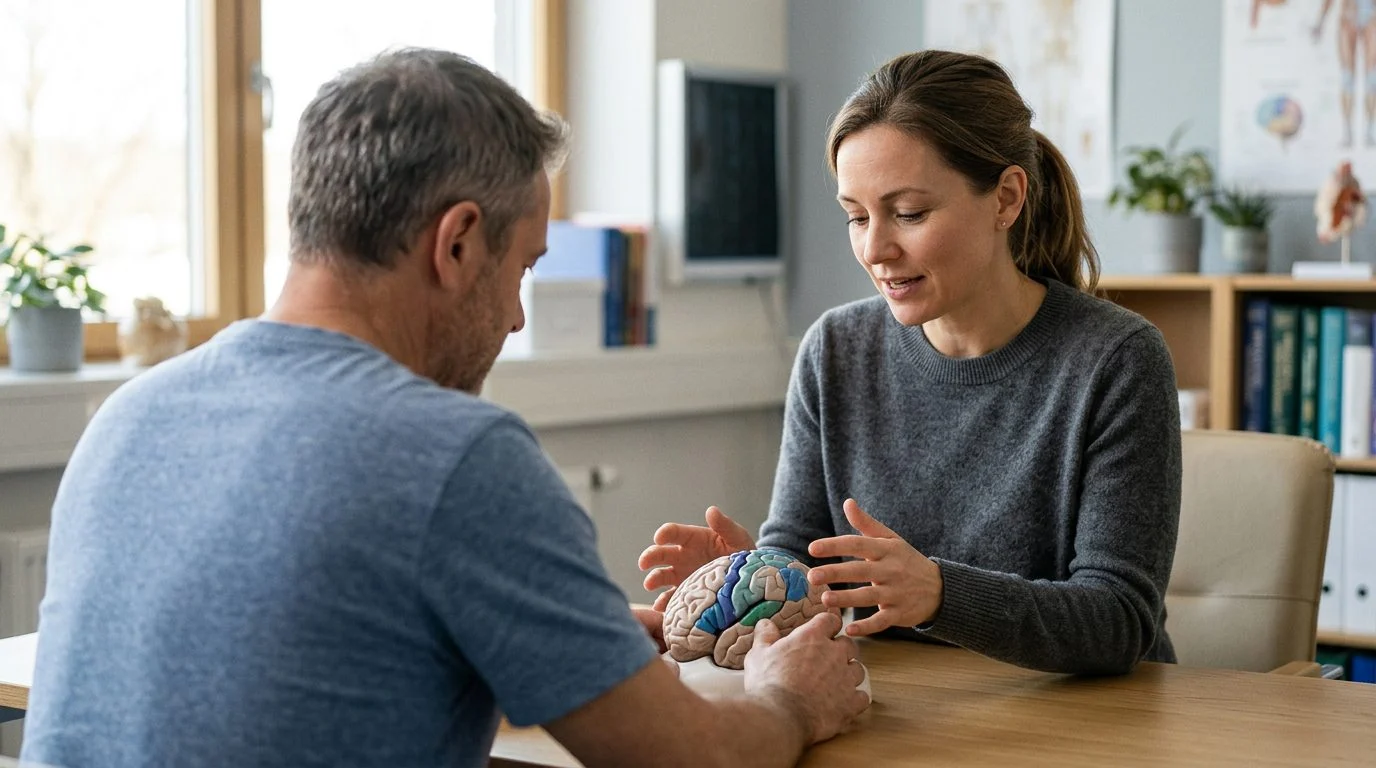
Can the Brain Heal from Traumatic Brain Injury?
Understanding recovery, neuroplasticity, and what happens after a serious head injury.
Published October 02, 2026
Can the Brain Heal from Traumatic Brain Injury?
Yes, the brain can heal after traumatic injury. The brain has an inherent ability to repair itself and form new neural connections through a process called neuroplasticity. However, healing is complex, varies widely by injury severity, and often takes months or years. Recovery doesn’t always mean returning to your exact pre-injury self, but meaningful improvement is frequently possible.
If your traumatic brain injury resulted from a car crash, truck accident, or another person's negligence, you may have a claim for damages. Talk it through with our team — the first case review is free, confidential, and carries no obligation.
Yes, the brain can heal—but recovery is complex and varies widely
The brain’s capacity to recover depends on many factors: the injury’s severity and location, your age, overall health, and access to rehabilitation. Healing isn’t a straight line. Progress may come quickly at first, then slow down for weeks or months, then accelerate again. This is normal. Many people continue to improve years after their injury, even after early progress seems to have stopped.
Recovery also means different things to different people. For some, it means returning to work or school. For others, it means regaining independence in daily tasks or rebuilding relationships. For still others, it means adapting to lasting changes while building a meaningful life with support.
How neuroplasticity allows the brain to recover
Neuroplasticity is the brain’s ability to reorganize itself by forming new neural connections. When brain tissue is damaged, undamaged regions can sometimes take over the functions that were lost. This rewiring doesn’t happen automatically—it requires work, usually through rehabilitation.
Physical therapy, occupational therapy, speech therapy, and cognitive rehabilitation activate this rewiring process. Each time you practice a skill or exercise, you’re creating new pathways in your brain. The brain’s capacity for this adaptation is strongest in the first few months after injury, but it continues for years with consistent effort and engagement.
Age matters too. Younger brains often rewire more quickly, but older adults can still achieve significant improvement. The key is consistent, targeted practice—doing the same movements, exercises, or cognitive tasks repeatedly to strengthen new pathways.
Recovery looks different for mild, moderate, and severe traumatic brain injury
Mild TBI (concussion): Most people recover fully within weeks to a few months with proper rest and a gradual return to activity. Symptoms like headache, dizziness, or difficulty concentrating usually resolve. However, some people experience persistent symptoms that take longer to fade.
Moderate TBI: Recovery typically takes months to over a year. Many people return to work or school, though some residual symptoms—like fatigue, memory problems, or mood changes—may linger. Rehabilitation makes a significant difference in outcomes.
Severe TBI: Recovery is longer and more complex. Some people regain substantial function and independence; others experience lasting changes in thinking, movement, personality, or emotion. Recovery may continue for years, and ongoing support or accommodations may be needed.
An important point: severity on brain imaging doesn’t always predict recovery. Some people with severe findings on CT or MRI scans improve dramatically, while others with milder imaging may have prolonged symptoms. This unpredictability is why early rehabilitation and ongoing medical care matter so much.
Can you ever fully recover from a traumatic brain injury?
Full recovery—returning to exactly how you were before the injury—is more common in mild TBI but less predictable in moderate to severe cases. Many people achieve what doctors call “functional recovery”: they return to work, school, or their daily routines, even if subtle changes remain.
Others experience permanent changes but adapt successfully. They develop new routines, use compensatory strategies (like written reminders or structured schedules), and rebuild their lives. The definition of recovery is personal. For some it means independence; for others it means quality of life with the right support in place.
What affects the timeline and extent of recovery
Several factors influence how quickly and how completely you recover:
- Age: Younger brains often heal faster, but age alone doesn’t determine outcome. Many older adults make remarkable recoveries.
- Rehabilitation access and intensity: Early, consistent therapy—starting in the hospital and continuing for months—accelerates healing and improves results.
- Overall health: Pre-existing conditions, nutrition, sleep quality, and mental health all affect recovery speed.
- Support system: Family involvement, social connection, and structured rehabilitation environments correlate with better outcomes.
- Engagement: Active participation in therapy and recovery efforts—rather than passive treatment—leads to better results.
Not sure what your next step is?
Talk it through with our team — the first case review is free, confidential, and carries no obligation.
What are some tips for recovery from a traumatic brain injury?
- Follow medical guidance: Work with your care team on rest, activity progression, and when it’s safe to return to work or school.
- Engage in rehabilitation: Physical therapy, occupational therapy, speech therapy, and cognitive rehabilitation are evidence-based tools for recovery. Don’t skip sessions.
- Manage fatigue and sleep: Rest is essential for healing. Prioritize sleep and manage activity to avoid overexertion, which can delay recovery.
- Avoid re-injury: Protect yourself from another head injury during recovery. A second impact can worsen outcomes significantly.
- Address emotional and cognitive changes: Counseling, support groups, and cognitive strategies help manage mood, memory, or attention changes.
- Maintain structure and routine: Predictable daily routines reduce confusion and support cognitive healing.
- Stay connected: Social engagement and family support improve motivation and emotional recovery.
What are the signs of a lack of emotion after a brain injury?
Emotional changes are common after traumatic brain injury and often overlooked. Signs include:
- Emotional blunting: Reduced ability to feel joy, sadness, or other emotions; responses feel muted or flat.
- Apathy: Loss of motivation or interest in activities, people, or goals that mattered before the injury.
- Difficulty recognizing emotions in others: Trouble reading facial expressions or understanding social cues.
- Inappropriate emotional responses: Laughing or crying at times that seem out of place, or responses that don’t match the situation.
- Irritability or anger: Sometimes emotional dysregulation appears as increased irritability rather than flatness.
Many of these changes improve with time and therapy. A neuropsychologist can assess emotional and cognitive changes and recommend specific strategies to help.
What is the life expectancy after traumatic brain injury?
Life expectancy depends on injury severity, age at injury, and overall health. Severe TBI can increase the risk of secondary complications—seizures, infections, or chronic health conditions—that require ongoing management. Access to quality medical care, rehabilitation, and social support significantly influences long-term health and life expectancy. Many people live full, productive lives after TBI, though some require ongoing support or accommodations.
Recovery continues beyond the first few months
Recovery from a brain injury can take a long time, and the damage may be temporary or permanent. Plateaus in recovery are normal; progress may resume after weeks or months of apparent stability. Late recovery—improvements months or years after injury—is well documented and shows the brain’s long-term capacity to adapt.
Ongoing therapy, mental stimulation, physical activity, and engagement support continued healing even years after injury. Don’t assume that progress has stopped just because recovery has slowed.
When to reach out for legal guidance
If your traumatic brain injury resulted from a car crash, truck accident, or another person’s negligence, you may have a claim for damages. Medical bills, rehabilitation costs, lost wages, and ongoing care expenses can be substantial. Compensation may help cover these costs and allow you to focus on recovery without financial stress.
The legal process takes time, and early consultation allows you to protect your rights while your case is handled. Many people injured in crashes don’t realize they have legal options until months later. It’s never too early to ask.
Have questions about what happened?
Ask our team directly. The first conversation is free, confidential, and there is no obligation to continue.
Frequently Asked Questions
How long does recovery from a moderate or severe traumatic brain injury typically take?
Recovery from moderate TBI usually takes months to over a year; severe TBI may take years, with some improvement continuing indefinitely.
Is neuroplasticity the same as full recovery?
No. Neuroplasticity is the brain’s ability to rewire itself, but rewiring doesn’t always restore function to pre-injury levels—though meaningful improvement is often possible.
Can someone recover from severe traumatic brain injury?
Yes, many people recover substantially from severe TBI, though recovery is longer and may involve lasting adaptations or ongoing support.
Should I pursue legal action if my brain injury came from a crash?
If someone else’s negligence caused your injury, you may have a claim for medical costs, lost income, and other damages—but timing matters, so early consultation is wise.
If you or someone you care for suffered a traumatic brain injury in a car crash, truck accident, or other incident in West Virginia, the path forward involves both medical recovery and, often, legal protection of your rights. People researching brain injury recovery after a crash frequently have questions about compensation and next steps. Reach out to discuss your situation and learn what options may be available.
Recovery is not always full recovery
The brain can rewire itself and form new connections after injury—a process called neuroplasticity. But rewiring doesn't always restore lost function completely. Recovery depends on the severity of the injury, the person's age, overall health, and the quality of rehabilitation and support they receive.
What affects brain injury recovery
Severity of the injury
Mild TBI may show improvement within weeks to months. Moderate TBI often takes months to over a year. Severe TBI may require years of recovery, with some improvement continuing indefinitely.
Age and overall health
Younger people and those in better health often recover more function. Pre-existing conditions, prior injuries, and age all play a role in how the brain heals.
Rehabilitation and support
Physical therapy, occupational therapy, speech therapy, and cognitive rehabilitation can help the brain rewire and regain lost abilities. Early intervention and consistent therapy improve outcomes.
Individual differences
Every brain injury is unique. Two people with similar injuries may recover very differently based on their individual biology, circumstances, and access to care.
Why Big Bubba handles traumatic brain injury cases
We focus exclusively on serious injury and wrongful death
Traumatic brain injury claims after car crashes, truck accidents, and other catastrophic injuries involve medical, legal, and financial complexities.
We understand what's at stake
A traumatic brain injury changes lives. We fight to help families get the resources they need for ongoing care, rehabilitation, and support.
We're here to listen
Tell us what happened. We'll explain your options and answer your questions in plain language, without pressure or jargon.
No fees unless there is a recovery
We work on a contingency basis. You pay no attorney fees unless we recover compensation for you. You are responsible for court costs and case expenses. We'll discuss all costs upfront.
Ready to talk about your case?
Related practice areas
- Traumatic Brain Injury from Car and Truck Accidents in West Virginia
- Wrongful Death Car Accident Compensation in West Virginia