
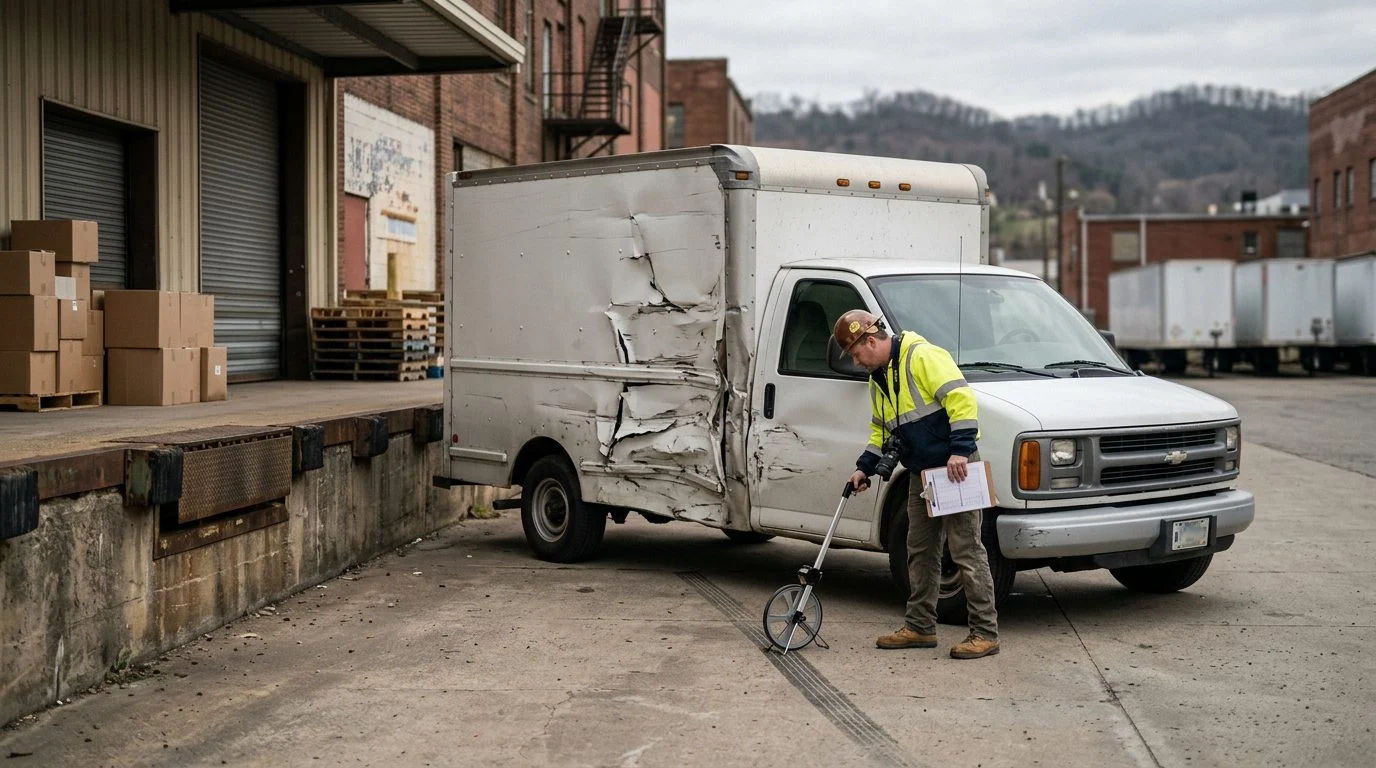
Car and Commercial Vehicle Accidents | West Virginia
Hurt by a Company Van? Find Out Who May Be Responsible
Crashes involving company vehicles can involve more than one party. Talk with the firm about where your claim stands.
Published November 16, 2026
If a company van hit you, or someone you love, you may be asking a simple question: can you sue the company, or only the driver? In many cases, a claim may reach the company too, but the answer turns on the facts of the crash. Three questions usually decide it: who owned the van, who was driving, and whether the driver was doing company work at the time.
Short Answer: Can You Sue the Company Whose Van Hit You?
In many cases, a person hit by a company van may be able to bring a claim against the company as well as the driver. Whether that works in a given crash depends on the facts, so it helps to look at each question.
The first is ownership. Who owns the van matters, because the owner may be a possible defendant. The second is the driver: who was behind the wheel, and did that person work for the company? The third is purpose. Was the driver making a delivery, heading to a job site, or running a personal errand?
Those questions can feel like a lot while you’re hurting, or while a family member is in the hospital. You don’t need every answer on day one. Writing down what you know now, including the company name and the crash date, gives you a starting point.
If a company van hit you or someone you love, you don't have to sort out who may be responsible alone; reach out for a free case review. Talk it through with Big Bubba — the first case review is free, confidential, and carries no obligation.
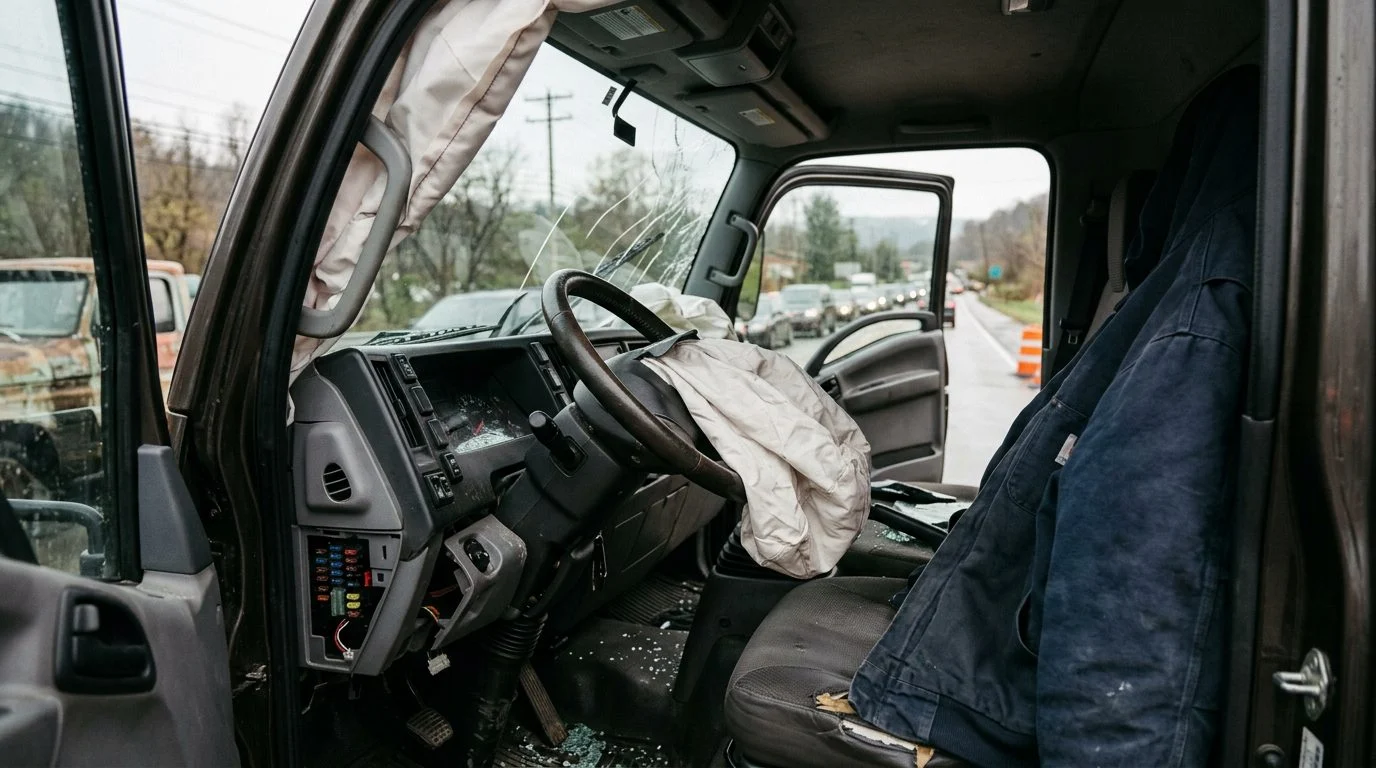
Who Can Be Responsible When a Company Van Causes a Crash
The driver, the employer, and sometimes the vehicle owner may each be possible defendants in a company van crash.
The driver is often the starting point. A driver who was careless, such as speeding, distracted, or failing to yield, may be personally responsible for the harm that follows.
The employer may also be answerable. Who is responsible for a worker’s actions on the job can be a central question in truck and commercial vehicle crash cases.
A company may also face direct claims. Questions about how carefully a company checked a driver’s background before hiring can also come up in some crash cases. McCormick v. West Virginia Department of Public Safety addresses that theory. A vehicle owner who lets an unfit person drive may face a similar question.
Other parties, such as a maintenance contractor or a parts maker, may be relevant in some crashes. Under West Virginia’s comparative fault rules, your own share of fault may reduce a recovery. It usually does not bar recovery unless your fault is greater than everyone else’s combined, under W. Va. Code § 55-7-13c.
Why Whether the Driver Was Working Matters
Whether the driver was doing company work at the time is often a central question in these claims.
Purpose can change the picture. A driver making a delivery, returning from a route, or heading to a job site is usually easier to connect to the company’s business. A driver who took a detour for personal reasons may raise different questions.
Certain records may help show what the driver was doing. Dispatch logs, delivery schedules, route data, and phone records can all be relevant. Some companies also use GPS systems, and those records may not be kept indefinitely.
Ownership and purpose often work together. Even when the company owns the van, the question of whether the driver was on the job still needs answers. Insurers and company representatives may read the same records in different ways, so keep your own notes about what you saw and heard after the crash.
What a Claim Against a Company Van May Cover
A claim may seek compensation for medical care, lost wages, property damage, and pain and suffering.
For the person who was hurt, a claim may address past and future medical treatment, rehabilitation, time away from work, and a reduced ability to earn a living. It may also address damage to the vehicle and the emotional toll of the crash.
Serious injuries change the picture. A traumatic brain injury or a spinal cord injury may involve long-term care, therapy, equipment, and changes to daily life. Those needs may take time to understand, so a claim may need to account for how a condition changes over time. Our spinal cord injury page covers these needs in more detail.
When a company van crash causes a death, the family may have a different claim. West Virginia law allows an action for damages when a death is caused by a wrongful act that would have allowed the injured person to sue (W. Va. Code § 55-7-5). The wrongful death statute also lists categories such as loss of companionship, expected loss of income, and funeral expenses (W. Va. Code § 55-7-6).
How Long You Have to File in West Virginia
West Virginia generally allows two years to file a personal injury lawsuit, and exceptions may apply (W. Va. Code § 55-2-12).
The general rule comes from W. Va. Code § 55-2-12, which sets two years for personal injury and for damage to property. Because deadlines can run out quickly, write the crash date down today and keep it somewhere safe.
Wrongful death claims follow a separate clock. A wrongful death action generally must be started within two years after the death, subject to tolling rules that may apply (W. Va. Code § 55-7-6). The action is brought by the personal representative of the deceased person’s estate.
Claims against a public entity follow their own rules. For a claim against a political subdivision, the statute generally requires filing within two years after the cause of action arose, or after the injury was discovered or reasonably should have been discovered, whichever last occurs, or within any shorter period the code provides (W. Va. Code § 29-12a-6). A city or county vehicle may fall under that section, so check the timing early.
Insurance Coverage That May Apply
A company’s commercial auto policy and the driver’s personal policy may both be relevant to a claim.
A company may carry commercial auto liability insurance, and the driver may carry a personal auto policy. Both may matter, and one policy may not cover every loss.
Some insurers may dispute a claim, question who was at fault, or ask for a recorded statement early. Before you give one, know that West Virginia restricts certain settlement activity for a short window. An exception allows a person acting for and on behalf of the injured person to obtain a statement from the injured person upon the injured person’s express request.
Your own coverage may matter too. Uninsured and underinsured motorist coverage, which West Virginia law addresses in W. Va. Code § 33-6-31, may pay sums you are legally entitled to recover from an uninsured or underinsured driver.
Not sure what your next step is?
Talk it through with Big Bubba — the first case review is free, confidential, and carries no obligation.
When the Driver Cannot Be Identified or Left the Scene
If the driver left the scene or cannot be identified, your own uninsured motorist coverage may be relevant.
Hit-and-run crashes raise separate questions. Who can be sued may stay unclear until the driver or the vehicle is found, and the company may not be known at first.
West Virginia’s auto insurance statute includes a notice step for these cases. When the other party’s identity is unknown, the insured or a legal representative generally must notify the insurer within sixty days after the accident that a cause of action exists. If the insurance company makes a written request, communicated to the insured not later than five days after it receives the notice, the insured must make available for inspection the motor vehicle the insured was occupying at the time of the accident (W. Va. Code § 33-6-31).
Police records may help. Under W. Va. Code § 17C-4-7, an officer who investigates a crash occurring on the public streets or highways of this state with bodily injury, death, or $1,000 or more in property damage must prepare a report within 24 hours after completing the investigation. The officer must also share owner and insurance information with the other parties on request, within 24 hours of the crash.
Evidence to Preserve After a Company Van Crash
The evidence most worth preserving early shows who owned the van, who was driving, and what job the driver was doing.
Photograph the van as soon as it is safe. Capture the company name, logo, phone number, and any unit or fleet number. Photograph the damage to both vehicles and the scene.
Write down the driver’s name, the employer’s name, and any witness contact details while they are fresh. Keep the other driver’s insurance card and license plate number.
Save every medical record, bill, and work-absence note. These records may matter when proving losses.
Keep texts, emails, and social media posts about the crash. Avoid posting details about the accident online, because insurers and other parties may see them.
If the van is a commercial motor vehicle, federal hours-of-service rules limit how long drivers may drive and require certain breaks (FMCSA). Driver schedules and logs may be relevant to that question.
Next Steps If Someone You Care About Was Hit by a Company Van
If someone you care about was hit by a company van, the first steps usually involve records, deadlines, and insurance.
You may be reading this for a parent, spouse, child, or friend who is still recovering and cannot yet make decisions about a claim. Family members may gather records and documents related to the crash. Family members often gather records, track dates, and speak with police while the injured person heals.
We serve injury victims across West Virginia, including families facing a wrongful death claim.
Common Questions
Can I sue the company if its employee was driving?
Possibly. Whether an employer answers for a worker’s conduct on the job is a question that can come up after a commercial vehicle crash.
Is the deadline two years?
West Virginia generally allows two years for personal injury and property damage claims, and exceptions may apply.
Can I recover if I was partly at fault?
Usually, a share of fault reduces recovery rather than barring it, unless your fault is greater than everyone else’s combined.
If a company van hit you or someone you love, and you’re still sorting out who may be responsible, you can request a free case review with the firm.