
West Virginia Injury Guide
Hit From Behind in West Virginia? Understand Your Next Steps
Rear-end crashes raise hard questions about fault, injuries, and insurance. Here is a plain-language overview of how these claims work and how the firm can help you think them through.
Published November 14, 2026
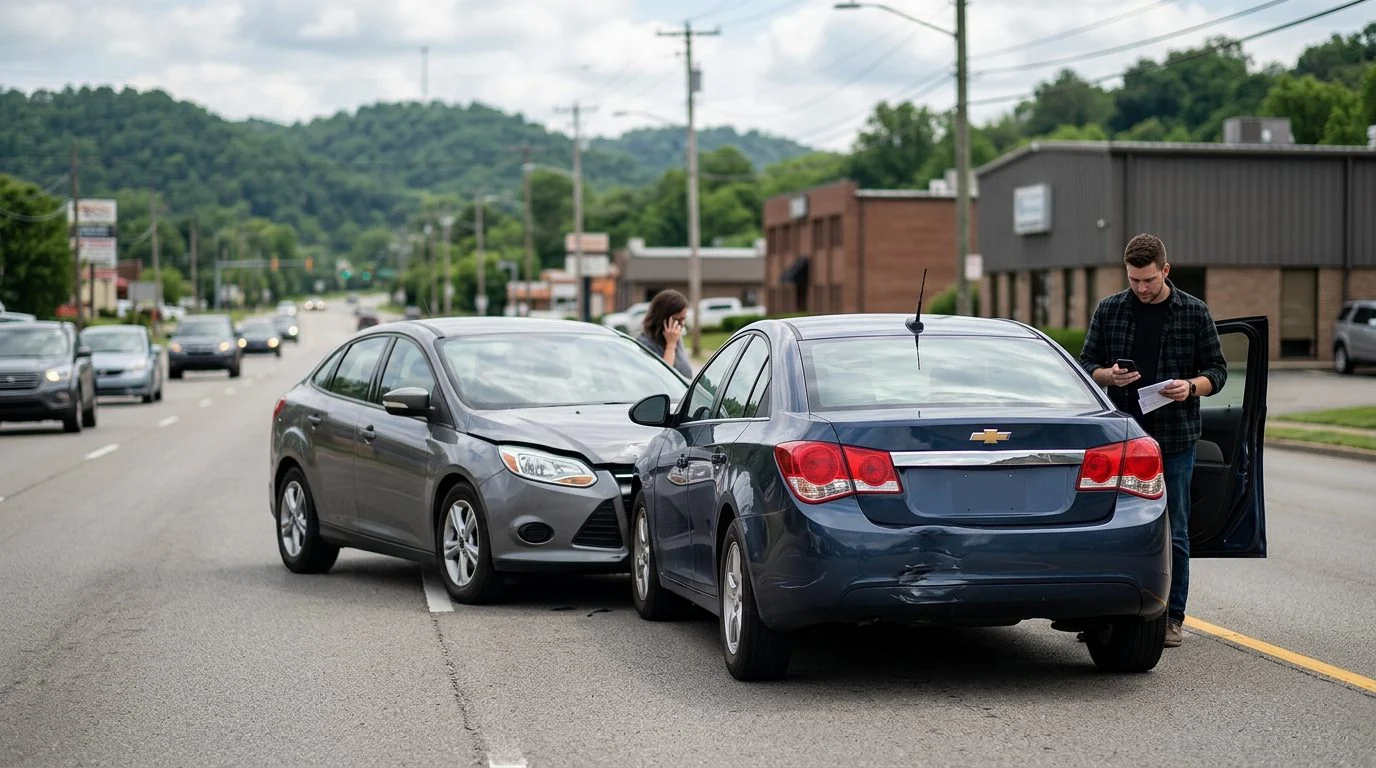
Being hit from behind can leave you hurt, shaken, and unsure who pays for the damage. In West Virginia, a person hurt in a rear-end crash can generally bring a claim against the other driver whose carelessness caused the harm, and exceptions may apply. Fault depends on how the crash happened, not on the position of the cars alone.
Short Answer: Can You Be Sued After a Rear-End Crash?
Yes, a driver who rear-ended someone may face a claim too, if that driver’s carelessness caused the crash. Who is at fault in a crash depends on the facts of each case.
West Virginia uses modified comparative fault, which means each driver’s share of blame is weighed. Under W. Va. Code § 55-7-13c, fault chargeable to the injured person does not bar recovery unless that person’s fault is greater than the combined fault of everyone else responsible. If it is less, the recovery is reduced in proportion to that person’s share. W. Va. Code § 55-7-13a says fault is expressed as a percentage and divided among each person who proximately caused the harm, meaning the people whose actions directly led to it.
So a rear-end case is rarely a simple yes or no. It usually comes down to how the blame is divided.
Hit from behind and not sure whether you have a claim? You can reach out to us to request a free case review, which is confidential. Talk it through with Big Bubba — the first case review is free, confidential, and carries no obligation.
Why Rear-End Crashes Are Often Blamed on the Following Driver
The following driver is usually examined first, because that driver generally had the chance to stop in time. Many drivers are expected to keep a safe following distance and watch the traffic ahead. That expectation shapes how investigators look at the back driver’s choices.
The back driver’s account at the scene can matter a lot. What you saw, where you were, and when you braked may shape how the crash is first recorded.
That starting point is not the end of the analysis. Fault can shift when the driver in front did something that helped cause the collision.
Another point people miss is that more than two drivers can share blame. West Virginia law requires the fault of every person who contributed to the harm to be considered, including someone who was not named in the lawsuit; fault of a nonparty is considered if the plaintiff entered into a settlement agreement with the nonparty or if a defending party gives notice no later than one hundred eighty days after service of process upon said defendant that a nonparty was wholly or partially at fault. See W. Va. Code § 55-7-13d. See W. Va. Code § 55-7-13d.
When the Driver in Front May Be at Fault
The driver in front may share fault when that driver’s own actions helped cause the crash. Several situations may matter.
A sudden stop with no traffic reason may be relevant, especially if it looks meant to cause a collision. A driver who changes lanes or merges into a small gap right in front of another car may also share responsibility. Backing into a vehicle, or pulling out from a stop without checking traffic, may be relevant too.
Equipment problems can matter. Defective brake lights, or a vehicle that loses control without warning, may change the picture.
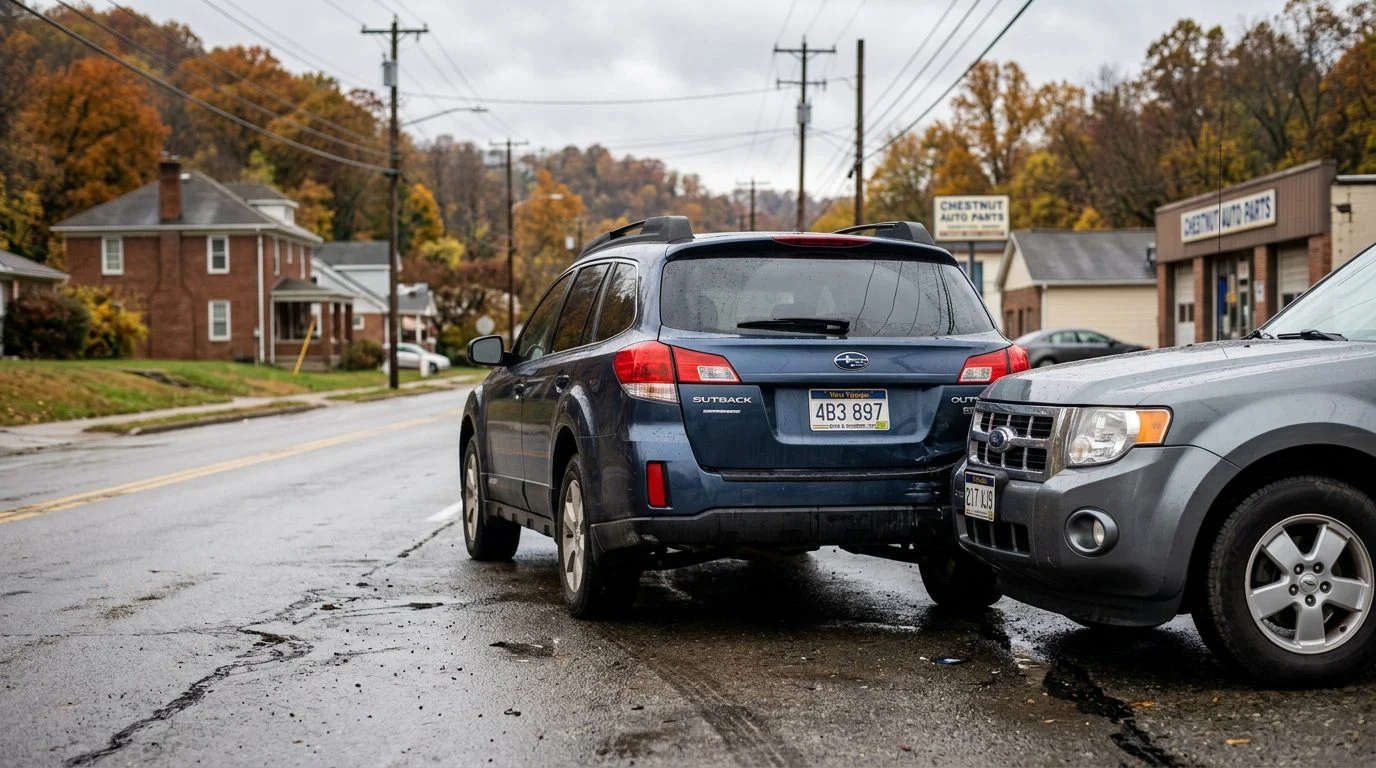
In a chain crash, one impact pushes a car into another. More than two drivers may be involved, and each person’s share of fault is weighed.
Mistakes can hurt a claim here. Admitting fault at the scene, even with a short apology, may be repeated later in reports. Stay calm, stick to facts you saw, and avoid guessing about speed or distance.
Who Can Bring a Claim After a Rear-End Crash
The person who was hurt can generally bring a claim against the at-fault driver. Passengers may not realize they have their own claim. A passenger hurt in a car struck from behind may have a claim against whichever driver they believe was responsible.
Federal rules also require commercial vehicles to follow the laws of the state where they are driven, and stricter federal safety rules can apply, as 49 C.F.R. § 392.2 explains.
Families have a separate path if a rear-end crash results in death. Under W. Va. Code § 55-7-6, a wrongful death action is brought by the deceased person’s personal representative. Recoverable damages can include sorrow, mental anguish, and certain expenses.
Evidence That May Matter in a Rear-End Crash Claim
Several kinds of evidence may show how a rear-end crash happened. Gathering it early helps preserve what it shows.
The police report may list the crash diagram, witness names, and the officer’s notes on vehicle positions. Photos of both vehicles, the damage pattern, and skid marks may also help.
Dashcam footage, vehicle event data, or traffic camera video may exist. It may be overwritten or deleted, so ask about it early.
Witness statements from other drivers or passengers may describe the braking, lane change, or stop. Medical records document injuries and when symptoms began, which may link them to the crash.
Insurance is a separate question from a lawsuit. Whether any of this evidence helps depends on the facts of your crash.
Injuries, Time Limits, and Your Next Step
West Virginia generally allows two years to file a personal injury claim, and exceptions may apply. W. Va. Code § 55-2-12 sets that general period, so the timing of a claim should be reviewed early.
Injuries after a rear impact may not show up right away. The Brain Injury Association of America notes that traumatic brain injury symptoms can be masked or delayed after a crash, and new symptoms should be reported promptly to a health care professional. Neck, back, and spinal injuries may also appear days or weeks later. Prompt medical evaluation matters for your health and for your record.
If court papers arrive, don’t set them aside. They may carry deadlines.
We handle car accident, truck accident, and wrongful death claims across West Virginia. We serve injury victims in places such as Charleston, Huntington, and Wheeling. If you were hit from behind and aren’t sure where you stand, reach out to us to request a free case review, which is confidential.