
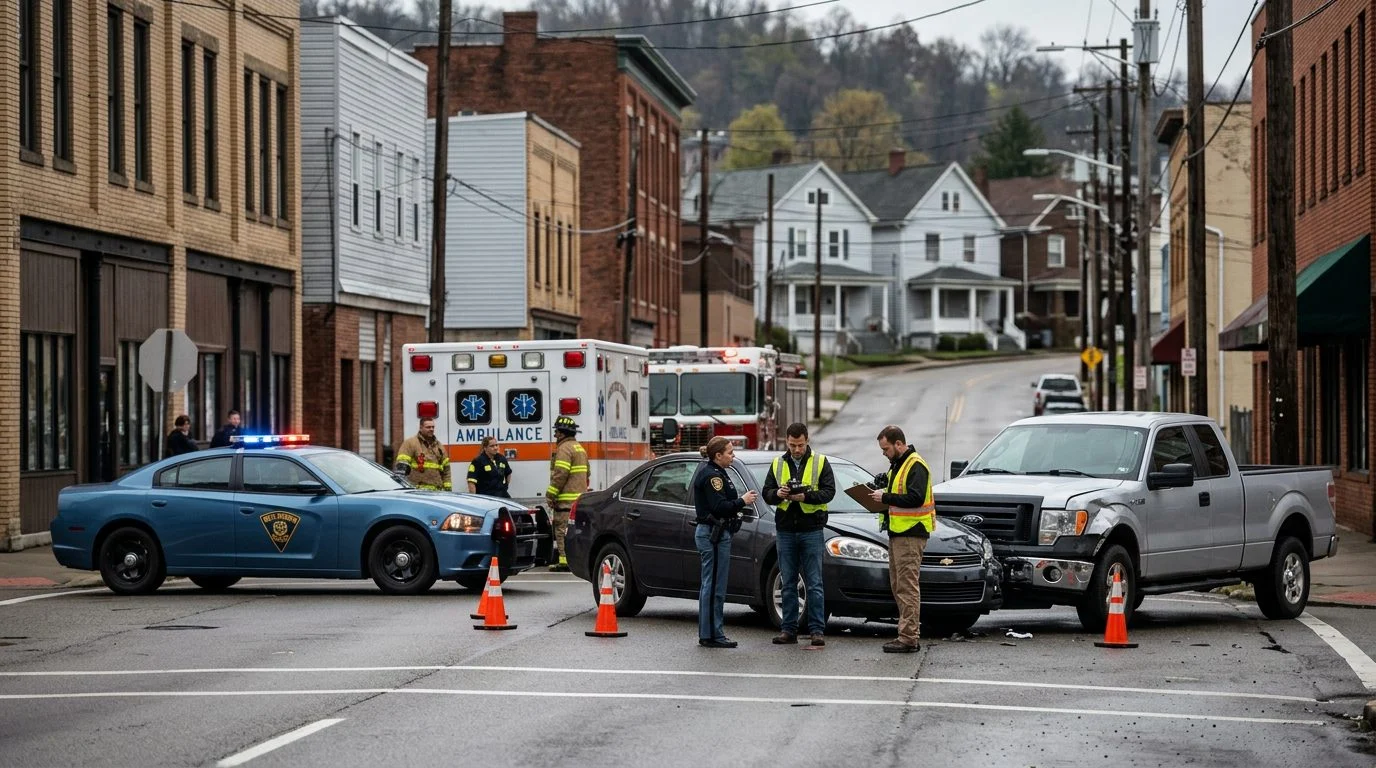
Car and Truck Crash Injury Claims in West Virginia
Went to the ER After a Crash? Talk With the Firm About Your Claim
Pain, stiffness, and other symptoms do not always show up right away. Here is how the firm helps people sort out their medical records and what comes next.
Published November 14, 2026
If you had an ER visit after a car accident, you may wonder what it means for an injury claim in West Virginia. The ER record can link your injuries to the crash, and it is often the earliest written proof you have. West Virginia generally allows two years to file a personal injury claim, and exceptions may apply (W. Va. Code § 55-2-12).
An ER Visit After a Car Accident Creates Early Proof
An ER visit after a crash creates an early medical record that can connect your injuries to the collision. This guide is for drivers, passengers, and families in West Virginia who were seen in an emergency room after a car or commercial truck crash.
The first chart is written close to the crash. It captures what you reported, what staff observed, and what tests showed. Later visits add more detail, but this first record comes first.
Many crash injuries show up in the ER. These include concussions and traumatic brain injury, spinal cord injury, broken bones, and internal or orthopedic injuries. Spinal cord injuries can result from motor vehicle accidents. MedlinePlus spinal cord injury notes that weakness, paralysis, and loss of sensation may follow.
Some symptoms take hours or days to appear. Headaches, dizziness, neck pain, or numbness may start later. Tell ER staff about every symptom, even minor ones, so the record reflects what you felt.
If you went to an ER after a crash and are unsure what your records mean for your claim, you can reach out to us for a free case review. Talk it through with Big Bubba — the first case review is free, confidential, and carries no obligation.

Which ER Records and Imaging Matter Most
The triage notes, imaging reports, and discharge papers matter most in an injury claim. Each part of the ER file tells a different part of the story.
- Triage and intake notes. These record how the crash happened and the symptoms you reported on arrival.
- Imaging results. CT scans, X-rays, and MRI reports belong in the file. The written report matters as much as the pictures, because it records what the reviewing physician found.
- Diagnoses and discharge papers. These show what the care team concluded, what you were told to do, and any prescriptions.
- Referrals and follow-up. Notes from primary care, neurology, or physical therapy belong with the ER file.
To get copies, ask the hospital’s medical records department in writing for your complete chart. Keep a personal copy of everything you receive, and write down the date you asked. Organized records make it easier to see the full picture later.
ER Record Issues That Can Affect an Injury Claim
Gaps in care, inconsistent accounts, and errors in records can raise questions in a claim. Knowing what to watch for helps you keep your file accurate.
- Gaps in treatment. A long stretch with no care after the ER visit may draw questions. Some insurers may point to gaps when they review a claim.
- Inconsistent descriptions. If the crash story differs between the ER notes and later visits, the difference may be questioned. Describe what you remember, and say when you are unsure.
- Record errors. Wrong dates, missing symptoms, or an incorrect medication list can happen. Ask the provider to review and correct the record through its records process.
Whether any of these issues matters depends on the facts of each case. Mentioning every symptom at every visit is the simplest way to keep the record accurate.
West Virginia Deadlines and Fault Rules for Car Accident Claims
West Virginia generally allows two years to file a personal injury claim, and exceptions may apply. The clock generally starts when the right to bring the action accrues, which ties to the injury. See West Virginia Code § 55-2-12 for the statute’s text.
If another driver’s carelessness caused your crash, that driver may be liable for resulting damages.
West Virginia uses modified comparative fault. Under West Virginia Code § 55-7-13c, your own fault generally bars recovery only when it is greater than the combined fault of all other people responsible. If your share is smaller, your recovery is reduced in proportion to your share of fault.
Families face different timing. West Virginia Code § 55-7-6 says a wrongful death action is brought by the personal representative of the deceased person. It generally must start within two years after the death, and exceptions may apply. Families should raise the question early, because waiting can make evidence harder to collect.
Scene Steps, Police Reports, and Insurer Calls
Document the scene, request the crash report, and think carefully before speaking with an insurer. Small steps taken early can help keep facts clear.
- Photos. Take pictures of vehicles, roadway conditions, traffic signals, and visible injuries.
- Information and witnesses. Exchange names, insurance details, and license plate numbers. Write down the names and phone numbers of anyone who saw the crash.
- Police crash report. The reporting agency may charge its own copy fee for the report.
- Insurer timing. West Virginia Code § 55-7-11a limits certain settlement contacts for twenty days after a personal injury, while the injured person is a hospital inpatient or is partially or totally unable to do their usual work. Under W. Va. Code § 55-7-11a, a settlement, release of liability or statement made in violation of the section may be disavowed by the injured person within one hundred eighty days from the date of the injury. To do so, the injured person signs a written statement of disavowal and sends a copy to the person who violated the section. For it to be kept out of evidence, any money paid for the settlement or release must be repaid or returned.
- Recorded statements. Some insurers may dispute a claim. Describe only what you know, and say when you do not know something.
How the Firm Helps With Car Accident Injury Claims
The firm handles car, truck, and commercial vehicle crash claims, along with catastrophic injury, traumatic brain injury, spinal cord injury, and wrongful death cases. We serve injury victims in Charleston, Huntington, Morgantown, Wheeling, Martinsburg, Parkersburg, Beckley, Clarksburg, Fairmont, Weirton, and across West Virginia.
Truck crashes add federal rules. The Federal Motor Carrier Safety Regulations govern commercial motor carriers, and they can matter alongside West Virginia law in a truck claim.
A free case review is an offer the firm makes at the start. It can cover your ER and medical records, the crash facts, and the deadlines that may apply. You do not have to continue after the review.
After that, typical steps include gathering records, looking into fault, communicating with insurers, and evaluating the claim. Timing varies from case to case.
Not sure what your next step is?
Talk it through with Big Bubba — the first case review is free, confidential, and carries no obligation.

Frequently Asked Questions
Can I still have an injury claim if I went to the ER days after the crash?
Delayed symptoms can happen after a crash. Later medical records can help show when symptoms began and how they changed.
Do I need a police report to start a claim?
A police report can be useful evidence. It is one piece of the file, not the only one.
What if my ER record has an error?
Ask the provider to review the record and correct it through its records process. Keep a copy of your request.
How long do I have to file?
West Virginia generally allows two years for most personal injury claims, and exceptions may apply. See West Virginia Code § 55-2-12.
If you went to an emergency room after a crash and are unsure what your records mean for a claim, tell Big Bubba what happened and request a free case review.