

Car Accident Guide for West Virginia
Keep a Clear Record of Your Crash and Recovery
A simple, dated journal helps you remember what happened, how you feel, and how the crash changes your days. Use it to organize your thoughts and share them with the firm.
Published November 17, 2026
Being hurt in a car crash, or watching someone you love go through one, is hard to sort out. Pain, shock, and a flood of phone calls can blur what happened.
The short answer: start a dated journal on the day of the crash. Record the facts, every symptom, every medical visit, and every way the crash changes daily life. The checklist below walks you through each part.
Why Keep an Injury Journal After a West Virginia Car Crash
A dated journal gives you one clear record of what happened and how you have felt since. It helps you and your family remember details that are easy to lose.
- Can you write or dictate entries most days? If yes, make it a short daily habit. If not, a family member can keep the log, using the injured person’s own words wherever possible.
- Has shock or a head injury made your memory unreliable? Shock and head injuries can affect memory. If yes, write entries the same day and mark anything you recall later as recalled later.
- Are you keeping the journal as a personal record? If yes, keep it beside your medical records. The journal supports those records. It does not replace them.
Not sure what your next step is?
Talk it through with Big Bubba — the first case review is free, confidential, and carries no obligation.
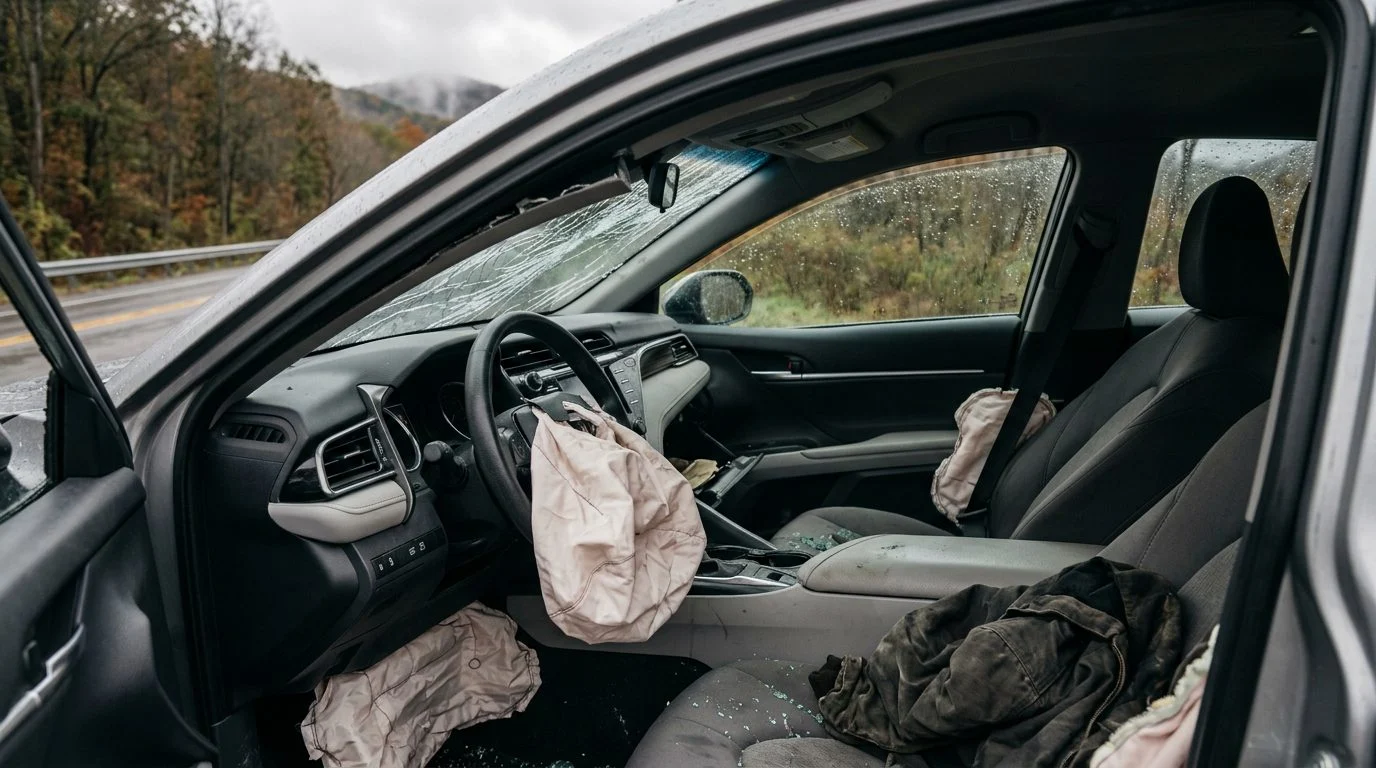
Day-of-Crash Checklist: What to Write Down Right Away
Write the basic facts down while they are fresh, ideally the same day.
- Did you record the date, time, and exact location? If yes, add the road name and nearest town. If not, write what you can now and note when you wrote it.
- Did you note the other drivers, passengers, and vehicles? Include license plate numbers and the insurance details exchanged. West Virginia law requires a driver in a crash resulting in injury to or death of any person, or damage to any vehicle which is driven or attended by any person, to give certain information, if physically able (W. Va. Code § 17C-4-3). Keep a copy of anything exchanged.
- Did you describe how the crash happened in your own words? Note the weather, road conditions, and where you were seated. Date the entry and write only what you saw.
- Did you note any symptoms, even minor ones? Write them down now. Symptoms can change over the next few days, so log them again later.
Crash Report Checklist for West Virginia Crash Victims
Your journal should track where the crash report stands. Under West Virginia law, an investigating officer must prepare a report within 24 hours after completing the investigation of a crash on public streets or highways that results in bodily injury, death, or total property damage to an apparent extent of $1,000 or more (W. Va. Code § 17C-4-7).
- Did the agency give you a report number or card? If yes, write the number and agency name in the journal. If not, ask the agency and note the date you asked.
- Do you have a copy of the crash report? If not, ask the investigating agency how to request one. Note the date and the name of the person you spoke with.
- Did you record the responding officers’ names or unit numbers? If yes, keep them with your crash notes.
- Does the report differ from your notes? If yes, write both versions and date each one. Do not change earlier entries.
Daily Symptom Log: Tracking Physical, Mental, and Sleep Changes
Log symptoms every day, even small ones, and note when each one started.
- Did you have headaches, dizziness, neck or back pain, numbness, tingling, or weakness today? Rate each one from 0 to 10. Note what helped and what made it worse.
- Have your memory, focus, mood, or sleep changed since the crash? Write specific examples, such as a missed appointment or a word you could not find.
- Did a symptom start days or weeks after the crash? Record the date you first noticed it, and tell your doctor. Delayed symptoms are worth reporting.
- Have you noticed numbness, tingling, or weakness in your arms or hands? Nerves in the neck help control the arms, hands, and the diaphragm, the muscle used for breathing (NINDS). If breathing changes, seek emergency medical care right away.
A medical provider, not the journal, decides what a symptom means.
Medical Visits, Treatment, and Prescriptions Checklist
Every visit, test, and prescription belongs in the journal, with dates and names.
- Did you log each appointment with the provider’s name, date, and reason? If yes, keep discharge papers and visit summaries together. If not, request the summaries from the office.
- Did you record every prescription, dose, and side effect? Note when each one started, changed, or stopped.
- Did you write down referrals, imaging, therapy, and tests you were told to schedule? Confirm each one was completed. If you missed one, write down why.
- Did you tell each provider how the crash happened and what symptoms you had? Write down what you said and when. This keeps your account consistent across visits.
Work, Home, and Daily Life: What the Crash Changed
Your daily life is part of the record. Log lost work time and tasks you can no longer do.
- Did you miss work or lose hours because of the crash or treatment? Note the dates, the reason, and any written note from an employer or provider.
- Can you still do your usual tasks, such as driving, cooking, childcare, yard work, or lifting? List each task you could not do, and who helped you with it.
- Did you pay out-of-pocket for rides to appointments, medical equipment, or medication? Save each receipt and log it by date.
- How have relationships, hobbies, or activities changed? Describe the change in plain, specific terms.
If a commercial truck was involved, federal rules may require post-accident drug and alcohol testing (FMCSA). Log the crash date and any testing you learn about.
Not sure what your next step is?
Talk it through with Big Bubba — the first case review is free, confidential, and carries no obligation.
Evidence and Keeping the Journal Organized
Keep the journal dated, unedited, and backed up. Store photos and witness details beside it.
- Did you save photos of the vehicles, the scene, and visible injuries, with dates? Keep the original files, and do not edit them.
- Did you write down witness names and contact information? If yes, store them with your crash notes.
- Are your earlier entries unchanged? If you need a correction, write a new dated note that explains it.
- Do you have a backup, such as a second paper copy or a secure digital copy? If not, keep one copy where a family member can reach it.
West Virginia sets a time limit for filing injury claims, so dated records made early are useful.

Next Steps: Sharing Your Journal and Reaching Out to the Firm
If you are keeping this journal for someone else, say so at the top of the first entry, along with your relationship to them.
If many answers above are still no or unknown, that is understandable in the weeks after a crash. The journal can grow over time. For an overview of the practice areas, see the traumatic brain injury accident overview. The car accident recovery timeline covers what recovery can look like. Parents of new drivers can read the teen driver checklist, and adult children of older drivers can read the older driver checklist.
You may be writing this journal alone, late at night, while also caring for someone you love. We serve injury victims across West Virginia. If that is your situation, reach out for a free case review and bring your journal to that conversation.