
Spinal Cord Injury | West Virginia
Hurt in a Crash, But Your X-Rays Looked Clear?
Normal imaging does not always rule out spinal cord damage. Learn what can be overlooked and how the firm can help you understand your options.
Published November 17, 2026
If your X-rays looked fine after a crash but the numbness or weakness hasn’t gone away, you may be wondering what’s really wrong. Here is the short answer: yes, a car accident can injure the spinal cord even when no bone is broken. The spinal cord is soft nerve tissue. It can be stretched, bruised, or pressed without a fracture showing on a basic scan. This page explains how that happens, why symptoms can arrive late, and which records matter.
What “Without a Broken Back” Really Means
A spinal cord injury and a broken back are different things, and the cord can be hurt without any bone breaking. The spine is made of vertebrae, the stacked bones that protect and support your back. The spinal cord is the bundle of nerve tissue that runs through the spinal canal, the hollow tunnel inside those bones. The cord carries signals between your brain and the rest of your body.
The NINDS spinal cord injury overview describes the cord as protected by three layers of tissue. Cerebrospinal fluid (CSF) surrounds it and acts as a cushion against shock. That cushion helps, but it does not make the cord immune to force.
Think of it this way. A fracture is damage to the bone. A cord injury is damage to the nerves inside the tunnel. The two can happen together, or one can happen without the other. That is why a person can feel numb, weak, or painful after a crash while the bone images look normal.
This page explains how cord injuries happen and what symptoms to watch for. Only a medical evaluation can say what happened in your body.
If numbness or weakness keeps coming back after a crash, you don't have to sort out the medical and legal questions alone; reach out to us to request a free case review. Talk it through with Big Bubba — the first case review is free, confidential, and carries no obligation.
How a Crash Can Injure the Spinal Cord Without a Fracture
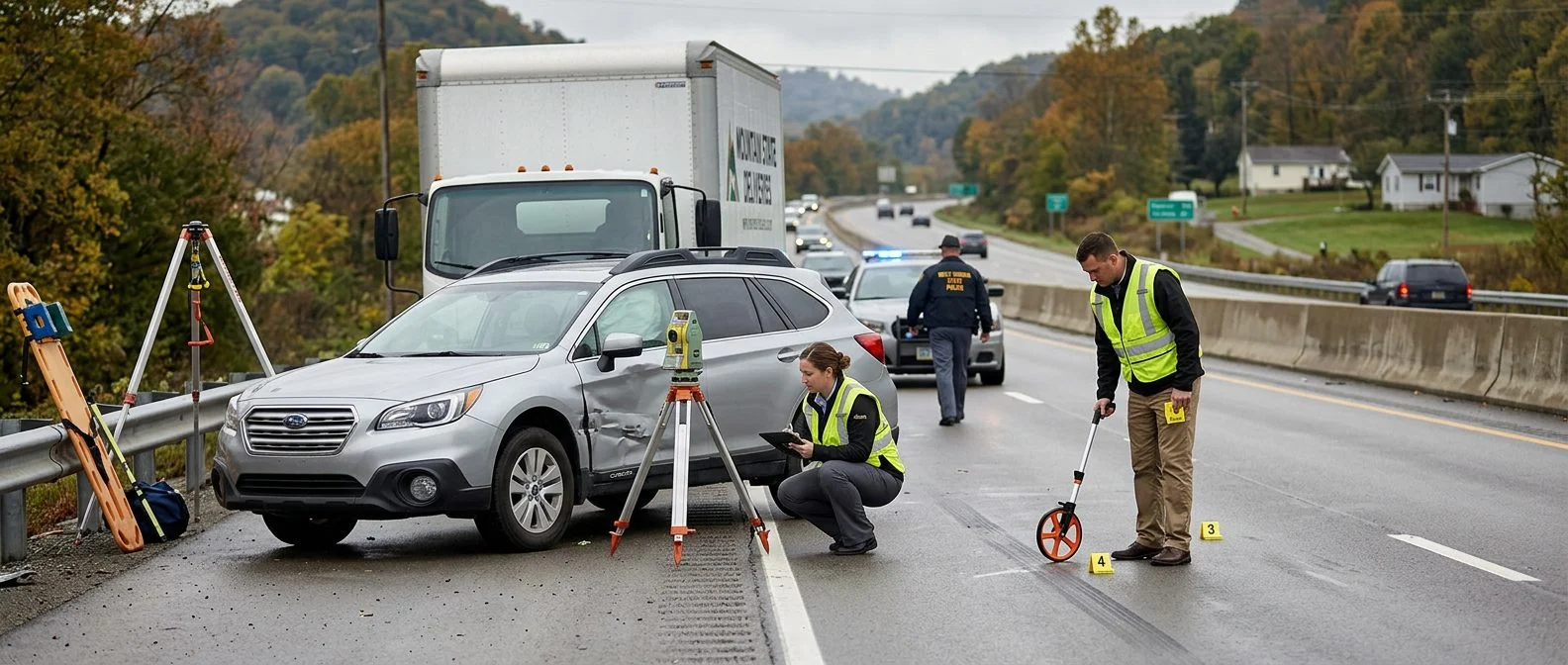
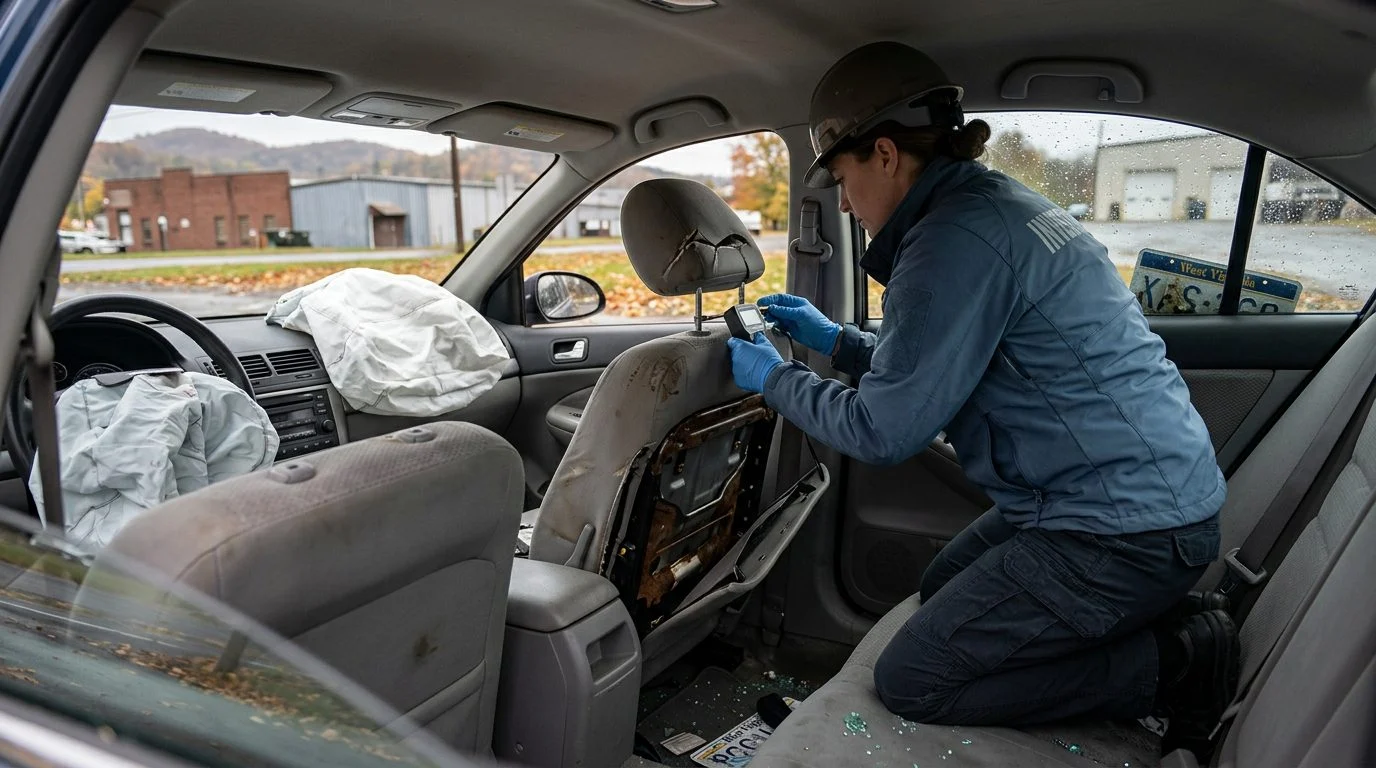
A crash can injure the cord when the spine moves faster than its protective structures can absorb. The MedlinePlus spinal cord injury article notes that car accidents can cause spinal cord injury. In a crash, the head and torso can snap forward, backward, or twist in a fraction of a second. The spine bends and straightens with that motion. Ligaments, discs, and the cord itself can be stretched or compressed.
Doctors often describe two movement patterns. Hyperflexion happens when the neck bends sharply forward, such as when the chest slams toward the steering wheel. Hyperextension happens when the neck snaps sharply backward, as in many rear-end hits. Both can strain the neck and the nerves that leave the spine. Whiplash-type forces can affect the cord in some people, not only the soft tissue around it.
The cord can also be pressed without a bone breaking. Swelling, bleeding, or a disc that shifts out of place can push on it. That pressure can cause symptoms even when the bones look intact.
How your body was positioned and how it moved in the crash can matter to the medical picture. Whether a seat belt was worn may also be relevant to the medical picture. Tell your doctor exactly what you remember about the impact.
Flexion-Distraction Injuries, Disc Damage, and Other Spine Injuries
A flexion-distraction injury is a spine injury where the upper body bends forward while the spine is pulled apart. In this injury, the upper body pitches forward over a fixed point, and the spine stretches along its length. It can damage bones, ligaments, and the cord. You may see the term in a medical record, so it helps to know what it means.
A flexion-distraction injury usually involves bone or ligament damage. It is not an example of a cord injury with no bone involvement. If the term shows up in a report, ask your doctor which part of the spine it describes.
Disc injuries are a separate issue. A spinal disc sits between two vertebrae, like a cushion. After a crash, a disc can bulge or herniate, which means soft material pushes out of place. That material can press on a nerve root or on the cord. The result can be pain, numbness, or weakness in an arm or leg.
A disc injury alone is not the same as a cord injury. Both can cause symptoms, and both need medical attention. Imaging and a physical exam are the tools doctors use to tell these injuries apart.
Why a Normal X-Ray May Not Settle the Question
A normal X-ray may not show damage to the cord, because X-rays mainly show bone and alignment. An X-ray is a fast, useful first look at the bones. It shows fractures, misalignment, and some changes in bone shape. It does not show soft tissue well. The spinal cord, ligaments, and most discs are soft tissue, so they can be hurt without an X-ray showing it.
Magnetic resonance imaging, called MRI, is the test doctors more often use to look at the cord and soft tissue. The treating physician chooses which scan to order, based on your symptoms, your exam, and the crash details.
A clear early scan does not always end the medical question. If numbness, weakness, or pain continues, the doctor may recommend follow-up imaging or a referral to a physician who treats spine injuries. Symptoms that persist or change are a reason to go back to the doctor.
Keep copies of every imaging report. Ask the treating doctor what each scan shows and what it does not show. Those answers help you understand your own medical record.
Delayed Pain, Numbness, and Other Symptoms After a Crash
Symptoms can appear hours or days after a crash, because shock and adrenaline can mask pain at the scene. Many people feel fine right after a collision. Adrenaline can dull pain for a while, so the body’s warning signs may come later. That delay can make an injury harder to connect to the crash. It does not mean the injury is not real.
Common delayed signs include neck or back pain, stiffness, tingling, numbness, or weakness in an arm or leg. Some people also feel unusually tired, dizzy, or unsettled. Symptoms can come and go, and their intensity can change.
Some signs need emergency care now. Call 911 or go to the nearest emergency room if you notice loss of strength or feeling in an arm or leg, trouble walking or balancing, loss of bladder or bowel control, severe neck pain, or confusion. These signs can point to a serious injury that needs prompt treatment.
Even if you feel you are doing fine, get checked after any crash. A medical exam creates a record of what you reported and when. That record matters for your health and for understanding how symptoms developed.
Complete and Incomplete Spinal Cord Injuries
Doctors describe a spinal cord injury as complete when no function is present below the injury, and as incomplete when some movement or sensation remains. The Christopher & Dana Reeve Foundation fact sheet explains that cord injuries are classified this way. The injury level and severity affect function and walking.
A complete injury means signals below the injury site are blocked. An incomplete injury means some signals still get through. That can mean some feeling, some movement, or both. Incomplete does not mean minor. An incomplete injury can still cause lasting problems, and the pattern of symptoms helps the care team describe it.
The classification is a medical description, not a prediction. Doctors base it on exams and records over time. A treating physician’s notes are the source for how an injury is classified in a given case. Ask for those notes if you don’t have them.
Symptoms can shift during the first weeks after an injury. The medical team may repeat exams as swelling settles and more becomes known. Keep every note so you can see how the picture changes.
Not sure what your next step is?
Talk it through with Big Bubba — the first case review is free, confidential, and carries no obligation.
Feeling Guilty or Shaken After a Crash
Feelings of guilt after a crash can be a normal reaction to a frightening event. You may replay the moment over and over, wonder what you could have done differently, or feel anxious every time you start the car. Strong emotions often follow a collision.
Guilt does not decide who caused a crash. Fault is decided by the facts of the crash, not by how a person feels afterward. West Virginia uses a modified comparative fault rule, which means fault can be shared among the people involved. The W. Va. Code § 55-7-13a explains that comparative fault is measured as a percentage. How that rule applies depends on the facts.
Emotional symptoms can also affect physical health. Trouble sleeping, flashbacks, headaches, or fear of driving are worth raising with a doctor or counselor. Those details help a medical team understand what you have been through.
Talk openly with your doctor about how you are feeling. Being honest about fear and sleep problems supports your care and gives your medical record a complete picture.
Records, Crash Reports, and Time Limits
West Virginia generally allows two years to file a personal injury lawsuit, and exceptions may apply. The W. Va. Code § 55-2-12 sets a two-year period for personal injury actions that have no other limit. The clock is measured from when the right to sue begins. Because exceptions may apply, the timing question is worth looking at early. For more on the deadline, see our page on how long to sue after a car accident.
A crash report is another record to track. Under W. Va. Code § 17C-4-7, the investigating officer must give the owner, operator, and insurance information to the other parties within 24 hours, at no cost, upon request. The officer must also prepare a report within 24 hours after completing the investigation for crashes occurring on the public streets or highways of West Virginia involving bodily injury or death, or total property damage to an apparent extent of $1,000 or more. You can learn more in our guide on how to get an accident report online.
Start a file now. Keep medical records, appointment notes, photos of the scene and vehicles, and a daily symptom diary. A diary can show how an injury affected your work, sleep, and daily tasks over time. For how the law may treat pain and suffering, see our page on pain and suffering after a car accident in West Virginia.

If Your Symptoms Followed a Crash You Did Not Choose
If your symptoms began after a crash you did not cause, you don’t have to work out the medical and legal questions alone. Many readers are dealing with more than pain. You may have been told the X-rays look fine, yet the numbness in your hand or the weakness in your leg keeps coming back. You may be caring for a family member who was hurt and trying to understand what their doctors are saying. That uncertainty is hard, and wanting clear answers is reasonable.
The firm handles car accident, truck accident, commercial vehicle, spinal cord injury, traumatic brain injury, and wrongful death claims. We serve injury victims in Charleston, Huntington, Morgantown, Wheeling, Martinsburg, Parkersburg, Beckley, Clarksburg, Fairmont, Weirton, and across West Virginia. Crashes involving commercial trucks can raise different questions, and the facts of each crash shape the next steps.
If you want help thinking through your crash, your symptoms, and the records you already have, you can request a free case review. Bring your medical reports and any crash report you have.
Related practice areas
- Traumatic Brain Injury from Car and Truck Accidents in West Virginia
- What If the Driver Who Hit You Left the Scene in W. Va.?