
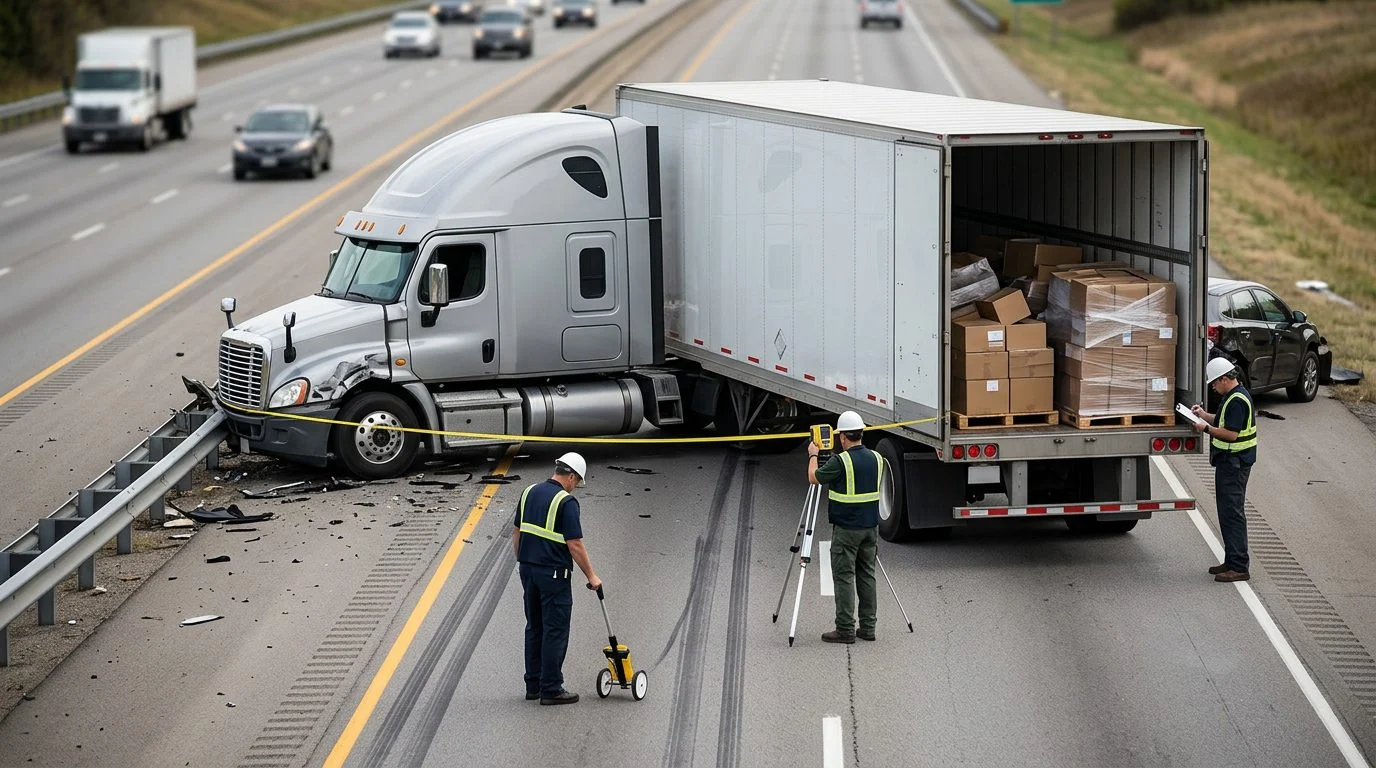
Commercial Truck Accidents
Hit by a Commercial Truck: Immediate Steps to Take
A commercial truck crash is different from a car accident. Here's what you need to do right now to protect yourself and your claim.
Published October 02, 2026
What to Do If You’re Hit by a Commercial Truck: Immediate Steps to Take
If you’ve just been hit by a commercial truck, your first priority is safety—then gathering information and getting medical care. Commercial truck crashes are often more serious than car accidents because of the size and weight difference, and injuries can take hours or days to appear. Here’s what you need to do right now and in the days immediately after.

Not sure what your next step is?
Talk it through with our team — the first case review is free, confidential, and carries no obligation.
Right After the Crash: Safety First
Move yourself and your vehicle to safety if possible, away from traffic and out of the truck’s blind spots. Call 911 right away if anyone is injured or if the vehicles can’t be safely moved. Turn on your hazard lights and set up warning triangles or flares if you can do so safely. Never leave the scene—that’s illegal and can make your situation much worse. Stay calm and avoid confrontation with the truck driver or other people at the scene.
Gather Information at the Scene
Get the truck driver’s name, phone number, and address. Write down the commercial truck’s license plate, company name, and any visible company information on the vehicle. Ask the driver for the trucking company’s name and contact details—this information is often printed on the side of the truck or in documents the driver carries. Collect names and phone numbers of any witnesses who saw the crash. Take photos of vehicle damage, the accident scene, road conditions, and any visible injuries if you’re able to do so safely. Note the exact date, time, and location of the crash.
Report the Accident
File a police report as soon as you can. Ask for the report number, the officer’s name, and their badge number. Report the crash to your own insurance company right away. When you talk to insurance adjusters or the other driver, don’t admit fault or apologize—stick to the facts about what happened. Insurance companies and trucking companies have teams working to protect their own interests, so be careful what you say.
Seek Medical Attention
Get evaluated by a doctor or go to an emergency room even if you feel fine. Traumatic brain injury and other serious injuries don’t always show symptoms right away—some signs appear hours or days after a crash. Keep all medical records, test results, and receipts. Follow your doctor’s treatment plan and attend all follow-up appointments. Write down any pain, limitations, or changes in how you feel in the days and weeks after the crash. This documentation matters if you need to pursue a claim later.
Have questions about what happened?
Ask our team directly. The first conversation is free, confidential, and there is no obligation to continue.
Protect Your Legal Rights
Don’t sign anything or agree to a settlement without understanding what you’re signing. Don’t post about the accident on social media—insurance adjusters and defense lawyers monitor these posts. Keep all documents related to the crash: the police report, medical records, photos, receipts for expenses, and any written correspondence. Write down your own account of what happened while it’s fresh in your memory. Consider reaching out to a lawyer who handles commercial truck accidents. Many people don’t realize how complex these cases can be, and West Virginia law gives you a limited time to file a claim.
Why Commercial Truck Accidents Are Different
Commercial trucks are much larger and heavier than passenger vehicles, which means crashes often cause more severe injuries. Federal regulations govern commercial drivers’ hours of service—drivers have limits on how long they can drive before resting—and violations of these rules can contribute to crashes. Trucking companies have insurance companies and legal teams working to protect their interests, not yours. Commercial truck accidents often involve multiple liable parties: the driver, the trucking company, the vehicle owner, the cargo loader, and maintenance contractors. Injuries from these crashes—including traumatic brain injury and spinal cord damage—can have lifelong effects on your ability to work, move, and live independently.
Traumatic brain injury is especially common in commercial truck crashes. According to the National Institute of Neurological Disorders and Stroke, brain injuries can cause problems with thinking, memory, balance, mood, and behavior that may not be obvious for days or even weeks. Spinal cord injuries can result in permanent paralysis, loss of sensation, or chronic pain depending on where and how severely the spine is damaged.
Understanding Your Situation
You may be dealing with pain, shock, or uncertainty about what comes next. Medical bills and lost wages can add up quickly, especially if your injuries are serious. Insurance adjusters may contact you; you have the right to have a lawyer represent you in those conversations. You have a limited time under West Virginia law to file a claim, so acting sooner rather than later protects your rights. The investigation and recovery process after a commercial truck accident is often more complex than after a typical car accident because of the federal regulations, multiple parties, and serious injuries involved.
Frequently Asked Questions
What should I do if the truck driver is aggressive or refuses to give me information?
Stay calm, move to a safe location, and call police. You don’t have to engage with an angry or hostile driver. Police can help collect information and file a report.
Can I settle with the trucking company’s insurance company on my own?
You can, but it’s often not in your best interest. Insurance adjusters are trained to settle claims for less than they’re worth. A lawyer can help you understand what your claim is actually worth.
How long do I have to file a claim in West Virginia?
West Virginia law sets a time limit for personal injury claims. The sooner you act after a crash, the sooner evidence can be preserved and your legal rights protected.
What if I don’t have health insurance?
Seek medical care anyway. Emergency rooms must treat you regardless of insurance status. Medical bills can be part of your claim, and a lawyer can help you understand your options for payment.
Should I post about my accident on social media?
No. Insurance adjusters and defense lawyers monitor social media posts. Anything you post can be used against you. Keep your situation private until your claim is resolved.
Being hit by a commercial truck is a traumatic event, and you may still be processing what happened. If you’re facing serious injuries, mounting medical bills, or questions about your legal rights, Big Bubba’s team can help you understand what comes next. Reach out for a case review to talk through your situation.
What to Do Right After the Crash
Get to Safety First
If you can move safely, get yourself and passengers away from traffic. Turn on hazard lights. If you're injured or the vehicles are blocking traffic, stay put and call 911.
Call Police
Always report a commercial truck accident to police. A police report creates an official record and helps document what happened. Ask the officer for the report number.
Document the Scene
Take photos of vehicle damage, road conditions, traffic signs, and the truck's license plate and company markings. If you can safely do so, note the time, weather, and any visible injuries.
Collect Information
Get the truck driver's name, phone number, and address. Ask for the trucking company name and the driver's employer. Get the truck's license plate, VIN, and insurance details. Write down names and contact info for any witnesses.
Do Not Admit Fault or Sign Anything
Don't apologize, agree you caused the accident, or sign any document from the trucking company or its insurance company. Anything you say can be used against your claim later. Stick to the facts: where, when, and what you saw.
After You Leave the Scene
Seek Medical Attention
Get checked by a doctor even if you feel okay. Some injuries—like traumatic brain injury or spinal cord damage—may not show symptoms right away. Medical records are crucial evidence.
Keep Records of Everything
Save all medical bills, prescriptions, repair estimates, and receipts. Keep a journal of your injuries, pain, lost work time, and how the accident has affected your daily life.
Don't Talk to the Insurance Company Alone
The trucking company's insurance adjuster may contact you quickly. You are not required to give a recorded statement. Anything you say can be used to reduce your claim.
Contact Big Bubba Right Away
Commercial truck accidents involve complex federal regulations, multiple insurance policies, and serious injuries. Call Big Bubba to discuss what happened and protect your rights.
Want to know where you stand?
Tell us what happened and our team will walk you through the options available to you, at no cost.
Why Commercial Truck Accidents Are Different
Federal Regulations Apply
Commercial trucks are subject to federal safety rules about driver hours, maintenance, and cargo. Violations can prove negligence and strengthen your claim.
Multiple Insurance Policies
Trucking companies carry commercial liability insurance, and there may be additional coverage. Identifying all policies takes careful investigation.
Serious Injuries Are Common
The size and weight of commercial trucks mean crashes often cause catastrophic injuries—traumatic brain injury, spinal cord damage, broken bones, and internal injuries.
Evidence Disappears Quickly
Trucking companies may destroy driver logs, maintenance records, and dashcam footage. Acting fast preserves critical evidence.
Tell Big Bubba What Happened
Related practice areas
- Traumatic Brain Injury from Car and Truck Accidents in West Virginia
- Traumatic Brain Injury in West Virginia