
Interstate Car Accidents | West Virginia
Brain Injury After an Interstate Crash? You Do Not Have to Sort It Out Alone.
Big Bubba Injury Law helps people hurt in car and commercial truck crashes on West Virginia's interstates, including families dealing with traumatic brain injuries. We serve communities across the state.
Published October 24, 2026
An interstate car accident brain injury can be serious even when the person felt fine at the scene. Some symptoms, like headaches, dizziness, and memory trouble, can show up days or weeks later.
This guide explains how these injuries happen, which symptoms to watch for, what to keep, and how a free case review works with Big Bubba Injury Law. If you’re still in treatment, you don’t have to sort this out alone.
What an Interstate Car Accident Brain Injury Is
A brain injury is damage to the brain caused by a blow, a jolt, or an object that enters the skull. A concussion is a mild traumatic brain injury (TBI). The Administration for Community Living states that automobile accidents can cause TBIs, which come from an external force.
You can have a serious brain injury even if you were awake, talking, and walking at the scene. The brain moves inside the skull during a hard jolt. That movement can cause injury even when your head doesn’t hit anything.
This page is for injured drivers and passengers. It is also for family members who are helping a relative recover, or who lost someone in an interstate crash.
If you're still in treatment, you don't have to sort this out alone. Talk it through with Big Bubba — the first case review is free, confidential, and carries no obligation.

Why Interstate Crashes Often Cause Head and Brain Injuries
Interstate crashes often cause brain injuries because the forces are large. High speeds, sudden stops, and chain collisions on roads like I-64, I-77, and I-79 can throw the head forward, back, or sideways.
Common brain injuries from car crashes include:
- Concussion (mild TBI): the most common form of brain injury in a crash.
- Contusion: bruising of brain tissue.
- Diffuse axonal injury: damage to the long nerve fibers that link brain areas.
- Skull fracture with brain involvement: a broken skull that also injures the brain.
A closed head injury means the skull did not open. It can still cause lasting harm. A penetrating injury happens when an object enters the skull.
Symptoms That Often Appear Days or Weeks Later
Brain injury symptoms don’t always show up right away. Many people feel sore or shaken after a crash and assume they’ll feel better in a few days.
Symptoms that can appear later include:
- Persistent headaches
- Dizziness or balance trouble
- Memory and concentration problems
- Sleep changes
- Irritability or mood changes
- Sensitivity to light or noise
- Fatigue
People often blame stress or a bad night’s sleep at first. Keep a dated symptom journal. Note when each symptom starts, how long it lasts, and what makes it better or worse.
Tell every provider about every symptom, even the ones that seem minor. If you had a scan and it was normal, ask what follow-up care is needed.
Brain Bleeds and Warning Signs That Need Emergency Care
A brain bleed from a car crash can be life-threatening. Blood can collect inside the skull and grow over hours. The Brain Trauma Foundation’s prehospital guidelines describe how a TBI is assessed before a patient reaches the hospital.
Emergency warning signs include:
- A headache that keeps getting worse
- Repeated vomiting
- Confusion
- Slurred speech
- Pupils of unequal size
- Weakness or numbness
- A seizure
- Loss of consciousness
If you see any of these signs, call 911 or go to the nearest emergency department right away. Your health comes first. A claim can wait.
What to Preserve After an Interstate Crash Involving a Head Injury
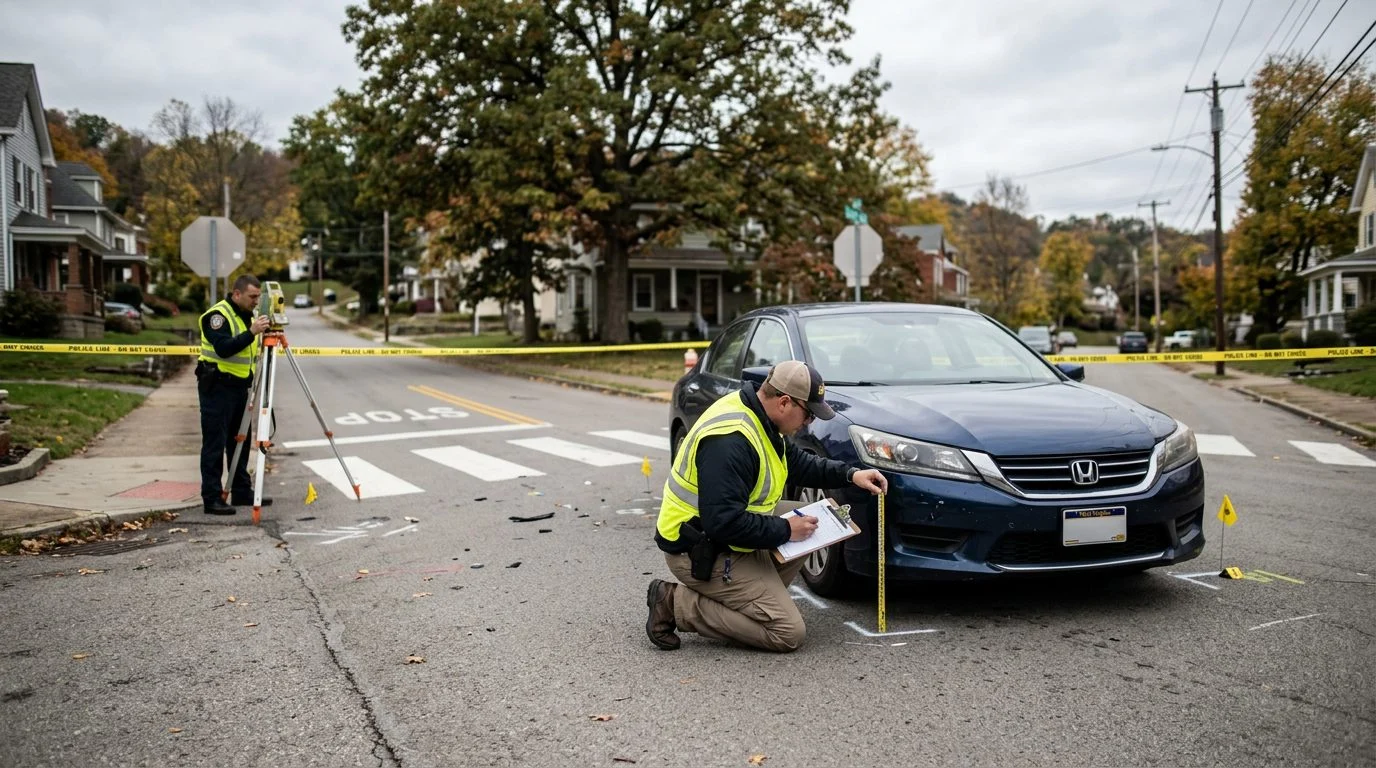
The best time to protect your claim is right after the crash. Start by collecting the crash report, photos of the vehicles and scene, witness names, and insurance details for every driver.
Keep these records:
- Medical records, imaging reports, and discharge papers from every provider
- Prescription receipts and travel records for medical visits
- Work absence notes and pay records
- A written account of the crash, with time, place, weather, road conditions, and any lane changes
- Photos of your injuries as they change over time
- If a truck was involved, the company name, DOT number, and trailer markings
Under the record-keeping rules in preserving records in 49 C.F.R. § 379.7, records covered by that part may be preserved using any technology that accurately captures all of the information in the record and remains accessible in a form that can be accurately reproduced later for reference.
Be careful with insurers. Before you give a recorded statement, talk with the firm first.
How a Brain Injury Claim Is Typically Evaluated
A brain injury claim review looks at three main areas: who caused the crash, the medical picture, and how the injury affects daily life and work.
Fault matters. Under W. Va. Code § 55-7-13a, comparative fault is the degree to which a person’s fault was a proximate cause of an injury, death or property damage, expressed as a percentage, and each person’s liability is allocated in direct proportion to that person’s percentage of fault. Under W. Va. Code § 55-7-13c, your recovery is reduced in proportion to your share of fault. Your fault does not bar recovery unless it is greater than the combined fault of all other persons responsible.
Medical records are central. Records of diagnosis, treatment, and follow-up show how the injury affects you over time.
Timing matters too. West Virginia’s general deadline for a personal injury action is two years, under W. Va. Code § 55-2-12. A prompt review helps protect that window.
No one can predict the outcome of a claim in advance. The value of any claim depends on the crash, the injury, and the evidence.
Not sure what your next step is?
Talk it through with Big Bubba — the first case review is free, confidential, and carries no obligation.
When a Crash Involves a Truck or Causes a Death
Truck and commercial vehicle crashes can involve more parties, such as the carrier and the employer.
For commercial motor vehicles requiring a commercial driver’s license, W. Va. Code § 55-7-32 limits the noneconomic damages recoverable by each person injured or killed against an employer defendant to $5 million for each occurrence, and beginning January 1, 2026, that limit increases each year for inflation, up to 150 percent of the stated amount. That cap is not available unless the employer carries at least $3 million in commercial motor vehicle insurance for that occurrence. The section lists exceptions, including impaired driving, and it applies to causes of action arising after July 1, 2024.
After a fatal crash, a wrongful death action is brought by the personal representative. Under W. Va. Code § 55-7-6, it must be started within two years after the death, subject to the provisions of section eighteen, article two, chapter fifty-five. W. Va. Code § 55-7-6 reads: “The provisions of this section shall not apply to actions brought for the death of any person occurring prior to July 1, 1988.”
The firm handles car accidents, truck and commercial vehicle accidents, catastrophic injuries including traumatic brain injury and spinal cord injury, and wrongful death. We serve injury victims across West Virginia, including Charleston, Huntington, Morgantown, Wheeling, Martinsburg, Parkersburg, Beckley, Clarksburg, Fairmont, and Weirton.
What Happens in a Free Case Review
A free case review is a confidential first step. You describe what happened and what symptoms you’re having.
The steps usually run in this order:
- First contact: you call the firm or send a message through the contact page.
- Conversation: you talk about the crash, your injuries, and your current symptoms.
- Review: the firm looks at the crash report and any records you have.
- Next steps: the firm explains what could come next.
Have these ready: the date and location of the crash, names of other drivers, provider names and discharge papers, and any letters from insurers.
After the review, the firm may request records, look into the crash, and communicate with insurers. How long each step takes varies with the medical and legal facts. You can ask questions about the process before you decide anything.
Frequently Asked Questions About Interstate Crash Brain Injuries
Can an interstate car accident brain injury in West Virginia have delayed symptoms?
Yes, symptoms that start later can still be tied to the crash. Write down when each one began and tell every provider.
Do I need a brain scan to have a brain injury claim?
A normal scan does not settle the question by itself. Keep your symptom journal, exam notes, and follow-up results, because they show how the injury affects you.
What if a truck was involved?
Truck crashes can involve more parties and more records. Note the company name and DOT number early.
Can a family member reach out for someone who cannot speak for themselves?
Yes, family members can reach out on a loved one’s behalf. The firm can explain what it needs to begin.
How long do I have to file?
For a personal injury, West Virginia’s general deadline is two years under W. Va. Code § 55-2-12. For a wrongful death, it is two years after the death under W. Va. Code § 55-7-6, subject to the provisions of section eighteen, article two, chapter fifty-five. W. Va. Code § 55-7-6 reads: “The provisions of this section shall not apply to actions brought for the death of any person occurring prior to July 1, 1988.”

What Makes an Interstate Crash Different
If you’re still in treatment or worried about a family member, you may not know yet whether symptoms are linked to the crash. That uncertainty is hard, and you don’t have to work through it alone. You can request a free case review with Big Bubba Injury Law, call the firm about your case, or tell Bubba what happened.