
West Virginia Auto Accident Guidance
Is West Virginia a No-Fault State? What It Means After a Crash
West Virginia is generally treated as an at-fault state. Here is a plain-language look at what that can mean after a car or truck crash.
Published November 2, 2026
The Short Answer: West Virginia Is Generally an At-Fault State
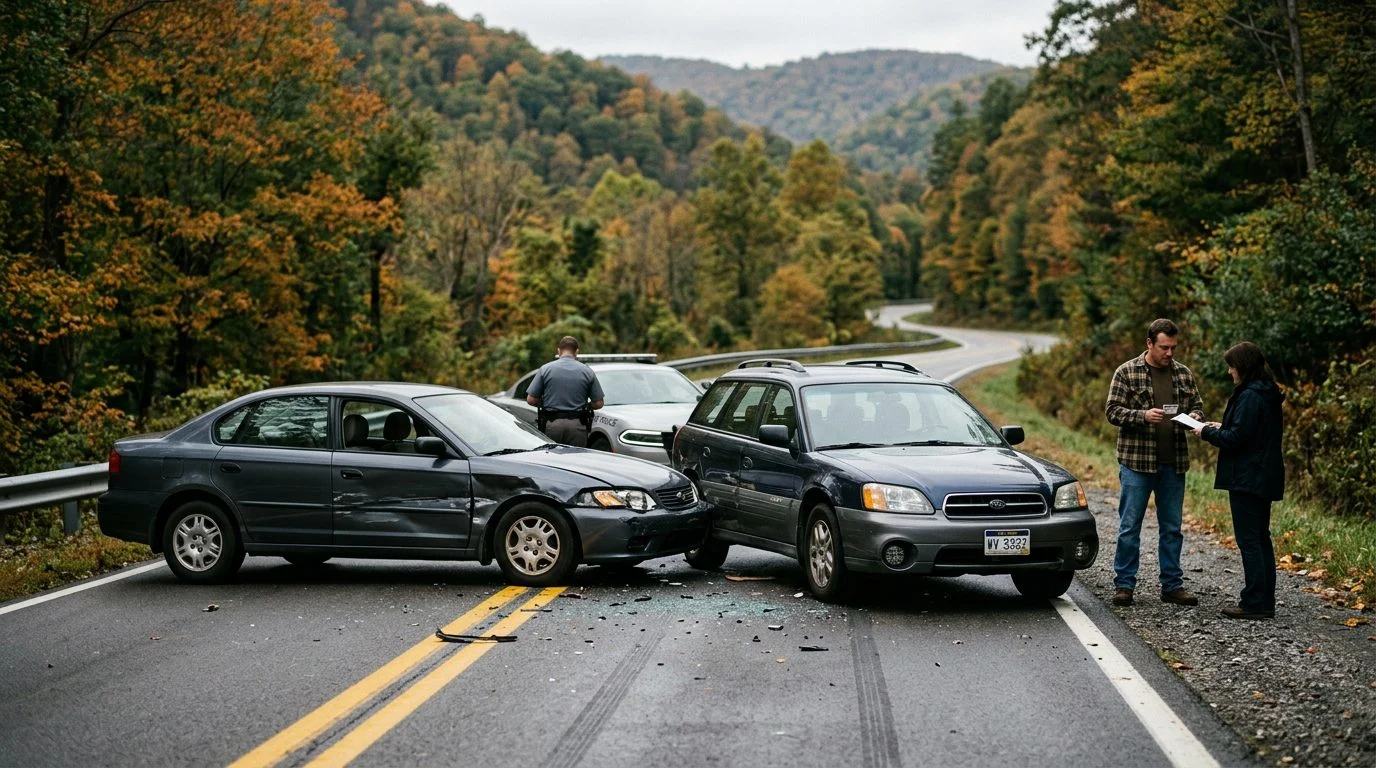
Is West Virginia a no-fault state for auto accidents? No. West Virginia is generally treated as an at-fault state. In an at-fault system, an injured person generally seeks compensation by showing that another driver was negligent. How this applies to a specific crash depends on the facts.
Many people look up this question after someone they love has been hurt. Insurance letters can arrive quickly, and the terms can be hard to follow. The basic picture is simpler than it first looks.
West Virginia’s fault rules are written in the state code. The comparative fault statute explains how responsibility is divided when more than one person contributed to an injury (W. Va. Code § 55-7-13c). The financial responsibility law sets minimum liability coverage for motor vehicles. In an at-fault claim, the other driver’s liability coverage is generally the insurance at issue. The rest of this page explains those terms, the filing deadline, and the coverage you may already carry.
If a family member was hurt in a crash and insurance letters keep arriving, you can reach out for a free case review to talk through your situation. Talk it through with Big Bubba — the first case review is free, confidential, and carries no obligation.
What No-Fault Insurance Means and Why It Matters Here
Some states call this coverage personal injury protection (PIP).
An at-fault system works differently. The focus is on who caused the crash. Insurance questions after a crash can be complex, so each situation is different.
The two systems can send a claim to different insurers and raise different questions. Mixing them up can cause real trouble. A family might send a claim to the wrong insurer, which can waste valuable time.
Some online summaries describe state rules in broad terms. Rules can change, and some states describe their systems differently, so the details matter. Knowing which system applies helps you ask the right questions from the start.
Minimum Auto Liability Insurance in West Virginia
West Virginia’s financial responsibility law defines proof of financial responsibility for motor vehicles. That proof is the ability to pay damages for liability from a crash. The statute sets minimum amounts for bodily injury, death, and property damage. W. Va. Code § 17d-4-2
Liability coverage is generally what pays people who were hurt by the insured driver. It is generally the coverage involved in an at-fault claim.
Minimum limits may not cover all losses from a serious injury. Medical bills, lost income, and long-term care needs can add up quickly and may exceed minimum amounts. This is why a person’s own coverage and other sources may matter.
If an insurer has contacted you, write down the company name, claim number, adjuster’s contact details, and what the letter says. Keep copies of everything. Some insurers may dispute a claim, so accurate records help.
How Negligence and Comparative Fault Shape a Claim
Negligence is a term that often comes up in injury claims. Running a red light, speeding, or looking at a phone while driving are common examples. The injured person generally has to show that another driver’s negligence caused the injuries.
West Virginia uses a modified comparative fault system. Fault is expressed as a percentage, and the total for a crash must equal either zero or one hundred percent. W. Va. Code § 55-7-13a
Your own share of fault matters. Under West Virginia’s comparative fault rule, your recovery is generally reduced in proportion to your share of fault. Under W. Va. Code § 55-7-13c, however, a plaintiff whose fault is greater than the combined fault of all others cannot recover. W. Va. Code § 55-7-13c
Police reports, witness statements, photos, and medical records may help show fault. Their weight varies from case to case.
In a truck crash, the question can reach beyond the driver. West Virginia case law holds that an employer may be answerable for an employee’s negligent act done within the scope of employment. Zirkle v. Winkler
If another driver was at fault, questions about that driver’s insurance may come up in a claim.
Time Limits, Your Own Coverage, and Uninsured Drivers
West Virginia generally allows two years to file a personal injury lawsuit. The personal actions statute sets that two-year period for injury claims, and exceptions may apply. W. Va. Code § 55-2-12 Missing that deadline may end a claim, so track the date from the crash early.
Some policies include medical payments coverage, often called MedPay. Where a policy carries it, it may help with medical bills. Its terms vary by policy, so the wording of that policy matters.
Uninsured motorist coverage is different. State law requires motor vehicle policies to include a provision for sums the insured is legally entitled to recover from an uninsured driver. W. Va. Code § 33-6-31 That coverage may apply when the at-fault driver has no insurance. Subsection (d) of § 33-6-31 says that an insured intending to rely on the coverage required by subsection (b) must, if an action is instituted against the owner or operator of an uninsured or underinsured motor vehicle, have the summons and complaint served on the insurance company issuing the policy.
Medical bills can create another issue. Medical bills from a crash can raise questions about repayment from any settlement or judgment. Monroe County medical lien page

Your Next Step When the Crash Involved a Family Member
If a parent, spouse, or adult child was hurt in a car or truck crash, you may be the one sorting through everything. Insurance letters arrive. Bills stack up. You may be deciding who to call first.
Keep the basics in one place: the police report, photos of the scene and vehicles, medical records, insurance letters, and a record of missed work. Write down the other driver’s insurer and claim number. Keep a simple log of calls, with dates and names.
The West Virginia Offices of the Insurance Commissioner handles consumer questions about automobile insurance. Consumers can file a complaint about an insurer’s handling of a claim, such as a delay or a denial. That help does not include legal advice. Insurance Commissioner complaint help
If you’re trying to work out what comes next for your family member, you can reach out for a free case review. Talk through the crash, the letters you’ve received, and your questions at your own pace. Contact the firm