
Car Accidents | West Virginia
Left Turn Car Accident Fault in West Virginia Explained
Left-turn crashes raise hard questions about who had the right of way. Here is how those questions are usually approached, and where to start if you were hurt.
Published November 11, 2026
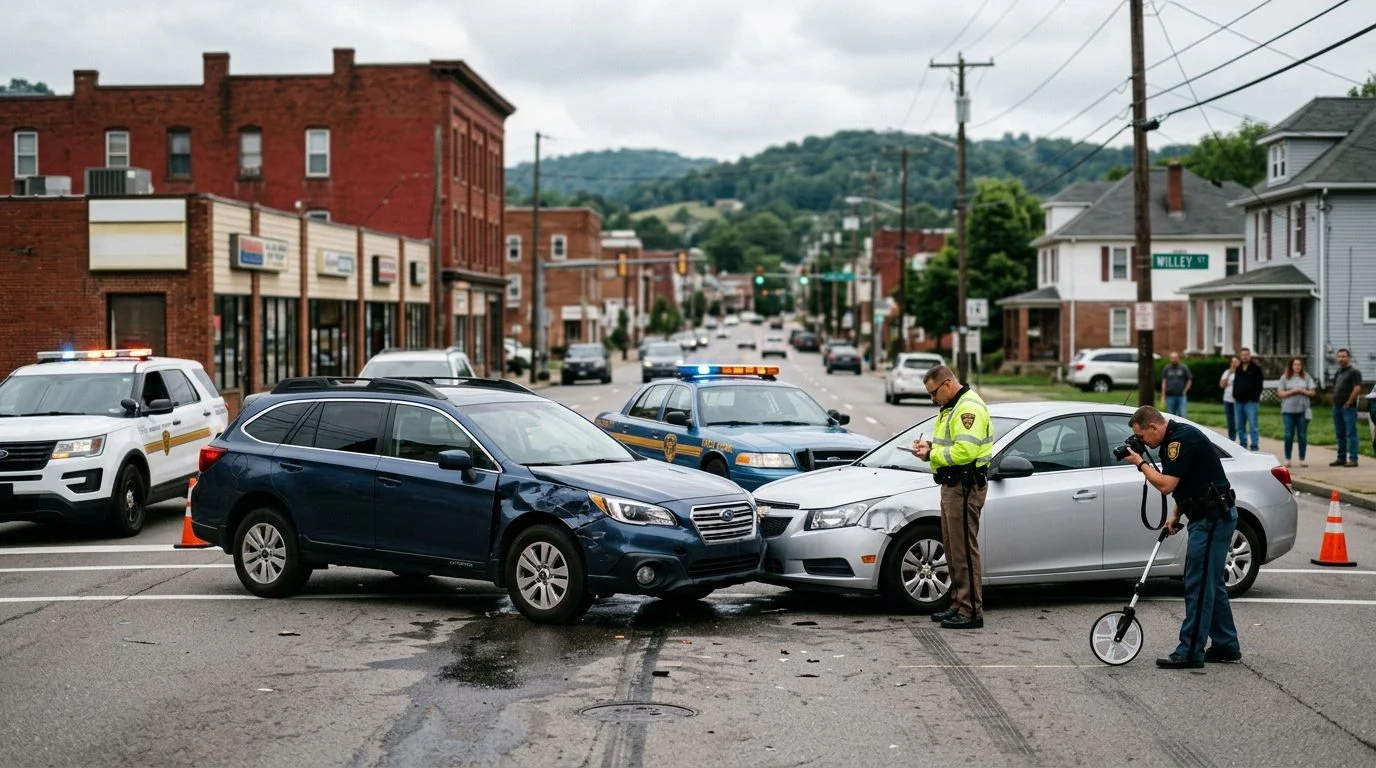
You were hurt in a crash where a car turned left across traffic, or you were the one turning. Now you want to know who is at fault. In a left turn car accident in West Virginia, fault usually turns on who had to yield, what the signals showed, and whether the oncoming vehicle was close enough to make the turn unsafe. State law divides fault by percentage, and an injured person’s fault shall not bar recovery by the plaintiff unless the plaintiff’s fault is greater than the combined fault of all other persons; if it is less, the recovery is reduced in proportion to the plaintiff’s degree of fault (W. Va. Code § 55-7-13c).
Why Left Turn Car Accidents Raise Difficult Fault Questions
A left turn car accident is often disputed because the turning driver must cross or enter oncoming traffic. Each driver sees the moment from a different place. Two people can describe the same intersection in opposite ways, so fault is usually sorted out from the evidence.
Serious injuries add another layer. A person with a traumatic brain injury may have gaps in memory about the seconds before impact. A person with a spinal cord injury may not be able to give a full account while recovering. When memory is limited, physical evidence, records, and witness accounts carry more weight.
The questions are usually the same. Who had to yield? What did the signal show? How fast was each vehicle moving, and what could each driver see? The sections below walk through each one and the state rules that shape how fault is divided.
If another driver's left turn may have caused the crash that hurt you or someone you love, we offer a free case review to talk it through. Talk it through with Big Bubba — the first case review is free, confidential, and carries no obligation.

The Yield Duty for a Left-Turning Driver in West Virginia
The real question is what counts as close enough in a particular crash.
Distance and speed answer that question. An oncoming car far down the road may not require a yield. One a short distance away at highway speed may. Investigators often estimate how much time the turning driver had to finish the turn safely, and those estimates can be disputed.
A turn made after the oncoming vehicle has passed can be analyzed differently. So can a turn made when the driver had no reasonable chance to see the other vehicle, such as when it was hidden behind a larger vehicle or came over a rise. The duty to yield is tied to the facts of that moment.
How Traffic Signals and Right of Way Shape the Analysis
The signal each driver faced is often one of the first facts investigators look at. A green, yellow, or red light can each create different expectations about who had the right of way.
Left turns add detail. A protected left-turn arrow usually means oncoming traffic has a red light. A permissive left turn is made on a green or yellow light while the turning driver yields to oncoming traffic. A driver who treats one like the other may be found partly responsible.
Signal timing and the order of light changes may be relevant evidence. A driver who ran a red or yellow light may share responsibility, depending on the sequence of events leading to the crash.
Speed, Sight Distance, and Whether the Gap Was Safe
Speed and sight distance usually decide whether a turning driver had a safe gap. An oncoming vehicle moving fast leaves much less time than a driver may expect.
Sight can be limited in many ways. Stopped vehicles, roadside signs, glare from a low sun, a dip in the road, or the angle of a crossing street can each block the view. A driver may have looked and still not seen an approaching car.
Physical evidence can help show speed and position at impact. Skid marks, damage patterns, and where the vehicles came to rest may be relevant. Some vehicles also store speed data before a crash. Whether that data helps depends on what was recorded and how it was preserved, so early action matters.
Other Parties Who May Share Responsibility
Other people may share fault even when they were not the one turning. A crash can involve more than two drivers or more than one responsible party.
A speeding driver, a driver who ran a signal, or a distracted driver may share fault. West Virginia law considers the fault of all persons who contributed to the damages, whether or not they were named in a lawsuit. Under W. Va. Code § 55-7-13d, a defending party may give notice that a nonparty was wholly or partially at fault, but only no later than one hundred eighty days after service of process upon that defendant, and the statute sets other conditions that depend on the facts (W. Va. Code § 55-7-13d).
When a commercial vehicle is involved, more parties may be relevant. A company may be held liable for fault assigned to its driver when that driver acted as its agent or servant (W. Va. Code § 55-7-13d). Federal rules require motor carriers, except a private motor carrier of passengers (nonbusiness), a driveaway-towaway operation, or any motor carrier operating only one commercial motor vehicle, to keep driver vehicle inspection reports for three months from the date they were prepared (49 C.F.R. § 396.11). Federal rules also require employers to test drivers for alcohol and drugs after certain commercial vehicle crashes, including some involving injuries and a traffic citation (49 C.F.R. § 382.303).
A vehicle defect, poor signal maintenance, or a roadway hazard may also be relevant in some crashes.
How West Virginia’s Comparative Fault Rules Can Affect a Claim
West Virginia uses comparative fault, so recovery is based on each person’s share of fault (W. Va. Code § 55-7-13c).
An injured person’s own fault does not automatically end a claim. Under W. Va. Code § 55-7-13c, fault chargeable to the injured person does not bar recovery unless it is greater than the combined fault of everyone else responsible. If it is less, recovery is reduced in proportion to that person’s share.
Because shared fault is often disputed, the way the facts are documented early can matter to how fault is later assigned. Those early records are the foundation for any percentage argument.
Not sure what your next step is?
Talk it through with Big Bubba — the first case review is free, confidential, and carries no obligation.
Evidence That May Help Show Who Was at Fault
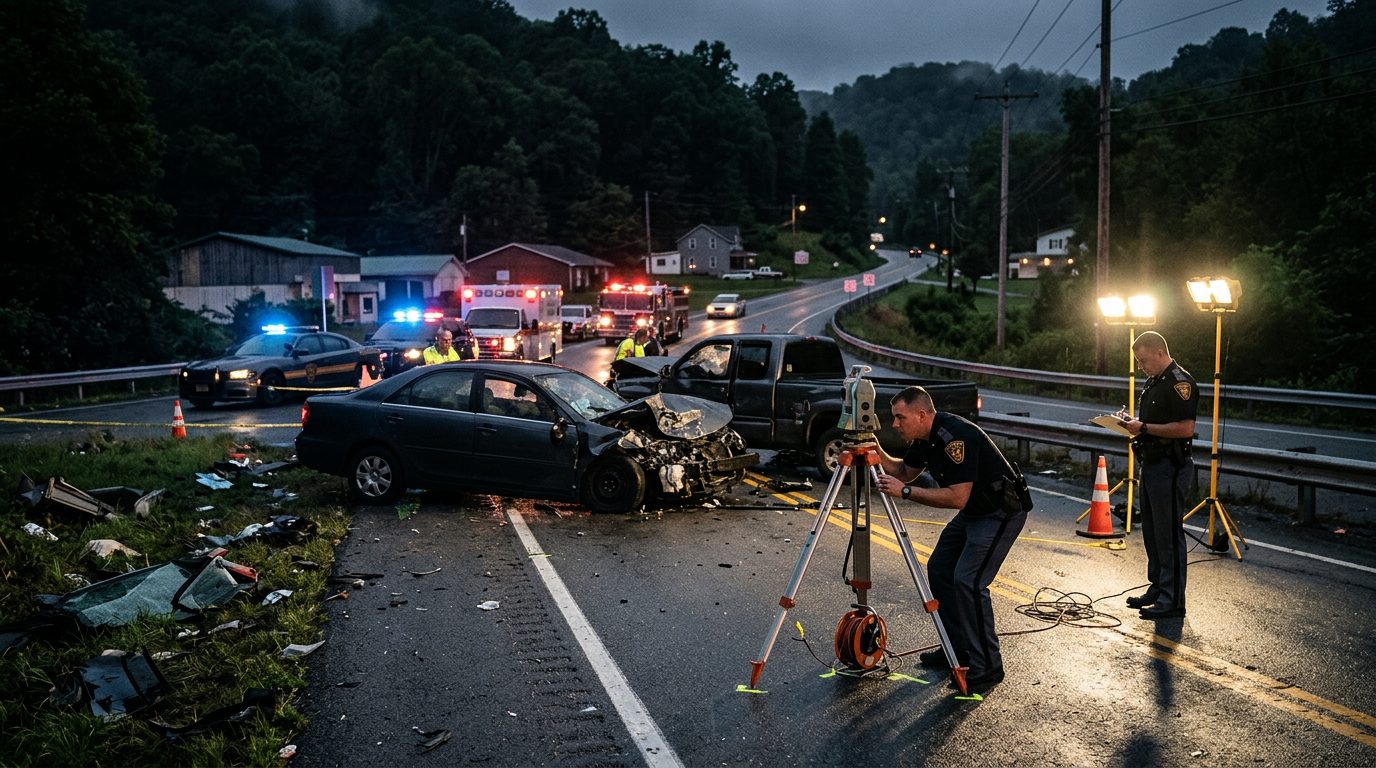
The police crash report is often the first document that records how the crash was described at the scene. It may include a diagram, the officer’s notes, any citations, and statements made at the scene.
Witness statements, photographs of the intersection and vehicles, and nearby video from a traffic camera or business may also be relevant. Photos taken soon after the crash can show sight lines, damage patterns, and the position of the cars.
Medical records matter too. They document the injuries, when symptoms first appeared, and how the injuries connect to the crash. Consistent treatment helps the record reflect what happened. For more detail, see what to tell your doctor after a car accident in West Virginia.
Lost income records can show how the injury affected work. Pay stubs, work schedules, and employer letters are common examples.
When Insurers Dispute Fault and What to Do Next
Some insurers may dispute a claim or argue that the injured driver shares the blame. A fault dispute means the facts need a careful look, and early steps can shape that review.
Timing matters. Under W. Va. Code § 55-7-11a, a settlement, release or statement obtained in violation of its twenty-day restriction on contact with an injured person who is an inpatient or unable to work may be disavowed by written statement at any time within one hundred eighty days from the date of the personal injury, subject to the statute’s conditions (W. Va. Code § 55-7-11a).
The filing deadline also matters. West Virginia generally allows two years to file a personal injury lawsuit, and exceptions may apply (W. Va. Code § 55-2-12).
Frequently Asked Questions
Does the driver turning left always have to yield?
Not in every case.
What if the other driver ran a red light?
A red-light violation may be relevant to fault. The full sequence of signals and movements still matters.
Can I still recover if I was partly at fault?
West Virginia generally allows recovery when your share of fault is not greater than the combined fault of others (W. Va. Code § 55-7-13c). Any recovery may be reduced by your share.
If a car turned across your path and left you or a family member seriously hurt, and another driver may be responsible, we can help you understand your options. We serve injury victims across West Virginia, including Charleston, Huntington, and Morgantown. Request a free case review and talk through what happened at the intersection.
Related practice areas
- Traumatic Brain Injury from Car and Truck Accidents in West Virginia
- How Gaps in Medical Treatment Can Affect a Car Accident Claim in West Virginia
- Lost Income After a Car Accident in West Virginia
- Truck Accident Lost Wages Claim in West Virginia
- West Virginia Brain Injury Claim: Does a Seatbelt Matter?