
Martinsburg & Eastern Panhandle
Traumatic Brain Injury After a Crash: What You Need to Know
A sudden impact can change everything—even when there's no visible wound. If you've been in a car or truck crash and are now experiencing confusion, headaches, or memory problems, you may have a traumatic brain injury claim.
Published October 03, 2026
A sudden impact or jolt that changes how your brain works—that’s a traumatic brain injury (TBI)—and it often goes unnoticed at the scene because there’s no visible wound. In Martinsburg and the Eastern Panhandle, where the I-81 corridor brings heavy commercial truck traffic and high-speed collisions, TBI is a real risk. Symptoms can emerge hours or days after the accident, making it easy to miss. If you’ve been in a car or truck crash and are now experiencing confusion, headaches, or memory problems, you may have a TBI claim that requires experienced legal help to protect.
Traumatic Brain Injury in Martinsburg: A Hidden but Serious Injury
A traumatic brain injury happens when a sudden impact or jolt disrupts how your brain functions—even if you don’t lose consciousness or see any visible injury. The problem is that TBI symptoms often don’t show up right away. You might feel fine at the accident scene, then hours or days later experience dizziness, confusion, or a persistent headache. By then, the connection to the accident isn’t obvious, and many people don’t seek medical care.
Martinsburg sits on the I-81 corridor, a major route for commercial trucks and high-speed traffic. The Eastern Panhandle’s road conditions, combined with heavy vehicle volume, create conditions where serious accidents happen. When a car collides with an 18-wheeler or another vehicle at highway speeds, the force can cause the brain to move inside the skull, tearing nerve fibers and disrupting brain chemistry. That damage is traumatic brain injury, and it’s often invisible on the surface.
TBI claims are complex because they require more than just a police report—they demand medical evidence, testimony from qualified medical professionals, and a clear understanding of how the injury will affect your life for years to come. Insurance companies know this complexity and often use it to their advantage, offering low settlements for injuries they don’t fully understand or believe.
If you've been in a car or truck crash and are now experiencing confusion, headaches, or memory problems, you may have a traumatic brain injury claim. Talk it through with our team — the first case review is free, confidential, and carries no obligation.
How TBI Happens in Martinsburg Accidents
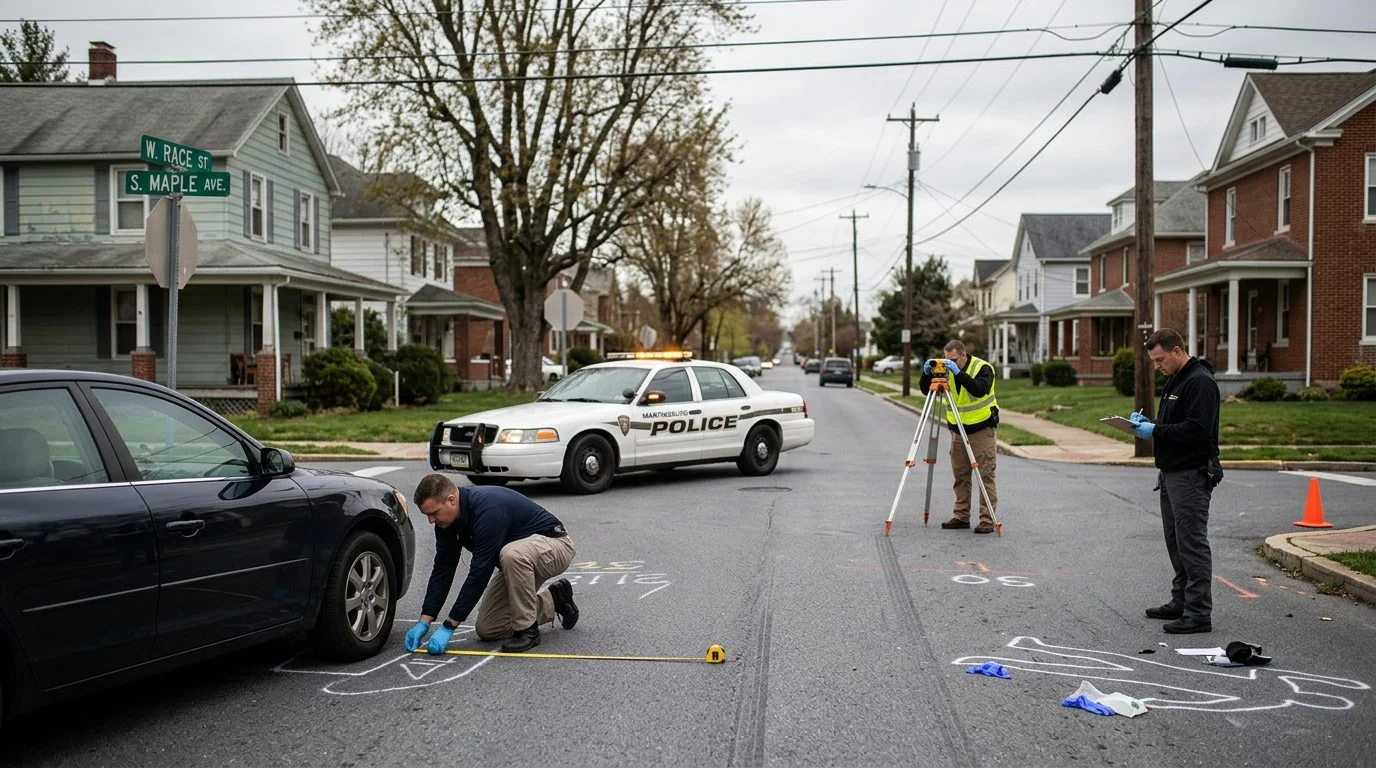
Traumatic brain injury in Martinsburg happens in several common accident scenarios. Rear-end collisions on I-81 are frequent; the sudden acceleration and deceleration can cause your brain to shift inside your skull. Head-on crashes and side-impact collisions create even greater forces. Commercial truck accidents are particularly dangerous—an 18-wheeler weighs many times more than a car, and even at moderate speeds, the force can cause severe brain injury.
Pedestrian and cyclist accidents in Martinsburg’s downtown and residential areas also cause TBI. A person struck by a vehicle, even at low speeds, can suffer a serious brain injury from the impact. Workplace accidents involving vehicles or equipment can cause TBI as well.
Here’s what many people don’t realize: impact speed matters less than the direction and nature of the impact. You don’t need a high-speed crash to suffer TBI. A rear-end collision at 20 miles per hour can cause a brain injury if your head snaps backward and forward suddenly. The sudden movement is what damages the brain, not necessarily the loudness of the crash or the visible damage to the vehicle.
Signs and Symptoms of Traumatic Brain Injury
Some TBI symptoms appear immediately: loss of consciousness (even for a few seconds), confusion, headache, dizziness, or nausea. But many symptoms emerge hours or days after the accident. You might notice memory problems, difficulty concentrating, mood changes, sleep disruption, or sensitivity to light or noise.
This delay is why TBI is so often missed. You leave the accident scene feeling shaken but okay. The next day, you can’t focus at work. A week later, you’re having trouble remembering conversations. You might attribute these changes to stress or shock, not realizing they’re signs of a brain injury.
Early medical evaluation is critical. It establishes a medical record connecting your symptoms to the accident, catches complications before they worsen, and protects your legal claim. If you hit your head or felt impact to your head during an accident, get checked by a doctor—even if you feel fine. Tell the doctor exactly what happened and ask for a thorough neurological evaluation.
The Long-Term Impact of TBI
Traumatic brain injury doesn’t always heal quickly, and for many people, it changes their life permanently. Physical effects include chronic headaches, balance problems, fatigue, and in some cases, seizures. Cognitive effects are often more disabling: memory loss, difficulty with attention and processing, problems with executive function (planning, organizing, decision-making).
Many TBI survivors experience emotional and behavioral changes—irritability, depression, anxiety, or shifts in personality. Some people find they can’t return to their previous job or work at full capacity. A person who was a supervisor before the accident might struggle with the focus and stress management the role demands. A tradesperson might lose the fine motor control or spatial reasoning the job requires.
The impact on family is real too. Caregiving becomes a burden. Relationships strain under the weight of personality changes and ongoing medical needs. Financial stress mounts as medical bills accumulate and income is lost.
The lifetime costs of TBI are substantial: ongoing medical care, rehabilitation, lost wages, home modifications, assistive technology, and long-term support. A TBI claim must account for these lifetime effects, not just the immediate hospital bill.
Not sure what your next step is?
Talk it through with our team — the first case review is free, confidential, and carries no obligation.
Why TBI Claims Are Complex
Proving causation is the first challenge. You must connect the accident to the brain injury in a way that satisfies the insurance company or a jury. Brain imaging (CT scans, MRIs) may not show any structural damage, even though you have a real injury. Diagnosis often relies on your symptoms and neuropsychological testing—standardized tests that measure memory, attention, processing speed, and other cognitive functions. Insurance companies sometimes question whether these symptoms are real or whether they’re caused by the accident.
Valuing the claim is equally difficult. TBI damages include medical costs (past and future), lost income, pain and suffering, and compensation for reduced quality of life. How do you put a dollar figure on memory loss or the inability to work? Insurance companies will lowball the claim because these damages are hard to quantify.
Medical experience is essential. You need a neurologist or neuropsychologist who can interpret your test results, explain your prognosis, and testify about your long-term needs. The insurance company will hire its own doctors to argue your injury isn’t as serious as you claim. Without experienced legal representation, you’re outgunned.
What Big Bubba Does for Martinsburg TBI Victims
We investigate your accident thoroughly: we reconstruct what happened, identify all responsible parties, and gather evidence that proves liability. We work with qualified medical professionals—neurologists, neuropsychologists, rehabilitation providers—to document your injury and prognosis. We build your claim by connecting the accident to your TBI, quantifying all your damages, and preparing for negotiation or trial.
We handle the insurance companies. We push back on lowball offers, protect your rights, and fight for fair compensation. We serve Martinsburg and the Eastern Panhandle. Most importantly, we take the stress off you so you can focus on recovery.
Have questions about what happened?
Ask our team directly. The first conversation is free, confidential, and there is no obligation to continue.
Next Steps: Getting Help for Your Traumatic Brain Injury
If you haven’t already, seek immediate medical care. Tell your doctor exactly what happened in the accident and describe all your symptoms, even the ones that seem minor.
Document everything: medical records, photos of the accident scene, witness statements, and a journal of your symptoms and how they’ve changed over time. This documentation is crucial to your claim.
Do not settle with the insurance company without legal advice. Insurance adjusters are trained to offer just enough to make you go away—not enough to cover your actual damages.
Contact Big Bubba for a free case review. Tell us what happened, describe your symptoms, and let us evaluate your claim. There’s no pressure and no cost. We’ll review your case and tell you what we think.
Frequently Asked Questions
What is the difference between a concussion and a traumatic brain injury? A concussion is a type of traumatic brain injury caused by a bump or blow to the head that changes how your brain works temporarily. All concussions are TBIs, but not all TBIs are concussions—some are more severe.
How long do I have to file a TBI lawsuit in West Virginia? West Virginia generally allows two years from when the right to bring a personal-injury lawsuit accrues to file, and exceptions may apply, under W. Va. Code § 55-2-12. Missing this deadline may bar your claim, and exceptions may apply.
Can I recover damages if I was partially at fault for the accident? Yes. West Virginia follows a modified comparative fault rule: you can recover damages even if you are up to 50% at fault, but you cannot recover if your fault is greater than 50%, under W. Va. Code § 55-7-13c.
Why do TBI symptoms sometimes appear days after an accident? The brain doesn’t always show damage immediately. Swelling, inflammation, and chemical changes in the brain can take hours or days to develop and cause noticeable symptoms.
What medical tests are used to diagnose traumatic brain injury? Doctors use neurological exams, imaging (CT scans, MRIs), and neuropsychological testing—standardized tests that measure memory, attention, processing speed, and other cognitive functions—to diagnose TBI according to the National Institute of Neurological Disorders and Stroke.
How do insurance companies evaluate traumatic brain injury claims? Insurance companies look at medical records, test results, and professional medical opinions. They often hire their own doctors to argue your injury is less severe than you claim. This is why experienced legal representation is critical.
If you’ve hit your head in a Martinsburg accident and symptoms are emerging—confusion, headaches, memory problems—you may want to find out whether you have a claim, and you can reach out to us.
Related practice areas
- Traumatic Brain Injury from Car and Truck Accidents in West Virginia
- Traumatic Brain Injury in Wheeling: What You Need to Know