

Car Accident Injuries | West Virginia
A Head Injury After a Crash Can Show Up in Stages
Some signs are obvious at the scene, while others take days or weeks to appear. Here is how to recognize them and when to get help.
Published November 17, 2026
Someone you care about was hurt in a car crash, and now you’re trying to understand what comes next. A traumatic brain injury can show signs right away, in the hours after the crash, or days and weeks later.
A clear timeline helps you know what to watch for and when to get medical care. This guide walks through a traumatic brain injury car accident timeline in plain words, from the scene to months later. For the bigger picture, read our overview of brain injuries from car crashes.
Why a Timeline Matters After a Head Injury in a Car Crash
A timeline helps you spot symptoms early, because brain injury signs don’t always show up at once. A person can have a traumatic brain injury without passing out. A lack of blackout does not rule out a head injury.
A study on traumatic brain injury effects notes that these effects may not be immediately apparent after an accident. Mild brain injuries can also be difficult to diagnose.
The timeline below uses phases, not exact days. Every person’s recovery is different, and symptoms may shift from one phase to the next.
Many readers are gathering this information for someone else, often in the middle of a hard recovery. You don’t have to read it all at once. Jump to the phase you’re in now and return to the rest later.
If someone you love is still recovering from a head injury after a crash, you don't have to sort out the next steps alone. We're here to talk when you're ready. Talk it through with Big Bubba — the first case review is free, confidential, and carries no obligation.
The First Hours: At the Scene and in the Emergency Room
Get emergency care right away if anyone hit their head and seems confused, drowsy, or hard to wake. Call 911 for anyone who is hurt, confused, or unresponsive. Don’t leave someone alone if they seem confused or are hard to wake.
Warning signs that need immediate emergency care include:
- a headache that keeps getting worse
- repeated vomiting
- confusion or unusual drowsiness
- a seizure
- slurred speech
- weakness or numbness on one side of the body
- pupils of different sizes
- loss of consciousness at any point
Emergency staff may order a CT scan to look for bleeding or a skull fracture. A normal scan may not rule out a concussion, so keep tracking symptoms even after a clear result. Tell staff about every hit to the head, even minor ones. List any blood thinners or other medicine you take.
West Virginia law also shapes what happens at the scene. A driver in a crash with injuries must remain at or near the scene until the required information is exchanged, but may leave as reasonably necessary to render assistance to an injured person. A driver who is able must also give reasonable assistance when treatment appears necessary or the injured person asks for it. Drivers must also report the crash immediately by the quickest means when someone is injured or total property damage reaches $1,000: to local police if the crash occurs within a municipality, otherwise to the county sheriff or the nearest West Virginia State Police office.
The First 24 to 72 Hours: Symptoms That Start Small
Early symptoms are often mild, and they can change quickly over the first few days. Common ones include headache, dizziness, nausea, sensitivity to light or noise, tiredness, and trouble focusing.
Some people feel fine at first. They notice symptoms later, often once they return to a normal routine, drive again, or go back to work or school. That delay is one reason a written record matters.
Start a simple symptom log today. Write the date, the time, the symptom, and how bad it feels on a scale you choose. Note sleep, mood, and what you were doing. A log helps when you describe recovery to a doctor, and it shows changes over weeks.
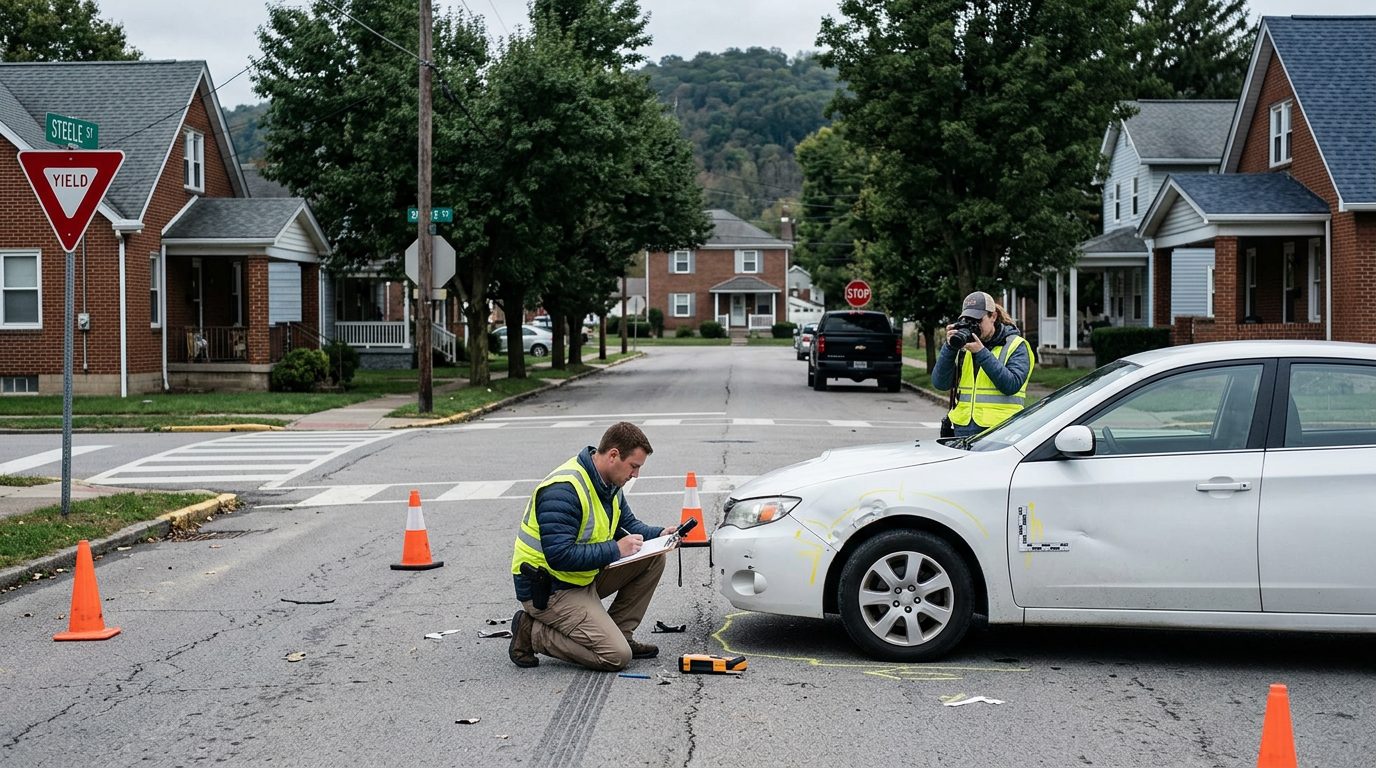
Write down the crash details while they’re fresh, too. Record the time, the road, the weather, and what each driver said at the scene.
Screens, loud rooms, or long days may make symptoms worse for some people. Note what helps and what makes things harder.
Follow the emergency room’s discharge instructions closely. They usually explain when to return or call for help. If symptoms worsen, don’t wait for the next scheduled visit. Get care sooner.
Days One Through Fourteen: Medical Follow-Up and Early Documentation
Follow-up care and early records are the main tasks in the first two weeks. A visit with a primary care doctor is a common next step. A referral to a neurologist may follow if headaches, dizziness, or thinking problems continue.
A doctor may ask about symptoms, sleep, memory, and mood. The doctor may also use short cognitive screening tests to track progress over time. Bring your symptom log to every visit.
Keep copies of everything: discharge papers, imaging results, prescriptions, and bills. Save work notes that show missed shifts or changed duties. If it’s safe, take dated photos of visible injuries and of the vehicles before repairs. Write down the names of people you speak with at the doctor’s office, and the dates you call.
Police paperwork matters too. West Virginia law requires the investigating officer to prepare a crash report within 24 hours after completing the investigation, for crashes on public streets or highways resulting in bodily injury, death, or total property damage to an apparent extent of $1,000 or more. The same law requires the officer to share owner, operator, and insurance information on request, at no cost, within 24 hours of the crash. Ask for the report number at the scene if you can.
Weeks Two Through Six: Headaches, Focus, and Sleep
Headaches, dizziness, trouble concentrating, and sleep changes can continue for weeks after a head injury. The pace of improvement varies from person to person.
Screens, bright light, and noisy places can make symptoms worse for some people. Some doctors may suggest a gradual return to reading, work, and driving rather than doing everything at once. Your doctor is the right person to set those limits.
Sleep problems can make other symptoms harder to manage, so track bedtime and wake time in the log. A family member may notice memory lapses or slower thinking before the injured person does. Those observations are useful. Write them down with the date and what you saw.
Keep every follow-up appointment. Tell the doctor about new or worsening symptoms, even if they seem minor. If you miss a visit, reschedule as soon as you can.
Months Two Through Six: Mood, Behavior, and Changing Symptoms
A traumatic brain injury can affect mood and behavior, and these changes may appear after the physical symptoms ease. Irritability, anxiety, and trouble controlling emotions are possible.
Family members may notice changes before the injured person does. Watch for slower planning, trouble finding words, impulsive decisions, less patience, or sleep that is off track. Note each one in the log.
Some people begin rehabilitation during this period, such as speech, occupational, or cognitive therapy, when a doctor recommends it. The Model Systems TBI fact booklet describes rehabilitation and post-acute care services for brain injury. Ask the medical team which options fit your loved one’s needs.
Mood changes can strain relationships at home and at work. Tell the medical team early if you notice them. Ask about school, work, or driving plans before making big changes.
Some symptoms come and go. Keep logging them, including the good days. A record that shows both helps a doctor see the real pattern.
Not sure what your next step is?
Talk it through with Big Bubba — the first case review is free, confidential, and carries no obligation.
Six Months to a Year and Beyond: Long-Term Effects
Some people have symptoms for months or longer after a brain injury. A moderate or severe injury can lead to lasting changes in memory, attention, mood, or physical function.
Recovery varies widely, and outlook depends on the injury and the person. A medical team, not a timeline, is the right source for an individual outlook.
A doctor may recommend periodic re-evaluation. These check-ins show whether symptoms are stable, improving, or changing. Keep those notes with your earlier log, because change over time can matter as much as any single visit.
Long-term effects can reach work, school, driving, and daily routines. Families may need records that show the change over time, such as pay stubs, school notes, and the symptom log. Save them in one folder. Keep a copy of the full medical file, not only the summaries.
Describe daily life honestly at each visit, including tasks that have become harder. Those details matter in medical and legal records alike.
Deadlines and Insurance Communications That Run on Their Own Clock
West Virginia generally allows two years to file a personal injury lawsuit, and exceptions may apply. The West Virginia Code § 55-2-12 generally runs from when the right to sue arose, which is often the crash date. Deadlines depend on the facts, so it’s wise to have the dates reviewed early.
Wrongful death follows a separate rule. West Virginia Code § 55-7-6 says a wrongful death action is generally brought by the personal representative of the deceased person. It generally must be commenced within two years after the death, and that clock starts at the date of death, not the crash date.
Insurance contact has its own limits. West Virginia Code § 55-7-11a generally bars settlement talks, releases, and statements in the first twenty days after an injury, when the person is in the hospital or unable to do usual work. The law allows a person acting for the injured person to take a statement when the injured person expressly asks for one.
Some insurers may contact you early and ask for a recorded statement. Before you speak, understand what you’re agreeing to. Some insurers may also dispute a claim or how serious a brain injury is. Medical records and your symptom log help answer those questions.
If a commercial vehicle was involved, the crash may involve more than one company and more than one set of records.
How the Firm Can Help You Decide What to Do Next
The firm handles car accident, truck accident, commercial vehicle accident, catastrophic injury, traumatic brain injury, spinal cord injury, and wrongful death claims across West Virginia. We serve Charleston, Huntington, Morgantown, and other West Virginia injury victims.
If you’re still gathering symptoms, records, and dates for someone you love, you don’t have to sort it out alone. Request a free case review when you’re ready to talk through what happened, in your own words. The free case review is confidential, with no obligation to continue.