
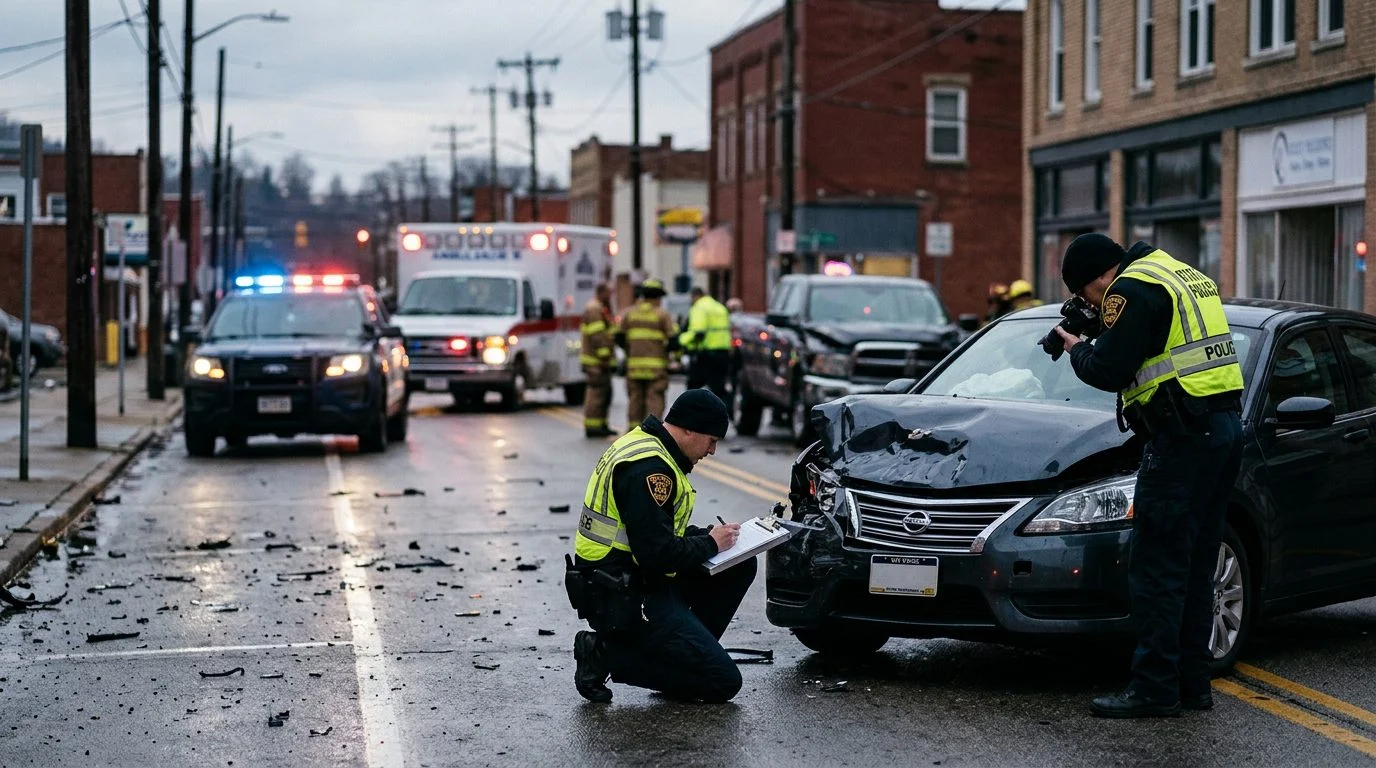
Car and Truck Accident Injuries in West Virginia
Blurred Vision After a Car Accident Head Injury? Talk to Us About Your Case.
A head or neck injury from a crash can affect how your eyes work. Learn what may be happening and how the firm can help you understand your options.
Published November 2, 2026
Can a Head Injury From a Car Accident Cause Blurred Vision?
Yes. A head or neck injury from a car or truck crash can cause blurred vision. Blurred vision after car accident head injury is one of several possible vision changes. Many people are surprised by this, because they expected only bruises or whiplash.
Your eyes send signals to the brain, and the brain turns those signals into what you see. The brain also controls how your eyes move, focus, and work together. A blow or sudden jolt in a crash can disrupt that process. The problem can start in the brain rather than the eyes.
Vision changes do not always appear right away. Some people notice them within hours. Others notice them days later. That is why tracking matters. A change you notice on day five is still worth reporting.
Vision changes may be linked to a head injury, and only a medical evaluation can show what is happening. Tell a doctor about every change, even small ones. Don’t assume the symptom will pass on its own.
If a crash left you with blurry or double vision, or you're helping someone who has it, we can talk through what happened and what to record. Talk it through with Big Bubba — the first case review is free, confidential, and carries no obligation.
What Is a Concussion, and How Does It Affect the Eyes?
A concussion is a type of traumatic brain injury. It happens when a blow or sudden jolt to the head or body disrupts normal brain function. You can have a concussion without passing out. The lack of fainting does not rule out a brain injury.
Symptoms can show up hours or days after the crash. That delay can make it hard to connect the symptom to the crash, so write down when each change began.
Eye control depends on the brain. After a concussion, the brain may have trouble with eye movement, focusing, and teaming the two eyes. The result can be blurred vision, double vision, eye strain, or eyes that tire quickly during reading. Some people feel that their eyes are out of sync when they shift from one object to another.
A concussion is a medical diagnosis, and a doctor makes it after an evaluation. Describe what happened in your own words. Include the impact, whether an airbag deployed, and any memory gaps around the crash. Those details help a doctor understand the injury.
For broader background on brain injuries from crashes, read our traumatic brain injury guide.
Common Vision Symptoms to Watch For After a Crash
Common vision signs after a head injury include blurred vision, double vision, eye strain, and light sensitivity. Write each one down in your own words. Blurred vision may be clear up close but unclear at a distance, or the reverse. Double vision may be worse when you look to one side, or when you read or use a phone.
Other signs include trouble focusing or shifting focus between near and far objects. Eye fatigue after short periods of reading or screen use is another. Some people are bothered by glare or by bright or flickering lights. Others feel dizzy or off balance when they move their eyes, or they struggle to follow a moving object such as a car in traffic.
These symptoms overlap with other concussion symptoms, including headaches, trouble concentrating, and sleep changes. Note them too. Pay attention to whether symptoms come and go, what brings them on, and what makes them ease. Describe each one as you actually feel it, not as you think it should sound.
Some people push through symptoms because they want to get back to work or care for family. Try not to. Driving with blurred or doubled vision can be dangerous. Stop and ask someone else to drive if you cannot see clearly.
When to Seek Medical Attention Right Away
Sudden vision loss, new double vision, or vision changes paired with severe headache, confusion, repeated vomiting, unequal pupils, weakness, or slurred speech need emergency care. Call 911 or go to the nearest emergency department right away. Don’t wait to see whether the symptoms pass.
Persistent vision changes after any head impact should be checked by a physician. The doctor may refer you to a neurologist, a doctor who treats the brain and nervous system, or to an eye care professional. Keep every appointment and follow the treating doctor’s instructions. That includes any recommended vision testing or therapy.
Medical records matter for two reasons. They guide your care, and they create a written link between the crash and your symptoms. An evaluation, a diagnosis, and a treatment plan show when symptoms started and how they changed. A record made close to the crash is generally easier to connect to the injury.
Tell your doctor that you hit your head, what you felt, and what you have noticed since. Don’t leave out a symptom because it seems minor. It may matter later.
How Long Do Headaches and Vision Symptoms Last?
Recovery from blurred vision after car accident head injury varies from person to person. The severity of the injury and the person’s overall health both affect it. No fixed timeline fits everyone. Some people notice improvement over days or weeks. Others have symptoms that last longer and need ongoing care.
Don’t measure your progress against a calendar or against someone else’s story. Measure it against what you notice. Pattern can be as useful as duration. Ask whether symptoms come and go or stay steady. Do they get worse at the end of the day, after reading, or while driving? Do they ease with rest?
Write these details down. They help your doctor decide what to test. They also help you describe your symptoms clearly to anyone reviewing your case.
Headaches often appear with vision changes. A headache that continues or gets worse after a crash is worth reporting to a doctor. Sleep changes and drowsiness can also show up alongside vision problems. Our pages on sleep changes after brain injury and drowsy driver crashes cover those issues in more detail.
If a symptom is getting worse, contact your doctor sooner rather than waiting for the next scheduled visit.
What to Document in West Virginia After a Car Accident Head Injury
Start a written symptom log as soon as you can. Record the date, the time, what you saw, how long it lasted, and what made it better or worse. Note which daily tasks were affected, such as driving, reading, or working on a screen. A simple log kept each day gives your doctor and anyone reviewing your case a clear timeline.
Keep photos of the vehicles, the scene, any visible injuries, and any glasses or contacts you wore at the time of the crash. Photos taken soon after the crash show conditions that may change later.
Save every medical record, discharge paper, prescription label, and appointment note. Include vision testing results. Keep a copy of anything you sign.
Get the crash report from the investigating agency. It may list the date, location, parties, and witnesses. Write down the names and phone numbers of witnesses. Include anyone who noticed changes in your behavior, speech, or vision after the crash. Those observations can matter later.
Crashes involving trucks call for extra records. Note the company name, the truck number, and the driver’s name if you know them. If cargo was involved, the state’s Drive Safe, Secure Your Load guidance explains that unsecured cargo can cause serious or catastrophic crashes and injuries in West Virginia.
Keep copies of everything you send to or receive from an insurance company. Write down what was said, when, and by whom. West Virginia law limits some settlement contact during the first twenty days after an injury, in certain situations, as explained in W. Va. Code § 55-7-11a. Ask for time before you give any statement.
Not sure what your next step is?
Talk it through with Big Bubba — the first case review is free, confidential, and carries no obligation.
How Vision Changes Can Matter in a Brain Injury Claim
A brain injury claim usually relies on medical records, a consistent symptom history, and proof of how the injury affects daily life. Vision changes can be one part of that proof. They may be relevant, depending on the facts.
Some insurers may dispute a claim. An insurer may question whether symptoms came from the crash, or point to an earlier condition. Dated symptom logs and complete medical records can help answer those questions. Keep your own notes accurate and consistent. Do not guess or exaggerate.
Timing also matters. West Virginia generally allows two years to file a personal injury lawsuit, and exceptions may apply. W. Va. Code § 55-2-12 sets that general time limit. Because of that limit, it is wise to learn your deadline early.
Shared fault is another issue. Under W. Va. Code § 55-7-13a, fault is split into percentages among the people involved, and recovery follows those percentages. Shared fault can matter in how a claim is evaluated.
In some crashes involving commercial motor vehicles, state law caps certain noneconomic damages recoverable against the employer defendant of a commercial motor vehicle, and exceptions apply under W. Va. Code § 55-7-32.
Every claim turns on its own record. No one can predict how a particular claim will end based on symptoms alone.

Steps to Take After a Serious Crash
The firm handles car, truck, and commercial vehicle crashes, including serious injuries such as traumatic brain injury and spinal cord injury, and wrongful death.
If you are dealing with vision changes after a crash, or you are caring for someone who is, the details can feel overwhelming. It can be hard to know what to write down and whom to trust with the facts. You may still be recovering while you try to sort it all out.
If a crash has left you with vision that blurs or doubles, and you are deciding what to keep and how to protect it, you can request a free case review with the firm. There is no obligation to continue. Bring your symptom log and any records you already have.