
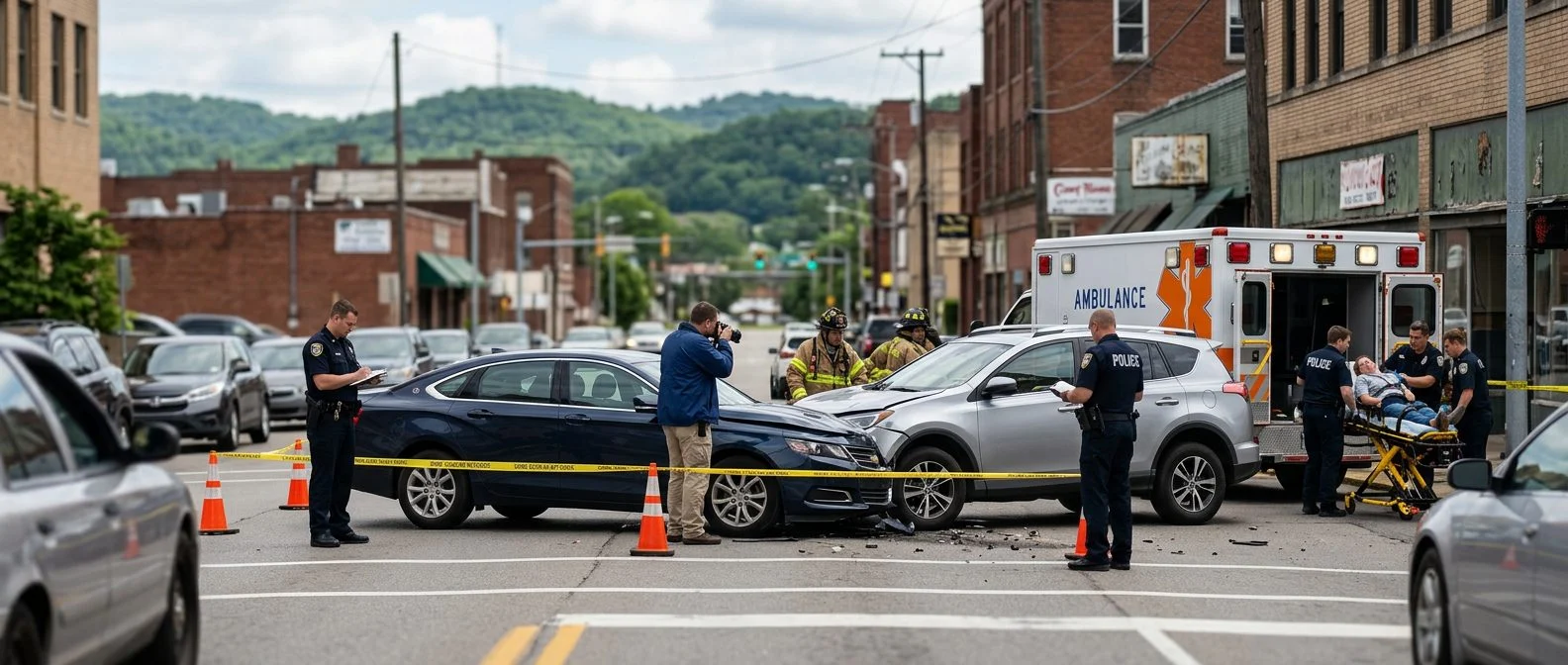
Car Accident Claims in West Virginia
Understanding Your Chances in a West Virginia Car Accident Lawsuit
Every claim turns on its own facts. Here is how the firm approaches the questions that shape a car accident case.
Published November 22, 2026
If you were hurt in a car crash, you probably want a straight answer. What are the chances of winning a car accident lawsuit? No one can give you a reliable number, because each claim turns on its own facts. In general, the result depends on three things: who was at fault, how well your injuries and losses are documented, and how the claim is handled from the start.
This page explains what “winning” usually means and what shapes the result in West Virginia. Many readers are still recovering, handling bills, or caring for a family member. You don’t need every answer yet.
What Does “Winning” a Car Accident Lawsuit Mean?
Winning usually means ending the claim with a result that pays for the harm the crash caused. That result often comes from a negotiated settlement with an insurer. Some cases go to trial, where a judge or jury decides the outcome.
Winning doesn’t always mean every loss gets covered. A resolution may cover medical bills and lost income but leave out other harms. The terms depend on the facts and on what each side agrees to.
Two questions sit at the center of every claim. The first is liability: who caused the crash? The second is damages: what did the crash cost the injured person? A claim usually needs strong answers to both. Proof on one side alone often leaves a gap.
Damages can include medical care, lost wages, and pain and suffering. Keep records of bills, missed work, and how your daily life has changed.
Not sure what your next step is?
Talk it through with Big Bubba — the first case review is free, confidential, and carries no obligation.

Why No Single Percentage Can Tell You Your Odds
No honest percentage can show how likely a win is, because each car accident claim has its own facts. A number from another case would not reflect your crash, your injuries, or your proof.
Several factors generally shape how a claim turns out. These include how clear fault is, the quality of the evidence, how severe and well documented the injuries are, the insurance limits involved, and the timing of the claim. Each one can move a case in either direction.
Fault is often the first battleground. If the other driver disputes what happened, the claim may depend on witness accounts, photos, and the police report. If fault is clear, the focus may shift to the injuries and the value of the losses.
Insurance limits matter too. A policy may cap what one source pays, so other coverage, such as underinsured motorist coverage, may become relevant depending on the facts.
Some insurers may dispute a claim. When that happens, careful records become more important. Gaps in early documentation can give the other side room to argue.
What a Car Accident Claim Generally Has to Show
If another driver was at fault, the claim generally focuses on how that driver’s conduct caused the crash and the injuries that followed. West Virginia generally divides fault by percentage. Each person’s liability follows that share. See W. Va. Code § 55-7-13a.
Your own share of fault does not automatically end the claim. Under W. Va. Code § 55-7-13c, your fault bars recovery only if it is greater than the combined fault of everyone else responsible. If it is less, your recovery is reduced in proportion to your share.
When a commercial truck is involved, the claim can reach beyond the driver.
Evidence That Often Shapes a Claim
Evidence gathered early often matters most. The police report is a good place to start.
A report may record the scene, statements, and citations. It may be relevant, depending on the facts.
Other useful evidence includes photos of the vehicles and the scene, damage records, and witness contact information. Dashcam or traffic camera footage can also help, when it exists.
Medical records tie the injuries to the crash. Records should show when symptoms began and what treatment followed. Gaps in treatment can raise questions, so keep appointments and follow medical advice.
Seat belt use is handled in a specific way. Whether evidence about seat belt use can be used in a case depends on the facts and the court’s rules.
Injuries That Can Be Harder to Prove
Some injuries are harder to prove than others. Soft tissue injuries, concussions, and traumatic brain injuries can be difficult to document, especially when symptoms are slow to appear.
Symptoms that show up days or weeks after a crash may still be connected to it. The timeline matters. Write down when symptoms began, what they feel like, and how they affect work, sleep, and family life.
Spinal cord injuries raise different questions. According to the Christopher & Dana Reeve Foundation, trauma such as a car accident can cause a spinal cord injury. Complete and incomplete injuries differ, and the injury level and severity can affect function and walking.
Catastrophic injuries often bring long-term medical needs. Those needs may take time to assess, and early records help a doctor and a claim tell the same story. Keep copies of every report and bill you receive.
Settlement or Lawsuit: How Claims Are Resolved
Many car accident claims are resolved through talks with an insurer. Others may need a lawsuit to move forward. A lawsuit does not always mean a trial. Many cases resolve at different stages.
The path usually depends on three things: whether liability is disputed, how serious the injuries are, and whether both sides can agree on the claim’s value.
Because of this, an early offer deserves careful review before you sign anything.
Not sure what your next step is?
Talk it through with Big Bubba — the first case review is free, confidential, and carries no obligation.
Deadlines to Keep in Mind
West Virginia generally allows two years to bring a personal injury lawsuit. Under W. Va. Code § 55-2-12, the two years run from when the right to bring the action accrues. Exceptions may apply.
Missing a deadline can end your ability to file. Reviewing timing early gives you more options.
The same statute sets a two-year period for property damage claims. That period is separate from the personal injury period, and the two claims can have different facts.
Wrongful death claims are a separate category with their own rules. Families dealing with a fatal crash should raise timing questions early, because the rules depend on the facts and on who brings the claim.

Taking the Next Step in Your Own Situation
If you’re researching a crash that changed your life, you may be recovering, waiting on medical bills, or wondering whether to talk to an insurer. Those choices can feel urgent and confusing. You don’t have to sort them out alone.
The firm handles car accident and truck accident claims. We serve injury victims across West Virginia, including people hurt in commercial vehicle crashes and families facing a wrongful death claim.
If you were hurt, or you’re caring for someone who was, you can request a free case review to talk through your facts.