
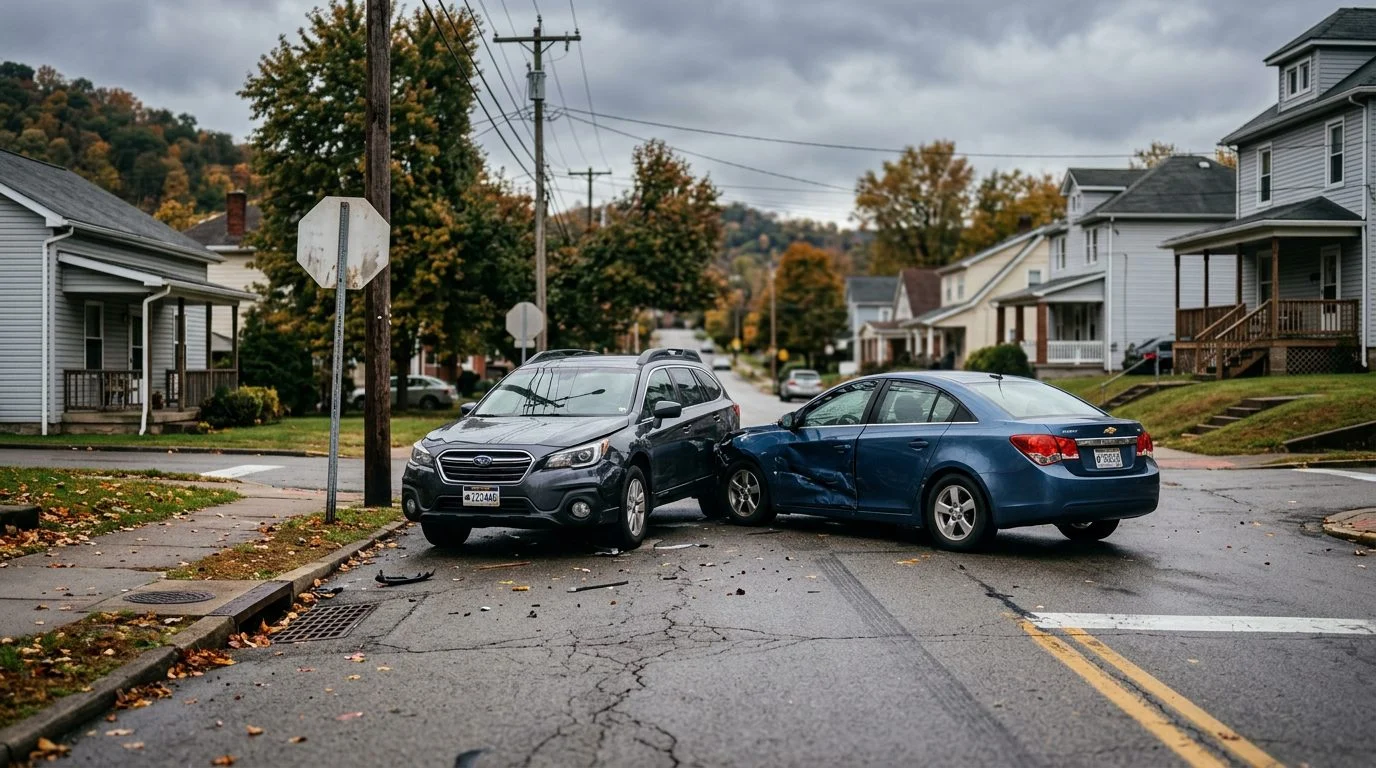
West Virginia Injury Claims
What a Negligence Claim Generally Requires in West Virginia
A plain-language guide for families dealing with a car crash, a commercial truck crash, or a wrongful death.
Published November 16, 2026
If someone you love was hurt or killed in a crash, you may be asking what it takes to hold the other side responsible. Negligence claims are fact-specific, and the details of each case matter.
This page explains each condition in plain language. It also shows how each may apply to car crashes, commercial truck crashes, and wrongful death cases.
What Negligence Means in a Legal Claim
Negligence is a civil wrong, called a tort, in which a person fails to use reasonable care and another person is harmed. A civil claim asks a court to hold the at-fault person responsible for that harm. It is not a criminal case.
Negligence is different from an intentional tort. An intentional tort involves harm a person meant to cause, such as a deliberate assault. Most crash claims are framed as negligence, because a driver usually does not intend to hit anyone. The driver may still have been careless.
The reasonable-care standard asks what a careful person would have done in the same situation. Courts and juries look at the circumstances, such as the weather, the road, the speed limit, and what the driver could see. Each crash is different, so the details matter a great deal.
For more on the injuries that often lead to these claims, see our guide to traumatic brain injury accidents.
If you are trying to make sense of a crash that changed someone you love, you can reach out to us to request a free case review. Talk it through with Big Bubba — the first case review is free, confidential, and carries no obligation.
The Four Elements of Negligence at a Glance
- Duty of care: the person owed you a legal obligation to act carefully.
- What happened: a case review may look at what the other person did or did not do before the crash, depending on the facts.
- Causation: that failure caused the harm.
- Your losses: a case review may also look at how the injury has affected your health, your work and your daily life.
Think of them as four questions. Was the person responsible for acting carefully? Did they fail to? Did that failure cause the harm? What losses resulted?
A West Virginia court applies them to each case in its own way, so the exact steps can vary.
Element One: Duty of Care
Duty of care is the legal obligation to act with reasonable care toward other people. A driver on a public road generally owes that duty to other motorists, pedestrians, and passengers.
Commercial vehicles add more layers. A truck driver and the trucking company may owe duties tied to maintenance and driving hours. Federal rules require every motor carrier to inspect, repair, and maintain its vehicles so that key parts stay in safe operating condition. Other federal rules limit driving time, including a 14-hour period that starts after 10 consecutive hours off duty, as set out in 49 C.F.R. § 395.3.
Driver conduct matters too. West Virginia law requires a driver to exercise due care and to avoid distractions, such as reading or writing text messages on a phone while driving. Whether a duty exists may turn on who was involved and what each person was doing.
Element Two: Breach of Duty
Common examples include speeding, running a red light, following too closely, and driving while distracted. On a commercial vehicle, failing to maintain brakes may also be a breach.
Evidence helps show what happened. Crash reports, witness statements, photographs, and vehicle data may all be relevant.
West Virginia also lets a person hurt by a violation of a statute seek damages from the offender. The exception is when the statute says its penalty replaces those damages, as explained in W. Va. Code § 55-7-9.
Breach can be a point of disagreement. Some insurers may dispute a claim on this point, so records that show what the other driver did are often important.
Element Three: Causation
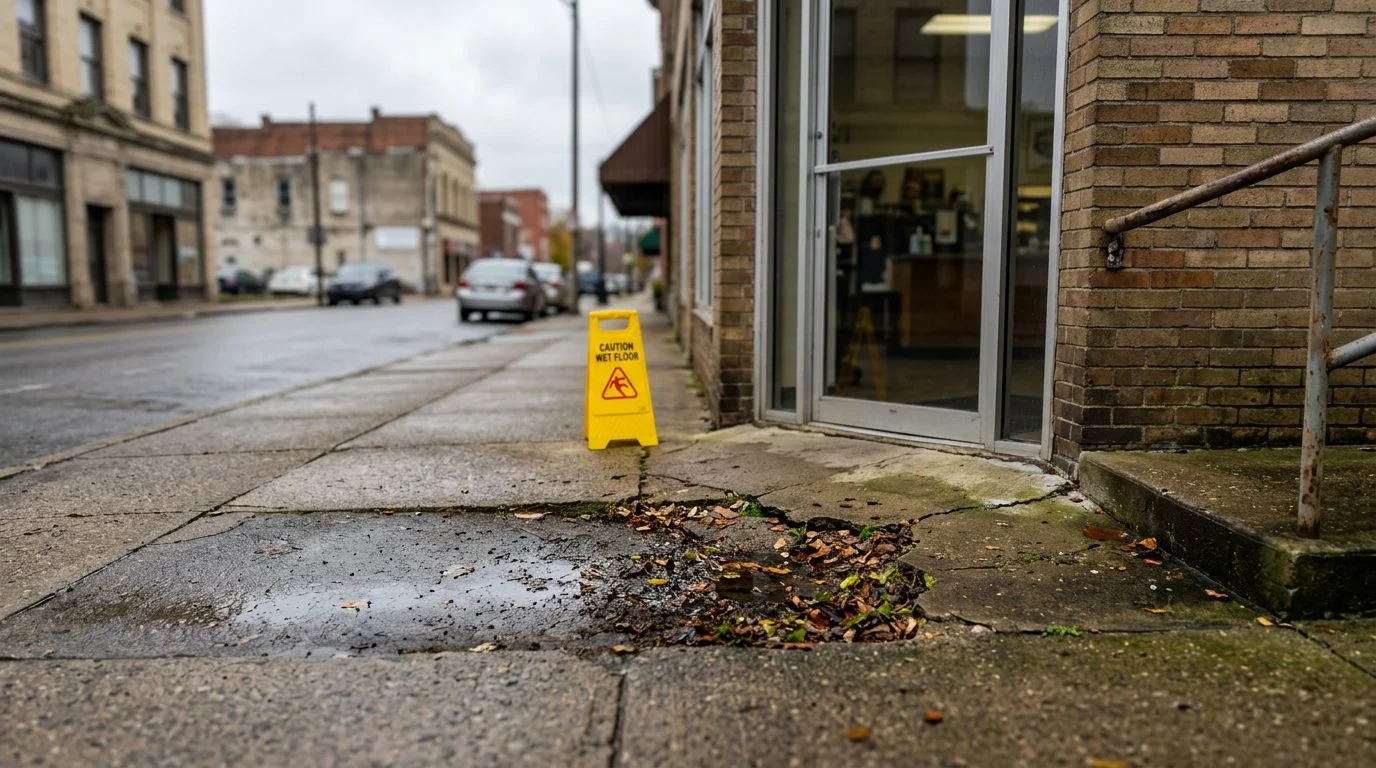
Causation means the careless act actually caused the injury.
Medical proof matters most here. The Christopher & Dana Reeve Foundation explains that trauma, including car accidents, can cause spinal cord injuries. Its fact sheet also explains how complete and incomplete injuries differ, and how injury level and severity affect function.
Medical records and treating providers’ opinions may help connect a brain or spinal cord injury to the crash. Causation can be hard to prove in catastrophic cases. An injury that worsens over time, or appears days later, may still raise questions about its cause. Keeping complete medical records can help show that link over time.
Element Four: Damages
Negligence claims generally require proof of actual harm, so losses need documentation.
Wrongful death adds its own list. Under W. Va. Code § 55-7-6, the jury’s verdict shall include, but may not be limited to, damages for sorrow, mental anguish, and solace. It may also cover lost income and services the decedent would have provided, care and hospital expenses from the injury, and reasonable funeral expenses. The claim is brought by the personal representative of the person who died.
Timing matters. The same statute says a wrongful death action must generally start within two years after the death, subject to other provisions of state law (W. Va. Code § 55-7-6). Our page on wrongful death after a car crash covers this type of claim in West Virginia.
Not sure what your next step is?
Talk it through with Big Bubba — the first case review is free, confidential, and carries no obligation.
How Fault Can Be Shared in West Virginia Crashes
Fault can be shared among several people in a West Virginia crash, and that can change a claim. West Virginia’s comparative fault statute, W. Va. Code § 55-7-13a, defines comparative fault as the degree to which a person’s fault was a proximate cause of an alleged personal injury, death, or property damage, expressed as a percentage. Under W. Va. Code § 55-7-13c, an injured person’s fault does not bar recovery unless it is greater than the combined fault of all others responsible. If it is less, recovery is reduced in proportion to that person’s fault.
When a commercial vehicle is involved, the claim may reach more than the driver. Under W. Va. Code § 55-7-32, the vehicle’s owner, the operator’s employer, or another entity with legal control may be an employer defendant.
If you believe another driver was at fault, you can reach out to the firm to talk through your situation. Reading about them while a family member recovers, or after a loss, can feel heavy. If you are trying to make sense of a crash that changed someone you love, you can reach out to us to request a free case review.