
Car Accidents | West Virginia
Rear-Ended in West Virginia? Know Your Next Steps
Practical guidance for drivers and passengers hurt in a rear-end collision, from the roadside to the weeks that follow.
Published November 10, 2026
If you’re wondering what to do if you were rear-ended in West Virginia, you may feel fine, or you may feel sore and unsure what comes next. The short answer: get to safety, get help if anyone is hurt, and gather basic facts before you leave the scene. The steps below explain each one in plain language.
The First Steps After a Rear-End Crash in West Virginia
Your first moves after a rear-end crash are simple. Get to safety, call 911 if needed, and exchange information. Work through these in order when you can.
- Move to safety. If the cars can move, pull them out of the travel lane and turn on your hazard lights.
- Call 911 if anyone is hurt or traffic is blocked. An officer can document the crash and give you a report number.
- Exchange information. Get the other driver’s name, phone number, insurance company, policy number, and license plate. Share your own details too.
A rear-end crash can cause injury even at lower speeds. Neck and back strain can happen when the head moves quickly forward and back. Some people feel little at first, and that’s why the next steps matter.
The facts of each crash shape what applies. Our site also covers serious car accident injuries more broadly.
If you're weighing a recorded statement or an early call from the other driver's insurer, you don't have to sort it out alone, and we offer a free case review. Talk it through with Big Bubba — the first case review is free, confidential, and carries no obligation.

Get Checked by a Medical Provider Even If You Feel Fine
Get checked by a medical provider soon after the crash, even if you feel fine. Some injuries don’t show up right away.
Neck and back strain, headaches, and concussion symptoms may appear hours or days later. Some head injuries are hard to spot at the scene, and a provider can check for them. The Brain Trauma Foundation’s prehospital guidelines for traumatic brain injury describe recommended early assessment of these injuries.
Seek care promptly if you notice dizziness, confusion, a bad headache, vision changes, numbness or tingling, or neck or back pain that gets worse. Tell the provider you were in a rear-end crash so it’s written in your chart. A medical record made soon after the crash may help show what happened.
Keep every follow-up appointment, and follow the care plan your provider gives you. Gaps in treatment can become a question in a claim.
Report the Crash and Collect Facts at the Scene
Get the police report number and write down the facts while they’re fresh. A police report documents the crash. Ask for the officer’s name and report number, even if the officer doesn’t assign fault at the scene.
Record the date, time, and exact location. Note the weather, road conditions, traffic signals, lane positions, and where each car stopped. Write down any statements made at the scene.
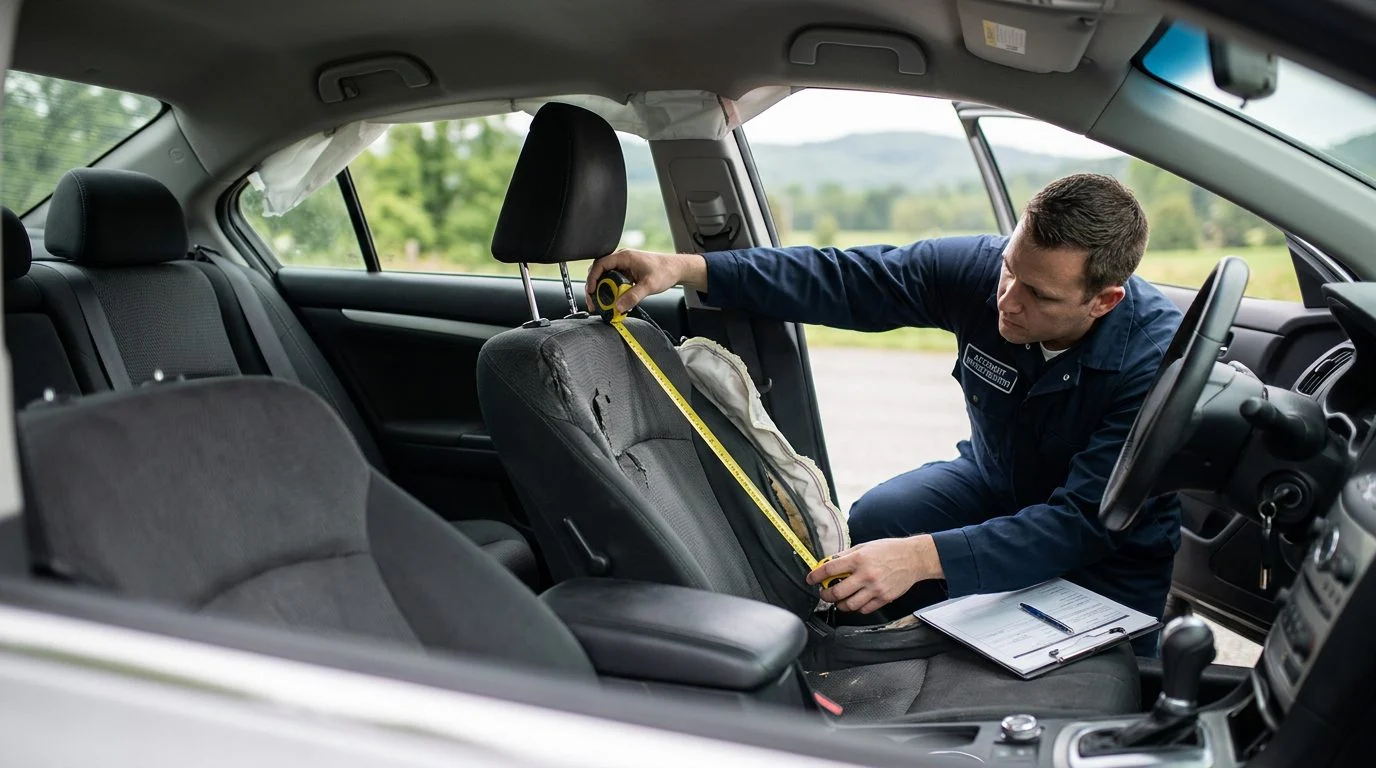
Take photos of both vehicles, the damage, the road, and any visible injuries. Get names and phone numbers from witnesses. Video from a nearby business or a home camera may exist, so ask about it soon.
Fault in a rear-end crash often turns on the details. West Virginia’s driver’s test material covers following too closely, a driver-safety rule that may bear on fault. If another driver was at fault, write down what that driver did, such as a sudden stop or phone use, if you saw it.
Document Your Injuries, Symptoms, and Missed Work
Keep a written record of your symptoms, bills, and missed work from day one. Records like these help you tell the full story later.
Start a daily symptom journal. Note your pain level, headaches, sleep, concentration, and anything you can no longer do, like chores, lifting a child, or driving. Date each entry.
Save every medical bill, prescription receipt, and insurance explanation. Keep a log of mileage to appointments, repair estimates, and rental car receipts.
If the crash kept you off work or cut your hours, keep pay stubs, a note from your provider, and any messages from your employer about missed shifts. Store the originals and keep copies. Photos of bruises as they heal can also be useful.
Why the Other Driver’s Insurance Company May Call Quickly
The other driver’s insurer may call you soon. You don’t have to answer every question right away.
An adjuster may ask for a recorded statement or start talking about a settlement. Some insurers may dispute a claim or ask questions aimed at limiting their responsibility. Some questions may help them more than you.
Ask for the adjuster’s name, company, and claim number, and write them down. Ask for the other driver’s insurance company and policy number too. West Virginia requires drivers to carry liability insurance, and the DMV’s consumer insurance information explains those rules.
Before you agree to a recorded statement, think about timing and wording. Statements may be used later. Don’t guess about speed, distance, or how hurt you are. Don’t sign medical releases or accept an offer until you know your symptoms and treatment.
West Virginia law also limits settlement contact in the first days after an injury. Under W. Va. Code § 55-7-11a, that limit applies within twenty days of the personal injury while the injured person is a hospital inpatient or partially or totally unable to engage in his or her usual trade, profession or occupation. Under W. Va. Code § 55-7-11a, a settlement, release or statement obtained in violation of that section may be disavowed by the injured person within one hundred eighty days from the date of the personal injury, by executing a written statement of disavowal and forwarding a copy to the person who violated the section, provided any consideration paid is repaid or returned.

Deadlines to Know and Reaching Out for a Free Case Review
West Virginia generally allows two years to file a personal injury lawsuit, and exceptions may apply. That period comes from W. Va. Code § 55-2-12. Insurance claim steps and lawsuit deadlines are different, so don’t assume one follows the other.
West Virginia also uses modified comparative fault, which is a shared-fault rule. Under W. Va. Code § 55-7-13c, a plaintiff’s fault generally does not bar recovery unless it is greater than the combined fault of all others responsible. Recovery is reduced in proportion to the plaintiff’s share of fault.
If you’re deciding whether to give a recorded statement or accept an early call from the other driver’s insurer, you don’t have to sort it out alone. Reach out to the firm for a free case review, and we can talk through your crash, your injuries, and the records you’ve gathered. Contact the firm