

Wrongful Death | Car Accidents | West Virginia
Understanding the Timeline After a Fatal Car Crash
A plain-language map of the steps families often face, from the first days after a crash through the claim process.
Published November 17, 2026
Losing a spouse in a car crash leaves you with questions you never expected to face. This guide lays out the wrongful death car accident timeline in West Virginia, step by step.
The key date is the filing deadline. W. Va. Code § 55-7-6 generally allows two years from the date of death to bring a wrongful death action, and exceptions may apply. The other steps move at their own pace, and each one varies by case.
What Happens in the First Days After a Fatal Car Accident
In the first days, your main job is to get the facts on record and keep the paperwork in one place. You may not feel ready for that, and that is normal.
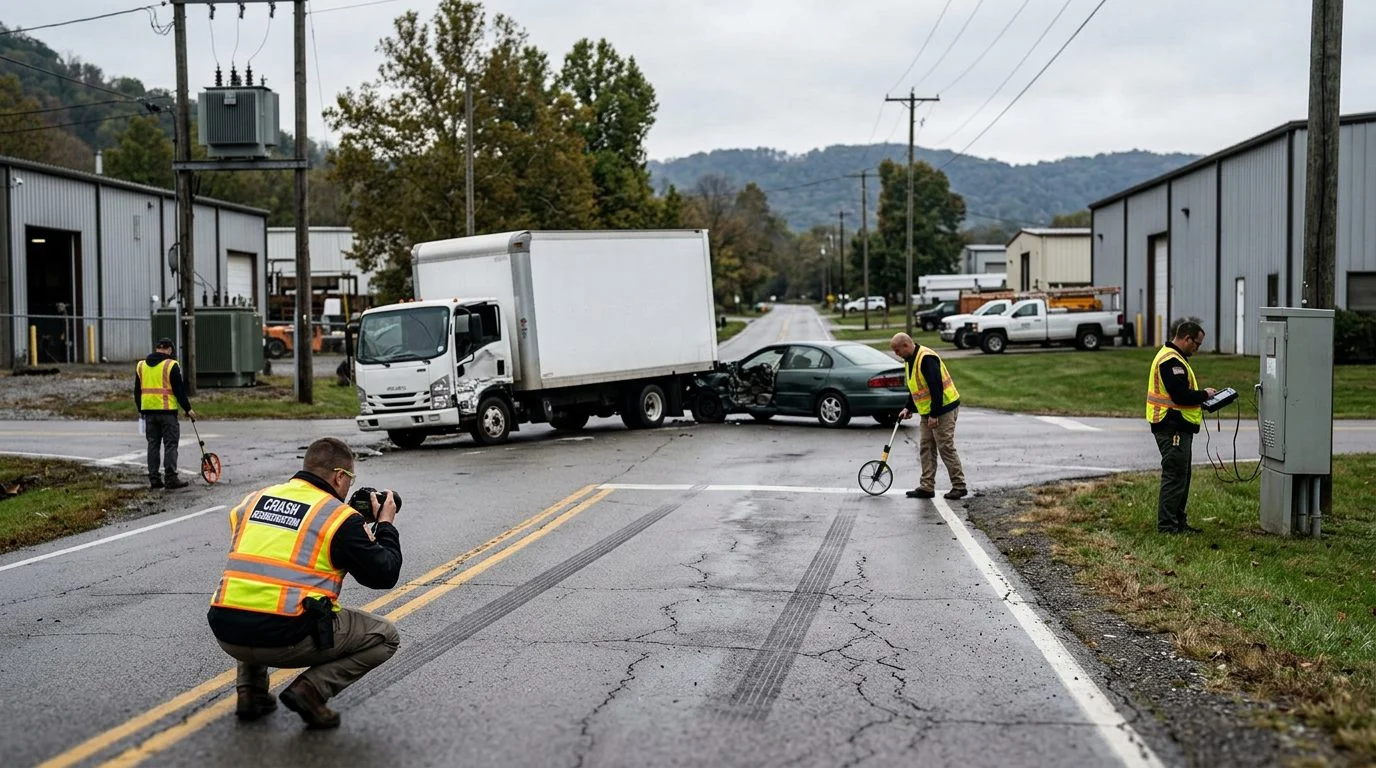
Start with the crash report. The agency that responded to the crash writes it. Ask that agency for a copy, and write down the report number and the officer’s name.
The coroner or medical examiner handles the death. State law requires each coroner to report traffic-crash deaths in writing to the Division of Highways by the tenth day of each month. That report lists the victim’s name, the date, time, and place of the crash, and the circumstances. W. Va. Code § 17C-4-11 sets that duty.
Evidence can disappear quickly. Ask the vehicle’s owner or insurer to keep the vehicle and its data. Save photos, text messages, phone records, dash camera video, and any notes from the scene. Which items matter varies by case.
Choose one person to be the family’s point of contact. Often that is the surviving spouse. This person keeps the calendar, takes calls from insurers, and writes down who said what and when.
Not sure what your next step is?
Talk it through with Big Bubba — the first case review is free, confidential, and carries no obligation.
Who Can Bring a Wrongful Death Claim in West Virginia
A wrongful death action is brought in the name of the decedent’s personal representative. The personal representative is the person formally appointed to act for the deceased person’s estate.
W. Va. Code § 55-7-6 also says the jury or court may decide how damages are shared. That sharing can include the surviving spouse and children, including adopted children and stepchildren. It can also include parents, siblings, and anyone financially dependent on the person who died.
As a spouse, you appear in that list. Your place in the claim still depends on the appointment of the personal representative and on the facts of your family.
Confirming who holds that role early saves time. Estate paperwork can take a while, so ask early what the process looks like where the estate is being opened.
These rules apply to the facts of each case. Some insurers may dispute a claim, and a dispute can add time to every step below.
The Filing Deadline: How Long to Sue Over a Fatal Crash in West Virginia
West Virginia generally allows two years from the date of death to file a wrongful death action, and exceptions may apply (W. Va. Code § 55-7-6).
The statute says every such action must be commenced within two years after the death of the person who died (W. Va. Code § 55-7-6). W. Va. Code § 55-7-6 reads: “The provisions of this section shall not apply to actions brought for the death of any person occurring prior to July 1, 1988.” The statute is subject to the limitations chapter’s other rules. West Virginia’s wrongful death statute is available to read in full at the link above.
The clock counts from the date of death, not the date of the crash. If a person dies weeks after a crash, the deadline runs from the death.
Treat that date as fixed.
What happens if the deadline passes? A late claim can be ended by the court. That means a family can lose the right to bring that claim at all.
Families often ask how late is too late. The safest answer is to treat the two-year date as the line you plan around.
Investigation and Building the Claim: Often Longer Than Expected
Building the claim often takes longer than families expect, because records arrive on their own schedule. Gather the crash report, witness names, medical records, hospital and funeral bills, and any vehicle data.
Commercial crashes add steps. The Federal Motor Carrier Safety Regulations are codified in Title 49 of the Code of Federal Regulations, and they govern commercial motor carriers. A truck or bus crash may lead to requests for carrier and driver records.
West Virginia law lists the damages a jury may award. These include sorrow, mental anguish, and solace, such as companionship and guidance. They also include reasonably expected loss of the decedent’s income and of the services, protection, care, and assistance the decedent provided. Care expenses and reasonable funeral expenses are on the list too. W. Va. Code § 55-7-6 sets out these categories.
Document each category with real records. Keep pay stubs, tax returns, receipts, and a list of household tasks the person handled. Write a note of how each task changed after the death.
Insurance Claims and Settlement Talks
Insurance claims usually run alongside the lawsuit clock, and some insurers may dispute a claim. The at-fault driver’s insurer may open a claim file and ask for records, statements, and bills.
Ask what the insurer needs in writing. Keep copies of everything you send and everything you receive.
If the at-fault driver has limited coverage, your own policy may matter. W. Va. Code § 33-6-31 sets rules for uninsured and underinsured motorist coverage. W. Va. Code § 33-6-31 reads: “The right of subrogation granted insurers under the provisions of subsection (f) of this section does not apply as against any person or persons who is or becomes an uninsured motorist for the reasons set forth in this subsection.”
A personal representative may settle a wrongful death claim before or after a lawsuit is filed. The court approves the settlement and sets how it is divided. W. Va. Code § 55-7-7 covers that process. Each negotiation moves at its own pace.
If the Claim Becomes a Lawsuit
If talks do not resolve the claim, the personal representative may file a lawsuit before the two-year date. In a personal injury or wrongful death action, a complaint filed on or after July 1, 2008 may not state a specific dollar amount of damages. It may say the amount in controversy meets the court’s minimum. W. Va. Code § 55-7-25 sets this rule.
A defendant may ask in writing for a statement of the damages sought. The plaintiff then has thirty days to respond.
After filing, the defendant responds to the complaint. Discovery follows. That stage includes written questions, document requests, and depositions, which are interviews taken under oath. Reviews by people who study the crash or medical records can add time.
Some cases settle through mediation, a meeting with a neutral person who helps both sides talk. Others go to trial. Court scheduling varies by county, so the pace can differ from one courthouse to another.
If more than one person shares fault, the jury assigns each a percentage. Those percentages set each party’s share of the recovery. W. Va. Code § 55-7-13a explains comparative fault.
Not sure what your next step is?
Talk it through with Big Bubba — the first case review is free, confidential, and carries no obligation.

Keeping Track of Your Family’s Timeline and Taking the Next Step
A written calendar is the simplest way to keep your family’s timeline in order. Mark the date of death and the two-year date, and set reminders well ahead of each one.
Add each document you requested, the date you asked, and the date it arrived. Note who sent it and what it covered.
Keep the crash report, death records, medical records, bills, and insurance letters in one folder, in date order. Save digital copies too.
We serve families across West Virginia, including Charleston, Huntington, Morgantown, Wheeling, Martinsburg, Parkersburg, Beckley, Clarksburg, Fairmont, and Weirton.
If you are still piecing together dates after losing your spouse in a road crash, you can request a free case review so your timeline can be looked at against your own situation.