
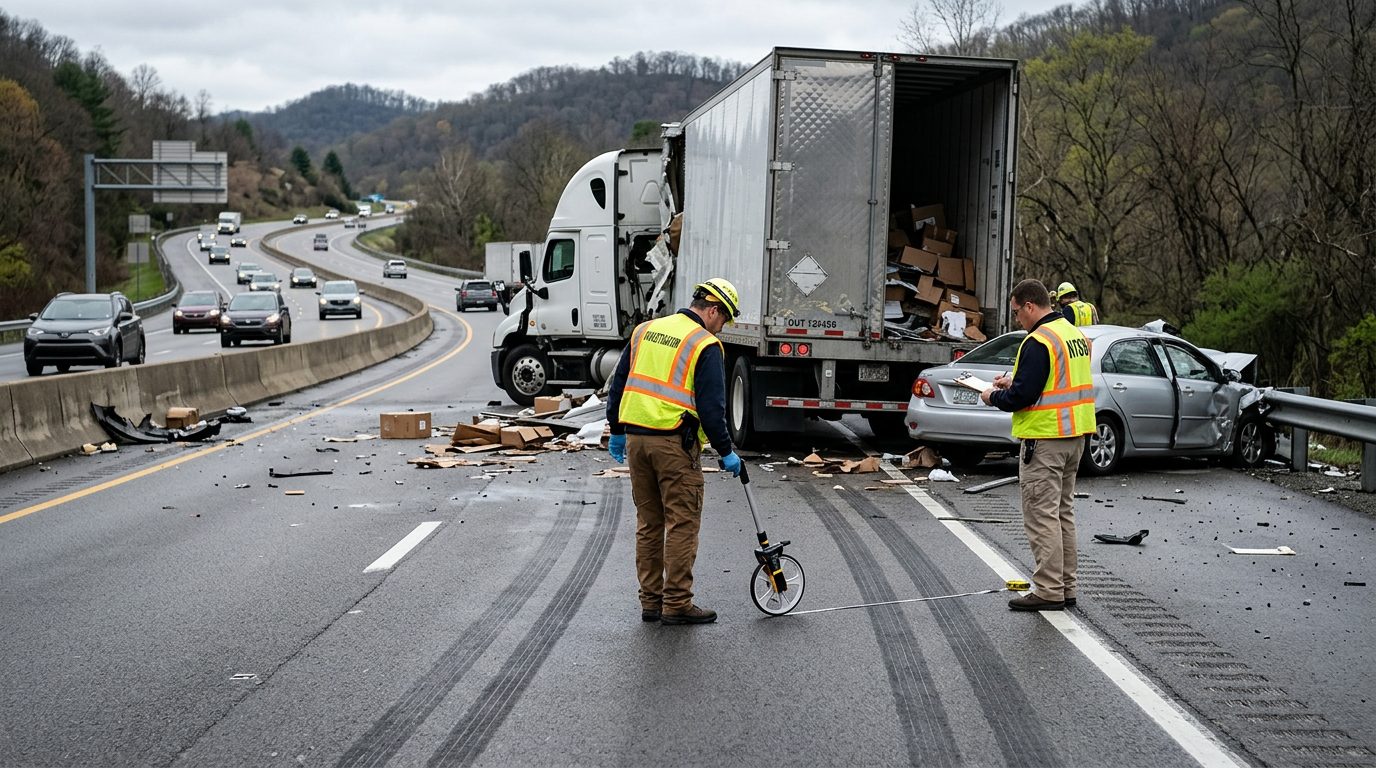
Truck Accidents in Beckley
Serious Truck Crash? Get Legal Help Now
We serve truck accident victims across West Virginia, including Beckley. We handle your case from start to finish.
Published October 04, 2026
Truck Accidents in Beckley: What to Do After a Crash
If you’ve been hit by a truck in Beckley, you’re facing injuries, medical bills, and questions about who pays. Truck accidents are different from car crashes—the size and weight of a commercial vehicle create catastrophic injuries and complex legal liability. Here’s what you need to know right now.
If you or a family member was injured in a truck accident in Beckley or anywhere in West Virginia, reach out now. Talk it through with our team — the first case review is free, confidential, and carries no obligation.
Truck Accidents in Beckley: Why They Happen and What Comes Next
Beckley sits on Interstate 77 and US Route 19, two major commercial corridors that carry heavy truck traffic daily. Coal industry transport, regional freight, and long-haul trucking make these routes busy and dangerous. When a truck crashes, the consequences are severe.
Common causes of truck accidents in this region include driver fatigue (especially on long routes), improper cargo loading, brake failure, speeding, and distracted driving. Unlike a two-car collision, a truck accident involves a vehicle weighing 20 to 30 times more than a passenger car. That mass and momentum create crush injuries, traumatic brain injuries, spinal cord damage, and death.
Truck accidents also differ legally. A car accident typically involves one at-fault driver. A truck accident may involve the truck driver, the trucking company, the vehicle manufacturer, the cargo loader, and a maintenance contractor—each potentially liable and each carrying different insurance. That complexity is why victims need legal help immediately.
What to Do Immediately After a Truck Accident
Your actions in the first minutes and hours after a crash can protect your health, preserve evidence, and strengthen your claim.
At the scene:
- Move to safety if you can do so without risking further injury. If you’re trapped or seriously hurt, stay put and wait for emergency responders.
- Call 911 immediately. Report the accident, request police and ambulance, and give dispatch your location.
- Take photos and video of the crash scene: vehicle damage, road conditions, skid marks, truck markings and license plate, debris, and traffic signs.
- Get the truck driver’s name, phone number, address, commercial driver’s license (CDL) number, and trucking company name.
- Ask for names and contact information from at least two witnesses—people who saw the crash or arrived shortly after.
- Do not admit fault, apologize, or sign anything except for police or medical personnel.
In the hours after:
- Seek medical attention even if you feel okay. Some injuries—internal bleeding, spinal cord damage, concussion—appear hours or days later. A medical record created on the day of the crash is crucial evidence.
- Report the accident to your auto insurance company, but keep your statement brief. Do not give a recorded statement or sign a release without legal advice.
- Write down everything you remember: the time, weather, what the truck driver was doing, what you were doing, and how the crash happened.
- Do not post about the accident on social media.
- Contact Big Bubba for a free case review as soon as possible. The sooner we begin, the sooner we can preserve evidence and investigate.
Why Truck Accident Claims Are Different
Truck accidents create legal complexity that car accidents don’t.
Multiple liable parties. A truck driver may be an employee of a trucking company or an independent contractor, depending largely on who controls the driver’s work. The company is responsible for hiring, training, and supervising the driver. The company may also be liable for failing to maintain the truck, overloading cargo, or violating federal safety rules. The manufacturer of the truck or its brakes may be liable if a defect caused the crash. The company that loaded the cargo may be liable if improper loading caused the truck to tip or brake failure. Each party has insurance, and each may try to blame the others.
Federal regulations create a roadmap for liability. Federal Motor Carrier Safety Regulations (49 CFR) govern truck driver hours of service, vehicle maintenance, cargo securement, and driver qualifications. Violations of these rules—a driver exceeding hours-of-service limits, a truck with failed brakes, cargo not properly secured—may help show negligence and liability. Logbooks, maintenance records, black box data, and dispatch communications prove violations.
Commercial insurance and liability limits differ. Trucking companies carry commercial liability insurance with higher limits than personal auto policies. But these companies also have legal teams and investigators on standby. They will contact you, offer quick settlement, and try to close your case before you understand the full extent of your injuries. You need representation to match theirs.
Evidence must be preserved immediately. Trucking companies can destroy or alter logbooks, maintenance records, dispatch records, and black box data. Once evidence is gone, it’s gone forever. Federal rules set specific record-keeping duties for trucking companies (for example, motor carriers must maintain an accident register for 3 years after the date of each accident), but they do not require a company to preserve every piece of evidence once it knows of a crash. A lawyer must send a preservation letter immediately to protect your case.
Not sure what your next step is?
Talk it through with our team — the first case review is free, confidential, and carries no obligation.
Common Truck Accident Injuries
Truck accidents cause catastrophic injuries that change lives.
Traumatic brain injury (TBI). The force of a truck crash can cause the brain to move inside the skull, tearing nerve fibers and damaging brain tissue. According to the National Institute of Neurological Disorders and Stroke, TBI can result in concussion, diffuse axonal injury, intracranial bleeding, and long-term cognitive impairment, memory loss, behavioral changes, and disability.
Spinal cord injury. A truck crash can fracture the spine or damage the spinal cord directly. Spinal cord injury may cause partial or complete paralysis, loss of sensation, chronic pain, and permanent disability depending on the level and severity of the damage.
Crush injuries and amputations. A truck can pin a vehicle, trapping occupants and crushing limbs. Amputation, organ damage, and internal bleeding follow.
Wrongful death. Families lose a loved one, their income, their support, and answers about what happened. Wrongful death claims are brought by the personal representative of the deceased person, and they may allow a family to seek damages for the loss.
How Big Bubba Helps Beckley Truck Accident Victims
In a truck accident case, we move quickly to investigate.
We investigate immediately. We send a preservation letter to the trucking company, truck driver, and insurers to protect evidence. We obtain the police report, interview witnesses, and request the truck’s maintenance records, logbooks, and black box data. We photograph the crash scene and the vehicles.
Your medical records matter. Records from your doctors can document the full scope of your harm.
We identify all liable parties and their insurance. We analyze the accident, the regulations, and the evidence to determine who is responsible and what coverage is available.
We handle all communications with insurers and trucking company lawyers. You don’t speak to them. We do. We negotiate a fair settlement or take your case to trial.
We work on a no-fee basis. You pay no attorney fees if there is no recovery. You remain responsible for court costs and case expenses.
Tell Bubba What Happened
If you or a family member was injured in a truck accident in Beckley or anywhere in West Virginia, reach out now. The sooner we begin, the sooner we can secure evidence and start building your case. Your free case review is a chance to tell your story and learn what happens next.
Have questions about what happened?
Ask our team directly. The first conversation is free, confidential, and there is no obligation to continue.
Frequently Asked Questions
How long do I have to file a truck accident lawsuit in West Virginia?
West Virginia law generally requires a personal-injury lawsuit to be filed within two years after the right to bring it accrues, and exceptions may apply. For wrongful death, West Virginia generally allows two years from the date of death to file, and exceptions may apply. Don’t wait—call now.
Can I recover damages if I was partially at fault in a truck accident?
Yes. West Virginia follows a modified comparative fault rule: you can recover damages even if you are up to 50% at fault, but you cannot recover if your fault is greater than 50%. This means even if you share some blame, you may still have a claim.
What evidence is important in a truck accident case?
Police reports, witness statements, photos of the crash scene and vehicle damage, the truck’s maintenance records, driver logbooks, black box data, dispatch communications, and medical records are all critical. Trucking companies move fast to destroy or alter this evidence—that’s why immediate legal action is essential.
Who can be held liable in a truck accident?
The truck driver, the trucking company, the vehicle manufacturer, the cargo loader, and the maintenance contractor may all be liable depending on the facts. A lawyer investigates each party and their insurance coverage.
Related practice areas
- Truck Accident Claims in West Virginia | Big Bubba Legal
- Truck Accidents in Parkersburg: What You Need to Know