
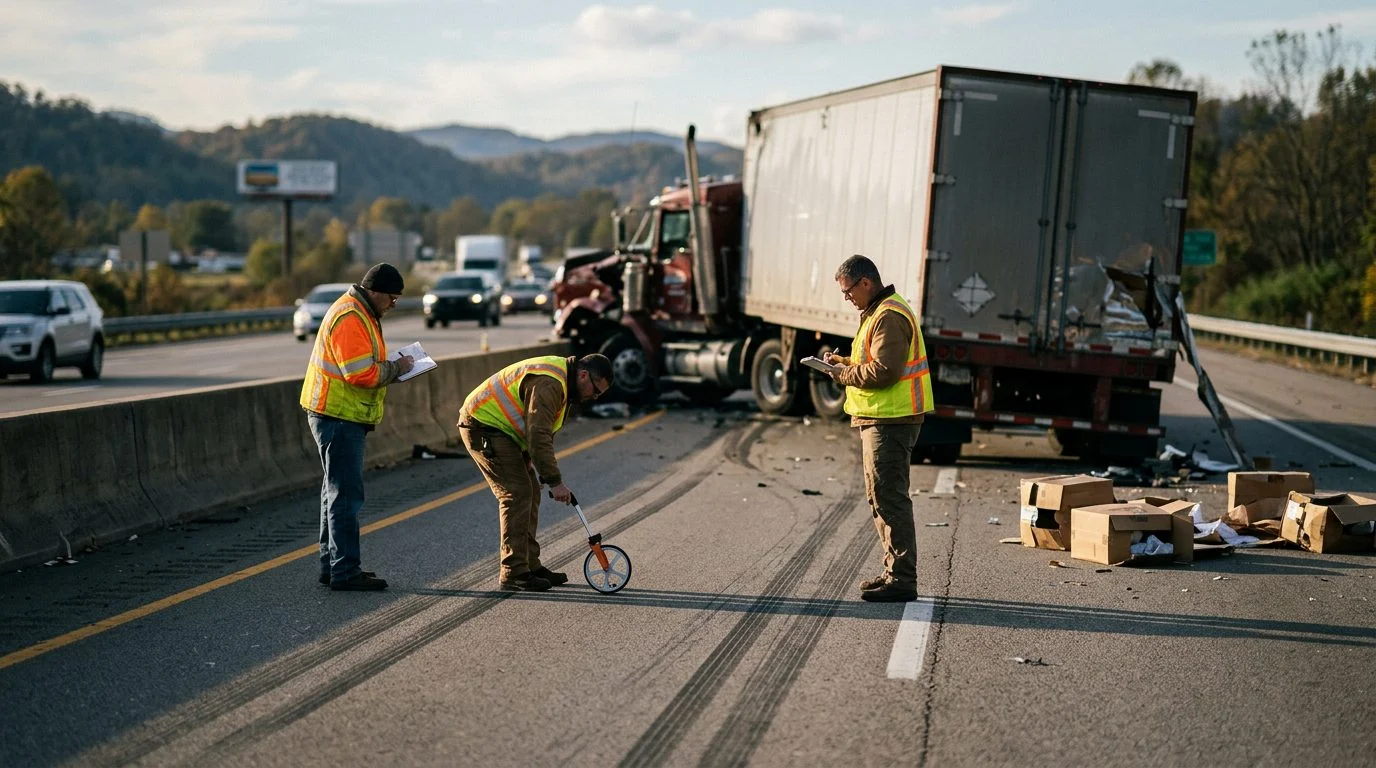
Truck Accidents in Huntington
Truck Accident Injuries in Huntington, WV: Know Your Rights
Commercial truck crashes cause catastrophic harm. Big Bubba Injury Law helps Huntington injury victims recover.
Published October 04, 2026
Truck Accidents in Huntington: What You Need to Know
Truck accidents in Huntington are serious, often catastrophic events that differ fundamentally from car crashes. The weight and force of a commercial truck multiply injury severity, and liability often involves multiple parties—the driver, the trucking company, cargo loaders, and sometimes manufacturers. If you’ve been injured in a truck accident in Huntington, understanding what makes these cases different and what steps to take next can protect your rights and your recovery.
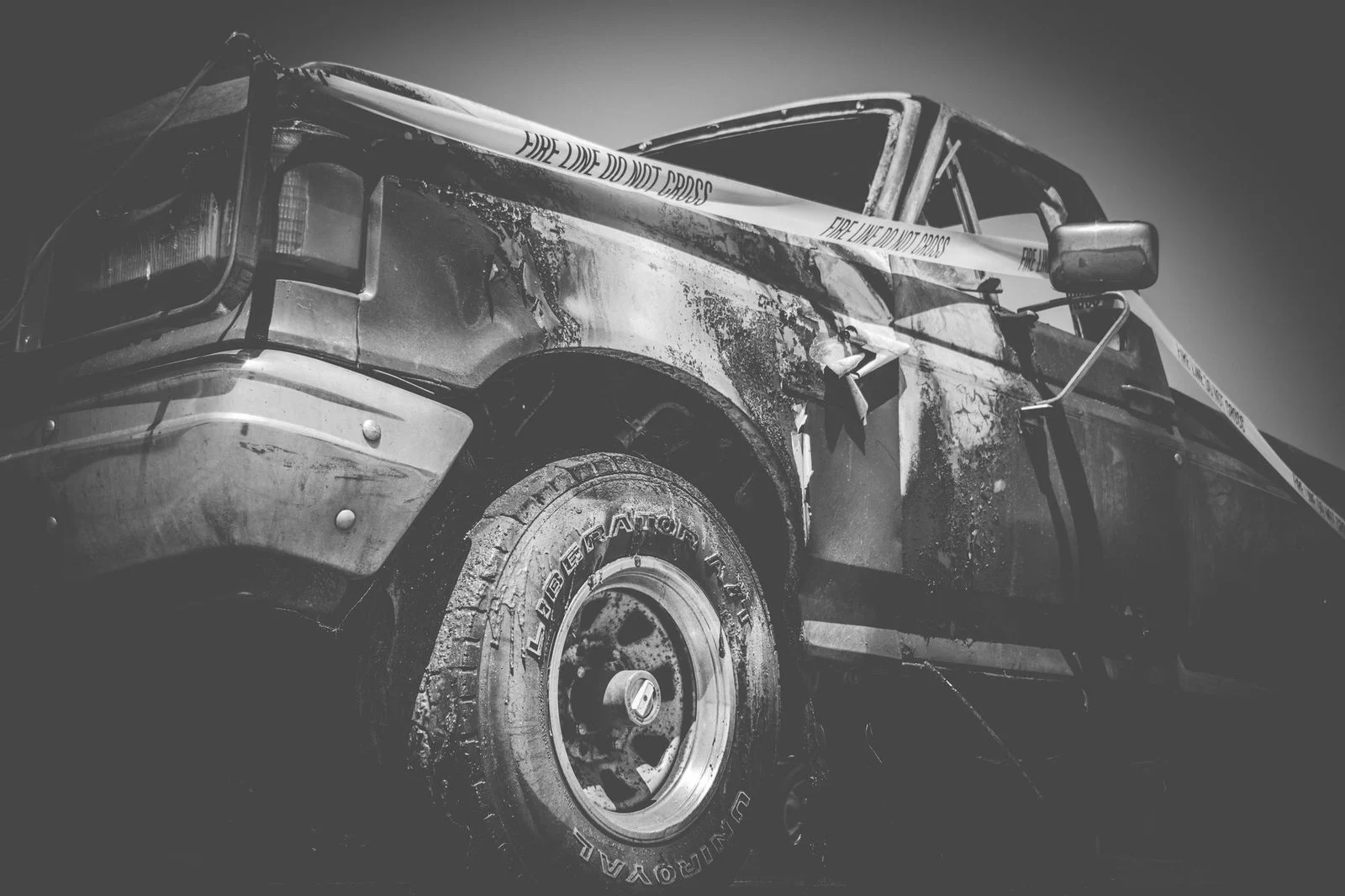
If you or a family member was injured in a truck accident in Huntington, you may have a claim against the driver, the trucking company, or both. Talk it through with our team — the first case review is free, confidential, and carries no obligation.
Truck Accidents in Huntington Are Serious
Huntington sits on Interstate 64 and US Route 60, major commercial corridors where semi-trucks, delivery vehicles, and commercial trucks operate daily. Truck accidents on these routes cause severe injuries and fatalities because of the sheer mass and momentum involved. Unlike car accidents, truck crashes often involve multiple liable parties and complex investigations that require immediate legal attention to preserve critical evidence.
Driver logs, maintenance records, electronic data from the truck, and dashcam footage are not kept forever; for example, federal rules require motor carriers to keep drivers’ records of duty status for at least 6 months. Victims and families need legal guidance early to understand their rights, identify all liable parties, and protect themselves from insurance companies working to minimize payouts.
Why Truck Accidents Differ from Car Accidents
A passenger vehicle weighs 3,000 to 4,000 pounds. A commercial truck weighs 20,000 to 80,000 pounds—up to 20 times heavier. That weight multiplies impact force exponentially, turning a survivable car crash into a catastrophic injury or death.
Truck accidents also involve layers of liability and regulation that car accidents don’t:
- Commercial liability and insurance: Trucking companies carry commercial liability insurance with dedicated legal teams and adjusters trained to deny or minimize claims.
- Federal trucking regulations: 49 CFR (Federal Motor Carrier Safety Regulations) govern driver hours of service, vehicle maintenance, cargo securement, and safety practices.
- Complex investigations: Truck accident investigations must examine driver logs, electronic control module (ECM) data, maintenance records, cargo documentation, and company safety practices—evidence that deteriorates or is destroyed quickly without immediate legal action.
- Substantial damages: Injuries from truck accidents often include catastrophic brain injury, spinal cord injury, amputations, severe burns, and wrongful death. Medical costs, lost wages, and long-term care expenses are far greater than in typical car accident cases.
Common Causes of Truck Accidents in Huntington
Truck accidents in Huntington happen for many reasons, and identifying the cause is crucial to establishing liability:
- Driver fatigue and hours-of-service violations: Federal regulations limit how many hours a truck driver can work without rest. Violations lead to drowsy driving, slower reaction times, and crashes.
- Improper maintenance or mechanical failure: Brakes, tires, steering, and lights must be maintained to federal standards. A company that skips inspections or repairs may be liable for crashes caused by mechanical failure, depending on the facts.
- Overloaded or improperly secured cargo: Cargo that shifts or falls can destabilize a truck, cause a rollover, or strike other vehicles. The loader or shipper who secured it improperly can be held liable.
- Speeding or unsafe driving: Trucks need more distance to stop than cars. A driver who speeds, follows too closely, or drives recklessly in bad weather or heavy traffic causes crashes.
- Inadequate driver training or hiring: A trucking company that hires drivers with poor safety records or fails to train them properly can be liable for crashes caused by the driver’s negligence.
- Road conditions: Poor visibility, potholes, standing water, or debris on I-64 or local routes can contribute to accidents, especially for large vehicles with limited maneuverability.
Not sure what your next step is?
Talk it through with our team — the first case review is free, confidential, and carries no obligation.
Who Can Be Held Liable
Truck accident liability often extends to multiple parties:
- The truck driver: for negligent or reckless operation, fatigue, speeding, or violating federal regulations.
- The trucking company: for hiring drivers with poor records, failing to maintain the vehicle, ignoring safety protocols, or pressuring drivers to violate hours-of-service rules.
- The cargo loader or shipper: for overloading the truck or securing cargo improperly, causing instability or spillage.
- The truck or parts manufacturer: if a defect in the truck, brakes, tires, or other components caused the crash.
- Third parties: other drivers, road maintenance contractors, or entities whose actions or negligence contributed to the accident.
Identifying all liable parties requires thorough investigation and legal knowledge. Our attorneys work to uncover every source of liability and hold each party accountable.
Injuries from Huntington Truck Accidents
Truck accidents cause injuries that change lives. Common outcomes include:
- Traumatic brain injury (TBI): Sudden impact or deceleration can cause bleeding, bruising, or swelling in the brain. According to the National Institute of Neurological Disorders and Stroke, TBI can result in cognitive changes, memory loss, difficulty concentrating, mood changes, and physical disabilities that may be permanent.
- Spinal cord injury (SCI): Impact or crushing can damage the spinal cord, causing partial or complete paralysis, loss of sensation, and loss of bowel or bladder control. The NINDS reports that SCI often requires lifelong medical care, rehabilitation, and adaptive equipment.
- Severe burns, crush injuries, and internal bleeding: Truck fires or crushing can cause life-threatening burns and internal injuries.
- Broken bones, amputations, and permanent disfigurement: High-impact crashes often result in fractures, limb loss, and scarring.
- Wrongful death: When a family member is killed in a truck accident, West Virginia law generally requires that a wrongful death action be commenced within two years after the death, subject to other provisions of state law (W. Va. Code § 55-7-6).
What to Do After a Truck Accident in Huntington
Your immediate actions after a truck accident can protect your health, your claim, and critical evidence:
- Call 911 and seek immediate medical attention, even if injuries seem minor. Some injuries (like internal bleeding or TBI) don’t show symptoms right away.
- Stay at the scene and cooperate with police. Obtain the accident report number and the officer’s name.
- Photograph the scene, vehicle damage, road conditions, weather, traffic signals, and any visible injuries. Take photos from multiple angles.
- Get names, phone numbers, email addresses, and insurance information from the truck driver, the trucking company (if different), and any witnesses.
- Do not sign anything or make statements to the trucking company’s insurance adjuster. Anything you say can be used against you.
- Contact a lawyer before speaking with insurance companies or accepting any settlement offer. Insurance adjusters are trained to minimize payouts.
Why You Need a Lawyer After a Truck Accident
Trucking companies and their insurers have teams of lawyers and investigators working to deny or minimize your claim. You need equal representation:
- Evidence preservation: Truck logs, maintenance records, ECM data, and dashcam footage must be preserved immediately. Without a lawyer, this evidence disappears.
- Complex liability: Identifying all liable parties and proving negligence requires knowledge of federal trucking regulations, industry standards, and investigation techniques.
- Substantial damages: Medical experts, economists, and life-care planners may be needed to calculate the true cost of your injuries—lost wages, future medical care, pain and suffering, and disability.
- Negotiation and litigation: Insurance companies will pressure you to settle quickly for less than you deserve. A lawyer negotiates aggressively and is prepared to take your case to trial if necessary.
Have questions about what happened?
Ask our team directly. The first conversation is free, confidential, and there is no obligation to continue.
Serving Huntington Injury Victims
We serve Huntington and all of West Virginia, handling truck accident cases from initial investigation through trial. We work on a contingency basis—you pay no fee unless we recover compensation for you. No attorney fee unless we win; clients remain responsible for case costs.
We handle catastrophic injury cases, including traumatic brain injury, spinal cord injury, and wrongful death. We preserve evidence, investigate thoroughly, and negotiate aggressively on your behalf.
Frequently Asked Questions
How long do I have to file a truck accident lawsuit in West Virginia?
Generally, you have two years from when your right to bring a personal injury claim accrued to file a lawsuit, and exceptions may apply. For wrongful death, you generally have two years from the date of death, not from the date of injury, and other provisions of West Virginia law may affect that deadline. W. Va. Code § 55-2-12 and W. Va. Code § 55-7-6 generally set these deadlines, and exceptions may apply. Don’t wait—call us as soon as possible.
Can I recover damages if I was partially at fault?
Yes. West Virginia follows a modified comparative fault rule: you can recover damages even if you are up to 50% at fault, but you cannot recover if your fault is greater than 50%. W. Va. Code § 55-7-13c explains this rule. We evaluate your case carefully to determine fault and your recovery options.
What damages can I recover in a truck accident case?
Damages may include medical expenses, lost wages, future lost earning capacity, pain and suffering, disability, long-term care costs, and in wrongful death cases, funeral expenses and loss of companionship.
What role do federal trucking regulations play in my case?
Federal Motor Carrier Safety Regulations (49 CFR) govern driver hours, vehicle maintenance, cargo securement, and safety practices. Our attorneys use these regulations to build your case.
How quickly should I contact a lawyer after a truck accident?
Consider contacting a lawyer early. Evidence such as driver logs, maintenance records and ECM data is not kept indefinitely; federal rules require carriers to keep drivers’ records of duty status for at least 6 months. The sooner you call, the sooner we can protect your rights.
If you or a family member was injured in a truck accident in Huntington, you may have a claim against the driver, the trucking company, or both. People in your situation can reach out to us, and we’re ready to help. Call us or request a free case review to tell Bubba what happened.
Related practice areas
- Truck Accident Claims in West Virginia | Big Bubba Legal