
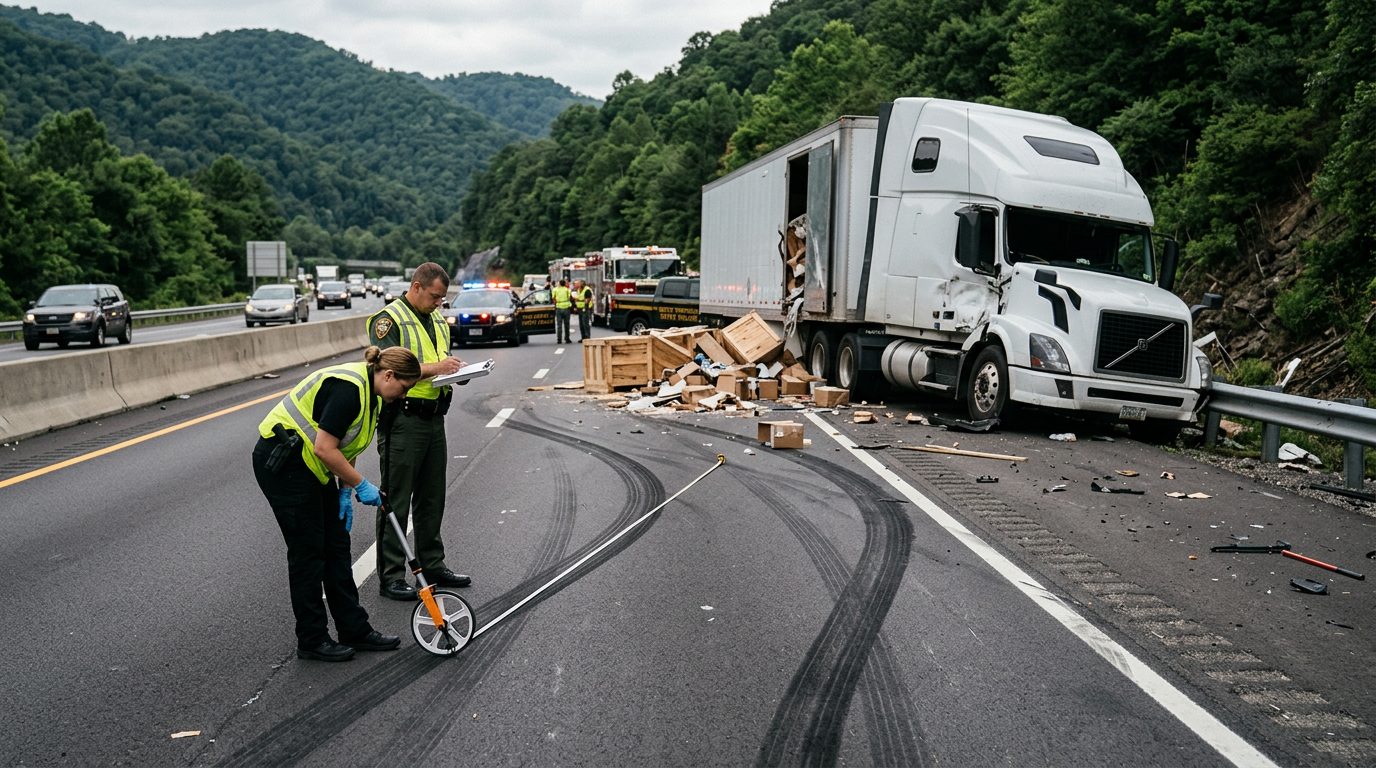
Truck Accidents | West Virginia
Understanding Your FMCSA Crash Report After a West Virginia Truck Accident
A crash report is one piece of the picture. Here is how to request it, what it does and does not show, and how the firm can help you review it.
Published November 3, 2026
You can request a police crash report from the agency that investigated the crash. You can also look up the FMCSA crash record online. These two records are the main official sources for a truck accident in West Virginia.
Neither record decides who was at fault on its own. This guide explains what each one contains, how to search for it, and what it may not show.
What a Truck Accident Crash Report Is
A crash report is the official written record of a collision. In most cases, the agency that sent officers to the scene writes it. That may be the West Virginia State Police, a county sheriff’s office, or a municipal police department.
The report usually records the date, time, and location of the crash. It lists the vehicles and people involved. It also notes what the responding officer observed.
The exact layout and details vary by agency. Ask the agency what its finished report includes. A truck crash can also produce other records, so the police report is only one piece of the picture. For the broader picture, read our truck accident claims guide.
If a truck crash left you with questions about the police report or the FMCSA record, you can reach out to us for a free case review. Talk it through with Big Bubba — the first case review is free, confidential, and carries no obligation.

What the FMCSA Crash Record Shows
The FMCSA crash record is a public page in the Safety Measurement System (SMS). The Federal Motor Carrier Safety Administration runs the system. Each page lists one reported commercial vehicle crash.
Records commonly display several sections. These include Carrier Information, Driver Information, Crash Information, Crash Environment, Location, and Reporting Data.
Each record shows a “Detailed Crash Report as of” date. Check that date. FMCSA data reflects what was reported, and the page can be updated over time.
The record also carries a crash identifier. The identifier includes a state code, which helps you match the record to the state where the crash happened.
Use the record as one source among several. It shows what was reported. It is not a finding about who caused the crash.
How to Search for the FMCSA Crash Record
Start with what you already know. Useful details include the crash date, the approximate time, the city or county, the highway, and the carrier’s name or USDOT number.
Follow these steps:
- Open the FMCSA SMS crash search.
- Enter the carrier information first. The USDOT number on the truck’s door or paperwork can help.
- Narrow the results by crash date and location.
- Compare the Location and Crash Information sections with the details you remember.
If nothing matches, check the spelling of the carrier’s name. The name on the truck may differ from the name in federal records. Save a dated screenshot or PDF of any matching record, because online pages can change.
Carriers keep their own records too. Under 49 C.F.R. § 390.15, a motor carrier must keep an accident register for three years after each accident. The register must contain at least the date, the city or nearest town, the state, the driver’s name, the number of injuries and deaths, and whether hazardous materials (other than fuel spilled from the vehicles’ fuel tanks) were released, along with copies of all accident reports required by state or other governmental entities or insurers.
How to Request the Police Crash Report in West Virginia
Request the report from the agency that investigated the crash. That agency may be a state police detachment, a county sheriff’s office, or a city police department.
Have these details ready:
- The date and time of the crash
- The exact location
- Names of drivers or passengers
- The report number, if you have it
- The agency’s name
Many agencies have a records unit that handles these requests. Ask how it accepts requests, whether in person, by mail, or through its own process. Methods vary, so confirm the current method with the agency.
Some reports take time to finish. Ask the agency about the status of a pending report. Don’t assume it is unavailable.
Keep a copy of your request and any reply. Write down the date you asked and the name of the person who helped you.
What a Crash Report May and May Not Show
A crash report records what was observed and reported at the scene. It does not, by itself, decide who was at fault.
The FMCSA record and the police report may differ in detail. Note any differences and ask about them.
Reports can be disputed, supplemented, or amended. Photos, witness statements, and vehicle data may also matter.
A plaintiff’s own fault does not bar recovery unless it is greater than the combined fault of all other persons responsible. Otherwise, recovery is reduced in proportion to the plaintiff’s fault. See W. Va. Code § 55-7-13c.
Responsibility may reach beyond the driver. Read how a trucking company’s responsibility for a driver’s crash can arise. Whether that applies depends on the facts.
If symptoms appeared after the crash, record them as well. See delayed symptoms after a truck accident.
Deadlines and Why Early Records Matter
West Virginia generally allows two years to file a personal injury lawsuit, and exceptions may apply. See W. Va. Code § 55-2-12.
A personal action for which no other limitation is prescribed is generally brought within two years after the right to bring it has accrued if it is for property damage or personal injuries, and within one year if it is for any other matter that, if a party died, could not have been brought at common law by or against his personal representative. See W. Va. Code § 55-2-12. See W. Va. Code § 55-2-12. In a wrongful death case, the personal representative of the deceased person brings the action. See W. Va. Code § 55-7-6.
Other claim types can follow different rules. Confirm which deadline applies to your situation.
Early records help keep a clear timeline. Your own copies, photos, and dated notes are in your hands from the start.
Track time away from work, too. Lost pay can be part of a later discussion. See missed work after a truck accident.
Not sure what your next step is?
Talk it through with Big Bubba — the first case review is free, confidential, and carries no obligation.
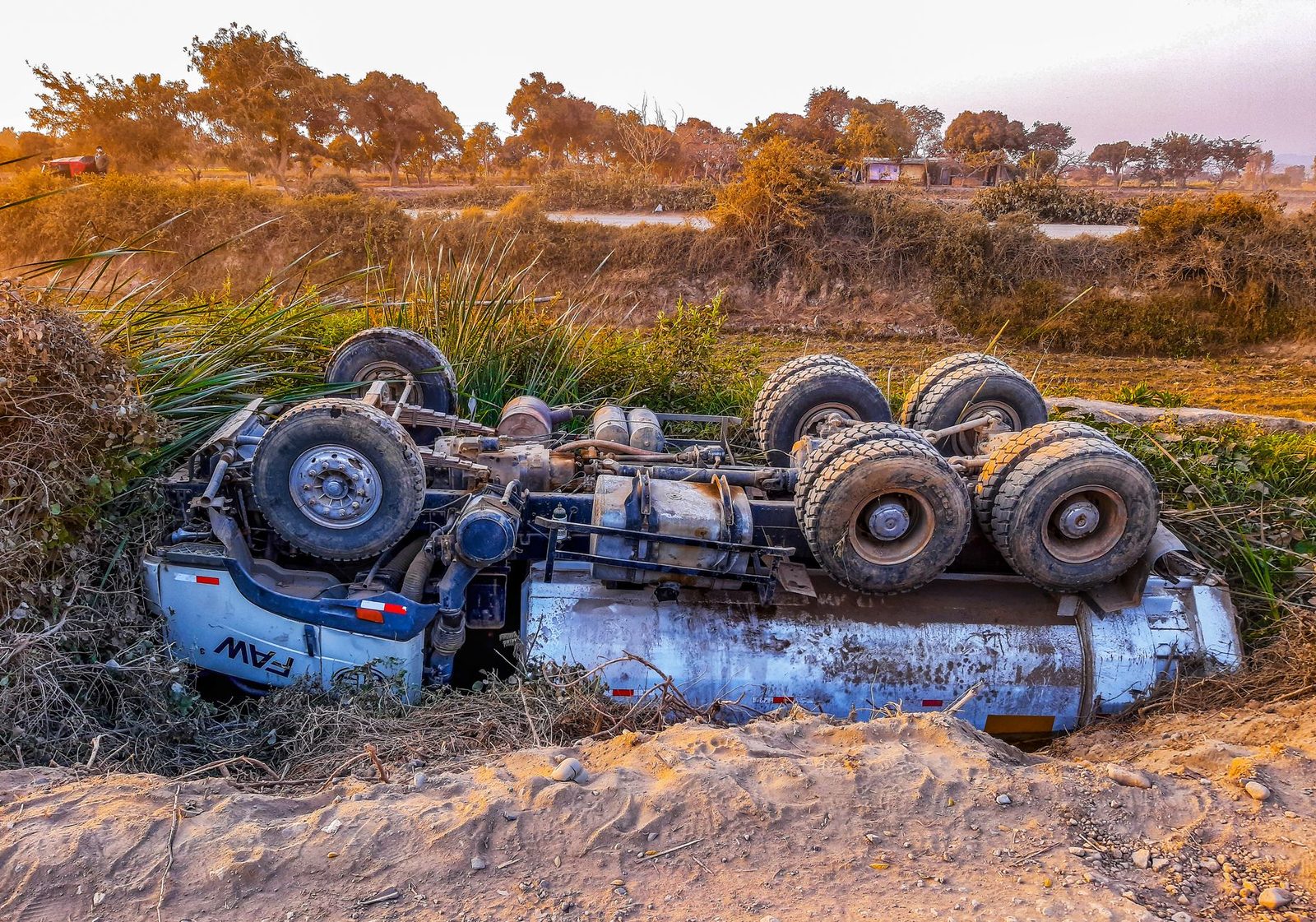
Truck Crash Records and Your Claim
If a commercial truck crashed into you or someone you love, the police report or FMCSA record may be missing or hard to read. You may also be deciding your next step on a claim.
You can reach out to the firm for a free case review. Bring the crash date, the location, and any reports or photos you have. The firm can review them with you.
Frequently Asked Questions
Where do I get a truck accident crash report in West Virginia?
Request it from the agency that investigated the crash, such as the State Police, a sheriff’s office, or a city police department.
Does a crash report decide who was at fault?
A crash report records what was observed and reported. It does not, by itself, decide fault.
How long do I have to file a personal injury lawsuit in West Virginia?
West Virginia generally allows two years, and exceptions may apply.