
Truck Accidents in Parkersburg
Truck Accidents in Parkersburg: What You Need to Know
If you or a loved one was hurt in a collision with a commercial truck, Big Bubba Injury Law is here to help you understand your options.
Published October 04, 2026
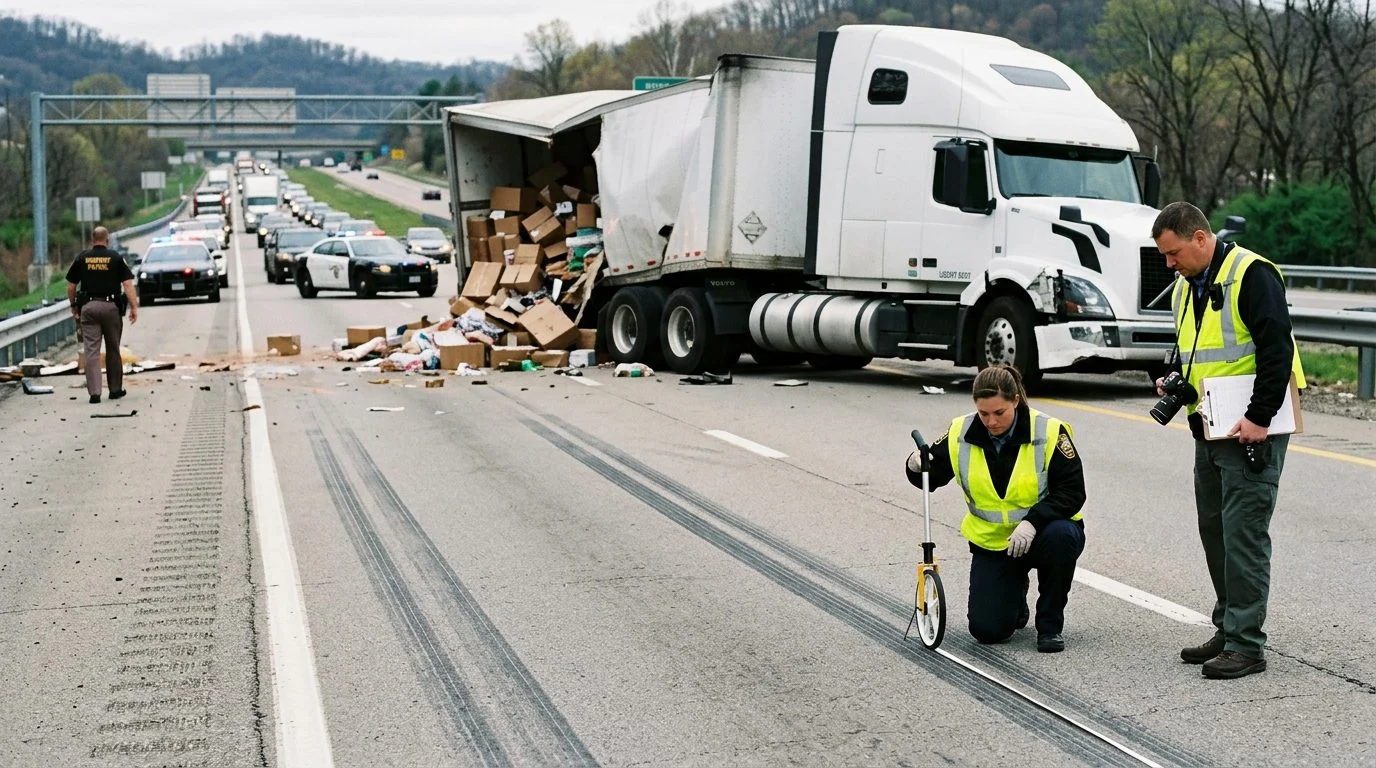
If you’ve been hit by a truck in Parkersburg, you know it’s not like a fender-bender between two cars. Truck accidents are more violent, the injuries are often catastrophic, and the legal and insurance landscape is far more complex. Parkersburg sits on Interstate 77, a major commercial corridor, which means heavy truck traffic moves through the area constantly. When a truck and a passenger vehicle collide, the outcome is rarely minor.
Truck Accidents in Parkersburg: Why They’re Different
Truck accidents in Parkersburg differ fundamentally from car-to-car collisions because of the sheer weight and force involved. A fully loaded tractor-trailer can weigh up to 80,000 pounds—roughly 15 times heavier than a passenger car. When that mass hits at highway speed, the energy transfer is devastating. The injuries tend to be severe: traumatic brain injuries, spinal cord damage, internal bleeding, and broken bones are common.
Beyond the physics, truck accidents involve layers of regulation and liability that car accidents don’t. Commercial trucks are governed by federal motor carrier safety regulations covering hours of service, vehicle maintenance, cargo securement, and driver qualifications. These regulations create evidence and legal theories that matter in your case. Multiple parties may be liable: the driver, the trucking company, the cargo loader, the truck owner, and maintenance providers. Each can be held accountable under different legal standards.
If you or a family member has been hurt in a truck accident in Parkersburg, you do not have to navigate this alone. Talk it through with our team — the first case review is free, confidential, and carries no obligation.
Common Truck Accident Scenarios in the Parkersburg Area
We serve Parkersburg injury victims, including people hurt in truck accidents on and around Interstate 77.
Jackknife accidents occur when a truck’s trailer swings out at an angle to the cab, often on curves or during sudden braking in rain, snow, or heavy traffic. The trailer can cross multiple lanes and strike other vehicles with tremendous force.
Rear-end collisions happen when a truck cannot stop in time—whether due to brake failure, driver distraction, or misjudged distance. The truck’s mass means it will push a smaller vehicle forward with crushing force.
Blind-spot crashes occur because large trucks have significant blind spots on all sides. A passenger vehicle can be invisible to the truck driver, leading to a collision when the truck changes lanes or turns.
Rollovers can happen on curves or during emergency maneuvers, especially if the truck is overloaded or the cargo is improperly secured. A rolling truck can crush vehicles nearby.
Underride accidents are among the most deadly. A passenger vehicle slides beneath a truck’s trailer, often decapitating or crushing the vehicle’s roof and occupants. These accidents are almost always catastrophic.
Driver fatigue, distraction, or impairment are common causes. Truck drivers work long hours under pressure to meet delivery schedules, and fatigue impairs judgment and reaction time just as alcohol does.
Mechanical failure—brake problems, tire blowouts, steering defects—can cause a truck to lose control. Poor maintenance is often the root cause.
Injuries from Truck Accidents
The force and weight of commercial trucks mean injuries are often severe and life-altering. Traumatic brain injuries result from the sudden acceleration, deceleration, or impact forces common in truck collisions. Symptoms may appear immediately or develop over hours or days: headache, confusion, memory problems, dizziness, loss of consciousness, and difficulty concentrating. Some people recover fully; others face permanent cognitive and physical changes.
Spinal cord injuries from truck accidents can cause partial or complete loss of motor function and sensation below the level of injury. A person may become paralyzed, lose bladder or bowel control, or experience chronic pain. Recovery is often incomplete, and the person may require lifelong care, mobility aids, and medical treatment.
Catastrophic injuries from truck accidents commonly include internal bleeding, organ damage, crush injuries, and severe burns. Recovery can take months or years, involve multiple surgeries and rehabilitation, and result in permanent disability. Lost wages, ongoing medical care, and the emotional toll on the person and their family are profound. In the worst cases, a loved one is killed in the crash, leaving the family to grieve and face a wrongful death claim.
What Happens After a Truck Accident in Parkersburg
Immediately after a truck accident, police respond and file a crash report. Ask the investigating agency how to request a copy—the report can be important evidence.
Seek medical attention right away, even if you feel okay. Some injuries, especially internal bleeding and brain injuries, don’t show symptoms immediately. A medical record creates a paper trail linking your injuries to the crash.
Document the scene if it’s safe to do so: take photos of vehicle damage, road conditions, weather, truck markings, and the surrounding area. Write down the names and phone numbers of witnesses. Get the truck driver’s name, company, license plate, and insurance information.
Report the accident to your own insurance company, but do not admit fault or sign anything without legal advice. Insurance adjusters are trained to minimize payouts. Anything you say can be used against you.
Understand this: trucking companies and their insurers will investigate immediately. They have teams of lawyers and adjusters working to limit their liability and pressure you into a quick, low settlement. You have the right to speak with a lawyer before giving any recorded statement or accepting any offer.
Not sure what your next step is?
Talk it through with our team — the first case review is free, confidential, and carries no obligation.
Why You Need a Lawyer After a Truck Accident
Trucking companies carry large insurance policies and employ experienced claims teams. They are not your friend, and they do not have your interests in mind. You need an advocate on your side.
Federal and state trucking regulations can create additional evidence and liability theories in a truck accident claim. Hours-of-service rules, maintenance standards, and cargo-securement rules can all be relevant to proving negligence in a truck accident claim.
Determining fault in a truck accident often requires expert analysis. Lawyers consult with accident reconstructionists, medical experts, and trucking industry experts to build a strong case. Insurance companies do the same; without expert support, you’re outmatched.
Medical and economic damages in truck accident cases are often substantial. Underestimating them—by accepting an early settlement or negotiating alone—costs you money you’ll need for years of care and lost income. A lawyer makes sure your damages are calculated fairly.
Insurance companies may pressure you to settle quickly for less than your case is worth. A lawyer handles all negotiations, so you’re not alone in the room with an adjuster trained to talk you down.
What Big Bubba Does for Truck Accident Victims in Parkersburg
We serve injury victims across West Virginia, including Parkersburg and Wood County. When you reach out, we listen to what happened and explain your rights in plain language—no legal jargon, no pressure.
We investigate the accident, gather evidence, and consult with medical and trucking experts to build your case. We handle all communication with insurance companies and opposing counsel, so you can focus on healing. We pursue fair compensation for your medical bills, lost wages, pain and suffering, and other damages. If a fair settlement cannot be reached, we are ready to take your case to trial.
Taking the Next Step
If you or a family member has been hurt in a truck accident in Parkersburg, you do not have to navigate this alone. The sooner you reach out, the sooner we can begin protecting your rights and gathering evidence. Your free case review is a chance to tell us what happened and learn what your options are—with no obligation.
Have questions about what happened?
Ask our team directly. The first conversation is free, confidential, and there is no obligation to continue.
Frequently Asked Questions
How long do I have to file a lawsuit after a truck accident in West Virginia?
Under W. Va. Code § 55-2-12, West Virginia generally requires a personal-injury lawsuit to be filed within two years after the right to bring the action has accrued, and exceptions may apply. If a family member was killed, a wrongful-death action generally must be brought within two years after the decedent’s death, and exceptions may apply. Don’t wait.
Can I recover if I was partially at fault in the truck accident?
Yes. West Virginia follows a modified comparative fault rule: you can recover damages even if you are up to 50% at fault, but are barred from recovery only if your fault is greater than 50%.
What damages can I recover in a truck accident case?
You may recover compensation for medical bills, lost wages, pain and suffering, disability, disfigurement, loss of enjoyment of life, and, in wrongful-death cases, funeral expenses and loss of companionship.
Why do I need a lawyer if I have insurance?
Your insurance company is not your advocate—it’s a business trying to minimize payouts. Trucking companies have large insurance policies and experienced legal teams. A lawyer can help you evaluate any settlement offer before you decide whether to accept it.
Related practice areas
- Truck Accident Claims in West Virginia | Big Bubba Legal