
Wrongful Death | Serving West Virginia Families
Wrongful Death Lawsuit Payouts in West Virginia: What Families Should Know
Every family's situation is different, and no amount can be promised in advance. Talk with the firm about your loss in a free case review.
Published October 29, 2026
There is no single average payout for a wrongful death lawsuit in West Virginia. Each claim turns on its own facts, including how the death happened and who depended on the person who died. This page explains what a family’s claim can include, what shapes its value, and the deadline that applies. If you are searching for how much do wrongful death lawsuits pay out, a clear answer helps more than a number.
Why There Is No Single Average Wrongful Death Payout
There is no reliable average. Online averages and headline verdicts from other cases do not predict what your family’s claim is worth. Every death is different, and so is every household.
A claim’s value depends on the facts of that case. This is the only general answer that is accurate.
Two families can lose a parent in the same kind of crash and have very different claims. One family may lose a steady paycheck and a caregiver. Another may lose a retired parent with few financial ties to the home. The law looks at the losses each family actually suffered.
Large numbers in search results come from particular cases with particular facts. They do not set a standard for your family’s case.
If your family lost someone in a car or truck crash, you may have a claim. Reach out to request a free case review and talk through your questions. Talk it through with Big Bubba — the first case review is free, confidential, and carries no obligation.

What a Wrongful Death Claim Is and Who Can Bring One
A wrongful death claim is a civil claim. It seeks money damages after a person dies because of another party’s wrongful act, neglect, or default. A civil claim is separate from any criminal case against the driver. West Virginia law allows a damages action when a death is caused by a wrongful act, neglect, or default that would have let the injured person sue if they had lived, as set out in W. Va. Code § 55-7-5.
In West Virginia, the claim is brought by the personal representative of the deceased person’s estate. The personal representative must be duly appointed. W. Va. Code § 55-7-6 requires the action to be brought in that person’s name.
The recovery is then shared among the people the law names. These can include a surviving spouse and children, brothers, sisters, parents, and anyone financially dependent on the person who died.
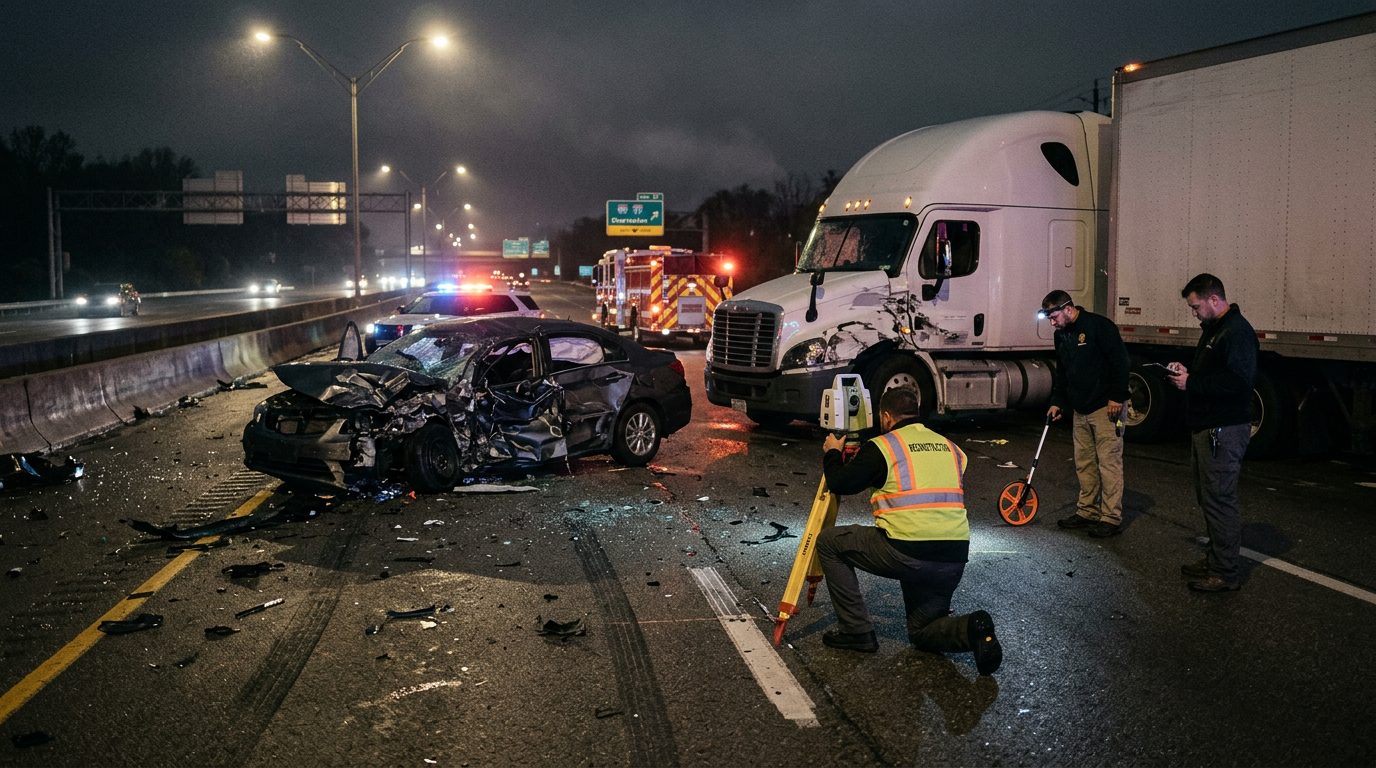
Car and truck crashes can lead to these claims. Some families face a death after a catastrophic injury, such as a traumatic brain injury or spinal cord injury. If the injured person dies, the law can still support a claim. W. Va. Code § 55-7-8 addresses claims where an injured person dies from the wrongful act.
What a Wrongful Death Claim Can Recover
West Virginia law lists the categories of damages a wrongful death verdict may include. W. Va. Code § 55-7-6 names these categories:
- Sorrow, mental anguish, and solace. This can include society, companionship, comfort, guidance, and the advice the person gave.
- Lost income and services. This covers reasonably expected loss of the person’s income, plus the care, protection, and help they provided.
- Care before death. This covers care, treatment, and hospital stays tied to the injury that caused the death.
- Funeral expenses. This covers reasonable funeral expenses.
Age, health, earning history, and role in the home all affect how these losses are measured. Families can help by gathering records. Useful documents include pay records, tax returns, medical bills, funeral receipts, and notes about what the person did for the household, such as childcare or home repairs.
Factors That Shape the Value of a Claim
Fault is the first factor. Under W. Va. Code § 55-7-13c, each defendant is generally liable only for its own percentage of fault. Driving under the influence is one exception where joint and several liability applies, if the impaired driving is a proximate cause of the damages suffered by the plaintiff.
Shared fault matters too. Fault charged to the person who died does not bar recovery unless that fault is greater than the combined fault of everyone else (W. Va. Code § 55-7-13c). Otherwise, recovery is reduced in proportion to that fault.
Commercial vehicle cases add a special rule. Under W. Va. Code § 55-7-32, in a civil action for personal injury or wrongful death involving the operation of a commercial motor vehicle requiring a commercial driver’s license, the maximum noneconomic compensatory damages recoverable by each person injured or killed against an employer defendant may not exceed $5 million for each occurrence, regardless of the number of claims or theories of liability, and that limit increases for inflation each year starting January 1, 2026, but may not exceed 150 percent of the amount specified in the statute. The cap does not apply if the employer lacks at least $3 million in commercial vehicle insurance for each occurrence. It also does not apply if the operator or driver is found to have engaged in certain conduct, such as impairment or willful disregard for safety.
Truck cases often involve federal rules. 49 C.F.R. § 395.3 limits driving time for property-carrying commercial vehicles. 49 C.F.R. § 396.3 requires motor carriers to inspect, repair, and maintain their vehicles. Driver logs and maintenance files can become key evidence.
How Wrongful Death Claims Resolve: Settlement or Trial
A wrongful death claim can end in a settlement or in a jury verdict. A settlement is an agreement reached during the claim. A verdict is a decision a jury makes after trial.
The personal representative may compromise any claim under W. Va. Code § 55-7-7 before or after a lawsuit is filed, but under § 55-7-5 no action may be maintained by the personal representative of one who, not an infant, after injury, has compromised for such injury and accepted satisfaction therefor previous to his death. Upon approval, the court divides the money after making provision for any expenses specified in subdivision (2), subsection (c), section six of this article, as described in W. Va. Code § 55-7-7.
No one can promise which path a case will take. Talking through the options early helps families make that choice with clear information.
Timeline and the Steps to Pursue a Claim
The deadline matters most. Under W. Va. Code § 55-7-6, a wrongful death action must be commenced within two years after the death, subject to the provisions of section eighteen, article two, chapter fifty-five. W. Va. Code § 55-7-6 reads: “The provisions of this section shall not apply to actions brought for the death of any person occurring prior to July 1, 1988.” The clock runs from the date of death, not from the end of talks with an insurer.
Here is how a claim typically moves forward:
- Free case review. You talk through the crash, the death, and your questions. The review is confidential, with no obligation to continue.
- Evidence preservation. The crash report, scene and vehicle evidence, witness information, and truck records such as driver logs and maintenance files are gathered early.
- Documenting losses. The family’s records and the medical history are organized into a clear picture of the losses.
- Presenting the claim. The claim goes to the responsible insurer, and negotiations begin.
- Filing suit if needed. If talks do not resolve the claim, a lawsuit is filed. A complaint cannot state a specific dollar amount of damages, under W. Va. Code § 55-7-25.
Not sure what your next step is?
Talk it through with Big Bubba — the first case review is free, confidential, and carries no obligation.
Frequently Asked Questions About Wrongful Death Payouts
How much do wrongful death lawsuits pay out?
There is no single average. The value turns on the details of each case, and no amount can be promised in advance.
Can a family file if the person died weeks after the crash?
Yes, the law can support a claim when an injured person dies from the wrongful act. W. Va. Code § 55-7-8 addresses this situation.
Does a truck crash claim differ from a car crash claim?
Truck cases can involve more parties and federal records, such as driving-time logs and maintenance files.
Who decides whether to accept a settlement?
Under W. Va. Code § 55-7-7, the personal representative compromises the claim, and the court approves the settlement and apportions the money.
How Big Bubba Injury Law Handles Wrongful Death Claims
Big Bubba Injury Law represents families in wrongful death cases across West Virginia. The firm also represents people seriously hurt in car and commercial truck crashes and people with catastrophic brain and spinal cord injuries.
The firm’s work includes car accidents, truck accidents, commercial vehicle accidents, catastrophic injuries, traumatic brain injury, spinal cord injury, and wrongful death. We serve all 55 West Virginia counties, including Charleston, Huntington, Morgantown, Wheeling, Martinsburg, Parkersburg, Beckley, Clarksburg, Fairmont, and Weirton.
Writing down the crash details while they’re fresh can help your family’s questions get answered faster.

Key Points for Affected Families
A family that has lost someone in a crash often faces hard questions at once. They include the deadline, the other driver’s insurance, and whether a claim is the right step. You don’t have to sort those out alone.