
Amputation Injury Claims | West Virginia
Losing a Limb in a Crash Changes Everything. We Can Help You Plan Your Next Steps.
The firm represents West Virginians who suffered amputation injuries in car, truck and commercial vehicle crashes. We serve injury victims and families across the state.
Published November 1, 2026
An amputation injury claim seeks compensation after a crash costs a person a hand, arm, foot, or leg, or part of one. In West Virginia, these claims can address medical care, prosthetic devices, and lost income, depending on the facts. This page explains what a claim covers, which records matter most, and how the firm handles crash cases involving cars, trucks, and commercial vehicles. If you are searching for an amputation injury lawyer in West Virginia, start here.
What an Amputation Injury Claim Covers
An amputation injury claim is a personal injury claim for losing a limb or part of one in a crash, where another party’s fault may be at issue. Amputation can result from crushing, pinning, severe impact, or fire.
Injured people may be drivers, passengers, pedestrians, or cyclists. When a crash injury leads to death, a wrongful death claim is generally brought by the personal representative of the deceased person, and any damages are distributed to the survivors as the law provides.
The firm handles these crash types:
- Car and passenger vehicle crashes
- Truck accidents involving tractor-trailers
- Commercial vehicle accidents, including buses, vans, and delivery vehicles
- Catastrophic injuries, such as brain or spinal cord injuries that occur along with an amputation
- Wrongful death claims
Talk it through with Big Bubba — the first case review is free, confidential, and carries no obligation.

Medical and Prosthetic Costs a Claim May Address
A claim may address the medical and prosthetic losses tied to the amputation. These often include:
- Emergency care, trauma surgery, hospital stays, and revision surgeries
- Physical and occupational therapy
- Prosthetic devices, fittings, adjustments, socket replacements, and upkeep
- Wheelchairs, mobility aids, and home or vehicle changes when a provider documents the need
- Future care that treating providers document as likely
Other losses may also be part of a claim. These can include lost wages, a reduced ability to earn, pain and suffering, and loss of everyday activities.
The value of a claim depends on the medical records, the provider documentation, and the facts of the crash.
Why Records From the First Days Matter
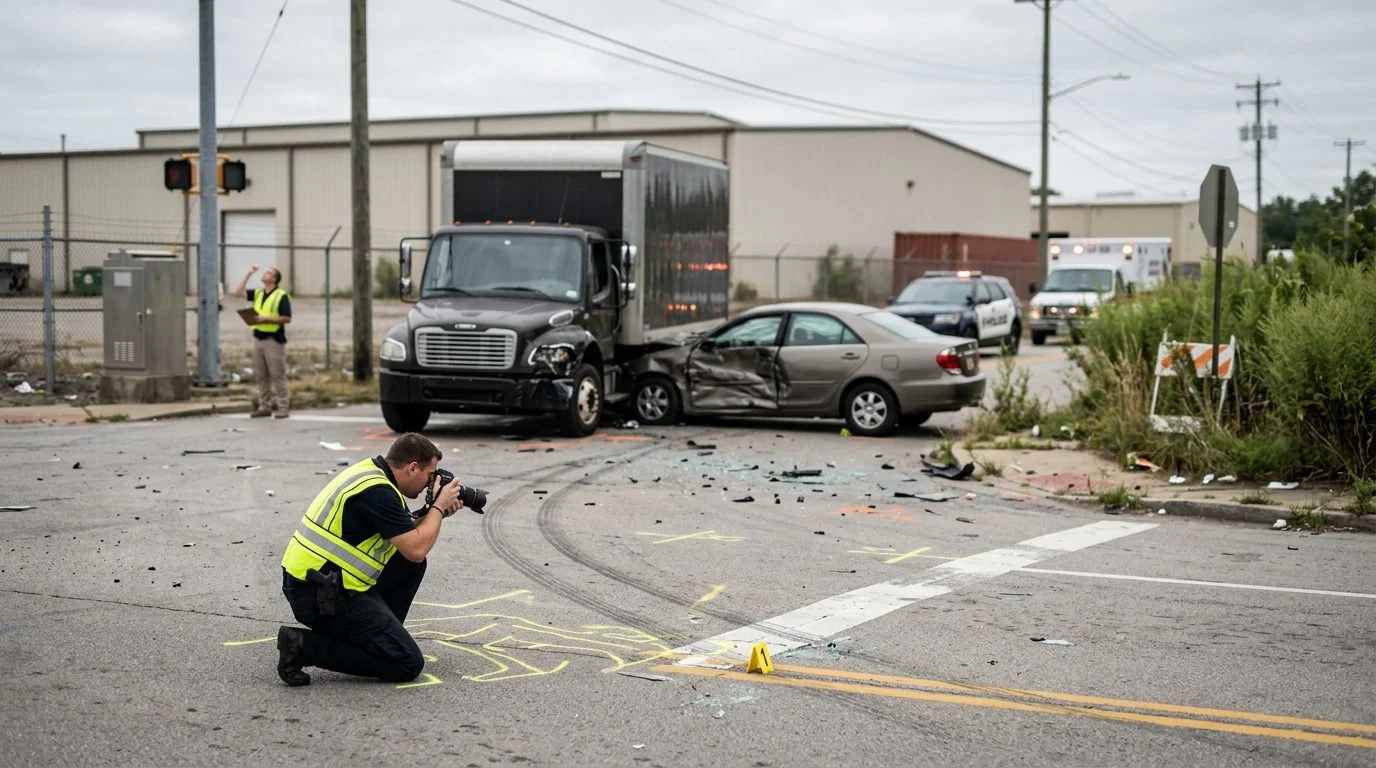
Records from the first days after a crash often shape how a claim is documented. Emergency, trauma, and operative notes describe the injury and the amputation. Police crash reports and witness names help show what happened.
Photos and video of the scene, the vehicles, and the injuries are useful when taken as soon as it is safe.
Truck and commercial vehicle crashes add another layer. Federal rules require drivers to record their duty status for each 24-hour period, and motor carriers generally must use electronic logging devices. 49 C.F.R. § 395.8 covers how motor carriers and drivers record driver duty status.
Some insurers may dispute a claim, so organized records can help. Keep every provider record, bill, and letter from an insurer. If you have these records, bring them to a free case review so the firm can review them with you.
How the Claim Process Works
Most claims follow the same basic steps, though each one moves at the pace of the facts and the medical care. Here is what to expect:
- Free case review. The firm reviews the crash, the injuries, and the records. The review is confidential, and you are not obligated to continue.
- Investigation. The firm gathers crash reports, scene evidence, carrier records where relevant, and witness information.
- Medical documentation. The firm works with treating providers to document the amputation, prosthetic needs, and future care.
- Fault and coverage. If another driver was at fault, a claim may be pursued against that driver’s insurance. West Virginia uses comparative fault. Under W. Va. Code § 55-7-13c, a plaintiff’s fault does not bar recovery unless it is greater than the combined fault of all others, and recovery is reduced by the plaintiff’s share. W. Va. Code § 55-7-13c reads: “(c) Any fault chargeable to the plaintiff shall not bar recovery by the plaintiff unless the plaintiff’s fault is greater than the combined fault of all other persons responsible for the total amount of damages, if any, to be awarded.”
- Resolution. Some claims resolve through negotiation. Others may require filing a lawsuit.
West Virginia generally allows two years to file most personal injury claims, and exceptions may apply. W. Va. Code § 55-2-12 sets a two-year limit for personal injury actions for which no other limitation is prescribed, running from when the right to bring the action accrued.
W. Va. Code § 55-7-11a Ask before you sign anything.
How Serious Injury Claims Are Handled in West Virginia
The firm handles car accidents, truck accidents, commercial vehicle accidents, catastrophic injuries, traumatic brain injury, spinal cord injury, and wrongful death claims. We serve injured people across West Virginia, including Charleston, Huntington, Morgantown, Wheeling, Martinsburg, Parkersburg, Beckley, Clarksburg, Fairmont, and Weirton.
We handle car accident, truck accident, commercial vehicle, catastrophic injury, traumatic brain injury, spinal cord injury, and wrongful death claims. These cases often involve detailed records, carrier procedures, and medical documentation. In some commercial vehicle cases, more than one party may be responsible. W. Va. Code § 55-7-32 does not decide who is responsible for a crash; it defines an “employer defendant” (the owner of a commercial motor vehicle, the operator’s employer, or another person or entity that holds or exercises legal control over the vehicle or its operator) to limit noneconomic damages in certain cases involving a commercial motor vehicle that requires a commercial driver’s license, and the statute lists situations where that limit may not apply, such as when the employer defendant lacks the required insurance or the operator was under the influence.
We aim to explain each step in plain language, in writing and by phone. The first step is a confidential free case review, and you decide whether to continue.
Common Questions About Amputation Injury Claims
Can I make a claim if another driver caused the crash?
If another driver was at fault, a claim may be pursued against that driver’s insurance.
Can a prosthetic device be part of a claim?
Prosthetic costs may be addressed when treating providers document the need and the cost.
How long do I have to file?
West Virginia generally allows two years for most personal injury claims, and exceptions may apply.
Can my family bring a claim if a loved one died after a crash that caused an amputation?
A free case review can help you understand the options.
Not sure what your next step is?
Talk it through with Big Bubba — the first case review is free, confidential, and carries no obligation.

Questions to Ask After a Serious Crash
If you lost a leg, foot, arm, or hand in a crash, you may be weighing your options while fitting a prosthetic and missing work. The firm can look at what happened and at your records. Request a free case review or tell Bubba what happened, and the firm can review your situation with you.