
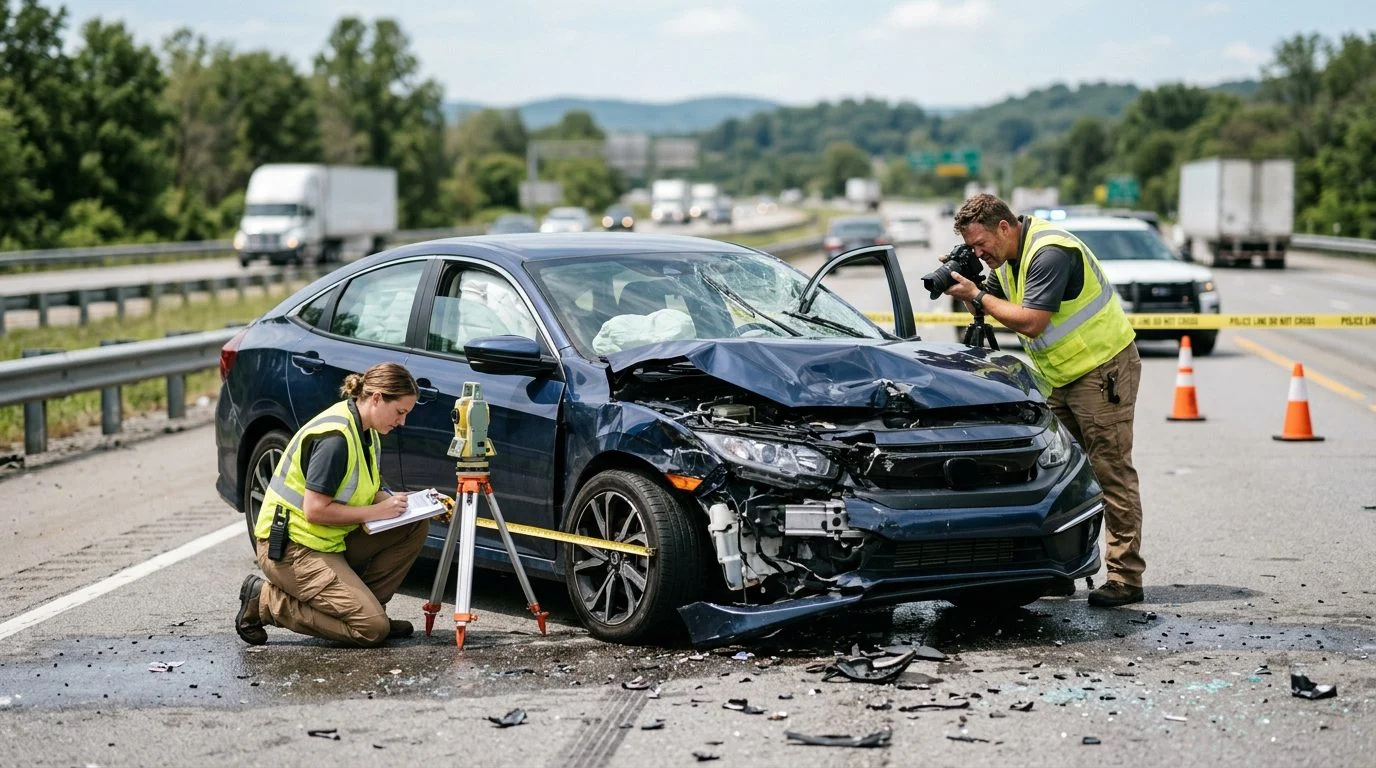
Catastrophic Injury Cases | West Virginia
Helping West Virginia Families Through Catastrophic Injury Cases
Big Bubba Injury Law represents people seriously hurt in car and commercial truck crashes, and families in wrongful death cases. We serve Charleston, Huntington, Morgantown, Wheeling, Martinsburg, Parkersburg, Beckley, Clarksburg, Fairmont, Weirton and communities across West Virginia.
Published October 26, 2026
When someone you love is seriously hurt, the family often ends up handling the claim. A catastrophic injury lawyer for families West Virginia residents can rely on helps sort out the process, the deadlines, and who can act for the injured person. This guide explains those basics in plain language. Big Bubba Injury Law represents people seriously hurt in car and commercial truck crashes, and families in wrongful death cases, across West Virginia.
What a Catastrophic Injury Lawyer Does for Families in West Virginia
The firm represents people seriously hurt in car and commercial truck crashes, and families in wrongful death cases, across the state. When the injured person cannot speak for themselves, a spouse, adult child, parent, or other relative often becomes the main contact. The firm works with that family member throughout the claim.
The firm handles these matters:
- Car accidents
- Truck accidents
- Commercial vehicle accidents
- Catastrophic injuries
- Traumatic brain injury
- Spinal cord injury
- Wrongful death
We serve all 55 West Virginia counties, including Charleston, Huntington, Morgantown, Wheeling, Martinsburg, Parkersburg, Beckley, Clarksburg, Fairmont and Weirton.
If your family is watching a loved one recover or still sorting out a loss, you don't have to work through the deadlines alone; share what happened in a free case review. Talk it through with Big Bubba — the first case review is free, confidential, and carries no obligation.
What Counts as a Catastrophic Injury
A catastrophic injury is a serious harm that often lasts. It can change how a person lives, works, and cares for themselves. There is no single list, but these injuries are common after serious crashes:
- Traumatic brain injury, a harm to the brain from a blow or jolt
- Spinal cord injury, which can lead to paralysis
- Amputation of a limb
- Severe burns
- Injuries that need long-term or lifelong care
Severity is judged through medical records and doctors’ findings over time. It is not judged by how an injury looks at the scene. Families should expect the full picture to build up as records come in.
When Your Loved One Cannot Speak for Themselves
A family member often steps in when the injured person is in a coma, under sedation, or has a serious brain injury. That person may be unable to answer questions, sign papers, or describe the crash. Who may act for them depends on the facts. It may be a health care agent named in advance, or a guardian or conservator a court appoints. The firm can explain what authority is needed in a specific case.
Families can start gathering these items now:
- The crash report number
- Photos of the scene and the vehicles
- Names and contact details of witnesses
- Hospital discharge papers and bills
- A written list of every medical provider
Keeping these items in one place makes the early work easier for everyone involved.
What a Claim Involves
A claim generally requires showing that someone’s carelessness caused the crash and the harm that followed. West Virginia uses a modified comparative fault rule. The injured person’s fault does not bar recovery unless it is greater than the combined fault of everyone else responsible. Otherwise, recovery is reduced by the person’s share of fault (W. Va. Code § 55-7-13c).
Examples of carelessness include a driver who ran a red light or a company that failed to maintain its truck.
Truck cases often involve more than one party. An employer can be answerable for a driver’s negligent act if it happened within the scope of employment (Zirkle v. Winkler). Federal rules also limit driving time. Drivers must also record their duty status for each 24-hour period (49 C.F.R. § 395.8). Unsecured cargo can cause serious crashes, according to the West Virginia Division of Motor Vehicles.
What a Catastrophic Injury Claim Can Cover
A claim can seek money for losses the injury causes. These often include past and future medical care, rehabilitation, equipment, home changes, and lost income or reduced ability to earn. Pain, suffering, and loss of enjoyment of life can also be part of a claim.
Wrongful death claims follow their own rules. The jury’s verdict shall include, but may not be limited to, damages for sorrow, mental anguish, and solace, which may include companionship and guidance. The verdict of the jury shall include, but may not be limited to, damages for sorrow, mental anguish, and solace; compensation for reasonably expected loss of income and services; expenses for the care, treatment, and hospitalization of the decedent; and reasonable funeral expenses (W. Va. Code § 55-7-6).
Commercial vehicle cases can carry a special limit. For noneconomic loss against an employer defendant in certain commercial vehicle cases, the statute sets a cap that starts at $5 million per occurrence. Under W. Va. Code § 55-7-32, in a civil action for personal injury or wrongful death involving the operation of a commercial motor vehicle that requires a commercial driver’s license, the maximum noneconomic compensatory damages recoverable by each person injured or killed against the employer defendant may not exceed $5 million for each occurrence, regardless of the number of claims or theories of liability; the section takes effect July 1, 2024 and applies only to causes of action arising after that date, and beginning January 1, 2026, that limit increases each year to account for inflation, not to exceed 150 percent of the $5 million amount. The limit has exceptions, including when the employer lacks at least $3 million in commercial vehicle insurance (W. Va. Code § 55-7-32). No one can promise a particular amount. Each claim turns on the injuries, the proof, and the facts of the crash.
How the Process Works, Step by Step
The process usually begins with a free case review, then moves through evidence, medical records, and talks with the insurer. Here is the general path:
- Share what happened. The family describes the crash and the injury in a free case review. It is confidential and carries no obligation to continue.
- Preserve evidence. The firm looks at crash reports, vehicle data, and photos. In truck cases, it also looks at driver logs and maintenance records. Early requests matter, because some records may not be kept indefinitely.
- Gather medical records. The full scope of a brain, spinal, or other catastrophic injury takes time to document. Treatment may continue for a long time.
- Present the claim. The claim goes to the insurer first. If a fair resolution is not reached, the case may be filed in court.
Catastrophic cases usually take longer than minor injury claims. How long one takes varies with the medical picture and the proof.
Not sure what your next step is?
Talk it through with Big Bubba — the first case review is free, confidential, and carries no obligation.
Deadlines and Talking to the Insurance Adjuster
Personal injury claims in West Virginia generally must be brought within two years (W. Va. Code § 55-2-12). A wrongful death action must be commenced within two years after the death. It must be brought by the duly appointed personal representative of the deceased person (W. Va. Code § 55-7-6).
The weeks right after a crash carry special rules for insurer contact. For twenty days after an injury, no one may try to negotiate a settlement or obtain a release or statement from an injured person who is in the hospital or unable to do usual work. An exception applies only to obtaining a statement, oral or written, from the injured person by a person acting for the injured person, and only upon the injured person’s express request (W. Va. Code § 55-7-11a). An injured person may disavow a settlement, release, or statement obtained in violation of this rule within one hundred eighty days from the date of the injury by executing a written statement of disavowal and forwarding a copy to the person who violated the rule; it then cannot be used as evidence if any money paid for the settlement or release has been repaid or returned.
A deadline is a fixed date. Time spent waiting while a loved one is in treatment can use up part of it, so an early review matters.
Why Families Bring These Cases to the Firm
The firm handles catastrophic injury, traumatic brain injury, spinal cord injury, and wrongful death matters that arise from car and truck crashes. The firm explains each step in plain language and keeps the family informed. It takes the injured person’s needs and limits into account when it plans the work.
The firm serves injured people and families across all 55 West Virginia counties. If your loved one was hurt in a crash anywhere in the state, the firm can explain how its services may apply. Wrongful death claims and injury claims have different rules and deadlines, so families should not assume one follows the other.
Questions Families Often Ask
Can a family member start a claim if my loved one cannot sign anything?
In some cases, yes. The firm can explain what legal authority is needed in your situation.
What if my loved one is still in the hospital?
Families can start gathering records and evidence while treatment continues. Early steps help protect the claim.
Do I have to talk to the insurance company?
Families can decline recorded statements and refer insurer calls to the firm.
Is a wrongful death claim different from an injury claim?
Yes. A wrongful death action is brought by and in the name of the personal representative of the deceased person who has been duly appointed, and has its own types of damages (W. Va. Code § 55-7-6).
If your family is watching a loved one recover or still sorting out a loss, you don’t have to work through the deadlines alone. Share what happened in a free case review through the Big Bubba Injury Law contact page.
Related practice areas
- Catastrophic Injuries
- How Long Do I Have to File a Crash Injury Claim in West Virginia?
- What Do I Tell the Insurance Adjuster After a Serious Crash in West Virginia?
- Work Van Accident Claim West Virginia: Key Facts