
Catastrophic Injury Law
Comparative Fault in Catastrophic Injury Cases
West Virginia law allows recovery even if you share fault (W. Va. Code § 55-7-13c). Understanding how comparative fault works can make a difference in your case.
Published October 05, 2026
Comparative Fault in Catastrophic Injury Cases in West Virginia
If you were partially at fault in an accident that caused a catastrophic injury or death, West Virginia law may still allow you to recover damages. Under West Virginia’s modified comparative fault rule, you can collect compensation as long as your fault does not exceed 50 percent—but your recovery is reduced by your share of the blame. In catastrophic cases, where injuries are severe and damages are substantial, even small differences in fault percentage can mean hundreds of thousands of dollars. Understanding how comparative fault works is essential to protecting your rights.
Not sure what your next step is?
Talk it through with our team — the first case review is free, confidential, and carries no obligation.
What Is Comparative Fault in West Virginia?
West Virginia uses a modified comparative negligence rule under W. Va. Code § 55-7-13c. This means you can recover damages even if you were partially at fault—as long as you were not more than 50 percent at fault. Your recovery is then reduced by your percentage of fault.
Here’s a concrete example: if you are determined to be 30 percent at fault and the total damages are $100,000, you recover $70,000. If you are more than half at fault, you cannot recover anything. This is sometimes called the bar rule—you are barred from recovery once your fault exceeds half of the total.
The rule generally applies to personal injury claims, including catastrophic injuries like traumatic brain injury, spinal cord injury, and wrongful death, though some types of claims are handled under different rules. Under W. Va. Code § 55-7-13c, comparative fault compares the fault of the parties involved: your recovery is reduced in proportion to your own degree of fault, and it is barred only if your fault is greater than the combined fault of all others responsible for the damages.
How Is Fault Determined in Catastrophic Injury Cases?
Fault is determined by examining the actions of all parties involved and whether those actions fell below the standard of reasonable care. In catastrophic cases, the investigation is often complex and involves multiple sources of evidence.
Evidence used to determine fault includes:
- Police reports and accident scene documentation
- Witness statements and testimony
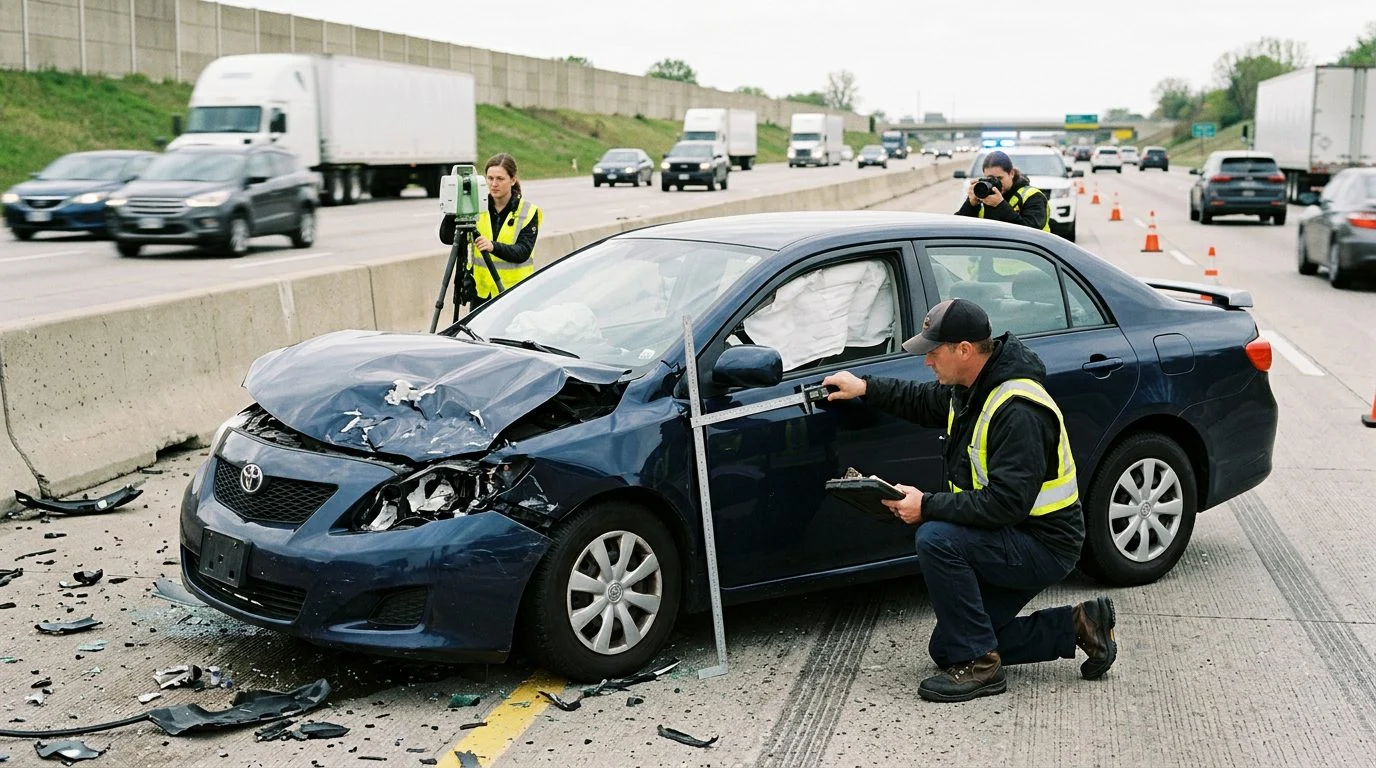
- Accident reconstruction (analysis of vehicle damage, road conditions, and physics of the crash)
- Medical records and expert testimony about causation
- Commercial records (in truck or commercial vehicle cases: driver logs, maintenance records, hiring practices)
- Video footage or dashcam recordings
- Expert analysis of industry standards and safety regulations
In a car accident, fault may hinge on whether you were speeding, distracted, or failed to yield. In a truck accident, the analysis is more complex: the trucking company’s hiring, training, and maintenance practices may show negligence even if the driver alone did not cause the crash. In wrongful death cases, comparative fault focuses on the deceased’s actions at the time of the fatal accident (W. Va. Code § 55-7-13c).
Your attorney’s role is to present evidence that minimizes your percentage of fault and establishes the other party’s negligence. The court or jury then weighs all the evidence and assigns a fault percentage to each party.
The 50 Percent Rule: What It Means for Your Case
You must be 50 percent or less at fault to recover any damages (W. Va. Code § 55-7-13c). This is the threshold—the line between recovery and nothing. If fault is exactly 50–50, you can still recover 50 percent of your damages.
In catastrophic injury cases, the financial stakes are enormous. A catastrophic brain or spinal cord injury can result in millions of dollars in lifetime medical care, lost wages, and pain and suffering. A difference of just a few percentage points in fault, when it moves you across the recovery threshold, can mean a large difference in what you are able to recover.
This is why careful investigation, clear evidence, and skilled presentation matter. Insurance companies know this too. They often argue that you were more at fault than you actually were, hoping to reduce their settlement offer or win at trial.
Have questions about what happened?
Ask our team directly. The first conversation is free, confidential, and there is no obligation to continue.
Comparative Fault in Different Types of Catastrophic Accidents
Car accidents: Comparative fault may apply if both drivers contributed to the crash (W. Va. Code § 55-7-13c). You might have been speeding, but the other driver ran a red light. Both actions matter. Your partial fault does not eliminate the other driver’s liability.
Truck accidents: Fault analysis is more complex because commercial drivers and trucking companies have heightened duties of care. Your partial fault does not eliminate the trucking company’s liability for their driver’s negligence, inadequate training, or failure to maintain the vehicle.
Commercial vehicle accidents: Similar principles apply. The operator’s and company’s duties are often higher than a private driver’s. Multiple defendants (the driver, the company, the vehicle owner, or a third-party maintenance contractor) may share liability.
Traumatic brain injury and spinal cord injury: Under W. Va. Code § 55-7-13c, your recovery is reduced in proportion to your own degree of fault, and it is barred only if your fault is greater than the combined fault of all others responsible for the damages.
Wrongful death: Comparative fault rules apply to the deceased’s actions at the time of the fatal accident (W. Va. Code § 55-7-13c). If your loved one was partially at fault, your recovery is reduced—but you may still recover if their fault was 50 percent or less.
What Happens If You Are Partially at Fault?
Under W. Va. Code § 55-7-13c, you do not lose your right to recover unless your fault is greater than the combined fault of all other persons responsible for the total damages. Instead, your recovery is reduced in proportion to your own degree of fault. In catastrophic cases, even a modest reduction in your award can mean a significant difference in dollars.
The other party bears the burden of proving your fault. You are not automatically blamed. Your attorney can challenge the other party’s claims about your fault and present evidence of their negligence. Many people assume that any fault bars all recovery—this is a dangerous misconception. West Virginia law protects you even if you share blame.
At settlement negotiations, insurance companies often use comparative fault arguments to reduce their offers (W. Va. Code § 55-7-13c). They may claim you were more at fault than the evidence shows. At trial, the jury must determine each party’s percentage of fault before calculating your award. Your attorney’s investigation and evidence presentation directly affect how the jury views fault.
Liability and Several-Only Damages in Catastrophic Cases
West Virginia law distinguishes between joint and several liability and several-only liability. Under West Virginia law, a defendant’s liability for compensatory damages is generally several only, so each defendant is liable only for the share allocated to it in proportion to its percentage of fault. Joint liability may apply in limited cases, such as when defendants consciously conspire to commit a tortious act. This rule can significantly affect your recovery if one party bears the majority of fault.
Multiple defendants may share liability. For example, in a truck accident, both the driver and the trucking company may be liable. Understanding which defendants are liable for which damages is critical in complex catastrophic cases. Your attorney will analyze the liability structure to maximize your recovery.
Building Your Case: Minimizing Fault and Proving the Other Party’s Negligence
Gather evidence immediately. Photos of the accident scene, vehicle damage, and road conditions; police reports; witness statements; medical records; and any video footage should be preserved as soon as possible.
Accident reconstruction can show how the crash occurred and who caused it. Experts analyze vehicle damage, skid marks, and physics to recreate the accident.
Expert testimony may establish industry standards (in commercial vehicle cases) or medical causation (in injury cases).
Your own actions are examined. Were you speeding, distracted, or violating traffic laws? Your attorney will address these issues head-on and present evidence that minimizes your fault.
The other party’s actions are examined. Were they negligent, reckless, or violating safety rules? In truck accidents, was the driver fatigued, improperly trained, or operating an unsafe vehicle?
Early case evaluation should include a realistic assessment of your comparative fault risk (W. Va. Code § 55-7-13c). Do not assume you cannot recover. West Virginia law gives you a pathway to compensation even if you share blame.

Want to know where you stand?
Tell us what happened and our team will walk you through the options available to you, at no cost.
Frequently Asked Questions
Can I recover if I was 50 percent at fault?
Yes. Under West Virginia law, you can recover 50 percent of your damages if you are exactly 50 percent at fault. You are barred only if your fault is 51 percent or more.
How much does comparative fault reduce my recovery?
Your recovery is reduced by your percentage of fault (W. Va. Code § 55-7-13c). If you are 30 percent at fault, you recover 70 percent of your damages. If you are 50 percent at fault, you recover 50 percent.
Does comparative fault apply to wrongful death cases?
Yes (W. Va. Code § 55-7-13c). Comparative fault rules apply to the deceased’s actions at the time of the fatal accident. If your loved one was partially at fault, your recovery is reduced proportionally.
How do insurance companies use comparative fault against me?
Insurance companies often argue that you were more at fault than evidence shows, hoping to reduce their settlement offer (W. Va. Code § 55-7-13c). Your attorney counters this argument with evidence and expert testimony.
What if multiple parties were involved in the accident?
The court or jury assigns a fault percentage to each party. Your recovery is based on the total damages minus your percentage of fault. Other defendants may also be liable for portions of the damages.
If you were injured in a car, truck, or commercial vehicle accident and worry that you were partially at fault, do not assume you cannot recover. If you suffered a catastrophic injury—traumatic brain injury, spinal cord injury, or other severe harm—or if a loved one died in an accident, comparative fault rules still protect your right to compensation (W. Va. Code § 55-7-13c). Understanding your actual exposure to comparative fault and what your case may be worth requires a careful review of the facts and evidence. Reach out to discuss your situation and what recovery may look like for you.
Related practice areas
- Catastrophic Injury Damages in West Virginia