
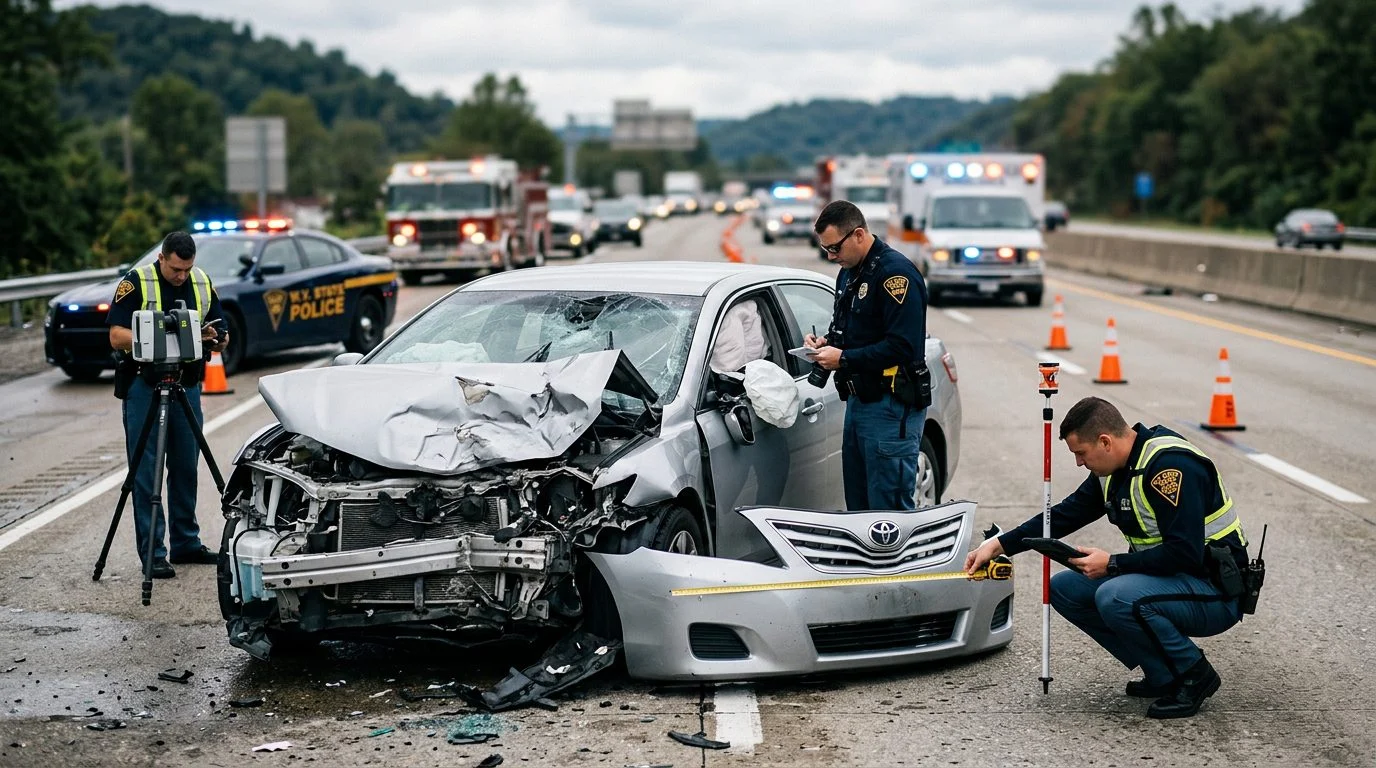
Ambulance Crash Injuries | West Virginia
Hurt in an Ambulance Crash? Talk With the Firm About Your Case
Big Bubba Injury Law represents people seriously hurt in car and truck crashes across West Virginia, including crashes involving ambulances and other emergency vehicles. We serve injury victims from Charleston to Weirton.
Published October 22, 2026
People seriously hurt in a crash with an ambulance, fire truck, or police car may have a claim. These cases often follow different rules than an ordinary car accident. Crashes involving government vehicles can also bring extra timing rules. This page explains how an ambulance crash catastrophic injury claim works in West Virginia and what to expect. The firm handles car, truck, and commercial vehicle crashes, catastrophic injuries, traumatic brain injury, spinal cord injury, and wrongful death.
What an Ambulance or Emergency Vehicle Crash Claim Covers
This page covers crashes where an emergency vehicle is involved. It applies whether the emergency vehicle struck another vehicle or was struck by one. Emergency vehicles include ambulances, fire trucks, police cars, and other vehicles responding to calls.
People who may have a claim include drivers, passengers, pedestrians, and patients being transported. Where someone dies, a wrongful death claim may be available.
Emergency calls add layers to the facts. Crews may be responding to a medical emergency, a fire, or a crime. A patient may already be hurt before the crash happens. These details can change who is responsible and how the claim is built.
If a crash with an ambulance or police car left you hospitalized or grieving a loved one, reach out to the firm to request a free case review and explain what happened. Talk it through with Big Bubba — the first case review is free, confidential, and carries no obligation.

Who May Be Responsible After an Emergency Vehicle Crash
More than one party can be responsible. The emergency driver is only one possibility.
- The emergency vehicle driver. Under W. Va. Code § 29-12a-4, except as otherwise provided in that article, political subdivisions are liable for injury, death, or loss to persons or property caused by the negligent operation of any vehicle by their employees when the employees are engaged within the scope of their employment and authority. Individual employees have immunity unless their conduct was manifestly outside their duties, malicious, in bad faith, or wanton or reckless, or unless liability is expressly imposed on the employee by a provision of the code (W. Va. Code § 29-12a-5).
- Public agencies. Cities and counties that own or operate a vehicle can be part of the claim. Government ownership changes the process, including the deadlines covered below.
- Private ambulance companies and contracted transport providers. A private company can face claims for its own negligence.
- Other motorists. Another driver whose actions helped cause the crash may share fault.
Naming every possible party early helps the firm request the right records from the right people.
Catastrophic Injuries Commonly Involved in These Crashes
Crashes with large emergency vehicles can cause injuries that last well beyond the day of the crash. Examples include the following.
- Traumatic brain injury. This can include concussions, bruising of the brain, and bleeding. Some symptoms do not appear right away, so early medical records matter.
- Spinal cord injury. This can cause partial or complete paralysis and may require long-term care.
- Multi-system trauma. This includes broken bones, internal organ damage, and injuries to several parts of the body at once.
- Wrongful death. When a family member does not survive, the claim can continue. Under W. Va. Code § 55-7-8, when the injured person dies as a result of the injury, an injury action does not end because of that death. It may be revived by the personal representative, and a separate claim may cover damages from the time of injury until death.
Medical records, imaging, and notes from treating providers are central. They show the injury, how it happened, and how it changed over time.
Deadlines and Notice Rules That Can Apply
Wrongful death claims under W. Va. Code § 55-7-6 generally must be commenced within two years after the death of the deceased person. W. Va. Code § 55-7-6 reads: “The provisions of this section shall not apply to actions brought for the death of any person occurring prior to July 1, 1988.” Claims against government entities can follow different rules.
- Personal injury. Under W. Va. Code § 55-2-12, a personal action for injury generally must be brought within two years after the right to sue accrued.
- Wrongful death. Under W. Va. Code § 55-7-6, the action generally must start within two years after the death. The decedent’s personal representative brings it.
- Government vehicles. Under W. Va. Code § 29-12a-6, claims against a political subdivision generally must be brought within two years. The two years run from when the cause arose or when the injury was or should have been discovered, whichever is later. A shorter period elsewhere in the code can apply. The clock can also be paused if the government entity commits fraud or conceals material facts.
- The first twenty days. Under W. Va. Code § 55-7-11a, for twenty days after an injury, no one may negotiate a settlement or obtain a release from an injured person who is in the hospital or unable to work. An injured person may disavow a settlement, release of liability or statement obtained in violation of this section at any time within one hundred eighty days from the date of the personal injury, by executing a written statement of disavowal and forwarding a copy to the person who violated this section; for the settlement or release to be kept out of evidence, any money paid for it must be repaid or returned when the copy is sent (W. Va. Code § 55-7-11a).
Missing a deadline can limit your options. Keep crash details, medical timelines, and agency letters together so timing can be checked early.
What to Expect: From First Contact to Resolution
The process starts with a free case review. Each step after that depends on the facts of your crash and your injuries.
- Share the basics. Tell the firm when and where the crash happened, which agencies or companies were involved, and what injuries occurred.
- Free case review. The firm talks through the facts, injuries, and deadlines in a confidential discussion. You have no obligation to continue.
- Evidence gathering. This can include crash reports, emergency vehicle records where available, witness statements, and medical documentation.
- Identifying parties and coverage. The firm works out who may be responsible and what insurance applies, including claims against public entities.
- Demand, negotiation, and suit. The firm presents the claim and negotiates. It files a lawsuit when that step is needed.
Under W. Va. Code § 55-7-13c, an injured person’s recovery is barred only if that person’s fault is greater than the combined fault of everyone else responsible, but that section does not apply to claims governed by Article 12-A of Chapter 29. Otherwise, recovery is reduced by the injured person’s share of fault (W. Va. Code § 55-7-13c).
Timing varies widely. Catastrophic cases often take longer because the full extent of injuries may not be clear for some time.
How the Firm Handles These Cases
The firm is a West Virginia personal injury practice. It handles car accidents, truck and commercial vehicle crashes, catastrophic injuries, traumatic brain injury, spinal cord injury, and wrongful death.
We serve injured people and families in Charleston, Huntington, Morgantown, Wheeling, Martinsburg, Parkersburg, Beckley, Clarksburg, Fairmont, and Weirton, and across the state.
The firm’s support staff help organize records, medical timelines, and communication. The firm’s approach is plain: careful fact-gathering, clear updates, and close attention to deadlines.
Not sure what your next step is?
Talk it through with Big Bubba — the first case review is free, confidential, and carries no obligation.
Common Questions About Emergency Vehicle Crash Injuries
Most questions come down to who was responsible and when a claim must be filed.
Can I bring a claim if the emergency vehicle had its lights and sirens on?
Lights and sirens do not decide a claim by themselves. The facts of the crash decide who was at fault, and a free case review can look at those facts.
Does a crash with a fire truck or police car follow the same rules as a car accident?
Not always. When a city, county, or state owns the vehicle, the government-claims rules covered above can apply. Those rules can include different timing.
Can a patient in the ambulance make a claim?
Yes, a patient who was hurt can have a claim related to those injuries. W. Va. Code § 55-7-13c(c) sets a general rule that a plaintiff’s own fault does not bar recovery unless it is greater than the combined fault of all other persons responsible, and that a smaller share of fault reduces the plaintiff’s recovery in proportion. However, § 55-7-13c(i)(1) states that the section does not apply to Article 12-A of Chapter 29, which governs the political-subdivision claims discussed on this page.
What if my family member died in the crash?
West Virginia’s wrongful death law lets the personal representative of the person who died bring the claim. Damages can include loss of companionship and guidance, lost income, and the help and care the person provided.
What should I gather now?
Keep the crash report number, photos, medical records, witness names, and any letters from insurers or agencies.
If a crash with an ambulance or fire truck left you in the hospital or grieving someone you love, you can request a free case review and tell the firm what happened.