
Brain Injury Guide | West Virginia
Understanding the Glasgow Coma Scale After a Car Accident
What the score measures, how it is recorded after a crash, and what families in West Virginia can ask their medical team.
Published October 31, 2026
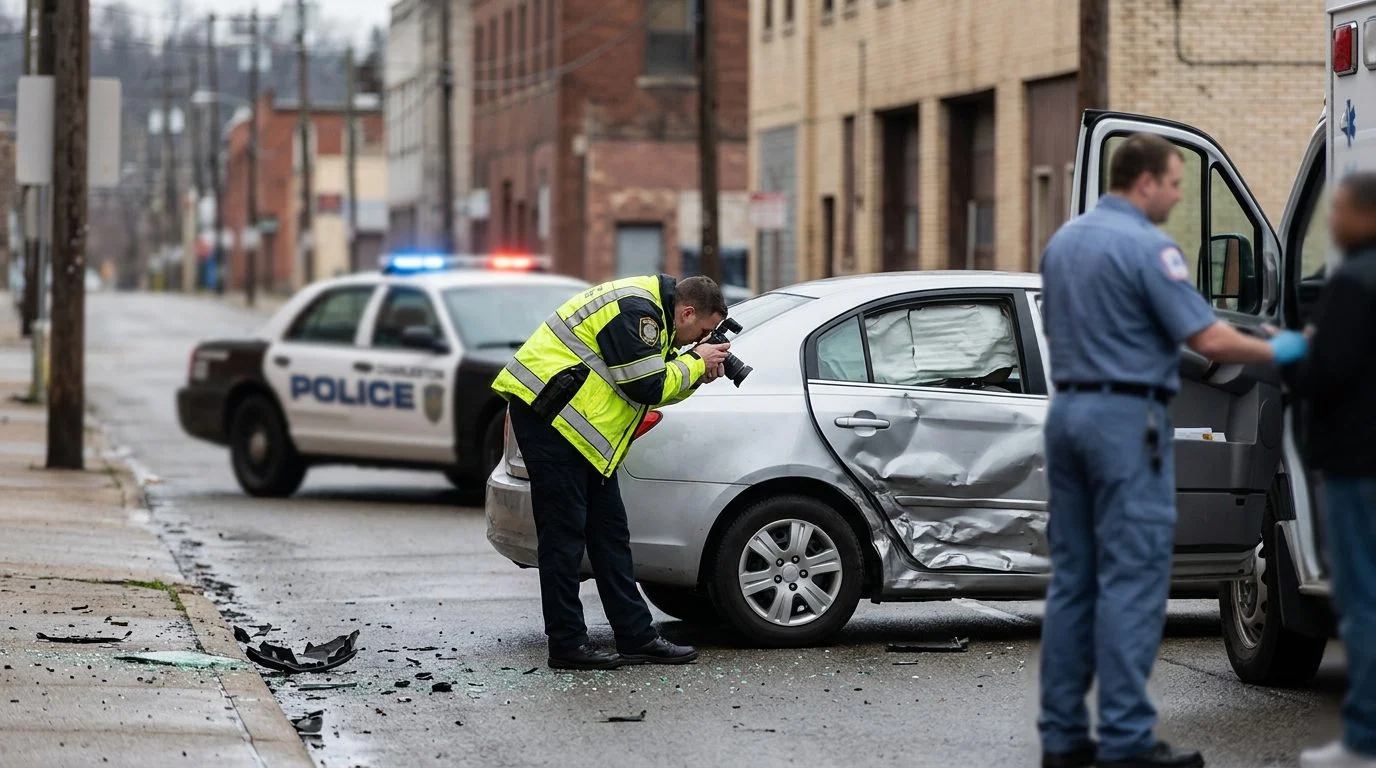
Many families first see the Glasgow coma scale after car accident injuries as a number on a hospital chart. The Glasgow Coma Scale (GCS) is a short test that rates how awake a person is and how they respond. It is a snapshot taken at one moment, not a forecast. This guide explains what the score means, how it is recorded after a crash, and why it matters in West Virginia.
What the Glasgow Coma Scale Measures
The Glasgow Coma Scale measures how awake a person is and how they respond to people and pain. Clinicians score three parts, then add them together for one total. Eye opening is scored from 1 to 4. Verbal response is scored from 1 to 5. Motor response, meaning how well a person moves when asked, is scored from 1 to 6. Emergency and hospital teams use the same scale. That way, different providers describe a patient in the same terms. Awareness is one of the first things care teams check after a head injury. The scale does not name a specific injury. It describes how the brain is working at that moment. The score is also one tool among several. Doctors check pupil response, examine nerve function, and order imaging. The American Association of Neurological Surgeons notes that CT findings are used in evaluating severe traumatic brain injury.
Not sure what your next step is?
Talk it through with Big Bubba — the first case review is free, confidential, and carries no obligation.
What the Score Ranges Mean
The total score runs from 3 to 15, and 3 is the lowest possible total. Higher totals mean a person is more alert and responsive. Lower totals mean the brain is more significantly affected. The AANS head trauma guidance says scores below 7 or 8 indicate coma. A low score tells the care team to watch the patient closely. That is one reason the number appears so often in medical charts. Keep in mind what a score cannot do. It describes the injury at the time it was measured. It does not, by itself, predict how a specific person will recover. Mild injuries are harder to spot. Their effects can be long-lasting and may not appear right away, according to brain injury research in PMC. That is why a normal early reading does not always close the question.
How the Score Is Recorded After a Car Accident
In a crash case, the Glasgow coma scale after car accident record usually includes more than one reading. Paramedics often record a first score at the scene. The emergency department records another score on arrival. The two can differ, because a person’s condition can change in the minutes and hours after a crash. A chart often shows the three parts separately. For example, E2 V3 M4 means eyes 2, verbal 3, and motor 4. The total is 9. Each letter stands for one part: E for eyes, V for verbal, and M for motor. A person on a breathing tube or under heavy sedation may not be able to speak. The care team then records the verbal part in a different way. So the chart can look different from what you saw at the bedside. Alcohol, drugs, sedation, and shock can also affect the score. Ask the care team to explain the context behind each number.
Why One Score Is Only a Snapshot
A GCS score is a single reading taken at one point in time. Care teams repeat the scale over the first hours and days. A score can rise, fall, or stay the same. Each change tells the team something about how the brain is responding. Doctors read the score next to pupil checks, neurological exams, and CT scans. One number rarely settles the picture. Families often hear a number without the findings around it. That can be confusing or frightening. Asking how the score has changed since admission is a reasonable step. Recovery varies from person to person. An early score does not answer long-term questions. Those answers depend on the facts of each case and the course of treatment. Written notes from each day can help everyone track that change over time.
Why the Score Matters After a Crash in West Virginia
The score matters because it is part of the medical record of how serious a head injury was at the time of the crash. It works best alongside other records. These include EMS run reports, hospital notes, imaging results, and rehabilitation records. In a wrongful death case, records from the period before death, including GCS entries, can be part of the review. West Virginia sets filing deadlines. A personal injury action must be brought within two years after the right to bring it accrues, under W. Va. Code § 55-2-12. A wrongful death action is brought by and in the name of the deceased person’s duly appointed personal representative, under W. Va. Code § 55-7-6. Under W. Va. Code § 55-7-13c, fault chargeable to the plaintiff does not bar recovery unless the plaintiff’s fault is greater than the combined fault of all other persons responsible for the total damages. If the plaintiff’s fault is less than the combined fault of all other persons, the plaintiff’s recovery is reduced in proportion to the plaintiff’s degree of fault. A patient with a low score may be unable to make decisions. Someone may need legal authority to act for them. Our page on who can act for an injured person in West Virginia covers that question. We handle car accident, truck accident, and wrongful death matters. We serve injury victims in Charleston, Huntington, Wheeling, and communities across the state.
Questions Families Ask About Brain Injury Recovery
Recovery after a brain injury is different for each person. The treating team can explain what to expect for that patient. Rehabilitation, such as physical, occupational, speech, and cognitive therapy, is a common part of recovery. The treating team decides which therapies a patient needs and when. A car accident can also injure the spinal cord. MedlinePlus spinal cord injury overview says this can lead to permanent paralysis. It can also cause loss of function or sensation below the injury site. A brain injury and a spinal cord injury can happen together. Whether a spinal cord injury is complete or incomplete is a separate question. Our page on complete and incomplete spinal cord injury after a crash explains that difference. Families can help the team by keeping a written log. Record symptoms, appointments, and daily changes in function. Notes like these help the treating team and any later review.
Not sure what your next step is?
Talk it through with Big Bubba — the first case review is free, confidential, and carries no obligation.

Steps to Take Now If a Loved One Has a Low GCS Score
When a glasgow coma scale after car accident reading is low, start by asking the treating team to explain it. Ask what each part means and how the score has changed since admission. Next, ask for copies of hospital and emergency records, including imaging reports. Access may depend on whether the patient or a legal representative can authorize release. Keep deadlines in mind. Keeping track of legal deadlines can be hard while a family focuses on care. Our page on filing a claim when the injured person cannot remember the crash covers questions that come up when a patient cannot give an account. If a crash has left someone you love with a head injury, a low score in the chart, or a death, you can reach out to the firm for a free case review. The firm can look at the records with you and talk through what comes next.
Related practice areas
- Catastrophic Injuries
- Complete vs. Incomplete Spinal Cord Injury After a Crash: What the Terms Mean
- Construction Zone Crash Injury Lawyer West Virginia