
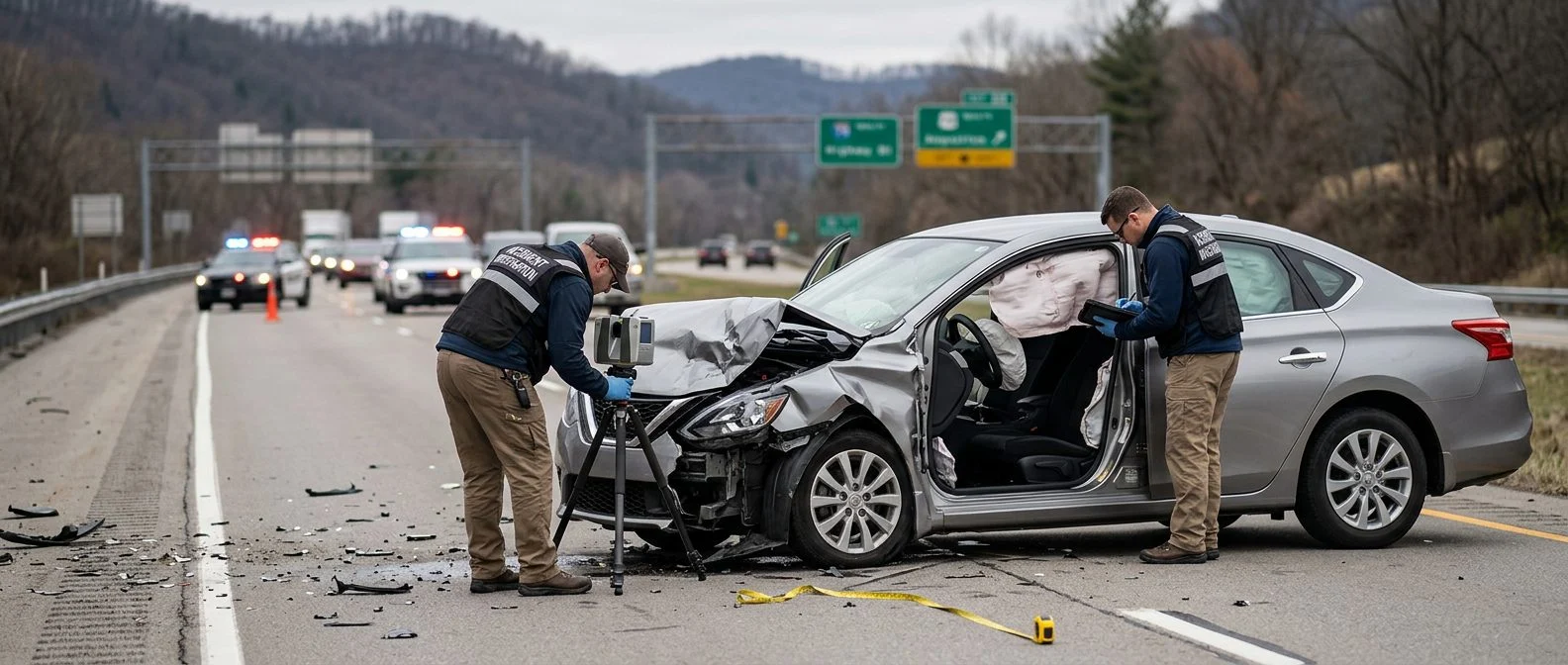
I-79 Crashes | Serving West Virginia
Hurt in an I-79 Crash? The Firm Is Here to Help Your Family Understand Your Options
Big Bubba Injury Law represents people seriously injured in car and commercial truck crashes on Interstate 79 and across West Virginia, including families facing wrongful death.
Published October 31, 2026
Families dealing with I-79 crash catastrophic injuries in West Virginia often ask the same things. A catastrophic injury claim seeks money for serious harm that lasts a long time, often for life. This page explains the basics in plain words.
What an I-79 Catastrophic Injury Claim Is and Who It Is For
A catastrophic injury claim asks for compensation for harm that changes a person’s life. Serious brain injuries, spinal cord injuries, and other severe injuries that need surgery, rehabilitation, or long-term care often fit this description.
This page is for people hurt on Interstate 79 and for the family members who act for them. Many families step in while the injured person is in the hospital, recovering at home, or unable to make decisions.
The firm handles these matters:
- Car accidents
- Truck accidents
- Commercial vehicle accidents
- Catastrophic injuries
- Traumatic brain injury
- Spinal cord injury
- Wrongful death
We serve injury victims in all 55 West Virginia counties. That includes people in Morgantown, Fairmont, Clarksburg, and other communities along the I-79 corridor. The firm is new, and we would rather say so plainly than overstate what we have done.
If you are sitting beside a hospital bed or reading a crash report late at night, you do not have to face the next steps alone. We would welcome the chance to hear what happened. Talk it through with Big Bubba — the first case review is free, confidential, and carries no obligation.
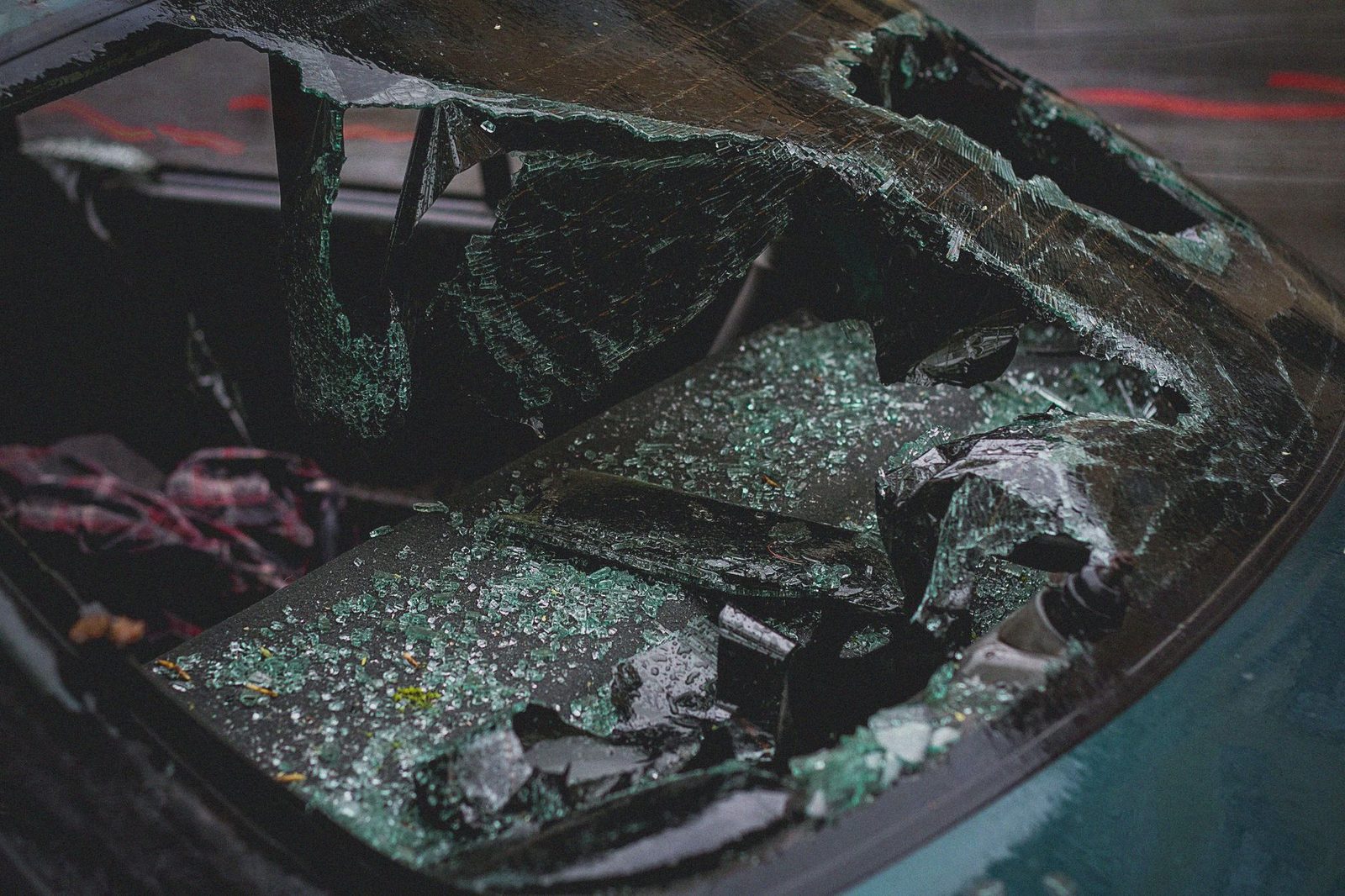
Why I-79 Crashes Can Cause Catastrophic Injuries
I-79 crashes can cause catastrophic injuries because the highway mixes fast passenger traffic with heavy trucks. Interstate 79 runs through north-central West Virginia, where cars and commercial vehicles share the same lanes.
The Insurance Institute for Highway Safety reports that West Virginia recorded 256 motor-vehicle crash deaths in 2024. Its IIHS state-by-state fatality data breaks those deaths down by road-user type, including large-truck occupants.
Several forces drive serious harm in these crashes:
- High-speed impacts, which add crash energy
- Sudden stops in slowed or stopped traffic
- Multi-vehicle collisions, where one impact triggers the next
- Heavy trucks, whose weight adds force to every impact
- Loads that are not secured
The West Virginia Department of Transportation notes that unsecured vehicle cargo can cause serious or catastrophic crashes and injuries.
Weather, road conditions, and congestion can also play a part. What caused a particular crash depends on the facts of that crash.
Injuries and Losses a Catastrophic Injury Claim Can Cover
A catastrophic injury claim can cover medical care, lost income, and the daily help a serious injury creates. These are the injuries and losses families ask about most.
Traumatic brain injury
Symptoms from a brain injury can appear days or weeks after a crash. Memory, focus, mood, and balance may change over time. Early medical records help show what the injury did.
Spinal cord injury
Doctors describe spinal cord injuries as complete or incomplete. A complete injury means no function below the injury site. An incomplete injury means some function remains, and recovery can vary.
Other severe injuries
Severe fractures, internal injuries, and burns can require surgery, rehabilitation, or long-term care.
Losses in a catastrophic injury claim
- Medical treatment and rehabilitation
- Lost income and lower earning ability
- In-home or long-term care
- Changes to daily life and family roles
Wrongful death
When a crash causes a death, the family’s claim is a wrongful death action. A personal representative who has been duly appointed must bring it. W. Va. Code § 55-7-6 lists damages a jury may consider, including sorrow, mental anguish, and loss of companionship. It also covers reasonably expected loss of income and services, care, treatment and hospitalization expenses, and reasonable funeral expenses. W. Va. Code § 55-7-6
The survival statute, W. Va. Code § 55-7-8a, lets certain injury claims continue after the injured person dies, and it is separate from the wrongful death rule described above.
Who May Be Responsible When a Truck or Commercial Vehicle Is Involved
More than one person or company can be responsible in a truck or commercial vehicle crash. Responsibility is decided by the evidence in each case.
West Virginia law defines an “employer defendant” to include the vehicle’s owner, the operator’s employer, and anyone else with legal control over the vehicle or driver. W. Va. Code § 55-7-32 sets the rules for these claims.
For certain commercial vehicle cases, that section limits each injured or killed person’s noneconomic damages against an employer defendant to $5 million per occurrence, a figure that adjusts each year for inflation, based on the Consumer Price Index published by the United States Department of Labor, beginning January 1, 2026, but not above 150 percent of the original amount, under subsection (e). The cap does not apply if the employer lacks at least $3 million in commercial vehicle insurance for each occurrence. It also does not apply in listed situations, such as impaired driving or willful disregard for safety. The cap applies only to claims arising after July 1, 2024.
Commercial carriers keep records that can matter. Federal rules require drivers to record their duty status for each 24-hour period. 49 C.F.R. § 395.8 sets that requirement.
49 C.F.R. § 382.303 covers testing after a fatal crash and certain injury or tow-away crashes that lead to a citation.
Families should ask for records to be kept early. 49 C.F.R. § 379.7 allows records to be preserved by any technology that accurately reflects all of the information in the record and remains accessible in a form that can be accurately reproduced later for reference. We help families request these records.
How the Process Works, Step by Step
The process starts with a free case review. It then moves through evidence, medical records, and either settlement talks or a lawsuit.
- Share what happened. In a free case review, families share the facts and ask questions. The review is confidential and carries no commitment to continue.
- Gather the facts. Review the crash report, insurance details, and medical records. Identify every party involved.
- Preserve evidence. Request records and send preservation requests, including commercial vehicle records.
- Document the injury. Brain and spinal cord records can take months to build, so the claim may move in stages.
- Present the claim. Negotiate with insurers, or file a lawsuit if needed.
Deadlines. W. Va. Code § 55-2-12 requires a personal injury action for which no other limitation is prescribed to be brought within two years after the right to bring it accrues. W. Va. Code § 55-7-6 requires a wrongful death action to be commenced within two years after the death, subject to the provisions of section eighteen, article two, chapter fifty-five. The provisions of this section shall not apply to actions brought for the death of any person occurring prior to July 1, 1988. Families should act early.
The first 20 days. W. Va. Code § 55-7-11a bars settlement talks within 20 days of an injury while the injured person is in the hospital or unable to work. A settlement, release or statement obtained in violation of this section may be disavowed by the injured person at any time within one hundred eighty days from the date of the personal injury, by executing a written statement of disavowal and forwarding a copy to the person who violated the section (W. Va. Code § 55-7-11a). The settlement, release or statement then may not be admissible in evidence, but only if any consideration paid for the settlement or release is repaid or returned to the person who paid it at the time the copy is forwarded.
Fault. Under W. Va. Code § 55-7-13a, recovery in a personal injury, property damage or wrongful death action is predicated on comparative fault, and each person’s liability is allocated in direct proportion to that person’s percentage of fault. W. Va. Code § 55-7-13c says fault does not bar recovery unless the injured person’s fault is greater than the combined fault of others. If it is less, the recovery is reduced in proportion to that fault.
Why Families Work With This Firm
The firm focuses on the practice areas named on this page. That means crashes, catastrophic injuries, and wrongful death.
- Focus: Car, truck, and commercial vehicle crashes, catastrophic injuries, and wrongful death.
- Statewide reach: We serve families in all 55 West Virginia counties, including Charleston, Huntington, Wheeling, Parkersburg, and Beckley.
- Support staff: The firm has assistants and office staff who help track records, schedule follow-up, and keep families informed.
- A clear first step: A free case review gives families a confidential place to start, without any commitment to continue.
- Honest about timing: The firm is new. This page describes what we do and how we work, not past results.
Not sure what your next step is?
Talk it through with Big Bubba — the first case review is free, confidential, and carries no obligation.

Common Questions About I-79 Crash Claims
Here are short answers to the questions families ask most often.
Can we reach out while our loved one is still in the hospital?
Yes. Families can ask questions while the injured person is still in treatment. West Virginia law also limits settlement talks in the first 20 days.
What if the injured person cannot remember the crash?
Memory gaps can happen after a serious head injury. Other records, such as driver logs and medical notes, can help rebuild the timeline.
Is a police report required?
A police report is useful, but it is not the only source of evidence. Other records can add important detail.
Who can file a wrongful death claim?
A personal representative who has been duly appointed brings the action for the family. W. Va. Code § 55-7-6 sets out this rule.
If you are sitting beside a hospital bed or reading a crash report late at night, you do not have to work out the next steps alone. Reach out for a free case review and share what happened in your own words.
Related practice areas
- Complete vs. Incomplete Spinal Cord Injury After a Crash: What the Terms Mean
- Paralysis Truck Accident Lawyer West Virginia | Big Bubba