
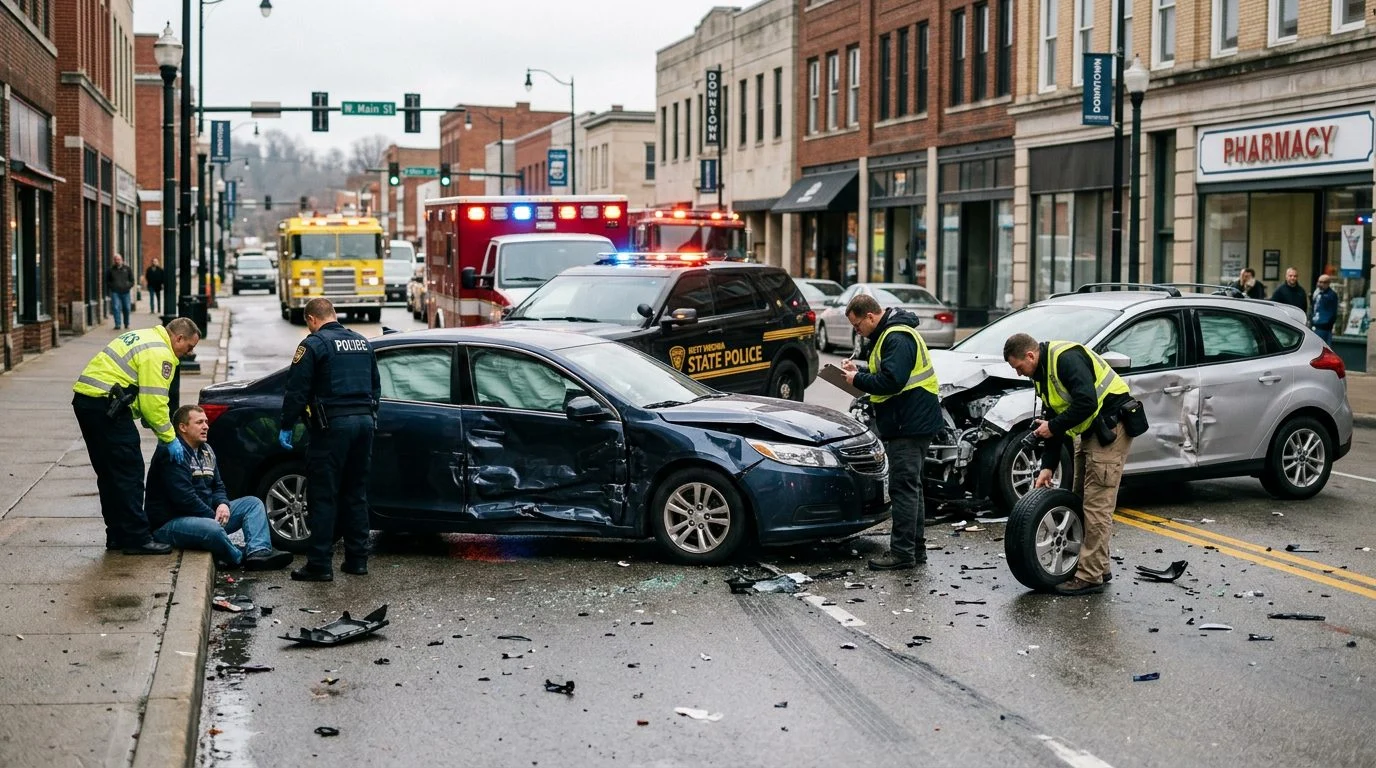
Car Accident Injury Claims | West Virginia
Independent Medical Exam After a Car Accident in West Virginia
Learn what an independent medical exam is, why an insurer may request one, and how to protect your claim. Serving injury victims across West Virginia.
Published October 25, 2026
An independent medical exam after car accident West Virginia injuries is usually requested by the other side’s insurer. An independent medical exam, or IME, is a checkup with a doctor the other side chooses. It is not a visit with your own doctor. Whether you have to go depends on the facts of your case and on whether a lawsuit has been filed. This page explains the difference in plain words.
Why You Are Likely Reading This Right Now
You are likely reading this because an exam request arrived while you are still recovering. You may be sore, off work, or waiting on test results. That is a hard time to decide what a request really means.
Most people in this spot ask the same three questions. Do I have to go? What will the doctor ask? How could this affect my claim? This page answers each one using West Virginia law where it applies.
If you are reading this for a family member, the questions are the same. The request may have been sent to the injured person. It may also have gone to a spouse, parent, or adult child who is helping with the paperwork. The steps below work either way.
It helps to know what is at stake. An IME report can become part of how an insurer views your injuries. That is why a request should be read carefully, not tossed aside. The rest of this page covers the parts people most often mix up: the exam, your own care, and your medical records.
Getting a request for an exam while you are still healing can be stressful, and you do not have to sort out what it means alone. Reach out to the firm for a free case review. Talk it through with Big Bubba — the first case review is free, confidential, and carries no obligation.
What Is an Independent Medical Exam?
An independent medical exam, or IME, is a medical exam arranged by the other side. The insurer or the other party picks the doctor, sets the date, and receives the written report. The doctor is not your treating physician.
Your treating doctor is the one who sees you for care. That doctor diagnoses your injuries, plans treatment, and tracks how you are doing over time. An IME doctor usually sees you for one visit. The report goes to the party who ordered it.
Keep three things separate in your mind. The first is the IME report. The second is ongoing care from your own providers. The third is your medical records, which include visit notes, test results, imaging, and bills. Each one tells a different part of the story. None of them replaces the others.
Many people assume the IME doctor is working on their side. That is a common mix-up. It can lead to confusion about who the report is meant to help.
Are You Required to Attend an IME in West Virginia?
Whether you must attend depends on the facts, including any agreement or policy language that applies.
The rules that govern an exam request can vary depending on the situation. For an independent medical exam after car accident West Virginia claims, timing matters.
What happens if I miss an IME?
A missed or refused exam can cause problems for your claim. Respond to the request promptly. Do not simply let the date pass.
Does an IME replace my own doctor’s view?
An IME does not replace your treating doctor’s view of your injuries. Both can be part of the picture that an insurer or a court reviews.
Why Insurance Companies Request an IME
Insurers request an IME to get a second medical opinion on the injuries you claim. The goal is usually to learn how serious the injury is, what caused it, and whether an older condition played a part.
West Virginia uses comparative fault, which means the degree to which a person’s fault was a proximate cause of the injury or damage, expressed as a percentage. Under W. Va. Code § 55-7-13a, recovery is based on each person’s percentage of fault. That is why cause matters so much in these claims. A report that ties an injury to an older problem can change how an insurer views the claim.
The IME report is written for the party who ordered it. An IME report may be prepared to support the position of the party that requested it, so read it with that in mind. Your own treating records and your honest account of the crash help show the full picture.
Prior injuries are a common focus. Tell your doctors about old back pain, past concussions, or earlier crashes, even if they seem unrelated.
What to Expect During an Independent Medical Exam
At an IME, you can expect paperwork, a history of the crash, questions about symptoms, and a physical exam. Some visits also include tests.
Most visits start with forms about your health history, medications, and past injuries. Then the doctor asks how the crash happened, where it hurts, and how daily life has changed. A physical exam follows.
Answer questions accurately and calmly. Don’t guess at dates or symptoms. If you don’t know something, say so. Answers that match your medical records are easier to review later.
Keep notes. Write down the date, the time, the clinic’s address, and the doctor’s name. Also note how long the visit lasted, what you were asked, and what tests were done. Save copies of any forms you sign. Notes help you remember details when the report arrives weeks later.
You can ask simple questions about the process, such as how long the visit will take. Write down the answers.
Monitoring Your Injuries Over Time
Serious injuries can change over months, so one exam may not show the full picture. Symptoms can shift, grow, or become clearer as time passes. That can affect when an exam is scheduled and what it finds.
A single exam captures one moment. It may not show how a brain injury or spinal cord injury changes during recovery. Your treating records show the injury across time, which one exam cannot do.
Keep your own treating providers informed. Tell them about new or changing symptoms, even small ones. Examples include headaches, numbness, memory trouble, or sleep changes. Write them down with dates so you can share them. If an exam comes up during this stretch, bring that current list with you.
Not sure what your next step is?
Talk it through with Big Bubba — the first case review is free, confidential, and carries no obligation.
Related Steps That Affect Your Claim
Several related deadlines and rules run alongside an exam request. Each one has its own timing.
Settlement talks have early limits. Under W. Va. Code § 55-7-11a, for twenty days after a personal injury, no person may negotiate a settlement while the injured person is an inpatient in a hospital. The same limit applies if the person is partially or totally unable to work in their usual trade, profession, or occupation. During the twenty days after a personal injury, while the injured person is an inpatient or unable to engage in their usual trade, profession, or occupation, the statute also bars seeking a statement for settlement, unless the person seeking it is acting for and on behalf of the injured person and the injured person expressly requests it. W. Va. Code § 55-7-11a limits settlements and statements obtained soon after an injury. Within twenty days of the injury, while the injured person is a hospital inpatient or unable to work, no person may obtain a release of liability or a statement for settlement purposes. An injured person can disavow a settlement, release or statement made in violation of this section within one hundred eighty days from the date of the injury by signing a written statement of disavowal and sending a copy to the person who violated the section. After that copy is sent, the settlement, release or statement cannot be admitted as evidence in any court or other proceeding about the injury, but only if any payment for it has been repaid or returned to the person who paid it. Settlement offers from insurers can also arrive during this period.
Filing deadlines run on their own track. West Virginia generally gives two years to bring a personal injury claim, under W. Va. Code § 55-2-12. For wrongful death, W. Va. Code § 55-7-6 requires the action to be brought by the personal representative of the deceased person’s estate. It must be commenced within two years after the death, subject to the provisions of section eighteen, article two, chapter fifty-five. Subsection (d) of W. Va. Code § 55-7-6 includes a carve-out for deaths that occurred before July 1, 1988. That carve-out covers those older deaths only and does not change the two-year deadline for deaths that occurred more recently.
Truck crash claims can involve federal rules. The federal motor carrier rules apply to commercial motor vehicles that transport property or passengers in interstate commerce. Safety guidance on securing loads, published by the West Virginia Department of Transportation, covers the risks of unsecured cargo.

Understanding Requests for an Exam
A free case review is a sensible next step if an exam request has you unsure what to do. You can talk through the request, the timing, and what comes next. The firm handles car accident, commercial truck and vehicle accident, catastrophic injury, traumatic brain injury, spinal cord injury, and wrongful death matters. We serve injury victims and families across West Virginia, including Charleston, Huntington, Morgantown, and Wheeling.
If you are still recovering and trying to decide what an exam request means, you do not have to sort it out alone. Request a free case review to talk through your options.